ODM watches or private label, which model fits better
Choosing between ODM watches and private label production can directly affect product speed, brand differentiation, and sourcing risk. For procurement professionals, the right model depends on design control, margin goals, compliance needs, and supplier capability. This guide compares both approaches to help buyers make smarter, faster decisions in today’s competitive watch sourcing market.
Why Scenario Differences Matter in Watch Sourcing
For buyers, the decision between ODM watches and private label is rarely theoretical. It shows up in real sourcing situations: a retail chain needs to launch in 90 days, a fashion brand wants exclusive dial aesthetics, a duty-free operator requires low-risk replenishment, or a corporate gifting program needs stable quality across 2,000 to 20,000 units. In each case, the production model changes lead time, cost structure, testing workflow, and supplier selection criteria.
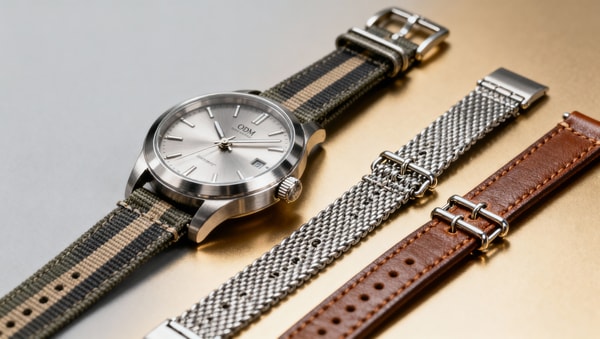
ODM watches usually fit projects where the buyer wants a faster route to market by selecting from existing supplier-developed platforms and then adjusting visible elements such as the logo, dial, strap, plating tone, packaging, or limited case details. Private label, by contrast, often emphasizes brand ownership over presentation while relying on a largely standardized product base. The two models overlap, but the procurement logic behind them is not identical.
In commercial trade, especially across jewelry, fashion accessories, premium retail, hospitality gifting, and travel retail, sourcing teams must judge not only design preference but also reorder predictability, warranty exposure, compliance documentation, and margin resilience. A difference of 30 to 60 days in development or a 10% to 20% change in minimum order quantity can affect launch timing, inventory turns, and working capital.
A practical way to evaluate ODM watches versus private label
Instead of asking which model is universally better, procurement teams should ask which model fits the specific business scenario. Start with five checkpoints: launch deadline, target price band, required uniqueness, compliance expectations, and forecast stability over the next 6 to 12 months. This approach reduces sourcing mistakes far more effectively than focusing only on sample price.
- If speed is critical and the market window is short, ODM watches often provide a better starting point.
- If branding matters more than structural innovation, private label can be commercially efficient.
- If exclusivity is central to the sales promise, buyers should confirm whether the design is truly reserved or merely customized.
- If the order will repeat seasonally, tooling, parts availability, and color consistency should be reviewed before approval.
These distinctions are especially relevant for procurement managers serving multi-country channels, where one missed certification file or one delayed component can disrupt an entire launch calendar. The sourcing model should therefore match the usage context, not just the product image.
Typical Business Scenarios and Which Model Usually Fits Better
The most useful way to compare ODM watches and private label is by application. Buyers in fashion retail, promotional programs, and premium accessory distribution often face very different priorities. The table below maps common scenarios to the model that usually performs better in practice.
This comparison shows that ODM watches are often favored when the product itself contributes to brand positioning, while private label tends to work well when branding sits more on packaging, channel presentation, or campaign execution. Buyers should also note that one supplier may use the two terms differently, so the exact scope of customization must be written into the quotation and sample approval sheet.
Scenario 1: Fast-turn fashion and accessory collections
In trend-driven collections, launch timing is often more valuable than deep mechanical originality. Retail buyers may have only one selling season of 12 to 16 weeks to capture demand. In this context, ODM watches are usually attractive because the supplier has already developed case molds, movement fitting, and baseline construction, allowing the buyer to focus on market-facing adjustments.
The key procurement question is how much of the watch can be changed without restarting engineering. Typical adjustable elements may include dial print, markers, hand color, strap material, buckle engraving, gift box, and plating finish. However, if the buyer requests a new case architecture, unique crown construction, or unusual material combination, the project may shift away from true ODM efficiency and become a longer development cycle.
For this scenario, buyers should confirm sample timing in stages: digital rendering within 5 to 10 days, pre-production sample in 2 to 4 weeks, and bulk production in 30 to 60 days after approval, depending on order size and component sourcing. Those checkpoints help avoid launch delays tied to color mismatch or strap approval.
Scenario 2: Corporate gifts, hotel retail, and event merchandise
When watches are purchased for hotel boutiques, conference gifts, membership programs, or institutional campaigns, the priority usually shifts from design originality to reliable execution. Procurement teams may need 500, 2,000, or 10,000 units delivered on one schedule with uniform packaging, legible branding, and manageable after-sales exposure. In such cases, private label often makes sense.
A private label approach can reduce development complexity because the product specification is more standardized. That matters when the watch is serving as a prestige item, loyalty gift, or merchandise line rather than a core fashion signature. The sourcing team can spend more time on packaging, engraving, presentation cards, and logo placement, which are often the visible decision points for these programs.
Still, buyers should not treat private label as risk-free. Even standard models require battery reliability, plating consistency, basic water resistance expectations, and packaging durability during transport. If watches will be distributed across several countries, user instructions, carton labeling, and restricted substance controls should be reviewed early instead of after mass production.
Scenario 3: Emerging brands that need visual distinction without full custom development
A growing number of small and mid-sized brands want the appearance of a custom collection but cannot support the cost or complexity of a fully original product program. For them, ODM watches can offer a middle path. The buyer gains access to a developed watch base while negotiating semi-exclusive combinations of dial layout, case finish, strap pairing, and packaging story.
This model is especially practical for brands that sell through e-commerce, specialty retail, airport stores, or concept boutiques. Their target is often to differentiate enough to justify a stronger retail price, while keeping initial MOQs within a manageable range such as 300 to 1,000 pieces per style. The commercial win depends on whether the supplier can control exclusivity by region, channel, or design combination.
The main risk in this scenario is assuming that visual customization equals unique market ownership. Buyers should ask whether the same case-dial combination can be sold to other clients, and if so, under what restrictions. That question matters more than the label used in the quotation.
What Procurement Teams Should Compare Beyond the Product Image
Once the use scenario is clear, the next step is operational comparison. Procurement professionals should assess not only style but also the sourcing mechanics that influence landed cost and supply continuity. ODM watches may look commercially attractive at first glance, yet the real value depends on change scope, tooling dependency, and repeat order conditions.
The following table highlights the main procurement dimensions that usually separate ODM watches from private label programs. These are the areas most likely to affect budget approval, internal sign-off, and post-launch performance.
A useful reading of this table is that private label generally minimizes execution friction, while ODM watches can create more room for pricing power and assortment distinction. Neither model is automatically lower cost across the full project lifecycle. A cheaper opening quote may become expensive if approval cycles, rework, or delayed replenishment increase operational cost.
Quality and compliance checkpoints
In watch procurement, quality control must go beyond appearance. Buyers should request a clear specification covering movement type, case and strap material, plating description, glass type, packing method, and basic performance expectations. For fashion and accessory channels, common review points include color consistency, logo durability, strap attachment security, and packaging resistance during export handling.
If the sourcing program targets multiple markets, the supplier should be able to discuss standard compliance topics such as labeling, material declarations, or restricted substance controls relevant to the destination. While requirements vary by market and product construction, the procurement team should set this review before deposit payment rather than after bulk packaging has started.
For ODM watches in particular, confirm whether customized coatings, adhesives, or decorative parts alter the original testing profile. A watch platform that performs well in a standard version may need renewed evaluation when finishes or components are changed.
Short checklist before sample approval
- Confirm whether the sample represents mass production materials or only a visual mock-up.
- Check if logo method is printing, engraving, embossing, or applied index, because durability differs.
- Review strap wear comfort and buckle stability in at least 2 to 3 fitting sessions.
- Ask for tolerance expectations on color tone, plating shade, and dial alignment.
This stage is where many sourcing delays can be prevented. A precise sample confirmation process is often more valuable than negotiating a small unit price reduction.
Common Misjudgments When Choosing ODM Watches or Private Label
One common misjudgment is assuming that ODM watches always mean deep originality. In practice, some suppliers use the term for products that are only lightly modified from a catalog range. Buyers should separate design ownership, visual customization, and sales exclusivity into three different questions. If these points are left vague, sourcing disputes often appear after the first successful launch.
Another frequent mistake is choosing private label solely because the opening MOQ looks lower. That may be sensible for testing demand, but if the product performs well and the brand later wants stronger differentiation, the switch to a more customized model can create a second round of approvals, packaging changes, and pricing renegotiation. Procurement should think at least one reorder cycle ahead.
A third issue is underestimating service capability. Watch sourcing is not only about making the product; it is also about whether the supplier can maintain parts consistency, support replacement policies, and communicate clearly on technical changes. For programs with 6-month or 12-month replenishment plans, this matters almost as much as the initial design.
Warning signs that require closer review
- The supplier cannot define which components are exclusive and which are shared across clients.
- Lead time promises are very short, but sample revision limits and approval procedures are unclear.
- Quotation details do not specify movement type, case material, strap specification, or packaging standard.
- Repeat order conditions, spare components, or after-sales handling are not discussed during the first negotiation.
For procurement professionals, these warning signs are often more useful than broad claims about product capability. A structured sourcing process can reduce delays, especially when multiple internal stakeholders such as merchandising, compliance, finance, and operations are involved.
How to Match the Right Model to Your Commercial Objective
A practical sourcing decision should connect the watch program to the business objective. If the goal is to validate a market quickly, private label may be the most efficient entry point. If the goal is to create a more defensible assortment with stronger price architecture, ODM watches are often worth considering, especially when the supplier can support curated customization without excessive tooling cost.
Procurement teams can use a simple decision path. First, define the launch horizon: under 60 days, 60 to 120 days, or over 120 days. Second, define how much uniqueness the end customer will actually notice. Third, confirm the likely reorder pattern: one-off, seasonal, or rolling. Fourth, assess the documentation and quality burden for the target market. With those four steps, the best-fit model usually becomes clearer.
In many cases, the smartest strategy is phased sourcing. A buyer might begin with private label for a test run of 300 to 500 units, gather sell-through data, and then migrate to ODM watches for the second or third launch once the target aesthetic and price band are proven. This staged approach can balance speed, risk, and brand building.
Recommended matching logic by buyer type
Different buyer organizations often need different sourcing logic even when they sell similar products. The key is to align operational capacity with product ambition rather than overcommitting at the first order stage.
Best-fit guidance
- Retail chains with fast assortment turnover: prioritize ODM watches if trend differentiation supports retail markup and launch calendars are tightly managed.
- Hospitality groups and event buyers: favor private label when the watch functions as premium merchandise, gifting, or loyalty support and consistency matters more than uniqueness.
- Emerging accessory brands: consider a hybrid path, starting with private label or light ODM, then expanding into more exclusive ODM watches once reorder visibility improves.
- Distributors and sourcing agents: compare supplier communication quality, documentation readiness, and repeat-order stability before chasing the lowest unit price.
This approach works particularly well in cross-border commercial trade, where project timing, packaging, and compliance are often as critical as design. The best sourcing outcome usually comes from a model that fits the use case, not from forcing every project into the same manufacturing framework.
Why Work With Us for Watch Sourcing Decisions
For procurement professionals evaluating ODM watches or private label programs, the hardest part is often not finding a factory. It is identifying which sourcing route best fits your timeline, brand position, compliance expectations, and commercial risk. That is where a structured sourcing perspective adds value. We help buyers compare options based on actual business scenarios, not generic product claims.
Through a commercial-trade lens, we support sourcing decisions across premium retail, hospitality merchandise, jewelry and accessory channels, and multi-market procurement projects. Whether you are reviewing an initial watch concept or planning a 6- to 12-month assortment strategy, the goal is to clarify what can be customized, what affects lead time, and what should be locked before order placement.
Contact us if you need support with product selection, ODM watches versus private label comparison, sample planning, supplier capability review, expected delivery windows, packaging coordination, or market-specific documentation checkpoints. We can also help you organize quotation comparison, define key parameters, and narrow down the most suitable sourcing path before you commit to production.
Search News
Hot Articles
Popular Tags
Need ExpertConsultation?
Connect with our specialized leisureengineering team for procurementstrategies.
Recommended News
 Apr 30, 2026What separates a commercial watch from a fashion driven modelCommercial watch buying explained: discover how durability, precision, serviceability, and channel fit separate true commercial models from fashion-led watches for retail, gifting, and hospitality.● Luxury Retail Analyst
 Apr 30, 2026ODM watches or private label, which model fits betterODM watches or private label? Compare speed, customization, MOQ, and sourcing risk to choose the best watch model for your brand, launch timeline, and profit goals.● Luxury Retail Analyst
 Apr 24, 2026ODM Watches: Costs, MOQ, and Lead TimesODM watches guide: compare costs, MOQ, and lead times for sports and entertainment sourcing. Ideal for hospitality procurement, resort retail, and branded event merchandise buyers.● Luxury Retail Analyst
 Apr 24, 2026ODM Watches vs OEM: Which Fits Your Brand?ODM watches vs OEM: compare speed, cost, design control, MOQ, and brand value. A practical guide for hospitality procurement, retailers, and distributors.● Luxury Retail Analyst
 Apr 14, 2026China's Berens Shines as Sole Domestic Brand at Watches & Wonders Geneva 2026China's Berens makes history as the only domestic brand at Watches & Wonders Geneva 2026, showcasing COSC-certified tourbillon movements and EU compliance. Discover how this milestone signals China's rising luxury watchmaking capabilities.● Luxury Retail Analyst
 Apr 16, 2026Supply chain solutions for watch components: Why dual-sourcing isn’t automatic—even with same specSupply chain solutions for watch components & designer eyewear: Why dual-sourcing fails without validation—OEM manufacturing, custom fabrication, and compliance risks revealed.● Luxury Retail Analyst
 Apr 16, 2026Smartwatch OEM partners who handle firmware updates—and why that changes your support liabilityDiscover smartwatch OEM partners with true firmware stewardship—critical for designer eyewear, hotel furniture integrations, and pro audio equipment sync. Reduce support liability now.● Luxury Retail Analyst
 Apr 16, 2026OEM manufacturing for watches: When 'custom' means longer lead times, not just logo changesOEM manufacturing for watches demands precision—not just logos. Discover how custom fabrication impacts lead times across designer eyewear, hotel furniture & supply chain solutions.● Luxury Retail Analyst
 Apr 16, 2026Luxury timepieces with service networks outside major citiesLuxury timepieces with certified service networks in Tier-2+ cities—backed by calibration, warranty & parts support. Also: custom jewelry, luxury accessories, orchestral instruments, park benches, music stands & more.● Luxury Retail Analyst
 Apr 15, 2026Luxury timepieces built for daily wear — not just displayLuxury timepieces engineered for daily wear—precision, durability & style. Also explore custom jewelry, luxury accessories, orchestral instruments, DJ equipment, music stands, park benches, outdoor playgrounds & more.● Luxury Retail Analyst
 Apr 13, 2026Watches & Wonders Geneva 2026: Audemars Piguet Returns, Behrens Makes History as First Chinese BrandWatches & Wonders Geneva 2026 marks Audemars Piguet's return and historic debut of Chinese brand Behrens. Discover how this event reshapes luxury watch sourcing with China's rising high-end watchmaking capabilities.● Luxury Retail Analyst
 Apr 13, 2026US CPSC Launches Review of New Fitness Tracker Regulations, Chinese Exporters Required to Submit UL/ETL ComplianceUS CPSC's new fitness tracker regulations require Chinese exporters to submit UL/ETL compliance. Learn how this impacts wearable device OEMs, logistics, and component suppliers. Stay ahead with key action items for 2026 compliance.● Luxury Retail Analyst
 Apr 11, 2026Watches & Wonders Geneva 2026: Audemars Piguet Returns, 10 New Brands Join, Behrens as Sole Chinese ExhibitorWatches & Wonders Geneva 2026 marks a historic event with Audemars Piguet's return & 10 new brands including China's Behrens. Discover luxury watch industry shifts & new opportunities in this groundbreaking exhibition.● Luxury Retail Analyst
 Apr 11, 2026EU EN 16830:2026 Eyewear Standard Mandatory from April 2026, Chinese Exporters Need Certification Within 6 MonthsEU EN 16830:2026 eyewear standard becomes mandatory April 2026. Chinese exporters must update CE certification within 6 months. Learn critical compliance steps for UV protection, impact resistance & labeling requirements to avoid market removal.● Luxury Retail Analyst
 Apr 10, 2026Designer eyewear frames labeled 'acetate' may contain only 37% bio-acetate — and no one discloses itDiscover supply chain solutions for designer eyewear, OEM jewelry & ODM watches — verify true bio-acetate content, not just labels. Premium accessories, commercial procurement made transparent.● Luxury Retail Analyst
 Apr 10, 2026ODM watches with interchangeable straps: Who controls the tolerances — designer or factory?ODM watches with interchangeable straps demand precision tolerance control. Discover how top-tier supply chain solutions, OEM manufacturing, and designer eyewear partnerships ensure premium accessories quality and commercial watch reliability.● Luxury Retail Analyst
 Apr 10, 2026Supply chain solutions for watches often ignore regional after-sales logisticssupply chain solutions for commercial watch, OEM jewelry & designer eyewear—unlock regional after-sales logistics resilience with GCT’s E-E-A-T–validated benchmarks.● Luxury Retail Analyst
 Apr 10, 2026Designer eyewear production runs under 500 units: Is MOQ negotiation still realistic?Explore realistic MOQ negotiation for designer eyewear under 500 units—backed by agile OEM manufacturing, supply chain solutions, and premium accessories expertise.● Luxury Retail Analyst
 Apr 11, 2026OEM manufacturing for eyewear: Where do tooling revisions actually begin?OEM manufacturing for eyewear starts where tooling revisions begin—early design validation, compliance mapping & pilot diagnostics. Discover supply chain solutions, designer eyewear, ODM watches & OEM jewelry excellence.● Luxury Retail Analyst
 Apr 11, 2026Commercial watch procurement often overlooks service lifecycle costsDiscover integrated supply chain solutions for commercial watch, OEM jewelry & ODM watches—reduce TCO with premium accessories, designer eyewear & more.● Luxury Retail Analyst
 Apr 11, 2026ODM watches with full compliance tracking — rare or just under-marketed?ODM watches with full compliance tracking—discover premium accessories, OEM jewelry & designer eyewear suppliers verified for commercial procurement, supply chain solutions, and traceability.● Luxury Retail Analyst
 Apr 11, 2026Designer eyewear brands: When 'custom' really means 'compromised fit'Discover how supply chain solutions & OEM manufacturing impact designer eyewear fit—plus ODM watches, OEM jewelry & premium accessories sourcing.● Luxury Retail Analyst
 Apr 07, 2026EU Updates EN 16830:2026 Eyewear Safety Standards, Impacting Chinese ExportersEU's new EN 16830:2026 eyewear safety standards impact Chinese exporters with blue light limits, impact resistance tests & AI privacy labels. Learn how to comply and maintain EU market access.● Luxury Retail Analyst
 Apr 07, 2026US New Tariffs on Optical Lenses: Impact on Chinese ExportersExplore how US new tariffs on optical lenses impact Chinese exporters, with key insights on compliance strategies for high-index resin and photochromic lenses. Essential reading for eyewear manufacturers and supply chain professionals.● Luxury Retail Analyst