Hotel Bathroom Amenities That Shape First Impressions Fast
In hospitality projects, first impressions are formed in seconds—and hotel bathroom amenities often influence them more than expected. For project managers and fit-out leaders, choosing the right amenities is not just about guest comfort, but also brand positioning, operational efficiency, and procurement consistency. This guide explores how the right selections can strengthen perceived quality from the very first stay.
For most project stakeholders, the core question is not whether amenities matter, but which ones create the fastest visible impact without adding unnecessary cost or operational complexity. The short answer is this: guests judge bathroom quality through a mix of cleanliness signals, tactile experience, visual coherence, and practical convenience. That means the best amenity strategy is rarely the most expensive one. It is the one that aligns brand level, room type, replenishment model, and maintenance realities.
For project managers, the real value lies in making decisions that satisfy design teams, operators, procurement departments, and ownership groups at the same time. That requires a structured view of what guests notice first, what affects review scores, what creates hidden labor costs, and what can be standardized across multiple properties or regions.
Why hotel bathroom amenities influence first impressions so quickly
Guests usually evaluate a room within moments of entry, and the bathroom is one of the fastest trust indicators. A well-planned bathroom suggests hygiene, attention to detail, and operational discipline. A poorly planned one, even in a visually attractive guestroom, can immediately reduce perceived value.
Unlike decorative features that may be admired from a distance, bathroom amenities are touched, opened, smelled, and used right away. That makes them unusually powerful. The guest is not judging them as abstract design elements, but as direct proof of the hotel’s standards.
For this reason, project teams should treat hotel bathroom amenities as part of the property’s first-impression architecture. The finish of a dispenser, the feel of a towel, the scent profile of toiletries, the clarity of labeling, and the placement of vanity essentials all contribute to whether the guest thinks, “This hotel is premium,” “This hotel is efficient,” or “This hotel is cutting corners.”
What project managers should prioritize instead of trying to impress with everything
One common mistake in hospitality fit-out projects is overinvesting in low-impact variety while underinvesting in high-impact consistency. Guests do not need an excessive number of items to form a positive impression. They need a well-curated set of essentials that look intentional and work flawlessly.
The first priority should be perceived cleanliness. Amenities must support a bathroom environment that feels hygienic, uncluttered, and easy to understand. Tamper-evident packaging, leak-free dispensers, clean tray systems, and moisture-resistant presentation matter more than novelty.
The second priority is brand fit. A luxury urban hotel, a business-focused airport property, and a resort villa should not present the same amenity logic. The goal is not simply to provide products, but to make sure the products reinforce the guest promise. For a business hotel, efficiency and order may matter most. For an upscale resort, sensory richness and material quality may take priority.
The third priority is operational durability. Amenities that look elegant on installation day but become difficult to refill, easy to damage, or inconsistent to source can create long-term friction. Project leaders should evaluate not only visual appeal, but also refill cycles, replacement parts, housekeeping workflow, and regional supply stability.
Which hotel bathroom amenities guests notice first
Although guest preferences vary by market and segment, several amenities consistently shape first impressions faster than others. These should receive the most attention during specification and supplier review.
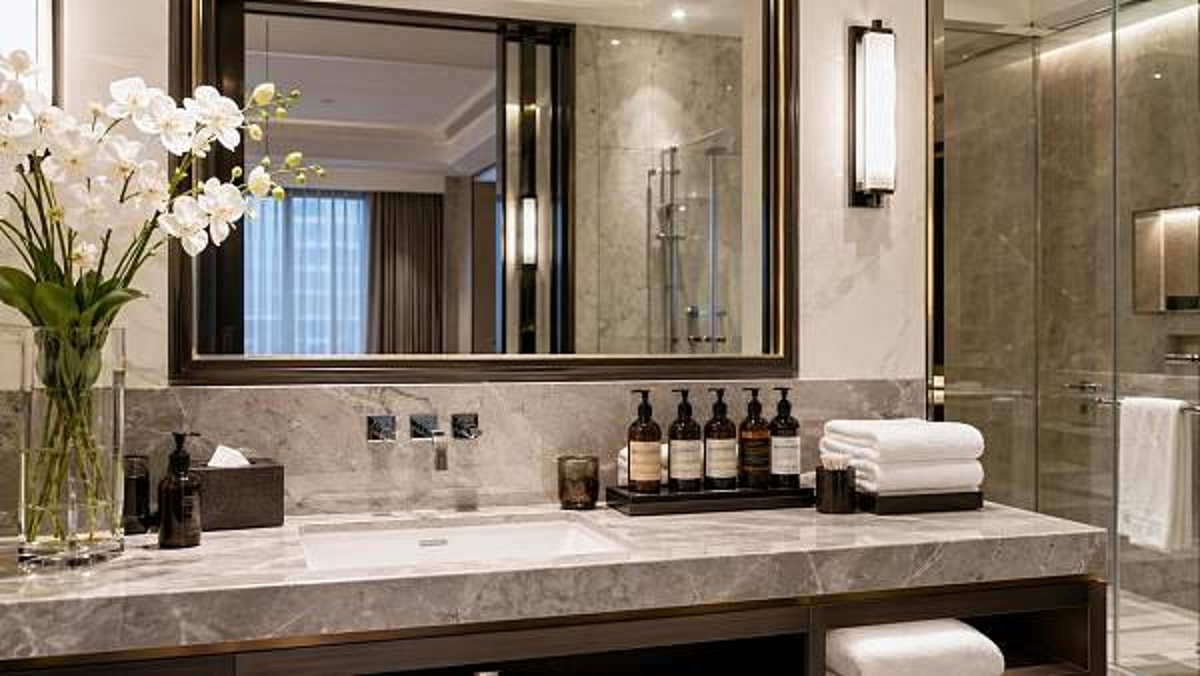
1. Soap, shampoo, conditioner, and body wash presentation. Whether delivered in miniatures or dispensers, these are among the first items guests inspect. They signal quality through packaging design, fragrance, texture, and placement. Poorly mounted dispensers, cheap-looking bottles, or inconsistent branding can undermine the entire bathroom experience.
2. Towels and bath linens. Guests quickly associate towel softness, whiteness, weight, and folding standards with the hotel’s cleanliness and service level. Even excellent toiletries cannot compensate for rough, thin, or visibly aged towels.
3. Vanity kits and practical essentials. Cotton pads, swabs, shower caps, sanitary bags, and tissue presentation may seem minor, but they communicate preparedness. When these items are thoughtfully selected and neatly arranged, guests feel the property has anticipated real needs.
4. Handwashing and countertop experience. The sink area is often the first bathroom zone used. A quality hand soap dispenser, clean mirror line, organized tray, and easy-access towel create an immediate sense of care and order.
5. Hair drying and grooming convenience. Functional, easy-to-access grooming amenities are especially important for business travelers and premium guests. An underpowered hair dryer, poor cord management, or awkward storage creates frustration that guests remember.
Choosing between single-use amenities and dispenser systems
This is one of the most important specification decisions in modern hospitality projects. The choice affects sustainability messaging, housekeeping workflow, guest perception, and long-term procurement economics.
Single-use formats can support a premium unboxing feel, especially in luxury or high-touch segments. They allow stronger visual branding and can feel more personal to some guests. However, they also increase replenishment frequency, packaging waste, storage volume, and recurring cost.
Dispenser systems often improve operational efficiency and support sustainability targets. When well designed, they can also look sophisticated and contemporary. But success depends on execution. Cheap brackets, poor refilling discipline, unclear labeling, or visible product residue can make dispensers feel institutional rather than upscale.
For project managers, the best decision should be based on property type, labor model, and brand positioning. Upper-upscale and luxury properties may adopt hybrid approaches, using elegant dispensers for shower products while retaining selected individually packed vanity or wellness items. Limited-service and business hotels may gain more value from robust, tamper-resistant, easy-refill systems that reduce operational cost without lowering perceived quality.
In other words, the real question is not “Which format is better?” but “Which format best supports the guest experience and operating model of this property?”
How amenities affect operations, procurement, and total cost of ownership
From a project delivery perspective, hotel bathroom amenities are not just a design line item. They have long-tail consequences for inventory planning, supplier management, room turnaround time, and brand consistency across locations.
Amenities with unstable sourcing can create immediate procurement risk. If a custom bottle, cap, pump, or tray cannot be replenished reliably, the hotel may be forced into substitutions that dilute brand presentation. For multi-property groups, this problem scales quickly.
Labor should also be factored into selection. A beautiful amenity setup that requires frequent manual alignment, individual unwrapping, or difficult cleaning may increase housekeeping time across hundreds of rooms. Even small inefficiencies can become expensive in full-service properties with high occupancy.
Project managers should therefore evaluate total cost of ownership across five dimensions: unit cost, logistics efficiency, installation complexity, replenishment labor, and replacement predictability. In many cases, a slightly higher upfront product cost leads to lower operational burden and more stable guest presentation.
This is especially relevant in new openings, renovations, and cross-border rollouts where procurement consistency matters. Standardizing amenity platforms across room categories can reduce purchasing fragmentation while still allowing selective upgrades in suites or premium floors.
What good specification looks like in real hospitality projects
A strong specification process starts by grouping amenities into three tiers: non-negotiable essentials, brand-enhancing upgrades, and optional category-specific items. This prevents overbuying while protecting the guest experience where it matters most.
Non-negotiable essentials include core toiletries, hand soap, towels, tissues, sanitary bags, and practical grooming support. These must meet clear standards for appearance, hygiene, durability, and ease of replenishment.
Brand-enhancing upgrades include signature fragrance programs, custom dispenser finishes, premium vanity trays, elevated bathrobes, or spa-linked product lines. These are ideal where the property needs stronger differentiation or a higher ADR justification.
Optional category-specific items depend on guest profile. Family-oriented hotels may include child-friendly formats or step-access convenience. Extended-stay properties may benefit from larger-format toiletries and more practical storage logic. Wellness resorts may emphasize natural ingredients, recovery-focused products, and sensory storytelling.
To make specification more reliable, project teams should define measurable criteria, not just visual preferences. These may include pump cycle durability, anti-leak performance, material resistance to humidity, refill method, fragrance stability, label legibility, and packaging compliance for target markets.
How to judge supplier suitability beyond samples and catalog claims
At sourcing stage, many amenity suppliers can present attractive samples. The real difference appears in quality control, export readiness, customization capability, and continuity of supply. That is why project managers should assess suppliers as operational partners, not just product vendors.
Start with formulation and material transparency. Toiletries should meet regulatory requirements for destination markets, and packaging components should be consistent in quality across batches. If dispensers are involved, ask for test data on mounting performance, pump lifespan, and refill compatibility.
Next, review OEM or ODM capability carefully. Custom branding can be valuable, but it should not create unnecessary complexity. Ask how minimum order quantities, lead times, artwork revisions, and component substitutions are managed. A supplier that handles custom work well should be able to explain these processes clearly.
Then look at logistics resilience. Can the supplier support phased openings? Can they maintain continuity for multiple regions? Do they offer standardized SKUs with localized labeling options? These factors often matter more than small price differences, especially for hotel groups and large developments.
Finally, ask for evidence from relevant hospitality projects. The strongest suppliers can show delivery performance, product consistency, and adaptation to different hotel segments rather than relying only on generic manufacturing claims.
How bathroom amenities support brand positioning and guest reviews
Well-selected amenities do more than satisfy immediate practical needs. They help define how guests describe the property afterward. In reviews, guests may not always mention every design feature, but they often remember whether the bathroom felt premium, fresh, useful, and complete.
For upscale hotels, sensory coherence is particularly important. Fragrance, packaging finish, textile touch, and countertop organization should feel part of one brand language. If the hotel promotes a modern wellness identity but uses low-grade or mismatched bathroom amenities, the brand promise becomes less credible.
For business-oriented properties, convenience and reliability may drive stronger guest satisfaction than luxury flourishes. Fast-drying towels, effective lighting, accessible outlets, clear product labeling, and dependable grooming items can matter more than ornate packaging.
In both cases, the principle is the same: amenities should make the guest feel that the hotel understands its audience. That alignment is what turns standard products into a memorable first impression.
A practical checklist for project managers before final approval
Before locking specifications, project leaders should run a final review that reflects both guest experience and operational practicality.
Check whether the amenity package matches the hotel’s segment, room rate logic, and target guest profile. Confirm that every item has a clear purpose and that no unnecessary complexity has been added for visual effect alone.
Test installation and housekeeping workflow in a mock-up room. Observe how easily products are accessed, cleaned, refilled, and reset. What looks acceptable on paper may perform poorly under real operating conditions.
Validate multi-market compliance and sourcing continuity. This is especially important for groups, developers, and procurement teams managing more than one geography or brand standard.
Review durability and replacement cycles. Items exposed to water, heat, cleaning chemicals, and daily guest use should be selected for sustained performance, not just launch aesthetics.
Finally, make sure the complete bathroom experience feels coherent. Guests do not judge amenities one by one. They judge the total impression created by the room’s most intimate functional space.
Conclusion: the fastest way to improve perceived hotel quality
If project managers want to improve first impressions quickly, few areas offer a better return than thoughtfully specified hotel bathroom amenities. They shape guest perception at the intersection of hygiene, comfort, branding, and operational discipline.
The most effective approach is not to maximize quantity or chase trends blindly. It is to identify the high-visibility essentials, align them with the property’s positioning, and source them through suppliers that can deliver consistency at scale. When amenities are selected with that level of intent, they do more than fill a bathroom. They reinforce trust from the first stay onward.
In practical terms, that means prioritizing cleanliness signals, tactile quality, usability, refill efficiency, and procurement reliability. For hospitality projects under pressure to balance guest expectations with cost control, that is where the strongest long-term value is created.
Search News
Hot Articles
- Musical InstrumentsChina Table Tennis Team Departs for London; BS EN 14904:2021 Takes EffectMay 01, 2026
- Outdoor RidesSanya Asian Beach Games Closure Triggers Halal Certification Demand for Sand Sports EquipmentMay 01, 2026
- Outdoor RidesAI Football Training Robots Export Surge After Man Utd MatchMay 01, 2026
Popular Tags
Need ExpertConsultation?
Connect with our specialized leisureengineering team for procurementstrategies.
Recommended News
 May 01, 2026Hotel Desks That Work for Both Business Guests and Small RoomsHotel desks for compact rooms: learn how to choose durable, space-saving, business-friendly designs that improve guest satisfaction and simplify hotel procurement.● Hospitality Sourcing Dir
 May 01, 2026Hotel Slippers in Bulk: Cheap Pairs Can Hurt Guest PerceptionHotel slippers bulk choices affect more than cost. Discover how cheap pairs can damage guest perception, comfort, and brand value—and how smarter sourcing improves reviews.● Hospitality Sourcing Dir
 May 01, 2026Hotel Room Furniture Sets That Balance Style and Replacement CostHotel room furniture sets that combine style, durability, and lower replacement cost. Discover a practical checklist for smarter sourcing, better lifecycle value, and reliable hospitality project results.● Hospitality Sourcing Dir
 May 01, 2026Hotel Bed Linens Wholesale Quality Checks Before Large OrdersHotel bed linens wholesale quality checks: learn how to verify fabric strength, shrinkage, stitching, wash durability, and supplier reliability before placing large hotel bedding orders.● Hospitality Sourcing Dir
 May 01, 2026Hotel Bathroom Amenities That Shape First Impressions FastHotel bathroom amenities shape guest first impressions fast. Discover how the right choices improve brand image, efficiency, and perceived quality from day one.● Hospitality Sourcing Dir
 Apr 30, 2026Hotel cabinets that look custom without custom lead timesHotel cabinets that look custom without long custom lead times. Learn how to balance brand style, durability, and faster installation for hotel projects.● Hospitality Sourcing Dir
 Apr 30, 2026Hotel sofas that hold shape better in high turnover roomsHotel sofas that keep their shape longer in high-turnover rooms. Learn what frame, cushion, and upholstery specs improve durability, guest appeal, and lifecycle value.● Hospitality Sourcing Dir
 Apr 30, 2026Hotel wardrobes that save space without looking budgetHotel wardrobes that save space without looking budget: discover premium, durable designs, smart specs, and sourcing tips to maximize guestroom value.● Hospitality Sourcing Dir
 Apr 30, 2026Hotel room furniture mistakes that quietly hurt guest comfortHotel room furniture mistakes can quietly damage guest comfort, reviews, and brand value. Learn how smarter layout, sizing, and material choices improve hotel room performance.● Hospitality Sourcing Dir
 Apr 30, 2026What makes hotel outdoor furniture easier to maintainHotel outdoor furniture is easier to maintain when it uses weather-resistant materials, smart construction, and replaceable parts. Learn how to cut upkeep and improve long-term value.● Hospitality Sourcing Dir
 Apr 30, 2026Hotel lobby furniture trends shifting guest first impressionsHotel lobby furniture trends are redefining first impressions with modular comfort, brand storytelling, tech integration, and durable style that elevates guest experience.● Hospitality Sourcing Dir
 Apr 30, 2026Why some hotel nightstands wear out faster than expectedHotel nightstands wear out faster when materials, edge sealing, and hardware are underspecified. Learn how to spot durable options, reduce lifecycle costs, and source smarter for hospitality projects.● Hospitality Sourcing Dir
 Apr 28, 2026Iranian Delegation at Sanya Asian Beach Games Spurs Halal-Certified Hardware DemandHalal-certified hardware demand surges after Iranian delegation’s cultural showcase at Sanya Asian Beach Games—key for GCC event tech exporters.● Hospitality Sourcing Dir
 Apr 27, 2026Iranian Delegation’s Ritual Gesture at Sanya ASG Sparks Mideast Hospitality Procurement ShiftIranian delegation's ritual gesture at Sanya ASG sparks Middle East hospitality procurement shift—key for hotel amenities, travel services & cultural compliance.● Hospitality Sourcing Dir
 Apr 28, 2026Hotel Beds in 2026 Are Being Chosen for Sleep Quality, Not Just StyleHotel beds, hotel furniture, and custom furniture in 2026 are defined by sleep quality, durability, and guest value—see how luxury furniture buyers source smarter.● Hospitality Sourcing Dir
 Apr 28, 2026Cheap Hotel Furniture Can Raise Costs Later in Unexpected WaysHotel furniture buying guide: compare hotel beds, hotel chairs, hotel tables, custom furniture and luxury furniture to avoid hidden costs and choose durable hotel equipment.● Hospitality Sourcing Dir
 Apr 28, 2026Hotel Furniture Replacement Cycles Are Changing in 2026Hotel furniture trends for 2026: discover smarter replacement cycles for hotel beds, hotel chairs, hotel tables, luxury furniture, and custom furniture to boost ROI and guest appeal.● Hospitality Sourcing Dir
 Apr 28, 2026Why Do Some Hotel Beds Get Complaints Faster Than Others?Hotel beds complaints often start with poor specs, not looks. Learn how hotel furniture, custom furniture, luxury furniture, hotel chairs, hotel tables, and hotel equipment affect guest satisfaction.● Hospitality Sourcing Dir
 Apr 28, 2026Hotel Beds: Which Frame and Mattress Setup Lasts Longer?Hotel beds guide: compare frame and mattress setups that last longer, with insights on hotel furniture, custom furniture, luxury furniture, hotel chairs and hotel tables.● Hospitality Sourcing Dir
 Apr 27, 2026Is Luxury Jewelry for Hotels a Smart Investment?Luxury jewelry for hotels: see how a custom jewelry manufacturer helps hotels turn custom luxury jewelry into brand value, guest appeal, and profitable luxury jewelry B2B growth.● Hospitality Sourcing Dir
 Apr 21, 2026Open or closed hotel wardrobes for easier housekeeping?Hotel wardrobes affect housekeeping speed, guest appeal, and hospitality procurement. Compare open vs closed designs for hotel furniture, luxury furniture, and hotel room furniture planning.● Hospitality Sourcing Dir
 Apr 21, 2026Hotel wardrobes that fit luggage without wasting spaceHotel wardrobes that fit luggage smartly without wasting space—explore hotel furniture solutions that elevate hotel room furniture, support hospitality procurement, and enhance guest comfort.● Hospitality Sourcing Dir
 Apr 21, 2026Why hotel room furniture wears unevenly after openingHotel furniture wear starts unevenly from day one. Learn how hotel beds, hotel chairs, hotel desks and hotel room furniture perform in real use, with smart hospitality procurement tips.● Hospitality Sourcing Dir
 Apr 21, 2026Hotel room furniture packages that cut design mismatchHotel room furniture packages align hotel furniture, hotel beds, hotel chairs, hotel tables, and hotel desks with luxury furniture standards—reducing design mismatch and speeding hospitality procurement.● Hospitality Sourcing Dir