Hotel Bed Linens Wholesale Quality Checks Before Large Orders
Before committing to hotel bed linens wholesale at scale, procurement teams need more than attractive pricing—they need proof of consistency, compliance, and long-term supplier reliability. From fabric strength and colorfastness to stitching quality and wash performance, every detail affects guest satisfaction and operating costs. This guide outlines the essential quality checks that help buyers reduce risk, compare vendors confidently, and secure bedding that meets commercial hospitality standards.
Why quality checks matter before placing hotel bed linens wholesale orders
For procurement teams, hotel bed linens wholesale is not a simple textile purchase. It is an operational decision tied to brand standards, laundry cycles, replacement budgets, and guest perception. Sheets that feel acceptable on arrival can fail after repeated commercial washing, causing pilling, seam splits, shade variation, or shrinkage that disrupts room readiness.
In hotels, especially multi-property groups, linen inconsistency creates hidden costs. Different hand feel across batches complicates housekeeping, while unstable sizing slows bed-making and raises inventory complexity. A lower quote may look attractive, but if the product lifespan is short, the total cost per occupied room often rises.
This is where a structured sourcing approach becomes valuable. GCT supports institutional buyers and hospitality procurement teams by turning supplier comparison into a disciplined evaluation process. Instead of relying on surface-level specifications, buyers can use measurable checkpoints, commercial risk indicators, and sourcing intelligence to screen suppliers before large commitments.
- Reduce the risk of receiving bulk lots that differ from approved samples.
- Protect guest experience by verifying softness, appearance retention, and clean finishing.
- Control replacement frequency by checking durability under industrial laundering conditions.
- Improve supplier negotiations by identifying where test data or process controls are missing.
What procurement teams should check first in hotel bed linens wholesale samples
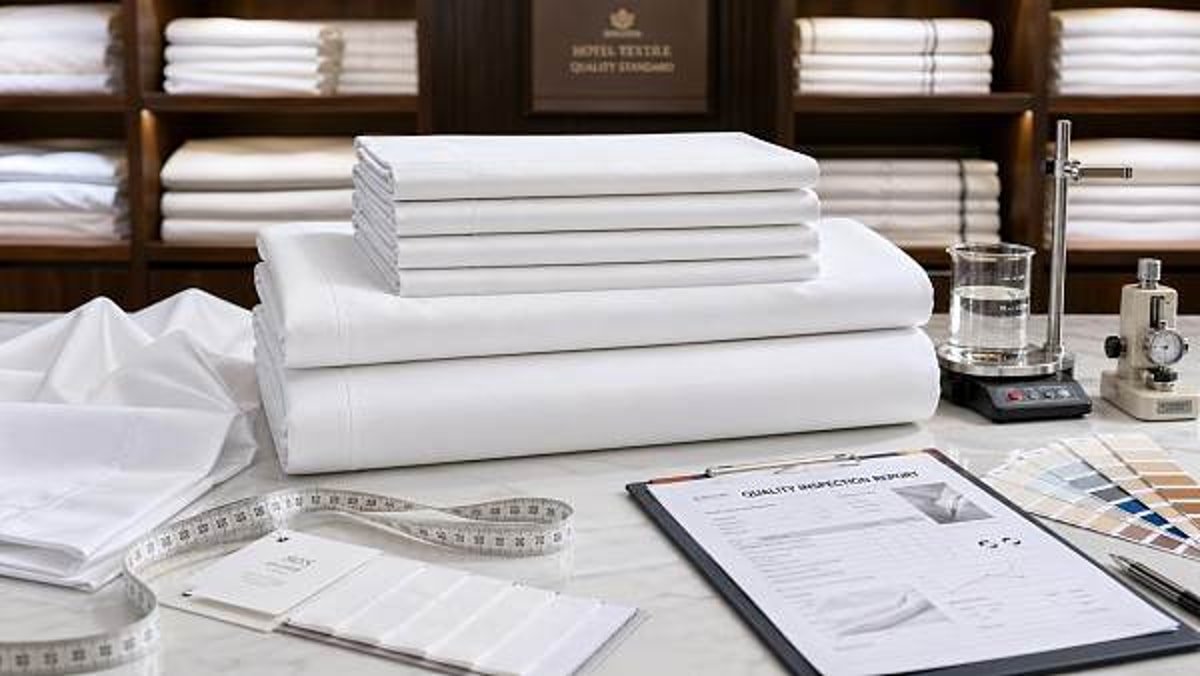
The first sample review should move beyond thread count claims. In hotel bed linens wholesale, thread count alone does not guarantee durability or comfort. Procurement teams should evaluate fiber composition, yarn quality, weave construction, finishing consistency, and post-wash behavior. These factors influence whether a linen program performs in luxury, business, resort, or extended-stay environments.
Core sample review checklist
- Confirm fiber content exactly matches the quotation, such as 100% cotton, cotton-polyester blend, or other commercial composition.
- Measure finished dimensions before and after washing to understand practical shrinkage.
- Inspect seam density, hem uniformity, corner construction, and loose thread control.
- Evaluate whiteness, shade consistency, and evidence of optical brightener overuse.
- Check fabric hand feel for stiffness that may come from temporary finishing rather than true yarn quality.
- Request wash-tested samples processed under commercial laundry conditions, not only unwashed showroom swatches.
Buyers should also compare the approved sample with the factory’s production tolerance policy. A supplier that cannot clearly define acceptable variation in weight, width, color, and shrinkage may struggle with repeatability. In large hospitality orders, process discipline matters as much as the fabric itself.
Which technical performance standards matter most for hotel bedding?
When sourcing hotel bed linens wholesale, procurement teams need a practical technical framework. The table below summarizes the most relevant quality checkpoints used in commercial bedding evaluation, along with why each one matters in hotel operations.
This table shows why procurement should insist on test-relevant evidence, not only brochure claims. In commercial settings, the best choice is often the linen that delivers stable performance over time, even if its initial marketing language sounds less premium.
How to compare suppliers for hotel bed linens wholesale more accurately
Supplier comparison should cover both product quality and execution reliability. A manufacturer may offer an acceptable sample, but if lead times are unstable, documentation is incomplete, or production controls are weak, bulk risk remains high. For hotel bed linens wholesale, buyers should score vendors across technical, commercial, and operational dimensions.
The next comparison table can help procurement teams structure vendor evaluation during RFQ, sample approval, and pre-production review stages.
A comparison model like this helps buyers separate a competitive supplier from a merely low-cost one. GCT’s value in this stage is practical: it helps commercial buyers frame the right questions, identify risk gaps early, and shortlist sources that can support repeat procurement rather than one-off transactions.
What fabric and construction choices fit different hotel segments?
Not every hospitality project needs the same bedding profile. Hotel bed linens wholesale should be matched to property positioning, guest expectations, laundry setup, and replacement strategy. Luxury hotels may prioritize hand feel and appearance, while high-volume city hotels often balance comfort with faster turnaround and lower lifecycle cost.
Typical procurement scenarios
- Luxury and upscale properties often prefer finer cotton-rich constructions with a smooth finish, but they still need strict checks on shrinkage, seam performance, and wash retention.
- Business hotels may choose balanced cotton-polyester options that offer easier ironing, faster drying, and better cost control across large room inventories.
- Resort properties should consider humidity, frequent turnover, and stain management, which can affect finishing choices and replenishment planning.
- Serviced apartments and extended-stay projects often need practical durability, especially where guest usage patterns create more varied laundering stress.
A common buying mistake is copying another hotel’s specification without checking if the operating model is comparable. Procurement should always evaluate room rate positioning, laundry partner capabilities, local water conditions, and expected occupancy. The right specification is the one that performs well in the actual commercial environment.
Which compliance and testing points should buyers request?
For hotel bed linens wholesale, buyers do not always need every possible laboratory document, but they should request testing and compliance evidence that fits the market and project risk level. Material safety, labeling accuracy, and wash durability are usually more actionable than decorative claims. When importing across regions, clear paperwork also supports customs and contract confidence.
Practical compliance checklist
- Fiber content verification to confirm the quoted composition is accurate.
- Colorfastness and dimensional stability reports, especially for repeated laundering use.
- Restricted substance or material safety documentation where the destination market or buyer policy requires it.
- Packing and labeling review, including carton marking, size breakdown, and SKU clarity for receiving teams.
- Pre-shipment inspection arrangement, either in-house, buyer-led, or through an agreed third-party protocol.
If a supplier hesitates to discuss testing methods, tolerance ranges, or failure handling, procurement should treat that as a sourcing signal. Good suppliers may not have every document immediately ready, but they should be able to explain the process and timeline for meeting commercial requirements.
How to control total cost instead of chasing the lowest unit price
The lowest quotation in hotel bed linens wholesale can become the most expensive option after six months of use. Procurement teams should estimate total cost based on service life, laundry efficiency, replacement rate, defect exposure, and inventory planning. A product with slightly higher upfront cost may produce lower annual spend if it survives more wash cycles and keeps presentation quality longer.
Important cost drivers include fabric yield, sewing quality, packaging format, container utilization, and reorder stability. There is also the cost of operational friction: delayed shipments, irregular sizing, and guest complaints consume labor and management time. In hospitality, linen is both a product cost and a service-delivery tool.
A practical cost review should include
- Expected wash-cycle lifespan relative to room turnover and laundry method.
- Replacement frequency for sheets, pillowcases, and duvet covers separately.
- Labor impact caused by wrinkles, fit issues, or inconsistent finishing.
- Buffer stock requirements if supplier lead times are long or volatile.
- Claim risk and the likely cost of defect handling after arrival.
Common mistakes in hotel bed linens wholesale procurement
Even experienced buyers can miss critical details when timelines are tight. Many sourcing problems begin not with production failure, but with unclear specifications or incomplete approval steps. The most effective way to avoid disputes is to define commercial expectations before deposit payment and bulk cutting.
Frequent procurement mistakes
- Approving only a hand sample instead of a washed sample that reflects real use.
- Relying too heavily on thread count without checking yarn quality and fabric weight.
- Ignoring packaging and assortment details, which later complicate warehousing and room deployment.
- Failing to document tolerance limits for size, GSM, and shade variation.
- Selecting a supplier without reviewing capacity during peak season production.
These errors are avoidable when buyers use a formal sourcing checklist and stage-gate review process. GCT helps procurement teams access structured market intelligence and sourcing logic that support better supplier conversations, stronger RFQs, and cleaner approval decisions across commercial textile categories.
FAQ: hotel bed linens wholesale questions procurement teams often ask
How many samples should be reviewed before a large bedding order?
At minimum, buyers should review an original sample, a wash-tested sample, and where possible a pre-production confirmation sample. For higher-risk or multi-property projects, it is useful to compare samples from different lots or different production dates. This helps reveal consistency, not just initial quality.
Is 100% cotton always better for hotel bed linens wholesale?
Not always. Cotton can offer a preferred hand feel, but blended constructions may provide easier care, lower wrinkling, and faster drying in some hotel operations. The right choice depends on brand positioning, laundry equipment, local utility cost, and the desired balance between comfort and durability.
What is the most overlooked quality issue in bulk hotel linen orders?
Sample-to-bulk inconsistency is often more damaging than an obviously weak sample. A good prototype can create false confidence if production controls are poor. That is why buyers should ask how the approved sample is documented, what tolerances apply, and how in-line inspection is managed.
How should procurement teams evaluate supplier lead time claims?
Ask for a milestone-based schedule rather than a single final shipment date. Review fabric sourcing time, dyeing or bleaching time, sewing capacity, packing, inspection, and booking. If a supplier cannot explain the sequence, the promised lead time may not be dependable.
When is third-party inspection worth adding?
It is especially useful for first orders, custom specifications, multi-SKU projects, and shipments under strict opening deadlines. Third-party inspection can verify quantity, workmanship, measurements, packing, and visible defects before goods leave the factory, which is often far less costly than resolving issues after import.
Why work with GCT when sourcing hotel bed linens wholesale?
Hotel bed linens wholesale decisions affect guest comfort, housekeeping efficiency, compliance confidence, and long-term operating cost. GCT supports procurement teams with sourcing intelligence built for commercial buyers who need more than a catalog. Our focus is on practical decision support across hospitality and other experience-driven sectors where product reliability and supply chain discipline matter.
If you are comparing suppliers, refining specifications, or preparing a bulk bedding program, you can consult GCT on key decision points such as fiber and construction selection, wash-performance review, supplier screening criteria, lead-time planning, sampling strategy, and documentation expectations. We can also help frame discussions around custom sizing, packaging configuration, certification requirements, and quotation comparison for complex hospitality projects.
For procurement teams managing hotel openings, refurbishment cycles, or multi-property replenishment, the next step is not simply asking for a lower price. It is building a sourcing brief that makes quality measurable. Contact GCT to discuss sample support, product selection, delivery timing, custom requirements, compliance questions, and bulk quotation alignment before you commit to your next hotel bed linens wholesale order.
Search News
Hot Articles
- Musical InstrumentsChina Table Tennis Team Departs for London; BS EN 14904:2021 Takes EffectMay 01, 2026
- Outdoor RidesSanya Asian Beach Games Closure Triggers Halal Certification Demand for Sand Sports EquipmentMay 01, 2026
- Outdoor RidesAI Football Training Robots Export Surge After Man Utd MatchMay 01, 2026
Popular Tags
Need ExpertConsultation?
Connect with our specialized leisureengineering team for procurementstrategies.
Recommended News
 May 01, 2026Hotel Desks That Work for Both Business Guests and Small RoomsHotel desks for compact rooms: learn how to choose durable, space-saving, business-friendly designs that improve guest satisfaction and simplify hotel procurement.● Hospitality Sourcing Dir
 May 01, 2026Hotel Slippers in Bulk: Cheap Pairs Can Hurt Guest PerceptionHotel slippers bulk choices affect more than cost. Discover how cheap pairs can damage guest perception, comfort, and brand value—and how smarter sourcing improves reviews.● Hospitality Sourcing Dir
 May 01, 2026Hotel Room Furniture Sets That Balance Style and Replacement CostHotel room furniture sets that combine style, durability, and lower replacement cost. Discover a practical checklist for smarter sourcing, better lifecycle value, and reliable hospitality project results.● Hospitality Sourcing Dir
 May 01, 2026Hotel Bed Linens Wholesale Quality Checks Before Large OrdersHotel bed linens wholesale quality checks: learn how to verify fabric strength, shrinkage, stitching, wash durability, and supplier reliability before placing large hotel bedding orders.● Hospitality Sourcing Dir
 May 01, 2026Hotel Bathroom Amenities That Shape First Impressions FastHotel bathroom amenities shape guest first impressions fast. Discover how the right choices improve brand image, efficiency, and perceived quality from day one.● Hospitality Sourcing Dir
 Apr 30, 2026Hotel cabinets that look custom without custom lead timesHotel cabinets that look custom without long custom lead times. Learn how to balance brand style, durability, and faster installation for hotel projects.● Hospitality Sourcing Dir
 Apr 30, 2026Hotel sofas that hold shape better in high turnover roomsHotel sofas that keep their shape longer in high-turnover rooms. Learn what frame, cushion, and upholstery specs improve durability, guest appeal, and lifecycle value.● Hospitality Sourcing Dir
 Apr 30, 2026Hotel wardrobes that save space without looking budgetHotel wardrobes that save space without looking budget: discover premium, durable designs, smart specs, and sourcing tips to maximize guestroom value.● Hospitality Sourcing Dir
 Apr 30, 2026Hotel room furniture mistakes that quietly hurt guest comfortHotel room furniture mistakes can quietly damage guest comfort, reviews, and brand value. Learn how smarter layout, sizing, and material choices improve hotel room performance.● Hospitality Sourcing Dir
 Apr 30, 2026What makes hotel outdoor furniture easier to maintainHotel outdoor furniture is easier to maintain when it uses weather-resistant materials, smart construction, and replaceable parts. Learn how to cut upkeep and improve long-term value.● Hospitality Sourcing Dir
 Apr 30, 2026Hotel lobby furniture trends shifting guest first impressionsHotel lobby furniture trends are redefining first impressions with modular comfort, brand storytelling, tech integration, and durable style that elevates guest experience.● Hospitality Sourcing Dir
 Apr 30, 2026Why some hotel nightstands wear out faster than expectedHotel nightstands wear out faster when materials, edge sealing, and hardware are underspecified. Learn how to spot durable options, reduce lifecycle costs, and source smarter for hospitality projects.● Hospitality Sourcing Dir
 Apr 28, 2026Iranian Delegation at Sanya Asian Beach Games Spurs Halal-Certified Hardware DemandHalal-certified hardware demand surges after Iranian delegation’s cultural showcase at Sanya Asian Beach Games—key for GCC event tech exporters.● Hospitality Sourcing Dir
 Apr 27, 2026Iranian Delegation’s Ritual Gesture at Sanya ASG Sparks Mideast Hospitality Procurement ShiftIranian delegation's ritual gesture at Sanya ASG sparks Middle East hospitality procurement shift—key for hotel amenities, travel services & cultural compliance.● Hospitality Sourcing Dir
 Apr 28, 2026Hotel Beds in 2026 Are Being Chosen for Sleep Quality, Not Just StyleHotel beds, hotel furniture, and custom furniture in 2026 are defined by sleep quality, durability, and guest value—see how luxury furniture buyers source smarter.● Hospitality Sourcing Dir
 Apr 28, 2026Cheap Hotel Furniture Can Raise Costs Later in Unexpected WaysHotel furniture buying guide: compare hotel beds, hotel chairs, hotel tables, custom furniture and luxury furniture to avoid hidden costs and choose durable hotel equipment.● Hospitality Sourcing Dir
 Apr 28, 2026Hotel Furniture Replacement Cycles Are Changing in 2026Hotel furniture trends for 2026: discover smarter replacement cycles for hotel beds, hotel chairs, hotel tables, luxury furniture, and custom furniture to boost ROI and guest appeal.● Hospitality Sourcing Dir
 Apr 28, 2026Why Do Some Hotel Beds Get Complaints Faster Than Others?Hotel beds complaints often start with poor specs, not looks. Learn how hotel furniture, custom furniture, luxury furniture, hotel chairs, hotel tables, and hotel equipment affect guest satisfaction.● Hospitality Sourcing Dir
 Apr 28, 2026Hotel Beds: Which Frame and Mattress Setup Lasts Longer?Hotel beds guide: compare frame and mattress setups that last longer, with insights on hotel furniture, custom furniture, luxury furniture, hotel chairs and hotel tables.● Hospitality Sourcing Dir
 Apr 27, 2026Is Luxury Jewelry for Hotels a Smart Investment?Luxury jewelry for hotels: see how a custom jewelry manufacturer helps hotels turn custom luxury jewelry into brand value, guest appeal, and profitable luxury jewelry B2B growth.● Hospitality Sourcing Dir
 Apr 21, 2026Open or closed hotel wardrobes for easier housekeeping?Hotel wardrobes affect housekeeping speed, guest appeal, and hospitality procurement. Compare open vs closed designs for hotel furniture, luxury furniture, and hotel room furniture planning.● Hospitality Sourcing Dir
 Apr 21, 2026Hotel wardrobes that fit luggage without wasting spaceHotel wardrobes that fit luggage smartly without wasting space—explore hotel furniture solutions that elevate hotel room furniture, support hospitality procurement, and enhance guest comfort.● Hospitality Sourcing Dir
 Apr 21, 2026Why hotel room furniture wears unevenly after openingHotel furniture wear starts unevenly from day one. Learn how hotel beds, hotel chairs, hotel desks and hotel room furniture perform in real use, with smart hospitality procurement tips.● Hospitality Sourcing Dir
 Apr 21, 2026Hotel room furniture packages that cut design mismatchHotel room furniture packages align hotel furniture, hotel beds, hotel chairs, hotel tables, and hotel desks with luxury furniture standards—reducing design mismatch and speeding hospitality procurement.● Hospitality Sourcing Dir