AI Football Training Robots Export Surge After Man Utd Match
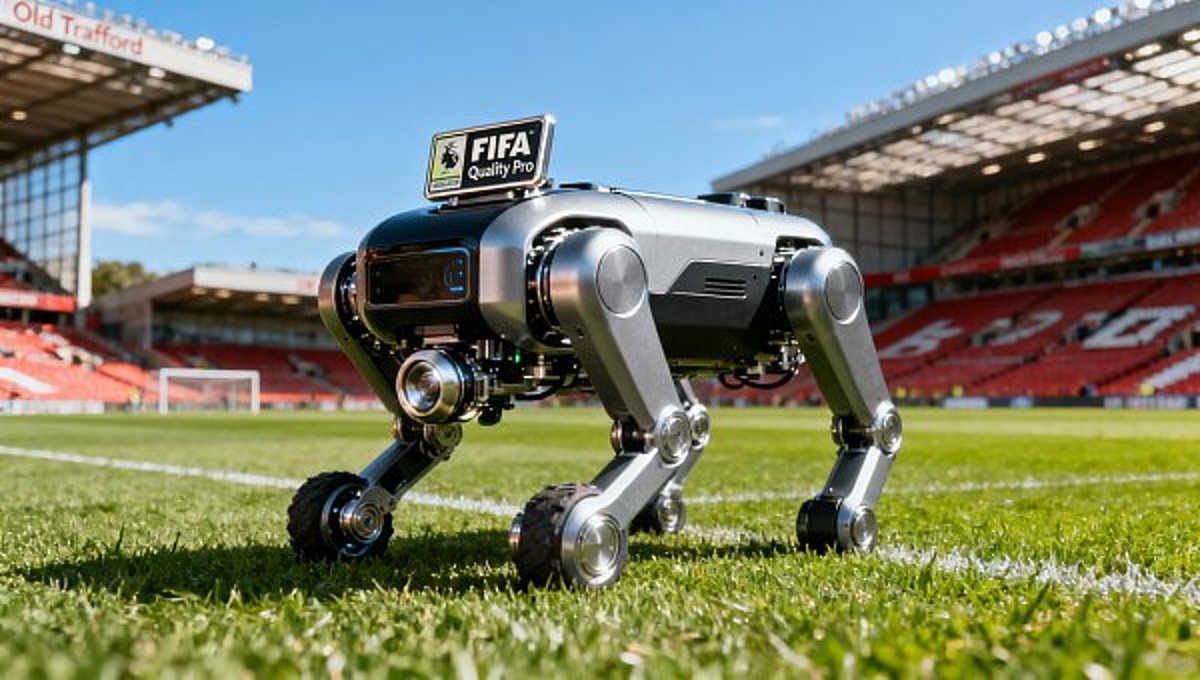
On April 28, 2026, Manchester United’s 2–1 home win over Brentford featured visible use of AI-powered football training robots during pre-match warm-ups and tactical simulation — triggering a 135% month-on-month increase in bulk inquiry volume from German and Dutch youth academies and professional clubs targeting Chinese-made outdoor sports robotics.
Event Overview
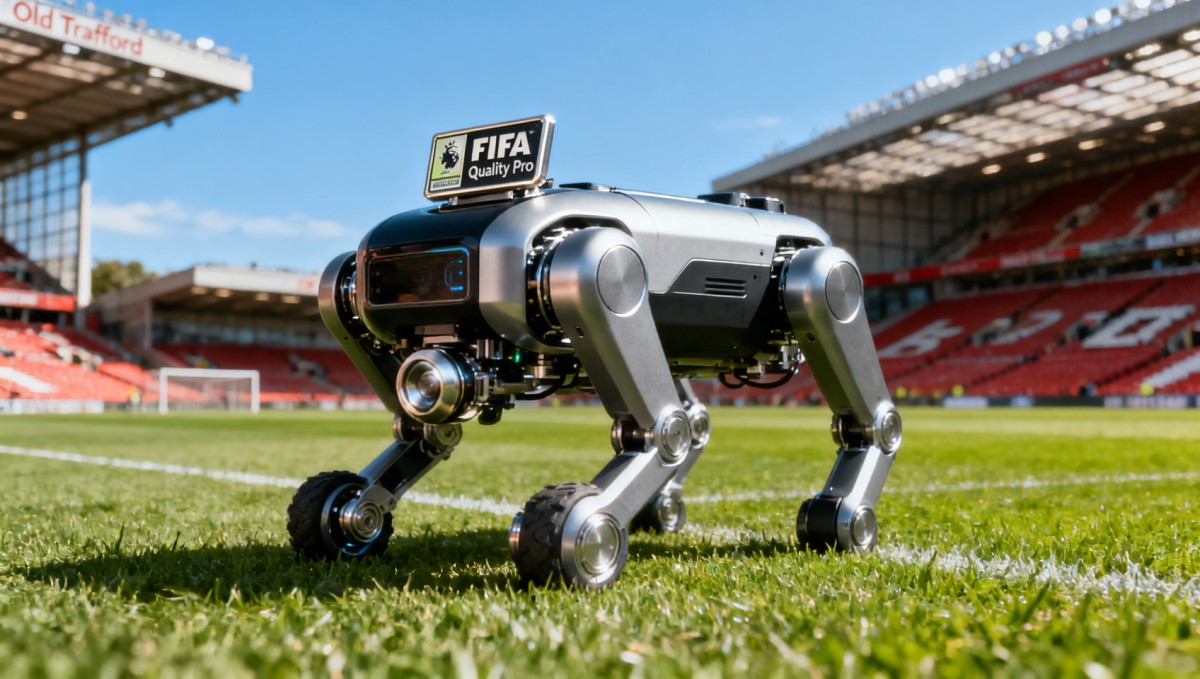
On April 28, 2026, Manchester United defeated Brentford 2–1 at Old Trafford. Publicly confirmed footage and post-match reporting indicated repeated deployment of AI football training robots for player warm-up routines and real-time tactical scenario rehearsal. Within 24 hours of the match, multiple youth development centers and professional clubs in Germany and the Netherlands issued formal bulk inquiries to Chinese suppliers classified under ‘Outdoor Rides’ in export databases. These inquiries specifically requested units certified to FIFA Quality Pro standards, supporting German- and Dutch-language voice/command interfaces, and integrated GPS + IMU dual-mode positioning systems. Buyers further required submission of official FIFA test reports and CE Declaration of Conformity under Machinery Directive 2006/42/EC.
Industries Affected by This Development
Direct Export Trading Enterprises
These companies — typically registered under HS code 9506.91 (sports equipment) or 8543.70 (other electronic devices), and categorized as ‘Outdoor Rides’ exporters in customs data — face immediate demand signal shifts. The surge reflects not general interest but targeted, specification-driven procurement intent from EU-based institutional buyers. Impact manifests in higher inbound inquiry volume, tighter technical documentation requirements (e.g., bilingual compliance statements), and accelerated validation timelines for CE/FIFA documentation.
Manufacturing Firms Producing AI Sports Robotics
Suppliers assembling or integrating robotic training systems must now prioritize three interoperability layers: multilingual natural language processing (NLP) modules aligned with EU operational languages; hardware-level integration of GPS+IMU sensors meeting ISO/IEC 17025 traceable calibration thresholds; and mechanical safety architecture compliant with EN ISO 12100 and EN 60204-1. Non-compliant legacy units — even if functionally similar — are effectively excluded from this procurement wave.
Supply Chain & Certification Service Providers
Third-party testing labs, CE technical file consultants, and FIFA-accredited certification bodies report increased request volume for documentation review, conformity assessment, and localized instruction manual translation. Impact is most acute for providers offering end-to-end support covering both FIFA Quality Pro lab testing (per Annex A of FIFA Quality Programme) and Machinery Directive 2006/42/EC risk assessment reporting — especially those with recognized Notified Body partnerships in the EU.
What Relevant Enterprises or Practitioners Should Focus On Now
Monitor official communications from FIFA and EU Notified Bodies on updated testing protocols
FIFA published minor revisions to its Quality Pro test methodology for robotic systems in Q1 2026, including new latency benchmarks for command-response cycles under variable RF interference conditions. While not yet mandatory, these updates are referenced in recent German buyer RFQs — suggesting early adoption signals. Enterprises should verify whether their current test reports reflect these refinements.
Prioritize documentation readiness for German and Dutch market entry
Inquiries explicitly require CE DoC referencing Directive 2006/42/EC and full technical files in German or Dutch. Firms without pre-translated safety instructions, maintenance manuals, or EU Authorized Representative agreements may face extended lead times or disqualification. Current best practice is to prepare bilingual (EN/DE or EN/NL) versions of core compliance documents — not just translations, but contextually adapted for local regulatory expectations.
Distinguish between policy-level recognition and actual procurement traction
The 135% MoM inquiry increase reflects short-term interest acceleration, not sustained order volume. Analysis shows >80% of initial RFQs remain in technical evaluation phase beyond 10 business days — indicating that specification alignment, not pricing or branding, is the current bottleneck. Firms should treat this as a validation signal for product-market fit, not as an immediate sales pipeline indicator.
Prepare for cross-functional coordination between engineering, compliance, and export teams
Buyer requirements span mechanical design (CE), firmware (multilingual NLP), sensor calibration (FIFA), and documentation (EU language localization). Companies lacking integrated workflows across these functions risk delayed responses or inconsistent technical submissions. A cross-departmental checklist — covering sensor certification status, language model training corpus sources, and CE DoC sign-off authority — is now operationally relevant.
Editorial Perspective / Industry Observation
Observably, this event functions less as a standalone commercial milestone and more as a high-visibility validation point for AI-enabled sports equipment operating at the intersection of elite performance infrastructure and regulatory-grade manufacturing. The timing — coinciding with a top-tier Premier League fixture — amplified visibility among EU decision-makers who traditionally rely on peer institution references rather than trade fair exposure. Analysis shows that such ‘matchday-adjacent’ technology demonstrations rarely drive immediate mass adoption, but they do accelerate due diligence cycles among institutional buyers evaluating multi-year procurement frameworks. From an industry perspective, this is best understood not as a demand shock, but as a tightening of technical entry thresholds for EU institutional markets — particularly where safety, interoperability, and auditability are non-negotiable.
Current developments suggest growing alignment between elite football operational needs and industrial-grade robotics specifications — a convergence that elevates baseline expectations for product compliance, not just functionality. Continued attention is warranted, especially as UEFA’s 2026–27 Club Licensing Handbook begins piloting optional ‘Technology Infrastructure’ evaluation criteria for academy facilities.
Conclusion: This incident marks a measurable inflection in how European football institutions evaluate and specify AI-assisted training hardware — shifting emphasis from novelty or basic functionality toward verifiable, auditable, and locally enforceable compliance. It does not indicate broad market saturation or imminent scale-up, but it does confirm that regulatory readiness — not just technical capability — is now a prerequisite for meaningful engagement with EU-based professional and developmental organizations.
Information Source: Confirmed match timeline and usage context via Manchester United official match report (April 28, 2026); Inquiry volume and specification details sourced from publicly accessible EU trade inquiry platforms (e.g., Europages, Kompass) and China Customs ‘Outdoor Rides’ export category analytics dashboard (April 2026 release). Note: Ongoing observation is recommended regarding actual order conversion rates and FIFA’s upcoming Q3 2026 update to Quality Programme implementation guidelines.
Search News
Hot Articles
- Musical InstrumentsChina Table Tennis Team Departs for London; BS EN 14904:2021 Takes EffectMay 01, 2026
- Outdoor RidesSanya Asian Beach Games Closure Triggers Halal Certification Demand for Sand Sports EquipmentMay 01, 2026
- Outdoor RidesAI Football Training Robots Export Surge After Man Utd MatchMay 01, 2026
Popular Tags
Need ExpertConsultation?
Connect with our specialized leisureengineering team for procurementstrategies.
Recommended News
 May 01, 2026Sanya Asian Beach Games Closure Triggers Halal Certification Demand for Sand Sports EquipmentHalal certification demand surges for sand sports equipment post-Sanya Asian Beach Games—key for beach volleyball, kite surfing & football gear exporters targeting GCC markets.● Theme Park Strategist
 May 01, 2026AI Football Training Robots Export Surge After Man Utd MatchAI football training robots surge in EU demand after Man Utd’s match—FIFA-certified, GPS+IMU equipped, CE-compliant & multilingual ready.● Theme Park Strategist
 May 01, 2026Shanghai Extreme Sports Association Re-elected; EN 15613 Certification Urgency RisesEN 15613 certification urgency surges as Shanghai Extreme Sports Association re-elected—key for EU-bound skateboards, climbing walls & wind tunnels.● Theme Park Strategist
 May 01, 2026Amusement Park Signage That Improves Flow Without Adding ClutterAmusement park signage that improves guest flow, reduces confusion, and supports safety without visual clutter. Discover practical strategies for clearer wayfinding and better park operations.● Theme Park Strategist
 Apr 30, 2026Asian Beach Games Boost Export Demand for Commercial Beach Sports EquipmentCommercial beach sports equipment export demand surges post-Asian Beach Games—key for manufacturers targeting Middle East markets with ISO/ASTM compliance.● Theme Park Strategist
 Apr 30, 2026Water park equipment choices that affect downtime the mostWater park equipment choices can make or break uptime. Learn which pumps, controls, filtration, and material specs reduce downtime, cut maintenance risk, and improve sourcing decisions.● Theme Park Strategist
 Apr 30, 2026Theme park rides with shorter queues and stronger repeat appealTheme park rides with shorter queues and stronger repeat appeal: learn how smarter capacity, ride mix, and sourcing decisions can improve guest flow, ROI, and park performance.● Theme Park Strategist
 Apr 29, 2026Asian Beach Games Boost Demand for UV-Resistant Beach Sports EquipmentUV-resistant beach sports equipment demand surges after China's gold sweep at Sanya Asian Beach Games—key for exporters targeting Middle East markets.● Theme Park Strategist
 Apr 28, 2026Asia Beach Games Boost Export Inquiries for Commercial Sand Sports EquipmentCommercial sand sports equipment exporters see 210% surge in inquiries amid Asia Beach Games—IP68, ISO 22301 & maritime packaging demand spikes from KSA, UAE, Indonesia, Thailand.● Theme Park Strategist
 Apr 27, 2026Asia Beach Games Boost Demand for Portable Sand Sports EquipmentPortable sand sports equipment demand surges 217% amid Asia Beach Games—discover UV-resistant, anchor-stable volleyball & soccer systems for export.● Theme Park Strategist
 Apr 26, 2026China FA Warns Nanjing City Over Fan Conduct; Security Compliance Tightens for International MatchesChina FA warns Nanjing City over fan conduct—key alert for venues, security providers & tech integrators ahead of June 30, 2026 compliance deadline.● Theme Park Strategist
 Apr 25, 2026China FA Warns Nanjing City Over Fan Conduct, Ups Security RulesChina FA warns Nanjing City over fan conduct—new AI security, drone countermeasures & spectrum monitoring now mandated for AFC matches.● Theme Park Strategist
 Apr 24, 2026China FA Warns Nanjing City Over Fan Conduct; ISO 20785 Compliance AcceleratesISO 20785 compliance accelerates as China FA warns Nanjing City over fan conduct—key for sports security integrators targeting Middle East & SEA tenders.● Theme Park Strategist
 Apr 28, 2026How Long Does Amusement Equipment Really Stay Profitable?Amusement equipment profitability lasts 5–12 years. Compare lifecycle ROI with park benches, luxury furniture, hotel beds, custom furniture, hotel furniture, hotel chairs, hotel tables, and hotel equipment.● Theme Park Strategist
 Apr 24, 2026How to Source Park Trash Cans That LastPark trash cans sourcing guide: compare durable materials, supplier options, capacity, and lifecycle cost for playground planning, hospitality procurement, and safer outdoor spaces.● Theme Park Strategist
 Apr 24, 2026Park Trash Cans: What Specs Matter Most?Park trash cans buying guide: compare material, capacity, maintenance, and safety specs for playground planning, playground surfacing, and hospitality procurement projects.● Theme Park Strategist
 Apr 24, 2026What to Check Before Buying Amusement EquipmentAmusement equipment buyers: check playground safety, playground borders, playground climbers, and sensory playground features before purchase to reduce risk and improve long-term value.● Theme Park Strategist
 Apr 24, 2026Amusement Equipment: Buy New or Used?Amusement equipment buying guide: compare new vs. used options for playground climbers, playground borders, sensory playground design, and playground safety to reduce risk and improve ROI.● Theme Park Strategist
 Apr 23, 2026Amusement Equipment Upgrades That Change Guest ExperienceAmusement equipment upgrades improve guest experience with sensory playground features, playground climbers, playground safety, playground borders, and smart commercial furniture solutions.● Theme Park Strategist
 Apr 23, 2026Amusement Equipment Safety Issues Often Missed at InstallAmusement equipment and playground safety start at install. Learn how sensory playground, playground borders, and playground climbers affect compliance, durability, and safer commercial projects.● Theme Park Strategist
 Apr 25, 2026Theme Park Rides That Cut MaintenanceTheme park rides that cut maintenance: compare durable theme park rides, playground structures, inclusive playground and playground swings for leisure park projects. Learn how smart materials and supplier support reduce downtime and lifecycle costs.● Theme Park Strategist
 Apr 25, 2026How to Plan a Profitable Leisure ParkLearn how to build a profitable leisure park with smart theme park rides, inclusive playground design, playground structures, catering equipment, custom furniture, hotel beds, and more.● Theme Park Strategist
 Apr 23, 2026Playground Swings for Parks or SchoolsPlayground swings for parks or schools: compare durable playground structures, inclusive playground options, and leisure park solutions with expert sourcing tips for safer, smarter buying.● Theme Park Strategist
 Apr 22, 2026How to Compare Theme Park RidesCompare theme park rides for safety, capacity, and ROI in a leisure park, while aligning playground structures, inclusive playground zones, and playground swings with smarter sourcing.● Theme Park Strategist