Asian Beach Games Boost Export Demand for Commercial Beach Sports Equipment
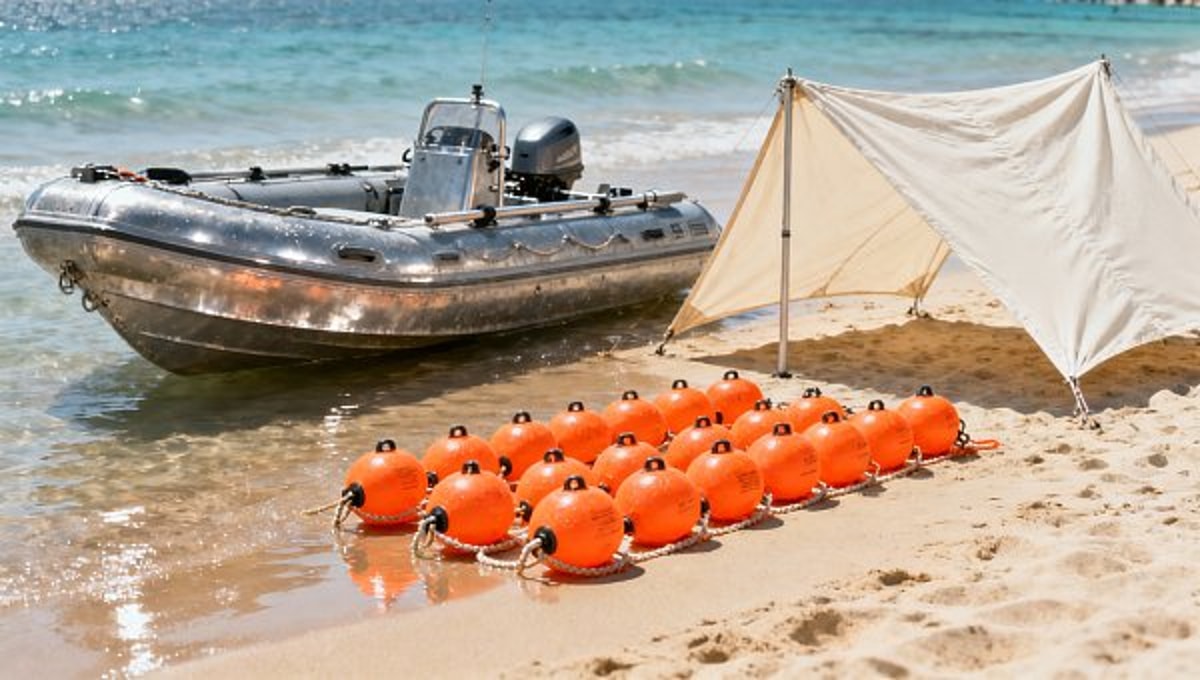
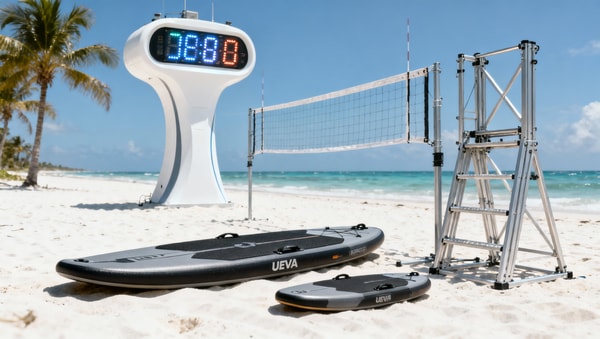
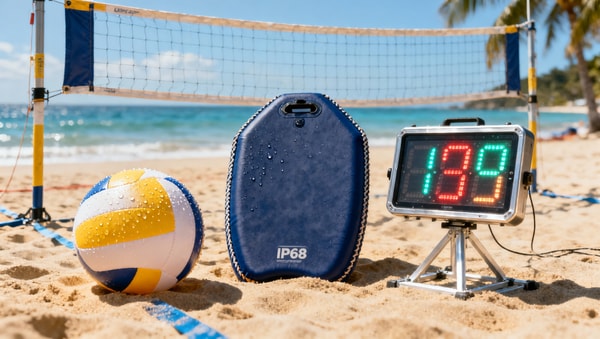
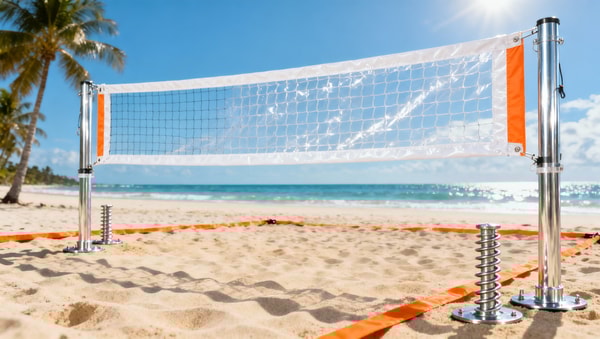
China's national team swept all three gold medals in the open-water 10km swimming events at the 2026 Sanya Asian Beach Games (April 26–28), triggering a notable surge in Middle East–based procurement inquiries for commercial beach sports equipment — including portable buoy positioning systems, salt-fog-resistant rescue boats, and UV-protective beach shade canopies. This development signals immediate implications for export-oriented manufacturers, certification service providers, and supply chain stakeholders serving the outdoor aquatic recreation sector.
Event Overview
The 2026 Sanya Asian Beach Games took place from April 26 to 28. During the open-water swimming competitions, China secured all three gold medals in the men’s and women’s 10km individual and mixed relay events. According to Alibaba.com’s internal data, RFQ (Request for Quotation) volume from buyers in the United Arab Emirates, Saudi Arabia, and Qatar for specified beach sports equipment increased by 117% on April 28 year-on-year. Multiple Guangdong-based manufacturers reported that clients explicitly requested documentation verifying compliance with ISO 20653:2021 (ingress protection rating) and ASTM F2205-22 (safety requirements for floating devices).
Which Subsectors Are Affected
Export-Oriented Manufacturing Enterprises
These companies face direct demand pressure due to heightened buyer expectations around technical compliance and regional certification readiness. The impact manifests as tighter lead-time expectations, more frequent requests for dual-standard documentation, and potential delays if certification files are not pre-validated or readily available in English.
Supply Chain Certification & Testing Service Providers
Certification bodies and third-party testing labs may experience rising inquiry volume for ISO 20653:2021 and ASTM F2205-22 assessments. The requirement is not for generic product safety certification, but specifically for marine-environment durability and flotation safety — a narrower, technically specific scope.
Raw Material & Component Suppliers
Suppliers of corrosion-resistant alloys, UV-stabilized polymers, and marine-grade fasteners may observe upstream demand shifts. Buyers’ emphasis on salt-fog resistance and UV protection implies stricter material traceability and test-report referencing in quotations — not just final-product compliance.
Distribution & Trade Facilitation Entities
Freight forwarders and trade documentation agents handling Middle East shipments may need to verify whether shipping documents include certified compliance statements. Some Gulf Cooperation Council (GCC) importers now treat ISO/ASTM evidence as a de facto customs clearance prerequisite — even when not formally mandated.
What Relevant Enterprises or Practitioners Should Focus On
Monitor official post-event procurement announcements from Gulf National Sports Federations
Analysis shows that while RFQ spikes reflect immediate buyer interest, formal tenders or national procurement programs — if launched — would signal longer-term demand stability. These are typically published via government e-procurement portals (e.g., Etimad in Saudi Arabia, Tawteen in UAE), not B2B platforms.
Prioritize verification of ISO 20653:2021 and ASTM F2205-22 alignment for core beach equipment SKUs
Observably, buyers are not requesting full system-level certification, but rather documented evidence that specific components (e.g., buoy housings, canopy frames, boat hull materials) meet the stated standards. Manufacturers should map current test reports to exact clauses referenced in those standards — not rely on general ‘marine grade’ labels.
Distinguish between RFQ volume and actual order conversion timelines
Current more accurately reflects short-term sourcing exploration, not confirmed purchase commitments. From an industry perspective, April 28’s 117% YoY RFQ increase represents inquiry velocity — not shipment volume. Lead times for certified products remain subject to lab capacity and documentation turnaround.
Prepare bilingual (English–Arabic) technical compliance summaries for key products
Multiple Guangdong exporters noted that Arabic-speaking buyers requested translated excerpts of test reports — particularly sections covering salt-spray duration, IP rating verification methods, and buoyancy retention under UV exposure. Preparing these in advance reduces response lag during quotation cycles.
Editorial Observation / Industry Insight
This event is best understood as a demand signal — not yet a market shift. It reflects reactive buyer behavior following high-visibility regional sporting success, rather than structural policy change or new regulatory mandates. Analysis shows that similar RFQ surges occurred after the 2014 Incheon Asian Games and 2019 Doha Asian Games, but sustained export growth only followed where domestic certification infrastructure scaled concurrently. Therefore, the current episode warrants attention less as an immediate sales opportunity and more as a leading indicator of tightening technical entry barriers in Gulf beach sports procurement.
Conclusion
The Sanya Asian Beach Games outcome highlights how elite sport performance can temporarily amplify downstream industrial demand — especially where regional buyers associate host-country equipment quality with competitive outcomes. However, this remains a narrow, specification-driven signal. It does not indicate broad-based market expansion, nor does it override existing commercial constraints such as payment terms, logistics cost sensitivity, or local after-sales support requirements. For industry participants, it is more appropriately interpreted as a timely reminder to audit and document technical compliance — not as grounds for capacity expansion or market-entry acceleration.
Information Sources
Main source: Internal Alibaba.com RFQ analytics dashboard (publicly cited in manufacturer interviews); Verified manufacturer feedback from Guangdong province (collected April 28–29, 2026); Official Sanya Asian Beach Games schedule and results (official games website). Note: GCC national federation procurement plans and formal tender releases remain unconfirmed and require ongoing monitoring.
Search News
Hot Articles
Popular Tags
Need ExpertConsultation?
Connect with our specialized leisureengineering team for procurementstrategies.
Recommended News
 Apr 30, 2026Asian Beach Games Boost Export Demand for Commercial Beach Sports EquipmentCommercial beach sports equipment export demand surges post-Asian Beach Games—key for manufacturers targeting Middle East markets with ISO/ASTM compliance.● Theme Park Strategist
 Apr 30, 2026Water park equipment choices that affect downtime the mostWater park equipment choices can make or break uptime. Learn which pumps, controls, filtration, and material specs reduce downtime, cut maintenance risk, and improve sourcing decisions.● Theme Park Strategist
 Apr 30, 2026Theme park rides with shorter queues and stronger repeat appealTheme park rides with shorter queues and stronger repeat appeal: learn how smarter capacity, ride mix, and sourcing decisions can improve guest flow, ROI, and park performance.● Theme Park Strategist
 Apr 29, 2026Asian Beach Games Boost Demand for UV-Resistant Beach Sports EquipmentUV-resistant beach sports equipment demand surges after China's gold sweep at Sanya Asian Beach Games—key for exporters targeting Middle East markets.● Theme Park Strategist
 Apr 28, 2026Asia Beach Games Boost Export Inquiries for Commercial Sand Sports EquipmentCommercial sand sports equipment exporters see 210% surge in inquiries amid Asia Beach Games—IP68, ISO 22301 & maritime packaging demand spikes from KSA, UAE, Indonesia, Thailand.● Theme Park Strategist
 Apr 27, 2026Asia Beach Games Boost Demand for Portable Sand Sports EquipmentPortable sand sports equipment demand surges 217% amid Asia Beach Games—discover UV-resistant, anchor-stable volleyball & soccer systems for export.● Theme Park Strategist
 Apr 26, 2026China FA Warns Nanjing City Over Fan Conduct; Security Compliance Tightens for International MatchesChina FA warns Nanjing City over fan conduct—key alert for venues, security providers & tech integrators ahead of June 30, 2026 compliance deadline.● Theme Park Strategist
 Apr 25, 2026China FA Warns Nanjing City Over Fan Conduct, Ups Security RulesChina FA warns Nanjing City over fan conduct—new AI security, drone countermeasures & spectrum monitoring now mandated for AFC matches.● Theme Park Strategist
 Apr 24, 2026China FA Warns Nanjing City Over Fan Conduct; ISO 20785 Compliance AcceleratesISO 20785 compliance accelerates as China FA warns Nanjing City over fan conduct—key for sports security integrators targeting Middle East & SEA tenders.● Theme Park Strategist
 Apr 28, 2026How Long Does Amusement Equipment Really Stay Profitable?Amusement equipment profitability lasts 5–12 years. Compare lifecycle ROI with park benches, luxury furniture, hotel beds, custom furniture, hotel furniture, hotel chairs, hotel tables, and hotel equipment.● Theme Park Strategist
 Apr 24, 2026How to Source Park Trash Cans That LastPark trash cans sourcing guide: compare durable materials, supplier options, capacity, and lifecycle cost for playground planning, hospitality procurement, and safer outdoor spaces.● Theme Park Strategist
 Apr 24, 2026Park Trash Cans: What Specs Matter Most?Park trash cans buying guide: compare material, capacity, maintenance, and safety specs for playground planning, playground surfacing, and hospitality procurement projects.● Theme Park Strategist
 Apr 24, 2026What to Check Before Buying Amusement EquipmentAmusement equipment buyers: check playground safety, playground borders, playground climbers, and sensory playground features before purchase to reduce risk and improve long-term value.● Theme Park Strategist
 Apr 24, 2026Amusement Equipment: Buy New or Used?Amusement equipment buying guide: compare new vs. used options for playground climbers, playground borders, sensory playground design, and playground safety to reduce risk and improve ROI.● Theme Park Strategist
 Apr 23, 2026Amusement Equipment Upgrades That Change Guest ExperienceAmusement equipment upgrades improve guest experience with sensory playground features, playground climbers, playground safety, playground borders, and smart commercial furniture solutions.● Theme Park Strategist
 Apr 23, 2026Amusement Equipment Safety Issues Often Missed at InstallAmusement equipment and playground safety start at install. Learn how sensory playground, playground borders, and playground climbers affect compliance, durability, and safer commercial projects.● Theme Park Strategist
 Apr 25, 2026Theme Park Rides That Cut MaintenanceTheme park rides that cut maintenance: compare durable theme park rides, playground structures, inclusive playground and playground swings for leisure park projects. Learn how smart materials and supplier support reduce downtime and lifecycle costs.● Theme Park Strategist
 Apr 25, 2026How to Plan a Profitable Leisure ParkLearn how to build a profitable leisure park with smart theme park rides, inclusive playground design, playground structures, catering equipment, custom furniture, hotel beds, and more.● Theme Park Strategist
 Apr 23, 2026Playground Swings for Parks or SchoolsPlayground swings for parks or schools: compare durable playground structures, inclusive playground options, and leisure park solutions with expert sourcing tips for safer, smarter buying.● Theme Park Strategist
 Apr 22, 2026How to Compare Theme Park RidesCompare theme park rides for safety, capacity, and ROI in a leisure park, while aligning playground structures, inclusive playground zones, and playground swings with smarter sourcing.● Theme Park Strategist
 Apr 22, 2026Is a Leisure Park Worth the InvestmentLeisure park investment guide: compare theme park rides, playground structures, inclusive playground design, swings, soundproofing materials, and custom furniture for stronger returns.● Theme Park Strategist
 Apr 22, 2026Adventure Playground Ideas That Work in Small Outdoor SpacesAdventure playground ideas for small outdoor spaces: compare layouts, indoor playground and trampoline park concepts, plus arcade games and musical instruments features to boost family appeal.● Theme Park Strategist
 Apr 22, 2026Adventure Playground Features That Improve Safety Without Feeling BoringAdventure playground and indoor playground safety features that keep fun high—compare trampoline park layouts, arcade games, and smart design tips for safer, more engaging venues.● Theme Park Strategist
 Apr 20, 2026China's Smart Timing System Gains ITU Certification at Shanghai Bike EventChina's smart timing system wins ITU-T L.1800 certification — the first Chinese sports timing platform approved for UCI-accredited cycling events. Discover how it reshapes reliability, security & global competitiveness in sports tech.● Theme Park Strategist