Langlangshan VR Rides Gain IP Licensing Momentum After Annecy Inclusion
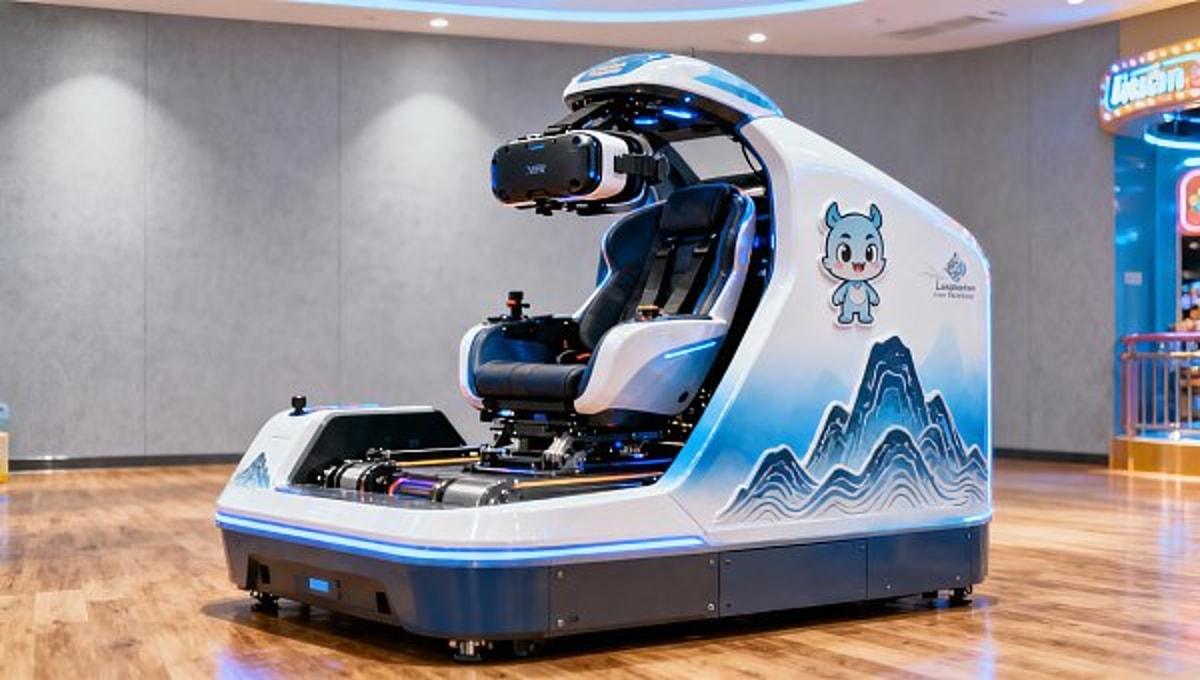
The inclusion of Chinese original animation Langlangshan Xiao Yaoguai (The Little Monsters of Langlang Mountain) in the 2026 Annecy International Animation Film Festival’s main competition long-form category — announced on April 28, 2026 — signals growing international recognition for China-originated animated IP. This development is prompting intensified sourcing activity from theme park developers in Southeast Asia and Latin America, specifically targeting VR-enabled arcade and motion-based amusement equipment with certified interoperability, IP co-development capability, and Unity-based content update support. Industry stakeholders across hardware supply, licensing integration, and regional distribution channels are advised to monitor downstream procurement shifts closely.
Event Overview
The Annecy International Animation Film Festival — widely regarded as the ‘Oscars of Animation’ — released its 2026 Main Competition Long Feature list on April 28, 2026. Chinese animated feature Langlangshan Xiao Yaoguai was officially selected. As confirmed by publicly available festival announcements, this marks the title’s first inclusion in Annecy’s principal competitive section. No further details regarding commercial licensing status, distribution agreements, or production partners were disclosed in the initial announcement.
Industries Affected
VR & Arcade Hardware Exporters
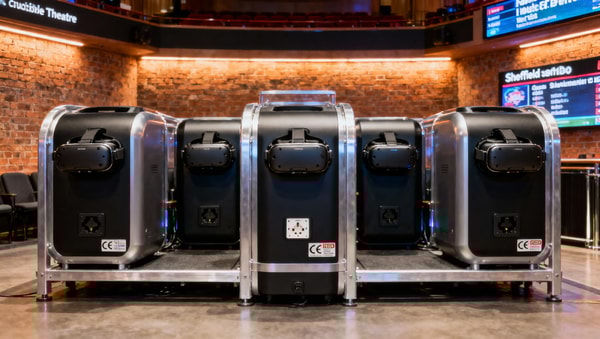
Export-oriented manufacturers of VR-enabled motion-based amusement machines are experiencing direct demand pressure. The announcement has triggered coordinated outreach from theme park developers in Southeast Asia and Latin America, with explicit technical requirements: CE/IC certification, Unity engine compatibility for localized content updates, and documented capacity for IP-branded co-development. MOQs for initial orders have risen notably — with early indications pointing to minimum order quantities of 50 units or more.
Licensing & IP Integration Service Providers
Firms specializing in cross-border IP adaptation — particularly those supporting hardware-integrated narrative experiences — are seeing increased inbound inquiries. Demand centers on turnkey solutions linking animated IP assets (e.g., character models, world-building assets, audio libraries) with real-time rendering pipelines and haptic feedback systems. The focus is not on standalone media licensing, but on scalable, modular integration frameworks compatible with public-venue deployment standards.
Regional Distribution & Aftermarket Support Networks
Distributors and service partners operating in Southeast Asia and Latin America report a surge in technical prequalification requests. These emphasize local regulatory compliance (e.g., electrical safety, accessibility), multilingual UI/UX localization, and field-service readiness — especially for motion-platform calibration and firmware maintenance. Lead-time expectations are tightening, indicating shift toward just-in-time fulfillment models rather than speculative inventory builds.
What Relevant Enterprises Should Monitor and Act On
Track official licensing communications from the Langlangshan Xiao Yaoguai production team
While Annecy selection confirms artistic merit, no public confirmation exists regarding commercial licensing availability or territorial exclusivity terms. Enterprises engaging with potential licensees should treat all current expressions of interest as preliminary until formal licensing frameworks are published — likely via the IP’s rights holder or designated agent.
Validate CE/IC certification scope against actual target-market requirements
Certification documentation must explicitly cover the full system configuration intended for sale — including motion actuators, VR headset integration, and networked backend services. Some ASEAN and LATAM jurisdictions require supplementary national marks (e.g., SIRIM in Malaysia, INMETRO in Brazil); generic CE/IC stamps alone may not suffice for customs clearance or site commissioning.
Prepare Unity-compatible asset pipelines and version-control protocols
Requests for Unity-based content customization imply demand for standardized, well-documented asset structures (e.g., FBX rigging conventions, shader graph compatibility, LOD management). Suppliers should audit internal development workflows to ensure reproducible export paths — not just one-off demo builds — and document revision history for client-facing deliverables.
Align logistics planning with elevated MOQ thresholds
A sustained shift toward 50+ unit minimums affects cash flow, warehousing, and shipping consolidation strategies. Exporters should reassess container load optimization, explore regional bonded warehouse options, and confirm incoterms alignment (e.g., FCA vs. DAP) with new buyer cohorts to avoid unexpected landed-cost overruns.
Editorial Perspective / Industry Observation
Observably, this event functions less as an immediate commercial trigger and more as a credibility signal within a longer-term market development cycle. Annecy selection does not equate to automatic licensing activation or guaranteed sales volume — but it does lower the due diligence burden for overseas buyers evaluating Chinese-originated IP-linked hardware. From an industry perspective, the reaction reflects maturing demand: purchasers are no longer seeking generic VR cabinets, but validated, compliant, and extensible platforms ready for branded narrative layering. Analysis shows that the primary impact lies in accelerated qualification timelines and tighter technical specification alignment — not sudden revenue inflection.
Current developments are better understood as a validation milestone within the broader trend of IP-driven experiential entertainment hardware adoption across emerging markets. It underscores a structural shift: hardware procurement decisions are increasingly contingent on upstream IP strength and downstream content agility — not just mechanical reliability or visual fidelity alone.
Conclusion
The Annecy inclusion of Langlangshan Xiao Yaoguai serves as a timely indicator of evolving global expectations for VR and arcade hardware suppliers — particularly those engaged with international theme park developers. Its significance lies not in immediate transaction volume, but in the raised benchmark for technical readiness, certification transparency, and IP integration maturity. For industry participants, this moment is best interpreted as a signal to strengthen foundational capabilities — not a prompt for reactive product launches.
Source Attribution
Main source: Official 2026 Annecy International Animation Film Festival Long Feature Selection Announcement (published April 28, 2026).
Additional context: Publicly reported procurement signals from Southeast Asian and Latin American theme park developers, as cited in trade channel briefings. No third-party licensing terms, financial data, or unconfirmed partner affiliations are included. Ongoing verification of licensing rollout plans and regional certification applicability remains necessary.
Search News
Hot Articles
- Musical InstrumentsChina Table Tennis Team Departs for London; BS EN 14904:2021 Takes EffectMay 01, 2026
- Outdoor RidesSanya Asian Beach Games Closure Triggers Halal Certification Demand for Sand Sports EquipmentMay 01, 2026
- Outdoor RidesAI Football Training Robots Export Surge After Man Utd MatchMay 01, 2026
Popular Tags
Need ExpertConsultation?
Connect with our specialized leisureengineering team for procurementstrategies.
Recommended News
 May 01, 2026Langlangshan VR Rides Gain IP Licensing Momentum After Annecy InclusionLanglangshan VR Rides: IP licensing surges after Annecy 2026 selection—unlock co-dev opportunities for VR arcade & motion-based systems in SEA/LATAM.● Theme Park Strategist
 May 01, 2026Volvo China Open Boosts Golf Simulator Exports to Middle EastVolvo China Open drives Middle East demand for certified golf simulators — USGA/EGF-compliant, Arabic UI, and rapid-delivery indoor simulation systems now in high inquiry.● Theme Park Strategist
 May 01, 2026Wu Yize vs. Selby Sparks VR Viewing Booth Export SurgeWu Yize vs. Selby Sparks VR Viewing Booth Export Surge: CE/UKCA-compliant VR cabins see 210% export inquiry surge amid snooker-driven global demand.● Theme Park Strategist
 Apr 30, 2026VR Sports Viewing Capsules Face New EU Latency Rules Post-PSG–Bayern MatchVR Sports Viewing Capsules face new EU latency rules after PSG–Bayern’s record 12-goal match — discover how ≤80ms RED compliance impacts exporters, OEMs & AI-driven live sports tech.● Theme Park Strategist
 Apr 30, 2026Snooker World Championship: VR Viewing Pods, Remote Commentary Systems See Export InquiriesSnooker World Championship sparks global export inquiries for VR viewing pods & AI remote commentary systems—UKCA-certified, Betfred-integrated, multilingual.● Theme Park Strategist
 Apr 30, 2026Zheng Qinwen’s Madrid Exit Spurs EU RFQs for Tennis Training RobotsZheng Qinwen’s Madrid exit sparks EU RFQs for tennis training robots — discover how Chinese robotics exporters can meet CE/MD compliance & seize new academy demand.● Theme Park Strategist
 Apr 30, 2026Kenya's Marathon Record Break Sparks Global Demand for TrackSense Pro ChipsTrackSense Pro chips fuel Kenya’s marathon record—now driving global demand. Certified for precision timing (±0.01s), IP68, CE-RED & FCC—discover why African and Gulf markets are fast-tracking procurement.● Theme Park Strategist
 Apr 29, 2026Are Premium Arcade Games Worth It? A Cost vs Revenue LookArcade games can deliver strong ROI when premium quality boosts uptime, pricing power, and repeat play. See how finance teams compare cost vs revenue before investing.● Theme Park Strategist
 Apr 29, 2026How to Choose Arcade Games That Keep Players Coming BackArcade games that keep players coming back can boost dwell time, revenue, and loyalty. Discover how to choose high-replay machines that fit your venue and drive long-term results.● Theme Park Strategist
 Apr 29, 2026VR Sports Viewing Booth Demand Rises After Wu Yize vs. SelbyVR Sports Viewing Booth demand surges globally after Wu Yize’s win over Selby—key for exporters, OEMs & cert providers in ME, AU, CA.● Theme Park Strategist
 Apr 29, 2026NBA 3-2-1 Lottery Reform Drives VR Viewing Hardware DemandNBA 3-2-1 Lottery reform fuels VR viewing hardware demand—boosting sales of commercial VR pods, immersive systems & remote commentary terminals across North America, ME & SEA.● Theme Park Strategist
 Apr 28, 2026Global VR Fitness Device Export Prices Rise 12% — China Leads in Delivery ReliabilityVR fitness device export prices surge 12% globally — China leads in delivery reliability. Discover key compliance shifts, market impacts & strategic actions for exporters, OEMs & logistics providers.● Theme Park Strategist
 Apr 28, 2026Snooker World Championship 'China Derby' Drives VR Viewing DemandSnooker World Championship 'China Derby' drives surging VR viewing demand—boosting exports of VR pods, low-latency streaming & Dolby Atmos-certified AI audio solutions globally.● Theme Park Strategist
 Apr 28, 2026BWF 15-Point System to Launch in 2027: Impacts on Timing, Broadcast & Data SystemsBWF 15-point system launching in 2027 — impacts timing displays, broadcast encoders & data platforms. Discover compliance steps for OEMs, venues & AI video providers.● Theme Park Strategist
 Apr 27, 2026Snooker World Championship 'China Derby' Drives VR Viewing DemandVR viewing demand surges after Snooker World Championship 'China Derby' — key opportunity for VR hardware, localization & compliance firms in UK/EU markets.● Theme Park Strategist
 Apr 27, 2026Global VR Fitness Equipment Export Prices Rise 12.3% QoQVR fitness equipment export prices surge 12.3% QoQ — discover why IPX5, ISO 20685, and cloud readiness now drive premium pricing & market share.● Theme Park Strategist
 Apr 27, 2026SASO Updates EMC Rules for VR & Immersive Fitness Devices in Saudi ArabiaSASO EMC updates for VR & immersive fitness devices in Saudi Arabia—Class B compliance mandatory from 25 Apr 2026. Act now to avoid delays & ensure market access.● Theme Park Strategist
 Apr 26, 2026Global VR Fitness Equipment Export Prices Up 12% in Q1 2026VR fitness equipment export prices surge 12.3% in Q1 2026 — discover why reliability-driven pricing is reshaping global gym hardware procurement.● Theme Park Strategist
 Apr 26, 2026SASO Updates EMC Standard for VR Motion Devices in Saudi ArabiaSASO EMC standard update for VR motion devices in Saudi Arabia—Class B limits effective Oct 2026. Ensure compliance now to avoid customs delays & market access risks.● Theme Park Strategist
 Apr 26, 2026Snooker World Championship 'China Derby' Drives VR Viewing DemandSnooker World Championship 'China Derby' drives surging VR viewing demand—CE/UKCA-certified hardware, AI commentary & rapid logistics now critical for venues.● Theme Park Strategist
 Apr 25, 2026Global VR Fitness Equipment Export Prices Up 12% in Q1 2026VR fitness equipment export prices rose 12% in Q1 2026 — discover why $2,840/unit reflects rising value, not just cost, and how OTD leadership reshapes global sourcing.● Theme Park Strategist
 Apr 25, 2026SASO Updates EMC Standard for VR Haptic Devices in Saudi ArabiaSASO updates EMC standard SR 2305:2026 for VR haptic devices in Saudi Arabia—Class B compliance now mandatory for fitness pods & training stations. Act now to avoid port delays.● Theme Park Strategist
![]() Apr 25, 2026Vietnam Enforces Local Type Testing for Commercial VR Fitness CabinsVR fitness cabins for commercial use in Vietnam must now pass local type testing & TÜV SÜD-VN certification—key for exporters, distributors & OEMs. Act before April 24, 2026.● Theme Park Strategist
Apr 25, 2026Vietnam Enforces Local Type Testing for Commercial VR Fitness CabinsVR fitness cabins for commercial use in Vietnam must now pass local type testing & TÜV SÜD-VN certification—key for exporters, distributors & OEMs. Act before April 24, 2026.● Theme Park Strategist Apr 24, 2026Global VR Fitness Equipment Export Prices Up 12% QoQVR fitness equipment export prices surge 12% QoQ to $4,280 — driven by EU 2026/789 & UL 62368-1:Ed4 compliance. Key insight for exporters, suppliers & logistics teams.● Theme Park Strategist