Wu Yize vs. Selby Sparks VR Viewing Booth Export Surge
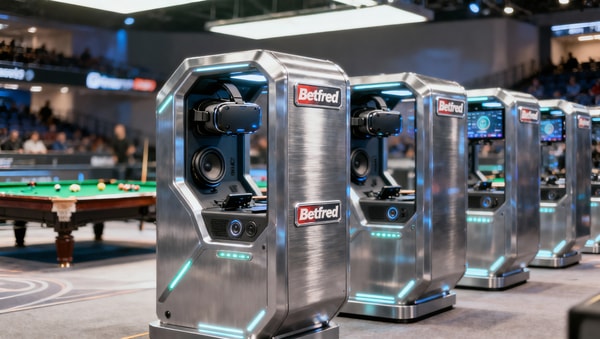
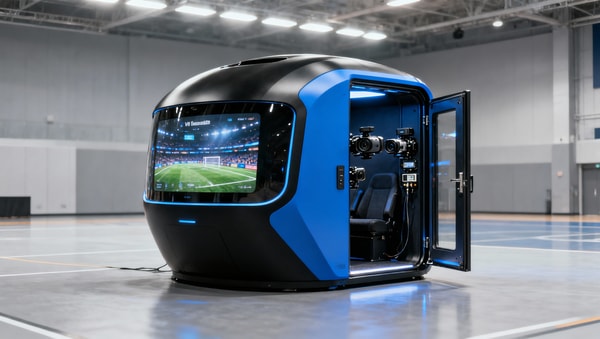
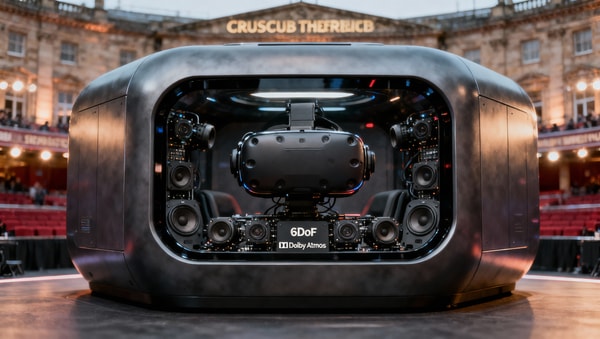
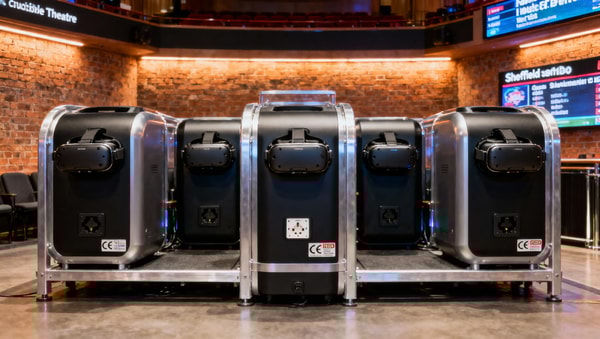
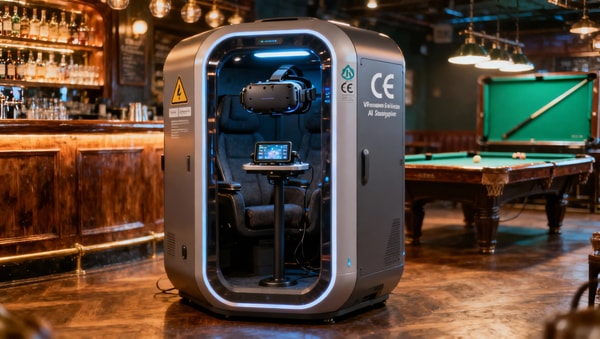
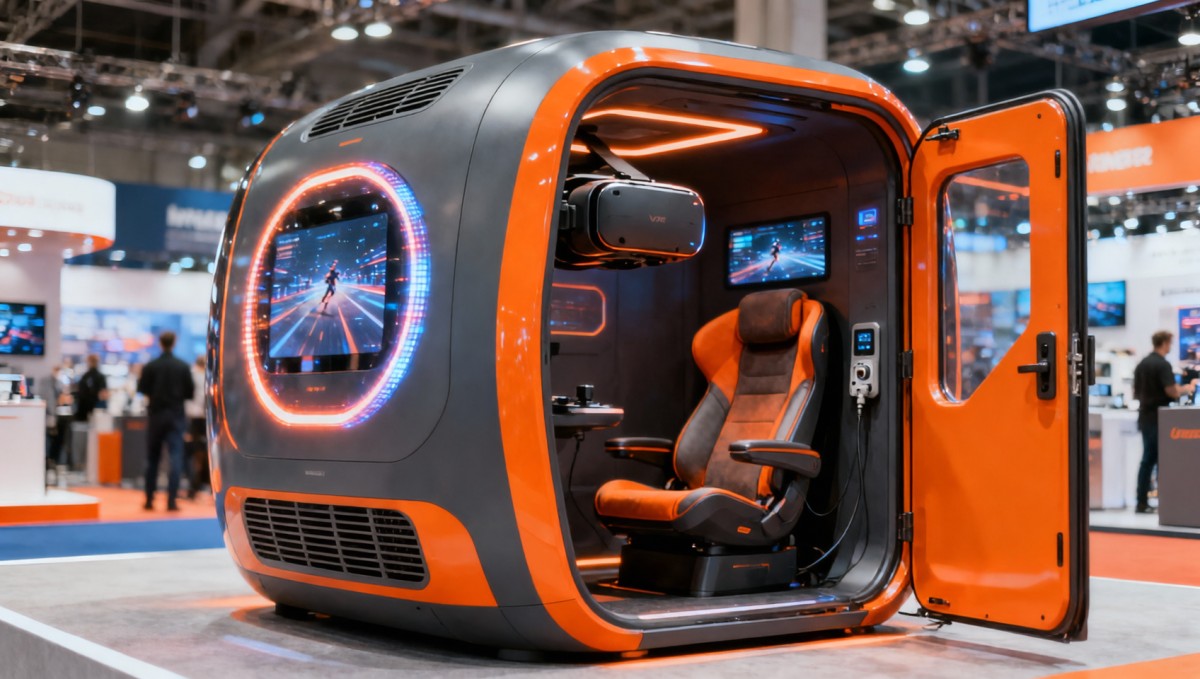
On April 28, 2026, Chinese snooker player Wu Yize defeated world champion Mark Selby 13–11 in the World Snooker Championship quarter-finals — an outcome that triggered a notable uptick in international export inquiries for commercial VR viewing cabins. This event has drawn attention from manufacturers, distributors, and supply chain service providers active in immersive sports technology, particularly those engaged in CE/UKCA-compliant hardware integration and low-latency streaming solutions.
Event Overview
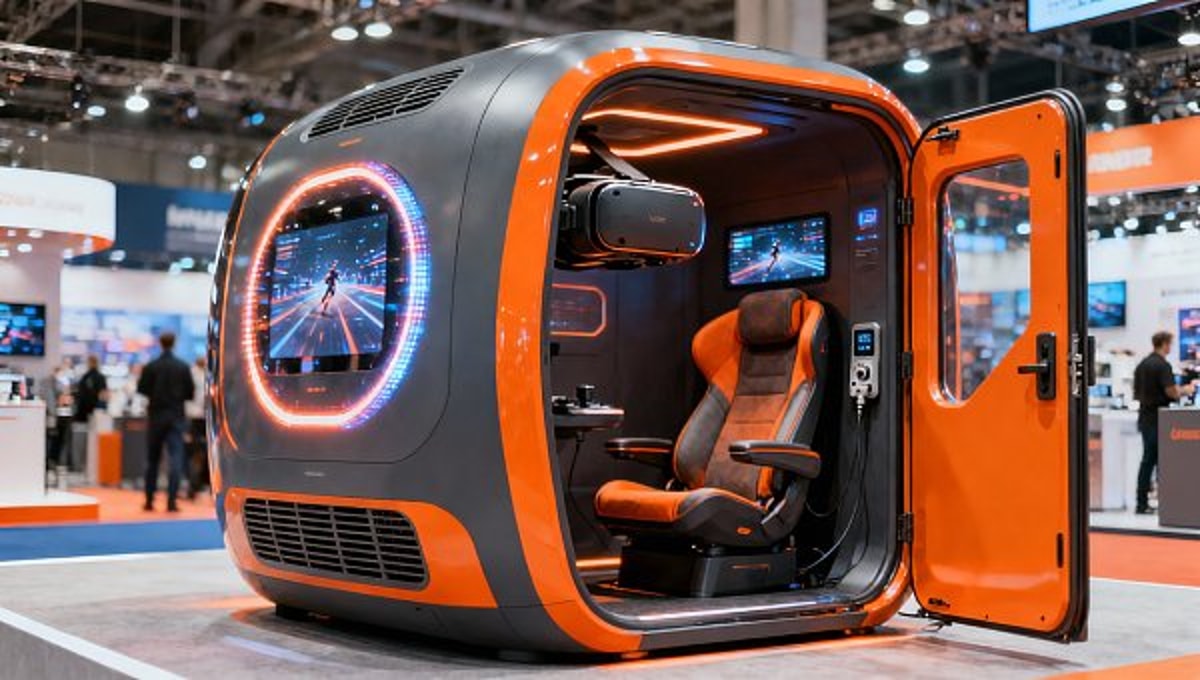
On April 28, 2026, Wu Yize defeated Mark Selby 13–11 in the quarter-final match of the 2026 World Snooker Championship. Following the match, multiple European and Middle Eastern distributors contacted Chinese suppliers of arcade and VR machines to inquire about VR viewing cabins configured for professional snooker broadcasts — specifically requesting verification of CE/UKCA compliance, minimum order quantity (MOQ), and readiness of integrated features including low-latency streaming modules, multilingual AI commentary interfaces, and real-time match data embedding. Publicly confirmed data indicates a 210% quarter-on-quarter rise in export-related inquiry volume for commercial VR viewing systems in Q2 2026.
Industries Affected
Direct Export Trading Enterprises
These firms act as intermediaries between Chinese VR hardware manufacturers and overseas buyers. They are affected because distributor inquiries now explicitly reference regulatory compliance (CE/UKCA), technical specifications (e.g., sub-50ms end-to-end latency), and contractual terms (MOQ, lead time). Impact manifests in increased pre-sales engineering coordination, tighter documentation requirements, and pressure to verify certification status before quotation.
VR Hardware Manufacturers & System Integrators
Manufacturers producing VR viewing cabins — especially those with embedded streaming or AI capabilities — face heightened demand for verifiable compliance evidence and functional validation reports. The surge reflects market sensitivity to broadcast-grade performance, not just form-factor appeal. Impact includes accelerated internal review of firmware latency benchmarks, localization readiness of AI commentary APIs, and traceability of component-level certifications.
Supply Chain & Certification Support Providers
Third-party labs, CE/UKCA consultants, and logistics partners specializing in EU/UK market access are seeing increased requests for expedited testing, conformity documentation, and customs classification guidance. The specificity of buyer queries — e.g., “Can your cabin’s streaming module meet EN 301 489-17 immunity thresholds?” — signals growing technical scrutiny beyond generic product safety assessments.
What Relevant Enterprises Should Monitor and Do Now
Verify and document CE/UKCA scope coverage for integrated subsystems
Buyers are no longer accepting blanket declarations. Firms should confirm whether low-latency streaming modules, AI voice engines, and embedded display controllers fall within existing certification scopes — or require supplementary testing. Maintaining updated technical files aligned with EN IEC 62368-1, EN 301 489-17, and UKCA equivalency is now operationally critical.
Prioritize clarity on MOQ, lead time, and configuration flexibility
Distributor inquiries emphasize urgency and modularity. Enterprises should prepare standardized response templates specifying base cabin MOQ, add-on pricing for certified streaming/AI options, and typical delivery windows post-certification confirmation — avoiding ambiguity that delays procurement cycles.
Track regional regulatory updates on AI-enabled consumer devices
While current inquiries focus on hardware compliance, the inclusion of multilingual AI commentary interfaces may trigger future scrutiny under the EU AI Act (if classified as high-risk) or UK’s forthcoming AI regulations. Monitoring official guidance on AI system transparency and human oversight requirements is advisable — even if not yet mandatory for this use case.
Editorial Observation / Industry Insight
This incident is best understood not as a standalone sales spike, but as an observable inflection point where live sports consumption patterns begin reshaping hardware procurement criteria in adjacent tech sectors. Analysis shows that buyer behavior shifted from general interest in ‘immersive viewing’ to precise, specification-driven sourcing — indicating maturation in how distributors assess technical readiness for broadcast-integrated VR. Observably, the 210% inquiry increase reflects demand signal amplification rather than immediate order conversion; it functions more as a leading indicator of near-term regulatory and integration complexity, not yet a validated revenue trend. From an industry perspective, this underscores the growing interdependence between elite sports scheduling, real-time media infrastructure, and hardware compliance readiness — a convergence requiring cross-functional alignment across R&D, regulatory affairs, and export sales teams.
Conclusion: The Wu Yize–Selby match did not alter VR viewing cabin fundamentals — but it did accelerate market awareness of technical and regulatory prerequisites for deploying such systems in regulated broadcast environments. Current understanding should emphasize signal detection over trend confirmation: enterprises benefit most by treating this as a prompt to audit compliance documentation, clarify subsystem-level certification boundaries, and align cross-departmental workflows — rather than interpreting it as an immediate growth catalyst.
Source: Publicly reported export inquiry metrics and distributor outreach patterns, as disclosed by Chinese arcade and VR machine suppliers (April 2026). Note: CE/UKCA certification status per specific cabin configuration remains subject to individual supplier verification; ongoing monitoring of EU Commission and UK Market Surveillance Authority updates is recommended.
Search News
Hot Articles
- Musical InstrumentsChina Table Tennis Team Departs for London; BS EN 14904:2021 Takes EffectMay 01, 2026
- Outdoor RidesSanya Asian Beach Games Closure Triggers Halal Certification Demand for Sand Sports EquipmentMay 01, 2026
- Outdoor RidesAI Football Training Robots Export Surge After Man Utd MatchMay 01, 2026
Popular Tags
Need ExpertConsultation?
Connect with our specialized leisureengineering team for procurementstrategies.
Recommended News
 May 01, 2026Langlangshan VR Rides Gain IP Licensing Momentum After Annecy InclusionLanglangshan VR Rides: IP licensing surges after Annecy 2026 selection—unlock co-dev opportunities for VR arcade & motion-based systems in SEA/LATAM.● Theme Park Strategist
 May 01, 2026Volvo China Open Boosts Golf Simulator Exports to Middle EastVolvo China Open drives Middle East demand for certified golf simulators — USGA/EGF-compliant, Arabic UI, and rapid-delivery indoor simulation systems now in high inquiry.● Theme Park Strategist
 May 01, 2026Wu Yize vs. Selby Sparks VR Viewing Booth Export SurgeWu Yize vs. Selby Sparks VR Viewing Booth Export Surge: CE/UKCA-compliant VR cabins see 210% export inquiry surge amid snooker-driven global demand.● Theme Park Strategist
 Apr 30, 2026VR Sports Viewing Capsules Face New EU Latency Rules Post-PSG–Bayern MatchVR Sports Viewing Capsules face new EU latency rules after PSG–Bayern’s record 12-goal match — discover how ≤80ms RED compliance impacts exporters, OEMs & AI-driven live sports tech.● Theme Park Strategist
 Apr 30, 2026Snooker World Championship: VR Viewing Pods, Remote Commentary Systems See Export InquiriesSnooker World Championship sparks global export inquiries for VR viewing pods & AI remote commentary systems—UKCA-certified, Betfred-integrated, multilingual.● Theme Park Strategist
 Apr 30, 2026Zheng Qinwen’s Madrid Exit Spurs EU RFQs for Tennis Training RobotsZheng Qinwen’s Madrid exit sparks EU RFQs for tennis training robots — discover how Chinese robotics exporters can meet CE/MD compliance & seize new academy demand.● Theme Park Strategist
 Apr 30, 2026Kenya's Marathon Record Break Sparks Global Demand for TrackSense Pro ChipsTrackSense Pro chips fuel Kenya’s marathon record—now driving global demand. Certified for precision timing (±0.01s), IP68, CE-RED & FCC—discover why African and Gulf markets are fast-tracking procurement.● Theme Park Strategist
 Apr 29, 2026Are Premium Arcade Games Worth It? A Cost vs Revenue LookArcade games can deliver strong ROI when premium quality boosts uptime, pricing power, and repeat play. See how finance teams compare cost vs revenue before investing.● Theme Park Strategist
 Apr 29, 2026How to Choose Arcade Games That Keep Players Coming BackArcade games that keep players coming back can boost dwell time, revenue, and loyalty. Discover how to choose high-replay machines that fit your venue and drive long-term results.● Theme Park Strategist
 Apr 29, 2026VR Sports Viewing Booth Demand Rises After Wu Yize vs. SelbyVR Sports Viewing Booth demand surges globally after Wu Yize’s win over Selby—key for exporters, OEMs & cert providers in ME, AU, CA.● Theme Park Strategist
 Apr 29, 2026NBA 3-2-1 Lottery Reform Drives VR Viewing Hardware DemandNBA 3-2-1 Lottery reform fuels VR viewing hardware demand—boosting sales of commercial VR pods, immersive systems & remote commentary terminals across North America, ME & SEA.● Theme Park Strategist
 Apr 28, 2026Global VR Fitness Device Export Prices Rise 12% — China Leads in Delivery ReliabilityVR fitness device export prices surge 12% globally — China leads in delivery reliability. Discover key compliance shifts, market impacts & strategic actions for exporters, OEMs & logistics providers.● Theme Park Strategist
 Apr 28, 2026Snooker World Championship 'China Derby' Drives VR Viewing DemandSnooker World Championship 'China Derby' drives surging VR viewing demand—boosting exports of VR pods, low-latency streaming & Dolby Atmos-certified AI audio solutions globally.● Theme Park Strategist
 Apr 28, 2026BWF 15-Point System to Launch in 2027: Impacts on Timing, Broadcast & Data SystemsBWF 15-point system launching in 2027 — impacts timing displays, broadcast encoders & data platforms. Discover compliance steps for OEMs, venues & AI video providers.● Theme Park Strategist
 Apr 27, 2026Snooker World Championship 'China Derby' Drives VR Viewing DemandVR viewing demand surges after Snooker World Championship 'China Derby' — key opportunity for VR hardware, localization & compliance firms in UK/EU markets.● Theme Park Strategist
 Apr 27, 2026Global VR Fitness Equipment Export Prices Rise 12.3% QoQVR fitness equipment export prices surge 12.3% QoQ — discover why IPX5, ISO 20685, and cloud readiness now drive premium pricing & market share.● Theme Park Strategist
 Apr 27, 2026SASO Updates EMC Rules for VR & Immersive Fitness Devices in Saudi ArabiaSASO EMC updates for VR & immersive fitness devices in Saudi Arabia—Class B compliance mandatory from 25 Apr 2026. Act now to avoid delays & ensure market access.● Theme Park Strategist
 Apr 26, 2026Global VR Fitness Equipment Export Prices Up 12% in Q1 2026VR fitness equipment export prices surge 12.3% in Q1 2026 — discover why reliability-driven pricing is reshaping global gym hardware procurement.● Theme Park Strategist
 Apr 26, 2026SASO Updates EMC Standard for VR Motion Devices in Saudi ArabiaSASO EMC standard update for VR motion devices in Saudi Arabia—Class B limits effective Oct 2026. Ensure compliance now to avoid customs delays & market access risks.● Theme Park Strategist
 Apr 26, 2026Snooker World Championship 'China Derby' Drives VR Viewing DemandSnooker World Championship 'China Derby' drives surging VR viewing demand—CE/UKCA-certified hardware, AI commentary & rapid logistics now critical for venues.● Theme Park Strategist
 Apr 25, 2026Global VR Fitness Equipment Export Prices Up 12% in Q1 2026VR fitness equipment export prices rose 12% in Q1 2026 — discover why $2,840/unit reflects rising value, not just cost, and how OTD leadership reshapes global sourcing.● Theme Park Strategist
 Apr 25, 2026SASO Updates EMC Standard for VR Haptic Devices in Saudi ArabiaSASO updates EMC standard SR 2305:2026 for VR haptic devices in Saudi Arabia—Class B compliance now mandatory for fitness pods & training stations. Act now to avoid port delays.● Theme Park Strategist
![]() Apr 25, 2026Vietnam Enforces Local Type Testing for Commercial VR Fitness CabinsVR fitness cabins for commercial use in Vietnam must now pass local type testing & TÜV SÜD-VN certification—key for exporters, distributors & OEMs. Act before April 24, 2026.● Theme Park Strategist
Apr 25, 2026Vietnam Enforces Local Type Testing for Commercial VR Fitness CabinsVR fitness cabins for commercial use in Vietnam must now pass local type testing & TÜV SÜD-VN certification—key for exporters, distributors & OEMs. Act before April 24, 2026.● Theme Park Strategist Apr 24, 2026Global VR Fitness Equipment Export Prices Up 12% QoQVR fitness equipment export prices surge 12% QoQ to $4,280 — driven by EU 2026/789 & UL 62368-1:Ed4 compliance. Key insight for exporters, suppliers & logistics teams.● Theme Park Strategist