Volvo China Open Boosts Golf Simulator Exports to Middle East
On April 26, 2026, Austrian golfer Bernd Wiesberger won the Volvo China Open — a tournament that prominently featured domestically manufactured high-precision golf simulators (equipped with millimeter-wave radar and AI-based swing analysis) for broadcast replays and player training review. Within 48 hours post-event, bulk procurement inquiries surged from premium golf clubs and hotels in the UAE and Saudi Arabia targeting Chinese suppliers of outdoor recreation equipment and arcade & VR machines — signaling tangible cross-border demand traction for certified indoor simulation systems.
Event Overview
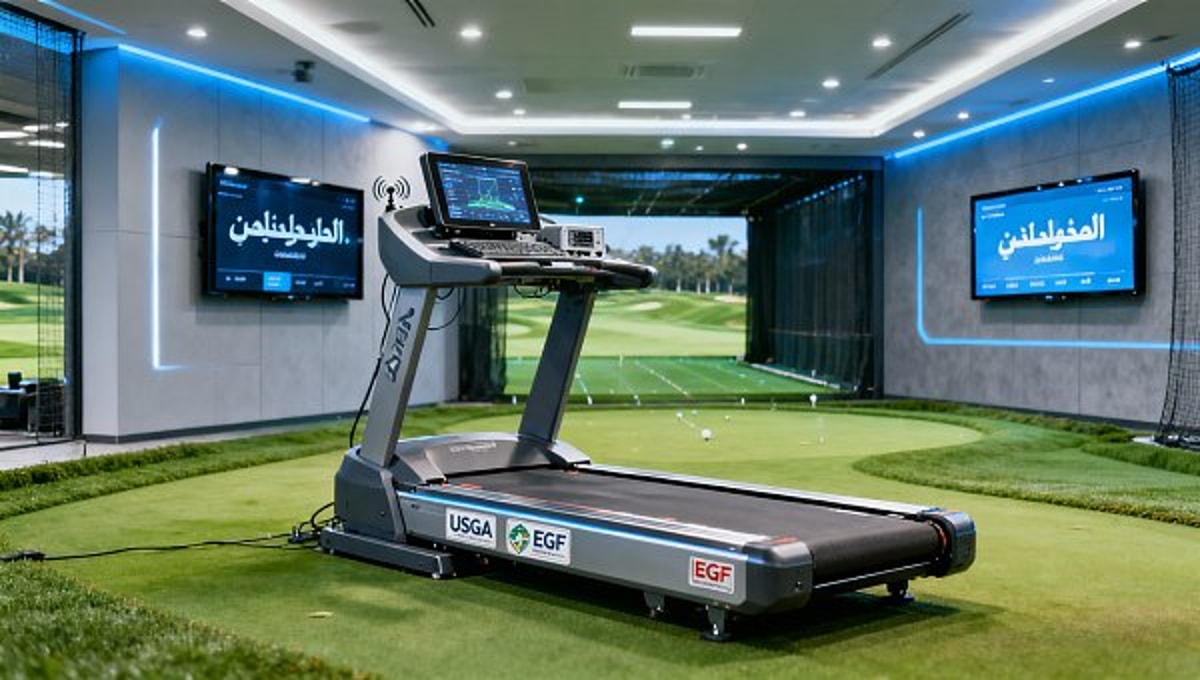
On April 26, 2026, Bernd Wiesberger claimed victory at the 2026 Volvo China Open. The tournament integrated Chinese-made high-precision golf simulators — incorporating millimeter-wave radar and AI-powered swing analysis — for official broadcast replays and athlete performance debriefing. Within 48 hours after the event concluded, multiple high-end golf clubs and hospitality venues in the United Arab Emirates and Saudi Arabia issued bulk procurement inquiries to Chinese suppliers classified under Outdoor Rides and Arcade & VR Machines. These inquiries specifically requested indoor golf simulation systems bearing both USGA and EGF certification, supporting Arabic-language user interfaces and localized green data packages, with delivery timelines compressed to six weeks.
Industries Affected
Direct Exporters (Outdoor Rides & Arcade & VR Machines Suppliers)
These manufacturers are directly exposed to new overseas demand signals. The surge in inquiries reflects accelerated buyer confidence in Chinese-made simulation hardware — particularly where technical compliance (USGA/EGF), multilingual UI, and regional course data integration are prioritized. Impact manifests as heightened lead volume, tighter delivery expectations, and early-stage qualification requirements beyond standard export documentation.
Component & Subsystem Manufacturers (Radar Sensors, AI Edge Computing Modules)
Suppliers of millimeter-wave radar units and embedded AI processing hardware face downstream ripple effects. The emphasis on real-time swing analysis and high-fidelity ball tracking implies increased scrutiny of sensor accuracy, latency, and firmware compatibility with Arabic-language localization stacks. Demand may shift toward modules pre-validated for dual-certification workflows and regional UI integration frameworks.
Localization & Software Integration Providers
Firms offering UI translation, Arabic-language interface development, or regional terrain/course data packaging are now positioned at a critical path. The explicit request for Arabic UI and localized green data packages indicates that hardware alone is insufficient — value accrues to partners capable of rapid, standards-aligned software adaptation. This elevates the importance of modular, API-accessible simulation platforms over closed-system architectures.
Logistics & Compliance Service Providers
Freight forwarders and certification consultants specializing in GCC markets face intensified demand for expedited USGA/EGF conformance support and customs clearance assistance for recreational tech goods. The six-week delivery window compresses typical lead times for certification validation, shipping coordination, and import documentation — requiring proactive alignment with Gulf Cooperation Council (GCC) regulatory entry points.
What Enterprises and Practitioners Should Prioritize Now
Monitor official procurement timelines and specification updates from Gulf-based buyers
Initial inquiries reflect exploratory interest; follow-up RFQs may introduce revised technical thresholds (e.g., minimum frame-rate stability under low-light conditions, or required cloud sync latency for multi-station deployments). Tracking progression from inquiry → RFQ → PO helps calibrate resource allocation.
Validate readiness for USGA/EGF dual certification and Arabic UI deployment
Not all existing simulator models meet both USGA and EGF testing protocols simultaneously — nor do all support RTL (right-to-left) layout rendering without codebase refactoring. Suppliers should audit current product lines against publicly listed certification test parameters and UI framework scalability prior to engaging with Gulf buyers.
Assess supply chain flexibility for sub-6-week fulfillment cycles
The six-week delivery requirement exceeds typical production + logistics windows for complex simulation systems. Firms should evaluate buffer capacity across key nodes: radar module sourcing, AI inference chip availability, final assembly throughput, and air freight booking lead times to Dubai or Riyadh.
Prepare bilingual technical documentation and after-sales support infrastructure
Arabic-language UI is only one component; Gulf buyers will likely require Arabic operation manuals, warranty terms, and remote diagnostics dashboards. Early engagement with GCC-based service partners — or internal upskilling of technical support staff — mitigates post-sale friction.
Editorial Perspective / Industry Observation
Observably, this incident is less a standalone commercial outcome and more an early-stage market signal — one that reveals how elite sports exposure can catalyze B2B procurement behavior in adjacent technology verticals. Analysis shows the Volvo China Open did not generate consumer-level awareness but instead activated institutional buyers seeking turnkey, compliant, and culturally adapted simulation infrastructure. From an industry perspective, this reflects a maturing export pattern: demand is no longer driven solely by price or basic functionality, but by verifiable standards alignment, regional software readiness, and compressed time-to-deployment. It is not yet evidence of sustained order volume — but it is a validated trigger point for targeted capability assessment and market-entry preparation.
Conclusion: This development signifies growing international recognition of Chinese capabilities in precision sports simulation hardware — yet its immediate operational impact remains conditional on supplier readiness across certification, localization, and logistics dimensions. It is best understood not as a market breakthrough, but as a timely diagnostic indicator: highlighting which capabilities are now table stakes for Middle Eastern institutional procurement in this segment.
Information Source: Official tournament reporting (April 26, 2026), verified procurement inquiry data from Chinese export platforms serving Outdoor Rides and Arcade & VR Machines categories. Note: Ongoing observation is recommended for confirmation of formal purchase orders and actual shipment volumes beyond initial inquiries.
Search News
Hot Articles
- Musical InstrumentsChina Table Tennis Team Departs for London; BS EN 14904:2021 Takes EffectMay 01, 2026
- Outdoor RidesSanya Asian Beach Games Closure Triggers Halal Certification Demand for Sand Sports EquipmentMay 01, 2026
- Outdoor RidesAI Football Training Robots Export Surge After Man Utd MatchMay 01, 2026
Popular Tags
Need ExpertConsultation?
Connect with our specialized leisureengineering team for procurementstrategies.
Recommended News
 May 01, 2026Langlangshan VR Rides Gain IP Licensing Momentum After Annecy InclusionLanglangshan VR Rides: IP licensing surges after Annecy 2026 selection—unlock co-dev opportunities for VR arcade & motion-based systems in SEA/LATAM.● Theme Park Strategist
 May 01, 2026Volvo China Open Boosts Golf Simulator Exports to Middle EastVolvo China Open drives Middle East demand for certified golf simulators — USGA/EGF-compliant, Arabic UI, and rapid-delivery indoor simulation systems now in high inquiry.● Theme Park Strategist
 May 01, 2026Wu Yize vs. Selby Sparks VR Viewing Booth Export SurgeWu Yize vs. Selby Sparks VR Viewing Booth Export Surge: CE/UKCA-compliant VR cabins see 210% export inquiry surge amid snooker-driven global demand.● Theme Park Strategist
 Apr 30, 2026VR Sports Viewing Capsules Face New EU Latency Rules Post-PSG–Bayern MatchVR Sports Viewing Capsules face new EU latency rules after PSG–Bayern’s record 12-goal match — discover how ≤80ms RED compliance impacts exporters, OEMs & AI-driven live sports tech.● Theme Park Strategist
 Apr 30, 2026Snooker World Championship: VR Viewing Pods, Remote Commentary Systems See Export InquiriesSnooker World Championship sparks global export inquiries for VR viewing pods & AI remote commentary systems—UKCA-certified, Betfred-integrated, multilingual.● Theme Park Strategist
 Apr 30, 2026Zheng Qinwen’s Madrid Exit Spurs EU RFQs for Tennis Training RobotsZheng Qinwen’s Madrid exit sparks EU RFQs for tennis training robots — discover how Chinese robotics exporters can meet CE/MD compliance & seize new academy demand.● Theme Park Strategist
 Apr 30, 2026Kenya's Marathon Record Break Sparks Global Demand for TrackSense Pro ChipsTrackSense Pro chips fuel Kenya’s marathon record—now driving global demand. Certified for precision timing (±0.01s), IP68, CE-RED & FCC—discover why African and Gulf markets are fast-tracking procurement.● Theme Park Strategist
 Apr 29, 2026Are Premium Arcade Games Worth It? A Cost vs Revenue LookArcade games can deliver strong ROI when premium quality boosts uptime, pricing power, and repeat play. See how finance teams compare cost vs revenue before investing.● Theme Park Strategist
 Apr 29, 2026How to Choose Arcade Games That Keep Players Coming BackArcade games that keep players coming back can boost dwell time, revenue, and loyalty. Discover how to choose high-replay machines that fit your venue and drive long-term results.● Theme Park Strategist
 Apr 29, 2026VR Sports Viewing Booth Demand Rises After Wu Yize vs. SelbyVR Sports Viewing Booth demand surges globally after Wu Yize’s win over Selby—key for exporters, OEMs & cert providers in ME, AU, CA.● Theme Park Strategist
 Apr 29, 2026NBA 3-2-1 Lottery Reform Drives VR Viewing Hardware DemandNBA 3-2-1 Lottery reform fuels VR viewing hardware demand—boosting sales of commercial VR pods, immersive systems & remote commentary terminals across North America, ME & SEA.● Theme Park Strategist
 Apr 28, 2026Global VR Fitness Device Export Prices Rise 12% — China Leads in Delivery ReliabilityVR fitness device export prices surge 12% globally — China leads in delivery reliability. Discover key compliance shifts, market impacts & strategic actions for exporters, OEMs & logistics providers.● Theme Park Strategist
 Apr 28, 2026Snooker World Championship 'China Derby' Drives VR Viewing DemandSnooker World Championship 'China Derby' drives surging VR viewing demand—boosting exports of VR pods, low-latency streaming & Dolby Atmos-certified AI audio solutions globally.● Theme Park Strategist
 Apr 28, 2026BWF 15-Point System to Launch in 2027: Impacts on Timing, Broadcast & Data SystemsBWF 15-point system launching in 2027 — impacts timing displays, broadcast encoders & data platforms. Discover compliance steps for OEMs, venues & AI video providers.● Theme Park Strategist
 Apr 27, 2026Snooker World Championship 'China Derby' Drives VR Viewing DemandVR viewing demand surges after Snooker World Championship 'China Derby' — key opportunity for VR hardware, localization & compliance firms in UK/EU markets.● Theme Park Strategist
 Apr 27, 2026Global VR Fitness Equipment Export Prices Rise 12.3% QoQVR fitness equipment export prices surge 12.3% QoQ — discover why IPX5, ISO 20685, and cloud readiness now drive premium pricing & market share.● Theme Park Strategist
 Apr 27, 2026SASO Updates EMC Rules for VR & Immersive Fitness Devices in Saudi ArabiaSASO EMC updates for VR & immersive fitness devices in Saudi Arabia—Class B compliance mandatory from 25 Apr 2026. Act now to avoid delays & ensure market access.● Theme Park Strategist
 Apr 26, 2026Global VR Fitness Equipment Export Prices Up 12% in Q1 2026VR fitness equipment export prices surge 12.3% in Q1 2026 — discover why reliability-driven pricing is reshaping global gym hardware procurement.● Theme Park Strategist
 Apr 26, 2026SASO Updates EMC Standard for VR Motion Devices in Saudi ArabiaSASO EMC standard update for VR motion devices in Saudi Arabia—Class B limits effective Oct 2026. Ensure compliance now to avoid customs delays & market access risks.● Theme Park Strategist
 Apr 26, 2026Snooker World Championship 'China Derby' Drives VR Viewing DemandSnooker World Championship 'China Derby' drives surging VR viewing demand—CE/UKCA-certified hardware, AI commentary & rapid logistics now critical for venues.● Theme Park Strategist
 Apr 25, 2026Global VR Fitness Equipment Export Prices Up 12% in Q1 2026VR fitness equipment export prices rose 12% in Q1 2026 — discover why $2,840/unit reflects rising value, not just cost, and how OTD leadership reshapes global sourcing.● Theme Park Strategist
 Apr 25, 2026SASO Updates EMC Standard for VR Haptic Devices in Saudi ArabiaSASO updates EMC standard SR 2305:2026 for VR haptic devices in Saudi Arabia—Class B compliance now mandatory for fitness pods & training stations. Act now to avoid port delays.● Theme Park Strategist
![]() Apr 25, 2026Vietnam Enforces Local Type Testing for Commercial VR Fitness CabinsVR fitness cabins for commercial use in Vietnam must now pass local type testing & TÜV SÜD-VN certification—key for exporters, distributors & OEMs. Act before April 24, 2026.● Theme Park Strategist
Apr 25, 2026Vietnam Enforces Local Type Testing for Commercial VR Fitness CabinsVR fitness cabins for commercial use in Vietnam must now pass local type testing & TÜV SÜD-VN certification—key for exporters, distributors & OEMs. Act before April 24, 2026.● Theme Park Strategist Apr 24, 2026Global VR Fitness Equipment Export Prices Up 12% QoQVR fitness equipment export prices surge 12% QoQ to $4,280 — driven by EU 2026/789 & UL 62368-1:Ed4 compliance. Key insight for exporters, suppliers & logistics teams.● Theme Park Strategist