Shanghai Extreme Sports Association Re-elected; EN 15613 Certification Urgency Rises
On April 29, 2026, the Shanghai Extreme Sports Association completed its fifth-term renewal, signaling a strategic shift toward standardization and international alignment for niche action-sports products. This development directly impacts manufacturers, exporters, and certification service providers in the skateboarding, climbing wall, and wind tunnel equipment sectors — particularly those targeting the European market, where regulatory compliance is now a decisive factor in export competitiveness.
Event Overview
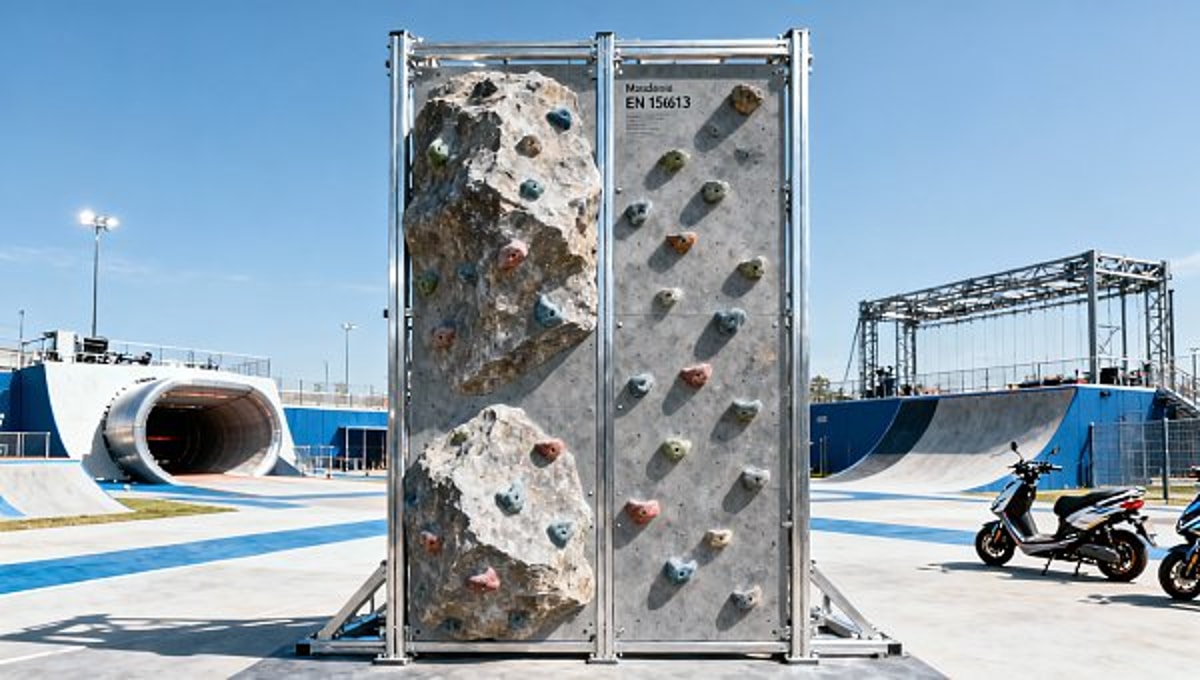
On April 29, 2026, the Shanghai Extreme Sports Association held its fifth-term换届 (leadership renewal). The newly appointed leadership publicly emphasized advancing standardization and internationalization of ‘niche lifestyle sports’ products. Concurrently, Shanghai Customs reported that Q1 2026 exports of skateboards, climbing walls, and extreme wind tunnel equipment to the EU rose 42% year-on-year. Over 60% of these export orders explicitly required third-party certification against EN 15613 (General Safety Requirements for Facilities Used in Extreme Sports). Manufacturers in Shenzhen and Dongguan specializing in outdoor ride equipment confirmed they are accelerating commissioning of TÜV Rheinland for EN 15613 certification, with average turnaround time reduced to 28 days.
Industries Affected
Direct Exporters
Exporters handling finished goods — especially skateboards, modular climbing walls, and portable wind tunnel units — face immediate pressure: over 60% of EU-bound orders now mandate EN 15613 certification. Non-compliance risks shipment rejection, contract termination, or forced rework at destination ports.
Contract Manufacturers & OEMs
OEM suppliers producing under brand partners’ specifications must now embed EN 15613 design and testing criteria into product development cycles. Absence of certified prototypes may delay customer approvals and order placement, especially for EU-based brands scaling retail distribution in 2026–2027.
Certification & Testing Service Providers
Third-party conformity assessment bodies — particularly those accredited for EN 15613 — are experiencing increased demand from Southern China-based manufacturers. Lead times have compressed to 28 days on average, indicating operational strain and potential bottlenecks in capacity allocation and technical review bandwidth.
Supply Chain Enablers (Logistics, Trade Compliance, Documentation)
Freight forwarders and customs brokers supporting these exports must now verify inclusion of EN 15613 certificates in commercial documentation packages. Incomplete or non-recognized certifications may trigger EU import inspections or classification disputes under Regulation (EU) No 2019/1020 on market surveillance.
What Relevant Enterprises or Practitioners Should Focus On
Monitor official updates from the Shanghai Extreme Sports Association and EU market surveillance authorities
Analysis shows the Association’s post-renewal statements function as early policy signals — not binding mandates — but may inform future local guidance or industry white papers. Meanwhile, EU national market surveillance authorities (e.g., Germany’s ZLS, Netherlands’ NVWA) have recently intensified checks on imported sports facilities; verifying their latest enforcement priorities is operationally critical.
Prioritize EN 15613 readiness for high-volume EU-bound SKUs, not full product portfolios
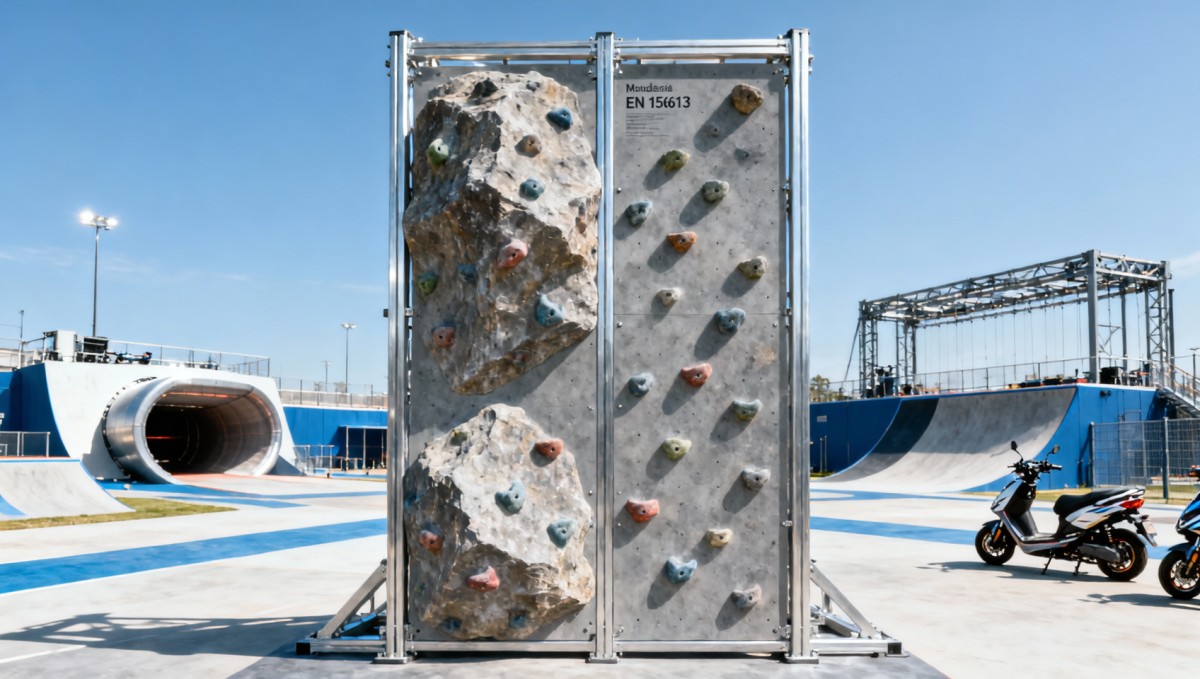
Observably, only specific configurations — e.g., freestanding climbing walls above 3 m height, powered wind tunnels exceeding 15 m/s airflow — fall under strict EN 15613 scope. Companies should conduct preliminary scope screening before initiating full certification, avoiding unnecessary cost and timeline overhead.
Distinguish between certification requirements and contractual obligations
From industry perspective, many EU buyers currently treat EN 15613 as a commercial condition rather than a legal requirement — meaning it may be negotiable per order or waived for low-risk items. However, this flexibility is diminishing as more distributors adopt standardized procurement checklists aligned with EN 15613 Annex A.
Align internal QA processes with EN 15613 test protocols ahead of formal certification
Current more practical approach is to integrate core EN 15613 mechanical strength, stability, and impact-absorption tests into existing factory QA workflows — even before engaging a Notified Body. Doing so reduces retest cycles during formal assessment and shortens overall time-to-certification.
Editorial Perspective / Industry Observation
This development is better understood as a regulatory acceleration signal — not yet a fully enforced compliance threshold. While EN 15613 remains a harmonized standard (not a mandatory directive), its adoption is rapidly shifting from voluntary best practice to de facto market access prerequisite in key EU channels. The Shanghai Association’s renewed focus reflects growing institutional recognition that standardization enables scalability beyond domestic ‘trend-driven’ demand. Observably, the 42% export growth in Q1 2026 suggests market pull is outpacing regulatory preparedness — making proactive alignment both commercially prudent and operationally urgent.
Conclusion: The Association’s renewal and concurrent export data highlight an inflection point — where niche action-sports hardware transitions from discretionary lifestyle product to regulated consumer equipment in mature markets. For affected enterprises, this is less about reacting to a new rule and more about aligning product development, quality assurance, and export logistics with an emerging, non-negotiable expectation in Europe. It is currently more accurate to interpret this as a structural market shift than a one-off compliance event.
Source: Shanghai Extreme Sports Association official announcement (April 29, 2026); Shanghai Customs Q1 2026 export statistics; manufacturer feedback from Shenzhen and Dongguan (collected April 2026). Note: Ongoing monitoring is recommended for updates on EN 15613 implementation guidance from EU Member State market surveillance authorities.
Search News
Hot Articles
- Musical InstrumentsChina Table Tennis Team Departs for London; BS EN 14904:2021 Takes EffectMay 01, 2026
- Outdoor RidesSanya Asian Beach Games Closure Triggers Halal Certification Demand for Sand Sports EquipmentMay 01, 2026
- Outdoor RidesAI Football Training Robots Export Surge After Man Utd MatchMay 01, 2026
Popular Tags
Need ExpertConsultation?
Connect with our specialized leisureengineering team for procurementstrategies.
Recommended News
 May 01, 2026Sanya Asian Beach Games Closure Triggers Halal Certification Demand for Sand Sports EquipmentHalal certification demand surges for sand sports equipment post-Sanya Asian Beach Games—key for beach volleyball, kite surfing & football gear exporters targeting GCC markets.● Theme Park Strategist
 May 01, 2026AI Football Training Robots Export Surge After Man Utd MatchAI football training robots surge in EU demand after Man Utd’s match—FIFA-certified, GPS+IMU equipped, CE-compliant & multilingual ready.● Theme Park Strategist
 May 01, 2026Shanghai Extreme Sports Association Re-elected; EN 15613 Certification Urgency RisesEN 15613 certification urgency surges as Shanghai Extreme Sports Association re-elected—key for EU-bound skateboards, climbing walls & wind tunnels.● Theme Park Strategist
 May 01, 2026Amusement Park Signage That Improves Flow Without Adding ClutterAmusement park signage that improves guest flow, reduces confusion, and supports safety without visual clutter. Discover practical strategies for clearer wayfinding and better park operations.● Theme Park Strategist
 Apr 30, 2026Asian Beach Games Boost Export Demand for Commercial Beach Sports EquipmentCommercial beach sports equipment export demand surges post-Asian Beach Games—key for manufacturers targeting Middle East markets with ISO/ASTM compliance.● Theme Park Strategist
 Apr 30, 2026Water park equipment choices that affect downtime the mostWater park equipment choices can make or break uptime. Learn which pumps, controls, filtration, and material specs reduce downtime, cut maintenance risk, and improve sourcing decisions.● Theme Park Strategist
 Apr 30, 2026Theme park rides with shorter queues and stronger repeat appealTheme park rides with shorter queues and stronger repeat appeal: learn how smarter capacity, ride mix, and sourcing decisions can improve guest flow, ROI, and park performance.● Theme Park Strategist
 Apr 29, 2026Asian Beach Games Boost Demand for UV-Resistant Beach Sports EquipmentUV-resistant beach sports equipment demand surges after China's gold sweep at Sanya Asian Beach Games—key for exporters targeting Middle East markets.● Theme Park Strategist
 Apr 28, 2026Asia Beach Games Boost Export Inquiries for Commercial Sand Sports EquipmentCommercial sand sports equipment exporters see 210% surge in inquiries amid Asia Beach Games—IP68, ISO 22301 & maritime packaging demand spikes from KSA, UAE, Indonesia, Thailand.● Theme Park Strategist
 Apr 27, 2026Asia Beach Games Boost Demand for Portable Sand Sports EquipmentPortable sand sports equipment demand surges 217% amid Asia Beach Games—discover UV-resistant, anchor-stable volleyball & soccer systems for export.● Theme Park Strategist
 Apr 26, 2026China FA Warns Nanjing City Over Fan Conduct; Security Compliance Tightens for International MatchesChina FA warns Nanjing City over fan conduct—key alert for venues, security providers & tech integrators ahead of June 30, 2026 compliance deadline.● Theme Park Strategist
 Apr 25, 2026China FA Warns Nanjing City Over Fan Conduct, Ups Security RulesChina FA warns Nanjing City over fan conduct—new AI security, drone countermeasures & spectrum monitoring now mandated for AFC matches.● Theme Park Strategist
 Apr 24, 2026China FA Warns Nanjing City Over Fan Conduct; ISO 20785 Compliance AcceleratesISO 20785 compliance accelerates as China FA warns Nanjing City over fan conduct—key for sports security integrators targeting Middle East & SEA tenders.● Theme Park Strategist
 Apr 28, 2026How Long Does Amusement Equipment Really Stay Profitable?Amusement equipment profitability lasts 5–12 years. Compare lifecycle ROI with park benches, luxury furniture, hotel beds, custom furniture, hotel furniture, hotel chairs, hotel tables, and hotel equipment.● Theme Park Strategist
 Apr 24, 2026How to Source Park Trash Cans That LastPark trash cans sourcing guide: compare durable materials, supplier options, capacity, and lifecycle cost for playground planning, hospitality procurement, and safer outdoor spaces.● Theme Park Strategist
 Apr 24, 2026Park Trash Cans: What Specs Matter Most?Park trash cans buying guide: compare material, capacity, maintenance, and safety specs for playground planning, playground surfacing, and hospitality procurement projects.● Theme Park Strategist
 Apr 24, 2026What to Check Before Buying Amusement EquipmentAmusement equipment buyers: check playground safety, playground borders, playground climbers, and sensory playground features before purchase to reduce risk and improve long-term value.● Theme Park Strategist
 Apr 24, 2026Amusement Equipment: Buy New or Used?Amusement equipment buying guide: compare new vs. used options for playground climbers, playground borders, sensory playground design, and playground safety to reduce risk and improve ROI.● Theme Park Strategist
 Apr 23, 2026Amusement Equipment Upgrades That Change Guest ExperienceAmusement equipment upgrades improve guest experience with sensory playground features, playground climbers, playground safety, playground borders, and smart commercial furniture solutions.● Theme Park Strategist
 Apr 23, 2026Amusement Equipment Safety Issues Often Missed at InstallAmusement equipment and playground safety start at install. Learn how sensory playground, playground borders, and playground climbers affect compliance, durability, and safer commercial projects.● Theme Park Strategist
 Apr 25, 2026Theme Park Rides That Cut MaintenanceTheme park rides that cut maintenance: compare durable theme park rides, playground structures, inclusive playground and playground swings for leisure park projects. Learn how smart materials and supplier support reduce downtime and lifecycle costs.● Theme Park Strategist
 Apr 25, 2026How to Plan a Profitable Leisure ParkLearn how to build a profitable leisure park with smart theme park rides, inclusive playground design, playground structures, catering equipment, custom furniture, hotel beds, and more.● Theme Park Strategist
 Apr 23, 2026Playground Swings for Parks or SchoolsPlayground swings for parks or schools: compare durable playground structures, inclusive playground options, and leisure park solutions with expert sourcing tips for safer, smarter buying.● Theme Park Strategist
 Apr 22, 2026How to Compare Theme Park RidesCompare theme park rides for safety, capacity, and ROI in a leisure park, while aligning playground structures, inclusive playground zones, and playground swings with smarter sourcing.● Theme Park Strategist