Amusement Park Signage That Improves Flow Without Adding Clutter
Amusement park signage should do more than label spaces—it should guide crowds, reduce confusion, and support a smoother guest journey without overwhelming the environment. For project managers and engineering leads, the challenge is finding signage strategies that improve wayfinding, safety, and operational efficiency while preserving visual clarity and brand experience.
In complex parks, poor navigation does not just create guest frustration. It increases queue pressure, slows emergency response, adds staff intervention, and weakens the commercial value of food, retail, and secondary attractions. Effective amusement park signage must therefore function as an operational tool, a safety layer, and a design element at the same time.
For B2B buyers managing new builds, phased renovations, or multi-zone upgrades, the priority is not adding more signs. It is building a signage system that reduces cognitive load, supports predictable movement patterns, and remains readable across peak attendance periods, weather conditions, and changing daylight levels. A practical strategy often starts with fewer sign types, clearer hierarchy, and measurable placement logic.
Why Signage Flow Matters More Than Signage Volume
Many operators assume guest confusion is solved by adding more boards, arrows, and branded installations. In practice, visual saturation often makes amusement park signage less effective. When guests see 6 to 10 messages at one decision point, they typically scan only the largest 1 or 2 elements, ignoring the rest. That creates bottlenecks exactly where movement should be fastest.
Project teams should treat signage as part of circulation engineering. At a minimum, four movement zones require separate planning logic: entry, transition, queue, and exit. Each zone has a different dwell time, viewing distance, and urgency level. A guest moving at 1.2 to 1.5 meters per second through a busy path does not process information the same way as a family pausing at a map pedestal.
The hidden cost of cluttered wayfinding
Cluttered amusement park signage often leads to three recurring operational issues. First, guests stop in circulation paths to read, increasing collision risk and reducing throughput. Second, staff must answer repetitive directional questions, which can consume 10 to 20 minutes per employee per hour during high traffic periods. Third, commercial tenants lose impulse purchases when visitors bypass zones they cannot quickly interpret.
- More missed attraction connections between anchor rides and secondary zones
- Higher congestion near map boards, restrooms, and food courts
- Lower visibility for first-aid, stroller parking, and family services
- Inconsistent branding when temporary signs multiply over time
A practical hierarchy for better guest movement
A strong signage program usually works with a 3-level hierarchy. Level 1 signs orient guests across districts or themed lands. Level 2 signs support route decisions within 30 to 80 meters. Level 3 signs confirm arrival, queue rules, restrictions, or service details. This structure helps project managers reduce duplicate messaging while increasing clarity.
The table below outlines how different signage layers should function in a park environment without adding visual noise.
The key takeaway is that amusement park signage performs best when every sign has one role, one audience, and one decision point. This approach reduces over-signing and allows themed environments to stay visually open, which is especially important in premium destinations where atmosphere directly affects guest spend and brand perception.
Design Principles That Improve Flow Without Overloading the Landscape
Well-planned amusement park signage is usually less about decoration and more about disciplined restraint. Project managers should define a limited visual system before fabrication begins: type families, icon logic, arrow styles, color coding, material finishes, and illumination rules. Keeping these variables under control can cut revision cycles by 15% to 30% during multi-contractor coordination.
Use message reduction before adding hardware
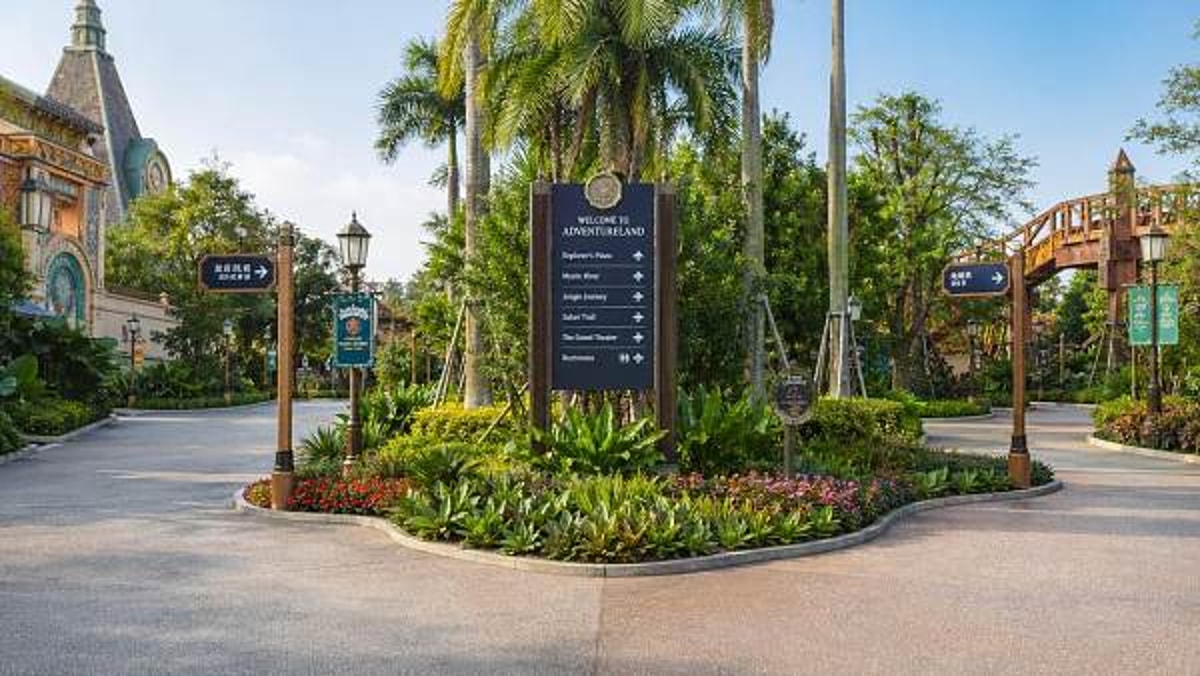
One of the most effective ways to declutter is to reduce words. Directional signs should ideally carry no more than 3 destinations per face in busy outdoor environments. If a sign lists 5 or 6 locations, guests take longer to decode it, and the board becomes visually dominant. This is especially problematic near photo points, themed facades, or narrow pathways under 4 meters wide.
Message design checklist
- Limit each directional panel to the most immediate route decisions.
- Use consistent naming for attractions across maps, apps, and physical signs.
- Separate safety warnings from promotional content.
- Prioritize icons only where recognition is universal and tested on-site.
- Remove legacy signs every 6 to 12 months during audit cycles.
Match sign scale to speed and sightline
A sign readable at 8 meters is not necessarily readable at 40 meters, and larger is not always better. Oversized structures can interrupt themed storytelling and create competition with storefronts or attraction facades. A balanced system considers approach angle, eye height, foliage, shade, night lighting, and crowd density. In practice, pedestrian decision signs often work best when placed 1.5 to 2.2 meters above grade, depending on barriers and sightline obstruction.
The following comparison helps engineering and design teams choose sign formats based on movement conditions and operational intent.
For most parks, wall-integrated and blade formats deliver the strongest balance between readability and visual restraint. Larger map or monument elements should be limited to major orientation zones rather than repeated at every junction.
Integrate signage with landscape and themed construction
Signage that is added after civil works and facade completion usually becomes visually intrusive. Better results come when amusement park signage is coordinated with lighting conduits, foundations, planting beds, queue rails, and storefront elevations during schematic or design development stages. This helps avoid exposed wiring, awkward offsets, and blocked sightlines caused by trees, merchandise displays, or temporary barriers.
On projects with 2 to 4 themed lands, a master family with controlled local variation often works better than fully separate sign systems. Guests still need consistent arrows, universal symbols, and predictable information order, even when graphic styling changes by zone.
Operational Planning: Placement, Safety, and Maintenance
From an engineering and project delivery standpoint, amusement park signage succeeds only when operational realities are built into the specification. This includes substrate durability, fixings, anti-corrosion performance, maintenance access, replacement lead times, and compliance with local safety and accessibility expectations.
Place signs at decision points, not after confusion begins
A common mistake is placing a directional sign directly at the turn. In crowded conditions, that is often too late. Guests need advance notice 5 to 20 meters before they must choose a route, depending on path width and pedestrian speed. Confirmation signage should then appear immediately after the turn or destination threshold. This two-step method reduces backtracking and keeps groups moving together.
Five placement rules for project teams
- Install directional signs before forks, not inside them.
- Keep maps outside primary queue spill areas and stroller parking zones.
- Reserve high-contrast safety messaging for hazards, restrictions, and emergency routes.
- Test readability at peak occupancy, not only during empty-site walkthroughs.
- Maintain at least one clear sightline to key guest services every 30 to 50 meters in dense family zones.
Specify materials for outdoor wear and fast replacement
Outdoor amusement park signage must withstand UV exposure, moisture, cleaning chemicals, and repeated contact. In many parks, the practical choice is a modular system with replaceable faces or panels rather than fully custom one-piece units. This reduces downtime when attraction names change, sponsors rotate, or seasonal overlays are added. Lead times for replacement graphics may range from 7 to 21 days, while structural replacements can take 4 to 8 weeks.
The table below highlights procurement factors that matter most when comparing signage suppliers or fabrication partners.
For project managers, the best procurement outcome is rarely the lowest unit cost. It is the package that minimizes rework, accelerates installation, and supports future updates without replacing an entire family of signs.
Plan inspections and audits from day one
A signage system should be reviewed on a fixed cycle, not only when complaints arise. Quarterly visual inspections and annual wayfinding audits are a practical baseline for most medium to large parks. During high season, teams should also review temporary signs weekly to ensure they have not multiplied into clutter or contradicted permanent instructions.
Inspection checklists typically cover 6 core items: legibility, structural stability, lighting function, update accuracy, surface wear, and visibility obstruction. This turns amusement park signage into a managed asset rather than a reactive maintenance issue.
How to Deliver a Signage Program That Supports Procurement and Long-Term Performance
For commercial buyers sourcing across regions, the most effective signage programs are those tied to a clear delivery workflow. That means alignment between concept, fabrication, installation, and maintenance documentation. Without this structure, even well-designed amusement park signage can become fragmented during procurement or value engineering.
A four-stage sourcing and delivery framework
- Audit existing guest movement, congestion points, and redundant sign inventory.
- Define a signage family with hierarchy, materials, message rules, and accessibility priorities.
- Prototype critical decision points and test them in day, dusk, and peak crowd conditions.
- Procure modular fabrication with documented replacement pathways and maintenance guidance.
This framework helps cross-functional teams make better decisions in 3 important areas: scope control, supplier evaluation, and lifecycle budgeting. It also improves communication between design consultants, park operations, themed environment specialists, and installation contractors.
Common buying mistakes to avoid
Several mistakes repeatedly weaken results. One is approving a signage package without a location logic plan. Another is selecting finishes that look premium on samples but perform poorly under UV or cleaning exposure. A third is mixing too many custom formats, which raises spare part complexity and extends replacement cycles. For most parks, reducing unique hardware families to 3 or 4 can materially simplify maintenance.
Questions procurement teams should ask suppliers
- How quickly can replacement panels or graphics be supplied for damaged signs?
- Which elements are standardized across the system, and which are fully custom?
- What installation tolerances and anchoring details are included in the package?
- How are illuminated signs serviced without disrupting guest traffic?
- Can the system support phased expansion over 12 to 36 months?
Amusement park signage works best when it is specified as part of the guest flow strategy, not treated as a late branding add-on. For project managers and engineering leads, the winning approach is clear: reduce message overload, build a strong hierarchy, align formats with movement behavior, and source modular systems that support maintenance and change.
At GCT, we help commercial buyers evaluate signage solutions with an eye on operational performance, sourcing reliability, and long-term commercial value across amusement and leisure environments. If you are planning a new park, upgrading a themed zone, or standardizing signage across multiple sites, contact us to get a tailored sourcing strategy, discuss project requirements, or explore more solutions for high-performance commercial environments.
Search News
Hot Articles
- Musical InstrumentsChina Table Tennis Team Departs for London; BS EN 14904:2021 Takes EffectMay 01, 2026
- Outdoor RidesSanya Asian Beach Games Closure Triggers Halal Certification Demand for Sand Sports EquipmentMay 01, 2026
- Outdoor RidesAI Football Training Robots Export Surge After Man Utd MatchMay 01, 2026
Popular Tags
Need ExpertConsultation?
Connect with our specialized leisureengineering team for procurementstrategies.
Recommended News
 May 01, 2026Sanya Asian Beach Games Closure Triggers Halal Certification Demand for Sand Sports EquipmentHalal certification demand surges for sand sports equipment post-Sanya Asian Beach Games—key for beach volleyball, kite surfing & football gear exporters targeting GCC markets.● Theme Park Strategist
 May 01, 2026AI Football Training Robots Export Surge After Man Utd MatchAI football training robots surge in EU demand after Man Utd’s match—FIFA-certified, GPS+IMU equipped, CE-compliant & multilingual ready.● Theme Park Strategist
 May 01, 2026Shanghai Extreme Sports Association Re-elected; EN 15613 Certification Urgency RisesEN 15613 certification urgency surges as Shanghai Extreme Sports Association re-elected—key for EU-bound skateboards, climbing walls & wind tunnels.● Theme Park Strategist
 May 01, 2026Amusement Park Signage That Improves Flow Without Adding ClutterAmusement park signage that improves guest flow, reduces confusion, and supports safety without visual clutter. Discover practical strategies for clearer wayfinding and better park operations.● Theme Park Strategist
 Apr 30, 2026Asian Beach Games Boost Export Demand for Commercial Beach Sports EquipmentCommercial beach sports equipment export demand surges post-Asian Beach Games—key for manufacturers targeting Middle East markets with ISO/ASTM compliance.● Theme Park Strategist
 Apr 30, 2026Water park equipment choices that affect downtime the mostWater park equipment choices can make or break uptime. Learn which pumps, controls, filtration, and material specs reduce downtime, cut maintenance risk, and improve sourcing decisions.● Theme Park Strategist
 Apr 30, 2026Theme park rides with shorter queues and stronger repeat appealTheme park rides with shorter queues and stronger repeat appeal: learn how smarter capacity, ride mix, and sourcing decisions can improve guest flow, ROI, and park performance.● Theme Park Strategist
 Apr 29, 2026Asian Beach Games Boost Demand for UV-Resistant Beach Sports EquipmentUV-resistant beach sports equipment demand surges after China's gold sweep at Sanya Asian Beach Games—key for exporters targeting Middle East markets.● Theme Park Strategist
 Apr 28, 2026Asia Beach Games Boost Export Inquiries for Commercial Sand Sports EquipmentCommercial sand sports equipment exporters see 210% surge in inquiries amid Asia Beach Games—IP68, ISO 22301 & maritime packaging demand spikes from KSA, UAE, Indonesia, Thailand.● Theme Park Strategist
 Apr 27, 2026Asia Beach Games Boost Demand for Portable Sand Sports EquipmentPortable sand sports equipment demand surges 217% amid Asia Beach Games—discover UV-resistant, anchor-stable volleyball & soccer systems for export.● Theme Park Strategist
 Apr 26, 2026China FA Warns Nanjing City Over Fan Conduct; Security Compliance Tightens for International MatchesChina FA warns Nanjing City over fan conduct—key alert for venues, security providers & tech integrators ahead of June 30, 2026 compliance deadline.● Theme Park Strategist
 Apr 25, 2026China FA Warns Nanjing City Over Fan Conduct, Ups Security RulesChina FA warns Nanjing City over fan conduct—new AI security, drone countermeasures & spectrum monitoring now mandated for AFC matches.● Theme Park Strategist
 Apr 24, 2026China FA Warns Nanjing City Over Fan Conduct; ISO 20785 Compliance AcceleratesISO 20785 compliance accelerates as China FA warns Nanjing City over fan conduct—key for sports security integrators targeting Middle East & SEA tenders.● Theme Park Strategist
 Apr 28, 2026How Long Does Amusement Equipment Really Stay Profitable?Amusement equipment profitability lasts 5–12 years. Compare lifecycle ROI with park benches, luxury furniture, hotel beds, custom furniture, hotel furniture, hotel chairs, hotel tables, and hotel equipment.● Theme Park Strategist
 Apr 24, 2026How to Source Park Trash Cans That LastPark trash cans sourcing guide: compare durable materials, supplier options, capacity, and lifecycle cost for playground planning, hospitality procurement, and safer outdoor spaces.● Theme Park Strategist
 Apr 24, 2026Park Trash Cans: What Specs Matter Most?Park trash cans buying guide: compare material, capacity, maintenance, and safety specs for playground planning, playground surfacing, and hospitality procurement projects.● Theme Park Strategist
 Apr 24, 2026What to Check Before Buying Amusement EquipmentAmusement equipment buyers: check playground safety, playground borders, playground climbers, and sensory playground features before purchase to reduce risk and improve long-term value.● Theme Park Strategist
 Apr 24, 2026Amusement Equipment: Buy New or Used?Amusement equipment buying guide: compare new vs. used options for playground climbers, playground borders, sensory playground design, and playground safety to reduce risk and improve ROI.● Theme Park Strategist
 Apr 23, 2026Amusement Equipment Upgrades That Change Guest ExperienceAmusement equipment upgrades improve guest experience with sensory playground features, playground climbers, playground safety, playground borders, and smart commercial furniture solutions.● Theme Park Strategist
 Apr 23, 2026Amusement Equipment Safety Issues Often Missed at InstallAmusement equipment and playground safety start at install. Learn how sensory playground, playground borders, and playground climbers affect compliance, durability, and safer commercial projects.● Theme Park Strategist
 Apr 25, 2026Theme Park Rides That Cut MaintenanceTheme park rides that cut maintenance: compare durable theme park rides, playground structures, inclusive playground and playground swings for leisure park projects. Learn how smart materials and supplier support reduce downtime and lifecycle costs.● Theme Park Strategist
 Apr 25, 2026How to Plan a Profitable Leisure ParkLearn how to build a profitable leisure park with smart theme park rides, inclusive playground design, playground structures, catering equipment, custom furniture, hotel beds, and more.● Theme Park Strategist
 Apr 23, 2026Playground Swings for Parks or SchoolsPlayground swings for parks or schools: compare durable playground structures, inclusive playground options, and leisure park solutions with expert sourcing tips for safer, smarter buying.● Theme Park Strategist
 Apr 22, 2026How to Compare Theme Park RidesCompare theme park rides for safety, capacity, and ROI in a leisure park, while aligning playground structures, inclusive playground zones, and playground swings with smarter sourcing.● Theme Park Strategist