Commercial Refrigerators Wholesale: Common Spec Mistakes to Avoid
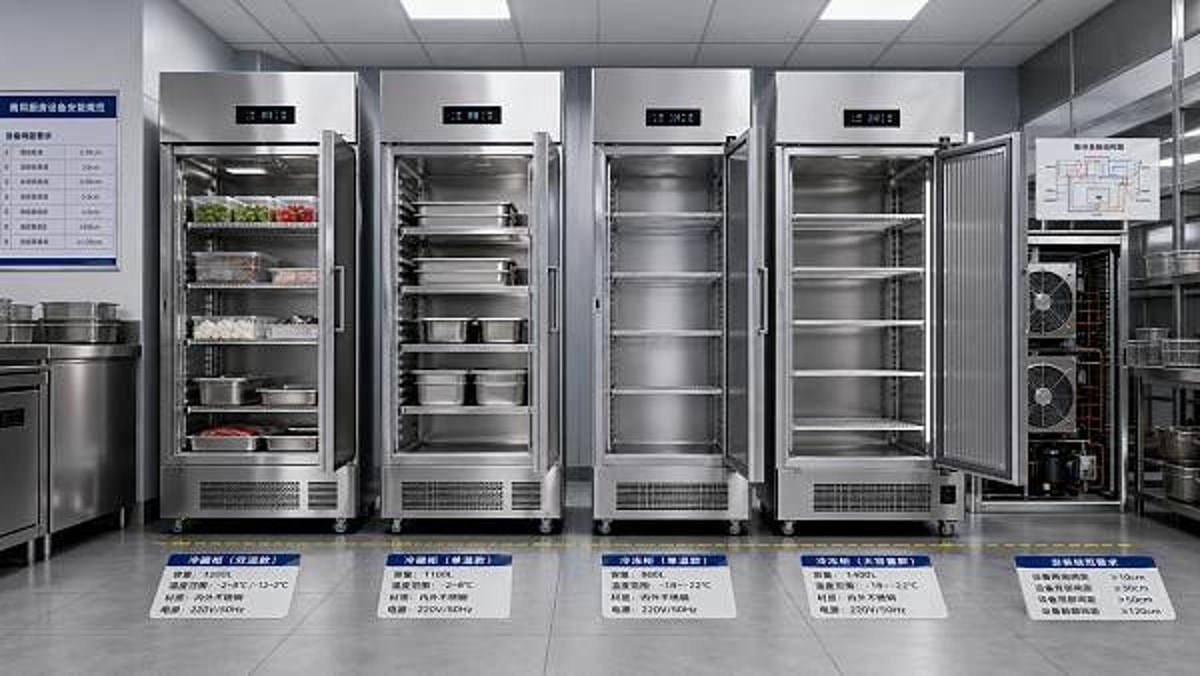
In commercial refrigerators wholesale, small specification mistakes can lead to major losses in energy costs, storage efficiency, and food safety compliance. For technical evaluators, understanding where buyers often misjudge capacity, temperature range, material grade, and cooling performance is essential to making reliable procurement decisions. This guide highlights the most common spec errors to avoid before placing large-volume orders.
Understanding specification risk in commercial refrigerators wholesale
In large-scale sourcing, specifications are not just product descriptions. They define whether a refrigerator can support a real operating environment, maintain stable food safety performance, fit available installation space, and deliver predictable lifecycle cost. In commercial refrigerators wholesale, many failed purchases do not come from obvious defects. They come from technically acceptable but commercially unsuitable specs.
This is why technical evaluation teams play a decisive role. A buyer may focus on unit price, external appearance, or nominal capacity, while an evaluator must examine refrigeration system design, ambient condition rating, insulation quality, compressor loading, evaporator layout, shelf strength, controller accuracy, and serviceability. In hospitality, catering, education, and institutional environments, those details affect uptime, compliance, and operating margin.
For organizations working through global sourcing platforms such as GCT, the challenge becomes even more important. Cross-border procurement often involves varying standards, test methods, climate assumptions, and material claims. A spec sheet that looks complete may still omit the exact information needed for a reliable technical decision.
Why the market pays close attention to accurate refrigerator specifications
The commercial refrigeration market serves hotels, restaurants, central kitchens, bakeries, hospitals, campuses, convenience formats, and specialty retail. Each environment places different stress on equipment. A back-of-house freezer in a luxury hotel, for example, may require low noise, corrosion resistance, and high door-opening recovery. A school cafeteria may care more about easy cleaning, standardized GN pan compatibility, and stable operation during peak meal periods. In commercial refrigerators wholesale, a generic specification approach rarely works across these use cases.
Energy standards are also becoming stricter in many regions. Buyers now expect better performance documentation, not only advertised cooling ability. At the same time, food safety regulations demand tighter control of holding temperatures. This combination means technical teams must read beyond headline metrics and verify how performance was measured, under what conditions, and with what tolerances.
A practical overview of the most frequent spec mistakes
Mistake 1: confusing gross capacity with usable storage capacity
One of the most common errors in commercial refrigerators wholesale is to compare cabinets by gross liters alone. Gross internal volume sounds simple, but it rarely reflects day-to-day storage reality. Evaporator housings, fan covers, shelf supports, internal light fittings, and airflow spacing all reduce usable room. If buyers store hotel banquet trays, bakery racks, beverage crates, or GN pans, the true question is not how many liters the cabinet has, but what format and quantity it can hold without blocking air circulation.
Technical evaluators should request dimensional drawings of the interior, shelf load limits, tray compatibility, number of shelf positions, and recommended loading pattern. In many projects, fewer but better-organized shelves outperform larger nominal volume. A cabinet that supports the exact pan system or crate standard used on site may deliver more real capacity than a larger competitor.
Mistake 2: reading temperature range without examining stability and uniformity
A refrigerator advertised at 0 to 10 degrees Celsius is not automatically suitable for all chilled storage tasks. What matters is whether the unit can maintain the target product temperature under expected ambient heat load, frequency of door opening, and stock rotation intensity. In commercial refrigerators wholesale, many buyers approve equipment based only on controller range, not on actual cabinet uniformity or recovery speed.
This distinction is critical in professional kitchens and institutional settings. Product at the top shelf may run warmer than product near the evaporator. During service peaks, frequent opening may create temperature swings large enough to compromise sensitive goods. Ask suppliers for test standards, temperature mapping data, controller tolerance, and defrost cycle impact. If blast-chilled items enter normal holding cabinets, pull-down performance becomes especially important.
Mistake 3: overlooking ambient climate rating and duty conditions
A spec sheet may list acceptable cooling performance without clearly stating the ambient conditions used for testing. That creates a hidden risk. Units that perform well in a temperate showroom may struggle in tropical kitchens, semi-open service stations, or hot laundry-adjacent back rooms. For technical teams handling commercial refrigerators wholesale, climate class and surrounding temperature assumptions should never be treated as secondary details.
Review the intended operating environment carefully. Is the unit placed near cooking lines? Is ventilation restricted? Is relative humidity high? Is the application overnight storage or constant daytime access? Compressor sizing, condenser design, and refrigerant system efficiency all interact with ambient conditions. A low-cost model can become an expensive liability if it runs continuously, accumulates frost quickly, or fails to recover after loading.
Mistake 4: accepting vague material descriptions
“Stainless steel construction” is one of the most misunderstood phrases in this category. Without grade information, surface finish details, and confirmation of where the material is applied, the statement has limited value. Exterior panels, interior liners, shelving, and structural frames may use different materials. In humid or coastal environments, lower-grade metal can degrade much faster than expected.
For commercial refrigerators wholesale, evaluators should verify whether the unit uses 304 stainless steel, 201 stainless steel, powder-coated steel, aluminum components, or mixed construction. Also check thickness, welded joint quality, edge treatment, and cleanability. In foodservice operations, hygienic durability often matters more than polished appearance. Rounded internal corners, removable gaskets, drain design, and corrosion resistance can strongly influence inspection outcomes and maintenance cost.
Mistake 5: underestimating cooling system design and airflow logic
Two refrigerators can share similar dimensions and temperature claims while delivering very different operational results. The reason often lies in refrigeration architecture. Fan-assisted cooling, static cooling, evaporator placement, air duct layout, and defrost strategy affect drying, frosting, noise, temperature consistency, and recovery after door openings. In commercial refrigerators wholesale, these design choices are often hidden behind simplified brochures.
The right system depends on product type and usage pattern. Beverage display applications may prioritize fast air circulation and visual merchandising. Ingredient holding may need gentler airflow to reduce dehydration. Frozen storage may require strong insulation and stable low-temperature recovery. Technical reviewers should ask not only what temperature is claimed, but how that temperature is achieved and maintained over a full operating cycle.
Typical application differences evaluators should map before ordering
Mistake 6: focusing on purchase price instead of lifecycle technical value
Price pressure is common in global procurement, but technical evaluators should protect projects from false economy. A cheaper cabinet may consume more electricity, require more frequent service, have lower insulation performance, or suffer from weak door hardware. In commercial refrigerators wholesale, those hidden costs multiply quickly across fleets of units.
A robust evaluation should include annual energy consumption, expected compressor duty cycle, gasket replacement ease, spare parts availability, controller reliability, and cleaning labor impact. For chain operations and multi-site institutions, consistency of parts and service procedures can be as valuable as the equipment itself. Standardization reduces downtime and simplifies technician training.
Mistake 7: failing to verify compliance, testing, and documentation depth
Another recurring issue in commercial refrigerators wholesale is assuming that all certifications carry the same meaning in every market. Technical files should be checked for electrical safety, refrigerant compliance, food-contact suitability where relevant, and regional performance labeling. If a supplier cannot explain test conditions or provide traceable reports, the risk level rises.
Documentation quality often reveals manufacturing maturity. Clear exploded views, wiring diagrams, spare parts lists, and maintenance manuals indicate better aftermarket readiness. For cross-border buyers, this matters because field service teams may depend heavily on remote support. Strong documentation shortens troubleshooting time and improves asset uptime.
A disciplined evaluation framework for technical teams
To reduce specification errors, technical evaluators should use a structured review path. First, define the operational profile: product type, holding temperature, load pattern, ambient condition, and cleaning regime. Second, match this profile to equipment architecture rather than to price tier alone. Third, validate critical claims with measurable evidence, including interior dimensions, temperature stability data, insulation details, compressor information, and compliance documents.
It is also useful to build a weighted scorecard. Capacity accuracy, thermal performance, material integrity, serviceability, and energy efficiency should each receive defined scoring criteria. This approach helps procurement, operations, and engineering teams align around practical decision factors instead of reacting to isolated features.
Conclusion: better specifications lead to better wholesale outcomes
Success in commercial refrigerators wholesale depends less on broad product categories and more on the accuracy of technical interpretation. The most expensive mistakes usually begin with small spec misunderstandings: gross capacity mistaken for usable storage, setpoint confused with real holding stability, stainless steel claimed without grade verification, or cooling performance accepted without ambient context.
For technical evaluators, the goal is not simply to approve a refrigerator that can work. It is to confirm a solution that will work reliably in the exact commercial environment it is meant to serve. When buyers apply disciplined specification review, they reduce compliance risk, improve energy performance, and create stronger long-term value across hospitality, institutional, and specialty retail operations. If your sourcing program involves high-volume international comparison, a data-backed evaluation process is the safest way to turn commercial refrigerators wholesale into a dependable operational advantage.
Search News
Hot Articles
- Musical InstrumentsChina Table Tennis Team Departs for London; BS EN 14904:2021 Takes EffectMay 01, 2026
- Outdoor RidesSanya Asian Beach Games Closure Triggers Halal Certification Demand for Sand Sports EquipmentMay 01, 2026
- Outdoor RidesAI Football Training Robots Export Surge After Man Utd MatchMay 01, 2026
Popular Tags
Need ExpertConsultation?
Connect with our specialized leisureengineering team for procurementstrategies.
Recommended News
 May 01, 2026Hotel and Catering Equipment Trends Shaping 2026 RenovationsHotel & Catering Equipment trends for 2026 renovations reveal smarter, cleaner, and more flexible solutions that cut risk, improve efficiency, and elevate guest experience.● Hospitality Sourcing Dir
 May 01, 2026Outdoor Patio Heaters: What Changes in Windy Dining AreasOutdoor patio heaters in windy dining areas need more than high output. Learn how wind changes comfort, efficiency, safety, and placement to choose smarter commercial heating solutions.● Hospitality Sourcing Dir
 May 01, 2026Food Warmers Commercial Models That Keep Texture, Not Just HeatFood warmers commercial buyers trust do more than hold heat—they preserve crispness, moisture, and presentation. Discover how to reduce waste and improve service quality.● Hospitality Sourcing Dir
 May 01, 2026Bakery Dough Mixers Sized Right for Batch ConsistencyBakery dough mixers sized right improve batch consistency, dough quality, and efficiency. Learn how to match capacity, torque, and dough type for reliable bakery performance.● Hospitality Sourcing Dir
 May 01, 2026Buffet Chafing Dishes in Bulk: Which Materials Age BetterBuffet chafing dishes bulk guide: compare 304 stainless steel, 201 stainless, aluminum, and coated finishes to see which materials age better, cut replacement costs, and protect buffet presentation.● Hospitality Sourcing Dir
 May 01, 2026Commercial Range Hoods and the Ventilation Problems They Actually SolveCommercial range hoods solve smoke, grease, heat, and air balance problems in commercial kitchens. Learn how they improve safety, compliance, and operating efficiency.● Hospitality Sourcing Dir
 May 01, 2026Commercial Deep Fryers: Gas or Electric for Busy Kitchens?Commercial deep fryers compared: gas or electric? Discover which option delivers faster recovery, better consistency, lower operating costs, and the right fit for busy kitchens.● Hospitality Sourcing Dir
 May 01, 2026Stainless Steel Kitchen Prep Tables and the Hygiene Details Often MissedStainless steel kitchen prep tables demand more than the right material. Discover the hidden hygiene details that impact sanitation, durability, compliance, and smarter buying.● Hospitality Sourcing Dir
 May 01, 2026Commercial Refrigerators Wholesale: Common Spec Mistakes to AvoidCommercial refrigerators wholesale buyers can avoid costly spec mistakes by checking usable capacity, temperature stability, materials, and cooling performance before bulk orders.● Hospitality Sourcing Dir
 May 01, 2026Commercial Ice Makers: When Higher Capacity Stops Saving MoneyCommercial ice makers can cut costs—but only to a point. Learn when higher capacity starts wasting energy, water, space, and budget, and how to size smarter for better ROI.● Hospitality Sourcing Dir
 May 01, 2026Bakery Ovens Commercial Models Compared by Output and FootprintBakery ovens commercial models compared by output and footprint. See which oven fits your bakery, kitchen, or production line for better efficiency, space use, and buying decisions.● Hospitality Sourcing Dir
 May 01, 2026Commercial Espresso Coffee Machines Worth Upgrading in 2026Espresso coffee machines commercial buyers planning 2026 upgrades can compare features, energy efficiency, workflow fit, and sourcing priorities to choose smarter, higher-value solutions.● Hospitality Sourcing Dir
 May 01, 2026Walk In Coolers Wholesale: What Impacts Lead Time the MostWalk in coolers wholesale lead times depend on customization, component supply, factory capacity, and shipping. Learn the biggest delay risks and how to keep projects on schedule.● Hospitality Sourcing Dir
 May 01, 2026Industrial Meat Grinders and the Hidden Cost of UndersizingIndustrial meat grinders that are too small can drive up labor, maintenance, and quality risks. Learn the hidden cost of undersizing and choose equipment that protects efficiency.● Hospitality Sourcing Dir
 May 01, 2026Soft Serve Ice Cream Machines That Fit Small Shop DemandSoft serve ice cream machines for small shops: compare compact capacity, footprint, cleaning, and long-term cost to find the right fit for cafés, kiosks, and dessert counters.● Hospitality Sourcing Dir
 May 01, 2026Why Glassware Sets Wholesale Prices Vary More Than ExpectedGlassware sets wholesale prices vary due to material, production, packaging, compliance, and freight. Learn what drives cost and source smarter with less risk.● Hospitality Sourcing Dir
 May 01, 2026What Separates Reliable Commercial Dishwashers from Costly OnesCommercial dishwashers differ by fit, hygiene, uptime, and lifecycle cost. Learn how to identify reliable models, avoid hidden expenses, and choose smarter for long-term value.● Hospitality Sourcing Dir
 May 01, 2026Ceramic Dinnerware for Restaurants That Lasts Through Daily ServiceCeramic dinnerware restaurant buyers trust should combine durability, style, and efficiency. Discover how to choose long-lasting pieces that reduce replacement costs and elevate guest experience.● Hospitality Sourcing Dir
 Apr 28, 2026What Hidden Costs Appear After New Hotel Equipment Is Installed?Hotel equipment hidden costs explained: hotel beds, hotel chairs, hotel tables, hotel furniture, custom furniture, and luxury furniture. Learn risks, TCO, and smarter sourcing.● Hospitality Sourcing Dir
 Apr 28, 2026Hotel Equipment Lists Often Miss the Items That Drive Daily OperationsHotel equipment gaps hurt daily operations. Discover how hotel furniture, hotel beds, hotel chairs, hotel tables, custom furniture and luxury furniture improve efficiency.● Hospitality Sourcing Dir
 Apr 21, 2026How hospitality procurement plans reduce replacement costsHospitality procurement cuts replacement costs by sourcing durable hotel furniture, hotel beds, hotel chairs, and hotel tables with long-term planning. Explore smarter commercial furniture strategies.● Hospitality Sourcing Dir
 Apr 21, 2026Hospitality procurement delays often start with approvalsHospitality procurement delays often begin with approvals. Learn how hotel furniture, luxury furniture, hotel beds, hotel chairs, and hotel tables sourcing can stay on schedule.● Hospitality Sourcing Dir
 Apr 21, 2026When catering equipment saves labor but slows serviceExplore how catering equipment can save labor yet slow service in hotel furniture environments. Learn smarter hospitality procurement for luxury furniture, hotel equipment, and smoother guest flow.● Hospitality Sourcing Dir
 Apr 21, 2026Catering equipment costs that often get missed at launchCatering equipment costs often missed at launch: uncover hidden expenses in hotel furniture, hotel beds, hotel chairs, soundproofing materials, and hospitality procurement to avoid delays and overspending.● Hospitality Sourcing Dir