Bakery Ovens Commercial Models Compared by Output and Footprint
Choosing among bakery ovens commercial models requires more than comparing price tags. For technical evaluators, output capacity, floor footprint, energy efficiency, and installation constraints directly affect production flow and long-term operating cost. This comparison outlines how different commercial oven configurations perform in real bakery settings, helping buyers match equipment specifications with space planning, throughput targets, and sourcing priorities.
Why output and footprint matter more in real bakery scenarios
In technical evaluation, the challenge is rarely finding a bakery oven that can bake bread, pastries, or pizza. The real task is identifying which bakery ovens commercial buyers should select for a specific operating scenario. A compact urban bakery, a hotel production kitchen, a supermarket in-store bakery, and a central commissary may all require different oven formats even when target products overlap. Output without space efficiency can create workflow bottlenecks. A small footprint without enough batch capacity can force extra labor, longer production windows, and rushed loading patterns that reduce consistency.
This is why footprint should never be treated as a simple dimensions issue. It affects aisle clearance, access to proofing and cooling zones, hood design, serviceability, and future line expansion. Output should also be tested beyond headline tray count. Technical teams need to evaluate effective hourly throughput, recovery time between loads, baking uniformity at full capacity, and product mix flexibility. In practice, bakery ovens commercial sourcing decisions succeed when production goals and spatial realities are reviewed together rather than as separate procurement checkpoints.
A practical comparison of bakery ovens commercial models by scenario
The table below provides a scenario-led comparison. It is designed for technical evaluators who need to map oven format to business use, expected output, and installation limits.
Scenario 1: Small retail bakery or cafe where space is the main constraint
For small retail sites, bakery ovens commercial selection usually starts with physical restrictions rather than theoretical production demand. Door width, electrical supply, wall spacing, and front-of-house aesthetics can limit model choice before thermal performance is even discussed. In this setting, countertop convection ovens and compact full-size convection ovens are often preferred because they support varied menus without occupying too much floor area.
The technical risk in this scenario is underestimating peak-hour volume. A compact oven may work for weekday sales but fail on weekend rushes or seasonal campaigns. Evaluators should calculate trays per hour, average bake cycle, and reload delay under real staffing conditions. If products include laminated pastries, cookies, and reheated savory items in the same shift, the oven must recover heat quickly and support frequent recipe changes. A bakery with limited backroom space should also check whether a stackable configuration offers better output per square meter than a single wider unit.
Scenario 2: Hotel, catering, and foodservice kitchens balancing versatility and service windows
Hotels and catering operations do not always run like dedicated bakeries. They may need to produce breakfast viennoiserie, banquet rolls, plated dessert components, and late-night room service items from the same kitchen. In these environments, bakery ovens commercial buyers typically value flexibility, cleaning access, and predictable recovery more than maximum production per hour.
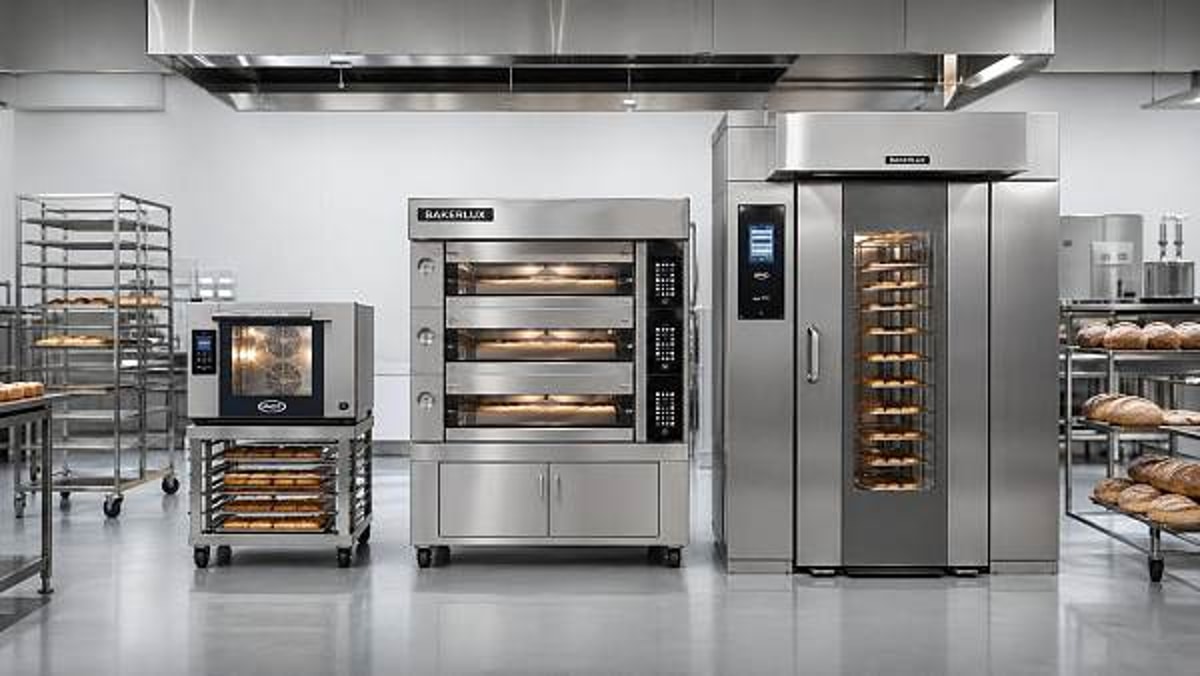
Full-size convection models and rack ovens often fit this scenario, depending on banquet scale. The key technical decision is whether the kitchen experiences short, intense production windows or sustained output across the day. If the operation serves large event volumes, rack ovens can reduce labor loading time and improve consistency across trays. If menus shift constantly and the pastry team works in a shared kitchen, a convection platform may be easier to integrate. Evaluators should examine ventilation loads, steam capability, programmable controls, and whether service teams can access components without disrupting adjacent kitchen operations.
Scenario 3: Supermarket in-store bakeries needing visible freshness and dependable volume
Supermarket bakeries are a distinct application because production is tied to merchandising. Freshness perception matters almost as much as actual output. Here, bakery ovens commercial planning must support repeat bake cycles, quick restocking, and broad product range, often including bread, sweet bakery, and par-baked finishing items. Rack ovens are common because they support larger batch runs with manageable labor, while some stores add smaller convection units for finishing and rapid replenishment.
In this scenario, technical teams should pay close attention to loading ergonomics, cleaning frequency, and how oven placement affects customer sightlines and staff movement. A model with high capacity but poor access can slow replenishment. Footprint must be evaluated with racks, ingredient carts, and packaging zones included, not just the machine body. Noise, heat release, and exhaust requirements may also matter more in an open retail environment than in a back-of-house bakery.
Scenario 4: Artisan bakeries prioritizing crust quality, bake profile, and product identity
When product differentiation depends on crust, oven spring, deck heat, or stone-baked texture, deck ovens become the center of evaluation. In this use case, bakery ovens commercial comparison should not be reduced to tray count alone. An artisan bakery may accept a larger footprint or lower automation because product quality directly supports premium pricing and brand identity.
Technical evaluators should review chamber independence, heat retention, steam injection, floor material, and how quickly operators can switch between bread styles. Output calculations must reflect actual loading patterns, since hand-crafted products may not use every available inch of deck space. The common mistake is installing a deck oven that fits the menu but overwhelms the room layout, leaving too little space for shaping, proofing, and cooling. In artisan environments, the oven works best as part of a coordinated production sequence rather than as an isolated capacity upgrade.
Scenario 5: Central production and industrial lines where throughput dominates
For commissaries and industrial bakeries, bakery ovens commercial decisions are driven by line balance, labor efficiency, and output stability over long operating hours. Rotating rack ovens may suit medium-scale centralized production with mixed SKUs, while tunnel ovens fit continuous, standardized, high-volume lines. In these scenarios, footprint includes much more than the oven itself. Ingredient feed, proofing interface, conveyor alignment, discharge cooling, maintenance access, and utility routing all influence total floor planning.
The technical question is whether production demand is stable enough to justify the equipment format. Continuous ovens can deliver excellent efficiency at scale, but they are harder to justify when SKU turnover is high or order variability is significant. Evaluators should model utilization rates, sanitation downtime, and energy consumption under partial-load conditions. An oversized industrial solution can create hidden inefficiencies if daily volume fluctuates more than expected.
How to judge output beyond brochure numbers
Manufacturers often present capacity in trays, racks, or pieces per hour, but technical teams should normalize output to the actual product mix. A bakery ovens commercial model that performs well on standard sheet pans may lose efficiency with tall products, delicate pastries, or dense bread loads. Throughput should be measured using cycle time, warm-up, recovery, unloading time, and reject rate. If one oven finishes more product per hour on paper but creates uneven color or overbakes edge trays, the effective output may be lower than a smaller, more stable system.
For sourcing comparison, request test data or trial baking based on representative products. The most useful benchmark is not nominal capacity but saleable output per labor hour within the intended site layout. This approach is especially important for GCT readers evaluating global suppliers, where specifications may look comparable but operational assumptions differ by market and installation standard.
Common misjudgments when matching bakery ovens commercial models to space
- Focusing on machine dimensions only and ignoring door swing, rack rotation, and maintenance clearance.
- Choosing maximum capacity without checking utility infrastructure, especially power, gas, steam, and extraction.
- Assuming one oven can serve all SKUs equally well, even when products need different humidity or heat profiles.
- Underestimating operator workflow and placing the oven too far from prep, proofing, or packaging zones.
- Comparing initial price only, without reviewing energy intensity, spare parts access, and service response.
A short scenario-based checklist for technical evaluators
Final recommendation: start with the business scenario, then narrow the oven type
The best bakery ovens commercial choice is rarely the one with the largest stated capacity or the lowest purchase price. It is the model that fits the production rhythm, space envelope, and product strategy of the site where it will operate. Small retail bakeries usually need compact flexibility. Hotels and caterers need predictable versatility. Supermarkets need replenishment efficiency and merchandising support. Artisan bakeries need bake character. Central facilities need throughput that stays efficient at real utilization levels.
For technical evaluators, the most reliable path is to convert business goals into measurable conditions: hourly output, product mix, service window, utility limits, labor pattern, and available footprint. Once those conditions are clear, comparing bakery ovens commercial models becomes far more objective. If you are building a supplier shortlist, requesting layout drawings, test-bake data, compliance records, and service documentation early will reduce sourcing risk and speed final approval.
Search News
Hot Articles
- Musical InstrumentsChina Table Tennis Team Departs for London; BS EN 14904:2021 Takes EffectMay 01, 2026
- Outdoor RidesSanya Asian Beach Games Closure Triggers Halal Certification Demand for Sand Sports EquipmentMay 01, 2026
- Outdoor RidesAI Football Training Robots Export Surge After Man Utd MatchMay 01, 2026
Popular Tags
Need ExpertConsultation?
Connect with our specialized leisureengineering team for procurementstrategies.
Recommended News
 May 01, 2026Hotel and Catering Equipment Trends Shaping 2026 RenovationsHotel & Catering Equipment trends for 2026 renovations reveal smarter, cleaner, and more flexible solutions that cut risk, improve efficiency, and elevate guest experience.● Hospitality Sourcing Dir
 May 01, 2026Outdoor Patio Heaters: What Changes in Windy Dining AreasOutdoor patio heaters in windy dining areas need more than high output. Learn how wind changes comfort, efficiency, safety, and placement to choose smarter commercial heating solutions.● Hospitality Sourcing Dir
 May 01, 2026Food Warmers Commercial Models That Keep Texture, Not Just HeatFood warmers commercial buyers trust do more than hold heat—they preserve crispness, moisture, and presentation. Discover how to reduce waste and improve service quality.● Hospitality Sourcing Dir
 May 01, 2026Bakery Dough Mixers Sized Right for Batch ConsistencyBakery dough mixers sized right improve batch consistency, dough quality, and efficiency. Learn how to match capacity, torque, and dough type for reliable bakery performance.● Hospitality Sourcing Dir
 May 01, 2026Buffet Chafing Dishes in Bulk: Which Materials Age BetterBuffet chafing dishes bulk guide: compare 304 stainless steel, 201 stainless, aluminum, and coated finishes to see which materials age better, cut replacement costs, and protect buffet presentation.● Hospitality Sourcing Dir
 May 01, 2026Commercial Range Hoods and the Ventilation Problems They Actually SolveCommercial range hoods solve smoke, grease, heat, and air balance problems in commercial kitchens. Learn how they improve safety, compliance, and operating efficiency.● Hospitality Sourcing Dir
 May 01, 2026Commercial Deep Fryers: Gas or Electric for Busy Kitchens?Commercial deep fryers compared: gas or electric? Discover which option delivers faster recovery, better consistency, lower operating costs, and the right fit for busy kitchens.● Hospitality Sourcing Dir
 May 01, 2026Stainless Steel Kitchen Prep Tables and the Hygiene Details Often MissedStainless steel kitchen prep tables demand more than the right material. Discover the hidden hygiene details that impact sanitation, durability, compliance, and smarter buying.● Hospitality Sourcing Dir
 May 01, 2026Commercial Refrigerators Wholesale: Common Spec Mistakes to AvoidCommercial refrigerators wholesale buyers can avoid costly spec mistakes by checking usable capacity, temperature stability, materials, and cooling performance before bulk orders.● Hospitality Sourcing Dir
 May 01, 2026Commercial Ice Makers: When Higher Capacity Stops Saving MoneyCommercial ice makers can cut costs—but only to a point. Learn when higher capacity starts wasting energy, water, space, and budget, and how to size smarter for better ROI.● Hospitality Sourcing Dir
 May 01, 2026Bakery Ovens Commercial Models Compared by Output and FootprintBakery ovens commercial models compared by output and footprint. See which oven fits your bakery, kitchen, or production line for better efficiency, space use, and buying decisions.● Hospitality Sourcing Dir
 May 01, 2026Commercial Espresso Coffee Machines Worth Upgrading in 2026Espresso coffee machines commercial buyers planning 2026 upgrades can compare features, energy efficiency, workflow fit, and sourcing priorities to choose smarter, higher-value solutions.● Hospitality Sourcing Dir
 May 01, 2026Walk In Coolers Wholesale: What Impacts Lead Time the MostWalk in coolers wholesale lead times depend on customization, component supply, factory capacity, and shipping. Learn the biggest delay risks and how to keep projects on schedule.● Hospitality Sourcing Dir
 May 01, 2026Industrial Meat Grinders and the Hidden Cost of UndersizingIndustrial meat grinders that are too small can drive up labor, maintenance, and quality risks. Learn the hidden cost of undersizing and choose equipment that protects efficiency.● Hospitality Sourcing Dir
 May 01, 2026Soft Serve Ice Cream Machines That Fit Small Shop DemandSoft serve ice cream machines for small shops: compare compact capacity, footprint, cleaning, and long-term cost to find the right fit for cafés, kiosks, and dessert counters.● Hospitality Sourcing Dir
 May 01, 2026Why Glassware Sets Wholesale Prices Vary More Than ExpectedGlassware sets wholesale prices vary due to material, production, packaging, compliance, and freight. Learn what drives cost and source smarter with less risk.● Hospitality Sourcing Dir
 May 01, 2026What Separates Reliable Commercial Dishwashers from Costly OnesCommercial dishwashers differ by fit, hygiene, uptime, and lifecycle cost. Learn how to identify reliable models, avoid hidden expenses, and choose smarter for long-term value.● Hospitality Sourcing Dir
 May 01, 2026Ceramic Dinnerware for Restaurants That Lasts Through Daily ServiceCeramic dinnerware restaurant buyers trust should combine durability, style, and efficiency. Discover how to choose long-lasting pieces that reduce replacement costs and elevate guest experience.● Hospitality Sourcing Dir
 Apr 28, 2026What Hidden Costs Appear After New Hotel Equipment Is Installed?Hotel equipment hidden costs explained: hotel beds, hotel chairs, hotel tables, hotel furniture, custom furniture, and luxury furniture. Learn risks, TCO, and smarter sourcing.● Hospitality Sourcing Dir
 Apr 28, 2026Hotel Equipment Lists Often Miss the Items That Drive Daily OperationsHotel equipment gaps hurt daily operations. Discover how hotel furniture, hotel beds, hotel chairs, hotel tables, custom furniture and luxury furniture improve efficiency.● Hospitality Sourcing Dir
 Apr 21, 2026How hospitality procurement plans reduce replacement costsHospitality procurement cuts replacement costs by sourcing durable hotel furniture, hotel beds, hotel chairs, and hotel tables with long-term planning. Explore smarter commercial furniture strategies.● Hospitality Sourcing Dir
 Apr 21, 2026Hospitality procurement delays often start with approvalsHospitality procurement delays often begin with approvals. Learn how hotel furniture, luxury furniture, hotel beds, hotel chairs, and hotel tables sourcing can stay on schedule.● Hospitality Sourcing Dir
 Apr 21, 2026When catering equipment saves labor but slows serviceExplore how catering equipment can save labor yet slow service in hotel furniture environments. Learn smarter hospitality procurement for luxury furniture, hotel equipment, and smoother guest flow.● Hospitality Sourcing Dir
 Apr 21, 2026Catering equipment costs that often get missed at launchCatering equipment costs often missed at launch: uncover hidden expenses in hotel furniture, hotel beds, hotel chairs, soundproofing materials, and hospitality procurement to avoid delays and overspending.● Hospitality Sourcing Dir