Food Warmers Commercial Models That Keep Texture, Not Just Heat
Choosing food warmers commercial buyers can trust means looking beyond temperature alone. In professional kitchens, the right unit preserves crispness, moisture, and presentation while meeting the pace of service. This guide explores how commercial food warmers help operators protect texture, reduce waste, and deliver a better dining experience across hotels, catering, and high-volume foodservice settings.
What food warmers commercial systems are really designed to do
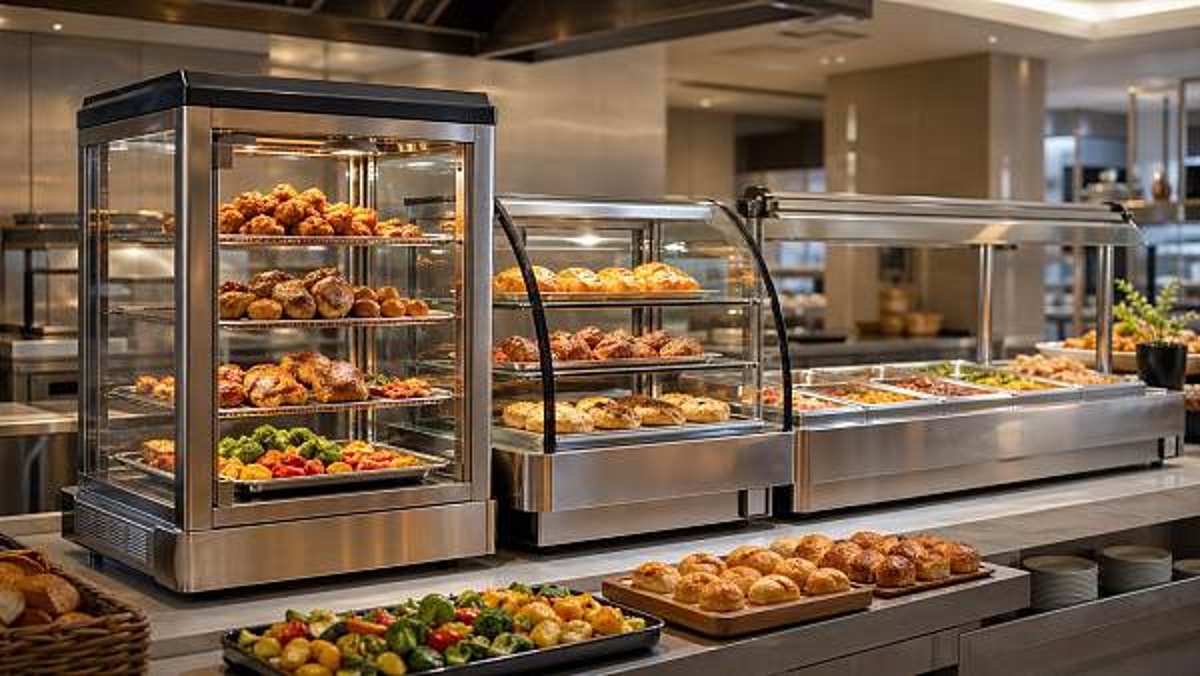
At a basic level, food warmers commercial operators use are holding solutions built to maintain safe serving temperatures after cooking. In practice, however, their role is much broader. They bridge the gap between production and service, especially in environments where timing is unpredictable, order volume changes quickly, or menu variety is high. A well-matched warming unit does not simply keep food hot; it helps preserve the eating qualities guests actually notice first: crust, tenderness, juiciness, separation of sauces, color, and overall presentation.
This distinction matters because heat retention alone can damage product quality. Excess dry heat can toughen proteins, collapse baked items, or turn fried foods limp. Too much moisture can make roasted vegetables soggy and blur textures in plated service. For hotels, institutional dining, retail foodservice, and premium catering, the operational goal is controlled holding, not prolonged cooking. That is why modern food warmers commercial kitchens depend on increasingly feature humidity control, zoned heating, precise thermostats, and designs tailored to specific menu categories.
Why the industry is paying closer attention to texture preservation
Across the broader commercial market, foodservice has moved toward experience-led value. Guests judge a buffet line, banquet station, cafeteria, or grab-and-go program not only by menu choice but by consistency from first serving to last. As labor pressure, energy costs, and food waste concerns continue to shape operations, holding performance has become a strategic issue rather than a back-of-house detail.
This is particularly relevant for businesses serving premium environments. A five-star hotel breakfast service, a conference venue, a smart campus dining hall, and an upscale leisure park outlet all face the same challenge: how to produce food in batches without sacrificing freshness perception. In these settings, food warmers commercial decision-makers evaluate can influence guest satisfaction, speed of service, sustainability metrics, and even brand reputation.
For global buyers and sourcing teams, the issue also connects to compliance and supply chain reliability. Commercial warming equipment must align with electrical standards, food-contact safety requirements, maintenance expectations, and service realities in different markets. This is where a data-backed sourcing perspective, like the one valued by Global Commercial Trade, becomes useful: product quality must be understood in operational context, not only through catalog specifications.
Core performance factors behind better holding results
When professionals compare food warmers commercial ranges, they usually start with size, power, and format. Yet texture-friendly performance often depends on a more detailed set of factors. Understanding these helps information researchers separate commodity equipment from solutions designed for serious service environments.
- Heat distribution: Even heat prevents hot spots that dry out edges or overcook top layers.
- Moisture management: Wet heat, dry heat, or adjustable humidity determines whether food stays crisp, tender, or glossy.
- Recovery speed: Doors opening, tray rotation, and high service frequency demand rapid return to target conditions.
- Pan and chamber design: The geometry of the unit affects airflow, product stacking, and holding time consistency.
- Control precision: Fine thermostat increments and separate heat zones improve menu flexibility.
- Serviceability: Easy cleaning and replaceable components matter in high-usage commercial environments.
The most suitable food warmers commercial teams choose therefore depend on menu behavior. Fried appetizers, carved meats, steamed vegetables, pastries, and plated dishes each respond differently to heat and humidity. A unit that performs well for braised items may be completely wrong for crispy food.
A practical overview of common commercial warmer types
To evaluate applications clearly, it helps to group equipment by holding method and service purpose rather than by brand alone.
Where food warmers commercial equipment creates the most business value
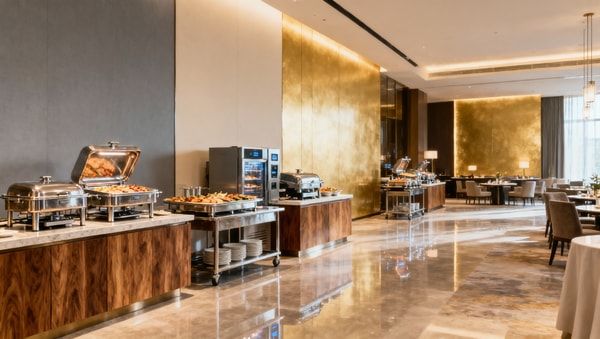
The value of food warmers commercial solutions changes by service model. In hotels, they support breakfast buffets, banquet production, room service coordination, and event turnover. In educational or institutional settings, they reduce queue disruption by holding menu components safely during peak waves. In leisure and entertainment venues, they help operators handle demand surges without making every customer wait for a fresh batch.
From a business standpoint, the most important gains usually appear in five areas. First, they improve consistency, which protects guest trust. Second, they reduce overproduction because kitchens can cook in controlled cycles instead of replacing degraded food prematurely. Third, they support labor efficiency by decoupling production timing from serving pressure. Fourth, they help maintain visual standards, which matters in premium hospitality and retail-facing food environments. Fifth, they strengthen menu flexibility, allowing operators to expand service windows without compromising safety.
This is why sourcing discussions should not isolate the unit from the wider commercial experience. The real return on investment is linked to better holding outcomes, fewer rejected servings, lower waste, and stronger guest perception.
Typical application categories and what they require
Different menu categories respond in distinct ways to holding conditions. Matching food type to warmer design is one of the clearest ways to improve performance.
What to evaluate before selecting a model
For information researchers, one useful approach is to assess food warmers commercial options through operational fit rather than headline features. Start with service rhythm. Is the kitchen handling short bursts, all-day display, or banquet staging over several hours? Then review product mix. A menu heavy in crispy items needs a very different solution from one focused on moist prepared foods.
Next, examine the physical workflow. Capacity should reflect actual pan counts, replenishment frequency, and point-of-service positioning. A large cabinet may look efficient on paper but create unnecessary movement in a compact kitchen. Likewise, an attractive display warmer may underperform if it cannot recover temperature fast enough during busy periods.
Commercial buyers should also pay attention to construction quality, insulation, door durability, gasket performance, digital controls, and cleaning access. International projects often require certification alignment, voltage compatibility, after-sales support, and documentation transparency. In global sourcing, these practical details can matter just as much as the warming technology itself.
Operational practices that help protect texture
Even the best food warmers commercial kitchens install will disappoint if operating methods are weak. Staff should be trained to understand maximum holding times by item, not only target temperatures. Batch sizing should reflect demand patterns so food turns over naturally. Containers should match the product, with depth and cover choices aligned to moisture behavior. Overstacking should be avoided because it traps steam and weakens consistency.
It also helps to build simple quality checks into service routines. Teams can monitor surface texture, internal moisture, appearance, and flavor drift at set intervals. This encourages active holding management instead of passive storage. In premium hospitality, that discipline often separates average buffet quality from a polished guest experience.
How a strategic sourcing perspective improves outcomes
Because warming equipment sits at the intersection of food quality, workflow, compliance, and brand delivery, sourcing should be guided by both technical and commercial intelligence. Buyers increasingly need more than a product brochure. They need confidence that a supplier can support customization, volume consistency, safety documentation, and long-term operational reliability.
This is especially true in sectors where commercial spaces shape customer experience. Hotels, campuses, specialty retail food concepts, and large event venues all benefit from partners who understand how equipment decisions affect service standards. A strong sourcing framework compares manufacturer capability, project references, maintenance realities, and market suitability alongside core performance data.
Final perspective for researchers and decision-makers
Food warmers commercial buyers evaluate should be seen as quality-control tools, not just heat boxes. The right unit protects texture, supports service timing, and helps deliver a more reliable dining experience across commercial settings. For operators under pressure to reduce waste and maintain premium standards, that difference is significant.
If you are researching food warmers commercial solutions for hospitality, institutional dining, or high-volume foodservice, focus on holding method, food behavior, workflow fit, and supplier credibility together. That broader view leads to better sourcing decisions and stronger performance once the equipment reaches the floor.
Search News
Hot Articles
- Musical InstrumentsChina Table Tennis Team Departs for London; BS EN 14904:2021 Takes EffectMay 01, 2026
- Outdoor RidesSanya Asian Beach Games Closure Triggers Halal Certification Demand for Sand Sports EquipmentMay 01, 2026
- Outdoor RidesAI Football Training Robots Export Surge After Man Utd MatchMay 01, 2026
Popular Tags
Need ExpertConsultation?
Connect with our specialized leisureengineering team for procurementstrategies.
Recommended News
 May 01, 2026Hotel and Catering Equipment Trends Shaping 2026 RenovationsHotel & Catering Equipment trends for 2026 renovations reveal smarter, cleaner, and more flexible solutions that cut risk, improve efficiency, and elevate guest experience.● Hospitality Sourcing Dir
 May 01, 2026Outdoor Patio Heaters: What Changes in Windy Dining AreasOutdoor patio heaters in windy dining areas need more than high output. Learn how wind changes comfort, efficiency, safety, and placement to choose smarter commercial heating solutions.● Hospitality Sourcing Dir
 May 01, 2026Food Warmers Commercial Models That Keep Texture, Not Just HeatFood warmers commercial buyers trust do more than hold heat—they preserve crispness, moisture, and presentation. Discover how to reduce waste and improve service quality.● Hospitality Sourcing Dir
 May 01, 2026Bakery Dough Mixers Sized Right for Batch ConsistencyBakery dough mixers sized right improve batch consistency, dough quality, and efficiency. Learn how to match capacity, torque, and dough type for reliable bakery performance.● Hospitality Sourcing Dir
 May 01, 2026Buffet Chafing Dishes in Bulk: Which Materials Age BetterBuffet chafing dishes bulk guide: compare 304 stainless steel, 201 stainless, aluminum, and coated finishes to see which materials age better, cut replacement costs, and protect buffet presentation.● Hospitality Sourcing Dir
 May 01, 2026Commercial Range Hoods and the Ventilation Problems They Actually SolveCommercial range hoods solve smoke, grease, heat, and air balance problems in commercial kitchens. Learn how they improve safety, compliance, and operating efficiency.● Hospitality Sourcing Dir
 May 01, 2026Commercial Deep Fryers: Gas or Electric for Busy Kitchens?Commercial deep fryers compared: gas or electric? Discover which option delivers faster recovery, better consistency, lower operating costs, and the right fit for busy kitchens.● Hospitality Sourcing Dir
 May 01, 2026Stainless Steel Kitchen Prep Tables and the Hygiene Details Often MissedStainless steel kitchen prep tables demand more than the right material. Discover the hidden hygiene details that impact sanitation, durability, compliance, and smarter buying.● Hospitality Sourcing Dir
 May 01, 2026Commercial Refrigerators Wholesale: Common Spec Mistakes to AvoidCommercial refrigerators wholesale buyers can avoid costly spec mistakes by checking usable capacity, temperature stability, materials, and cooling performance before bulk orders.● Hospitality Sourcing Dir
 May 01, 2026Commercial Ice Makers: When Higher Capacity Stops Saving MoneyCommercial ice makers can cut costs—but only to a point. Learn when higher capacity starts wasting energy, water, space, and budget, and how to size smarter for better ROI.● Hospitality Sourcing Dir
 May 01, 2026Bakery Ovens Commercial Models Compared by Output and FootprintBakery ovens commercial models compared by output and footprint. See which oven fits your bakery, kitchen, or production line for better efficiency, space use, and buying decisions.● Hospitality Sourcing Dir
 May 01, 2026Commercial Espresso Coffee Machines Worth Upgrading in 2026Espresso coffee machines commercial buyers planning 2026 upgrades can compare features, energy efficiency, workflow fit, and sourcing priorities to choose smarter, higher-value solutions.● Hospitality Sourcing Dir
 May 01, 2026Walk In Coolers Wholesale: What Impacts Lead Time the MostWalk in coolers wholesale lead times depend on customization, component supply, factory capacity, and shipping. Learn the biggest delay risks and how to keep projects on schedule.● Hospitality Sourcing Dir
 May 01, 2026Industrial Meat Grinders and the Hidden Cost of UndersizingIndustrial meat grinders that are too small can drive up labor, maintenance, and quality risks. Learn the hidden cost of undersizing and choose equipment that protects efficiency.● Hospitality Sourcing Dir
 May 01, 2026Soft Serve Ice Cream Machines That Fit Small Shop DemandSoft serve ice cream machines for small shops: compare compact capacity, footprint, cleaning, and long-term cost to find the right fit for cafés, kiosks, and dessert counters.● Hospitality Sourcing Dir
 May 01, 2026Why Glassware Sets Wholesale Prices Vary More Than ExpectedGlassware sets wholesale prices vary due to material, production, packaging, compliance, and freight. Learn what drives cost and source smarter with less risk.● Hospitality Sourcing Dir
 May 01, 2026What Separates Reliable Commercial Dishwashers from Costly OnesCommercial dishwashers differ by fit, hygiene, uptime, and lifecycle cost. Learn how to identify reliable models, avoid hidden expenses, and choose smarter for long-term value.● Hospitality Sourcing Dir
 May 01, 2026Ceramic Dinnerware for Restaurants That Lasts Through Daily ServiceCeramic dinnerware restaurant buyers trust should combine durability, style, and efficiency. Discover how to choose long-lasting pieces that reduce replacement costs and elevate guest experience.● Hospitality Sourcing Dir
 Apr 28, 2026What Hidden Costs Appear After New Hotel Equipment Is Installed?Hotel equipment hidden costs explained: hotel beds, hotel chairs, hotel tables, hotel furniture, custom furniture, and luxury furniture. Learn risks, TCO, and smarter sourcing.● Hospitality Sourcing Dir
 Apr 28, 2026Hotel Equipment Lists Often Miss the Items That Drive Daily OperationsHotel equipment gaps hurt daily operations. Discover how hotel furniture, hotel beds, hotel chairs, hotel tables, custom furniture and luxury furniture improve efficiency.● Hospitality Sourcing Dir
 Apr 21, 2026How hospitality procurement plans reduce replacement costsHospitality procurement cuts replacement costs by sourcing durable hotel furniture, hotel beds, hotel chairs, and hotel tables with long-term planning. Explore smarter commercial furniture strategies.● Hospitality Sourcing Dir
 Apr 21, 2026Hospitality procurement delays often start with approvalsHospitality procurement delays often begin with approvals. Learn how hotel furniture, luxury furniture, hotel beds, hotel chairs, and hotel tables sourcing can stay on schedule.● Hospitality Sourcing Dir
 Apr 21, 2026When catering equipment saves labor but slows serviceExplore how catering equipment can save labor yet slow service in hotel furniture environments. Learn smarter hospitality procurement for luxury furniture, hotel equipment, and smoother guest flow.● Hospitality Sourcing Dir
 Apr 21, 2026Catering equipment costs that often get missed at launchCatering equipment costs often missed at launch: uncover hidden expenses in hotel furniture, hotel beds, hotel chairs, soundproofing materials, and hospitality procurement to avoid delays and overspending.● Hospitality Sourcing Dir