Toddler Playground Layout Mistakes That Limit Safe Play
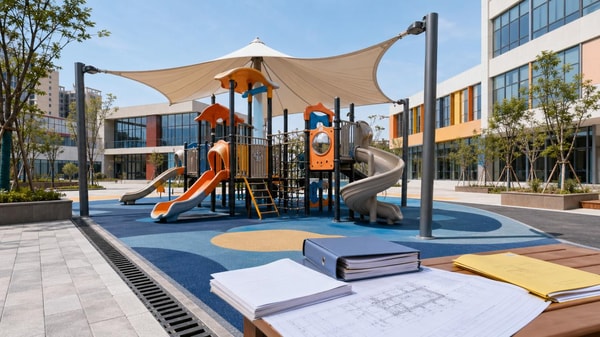
A well-designed toddler playground does more than fill a space—it reduces risk, supports development, and improves long-term site value. Yet many projects fail at the layout stage, where poor zoning, unsafe circulation, and limited visibility can restrict safe play. For project managers and engineering leads, understanding these common design mistakes is essential to creating compliant, efficient, and child-centered play environments.
Why layout mistakes matter more in some project scenarios than others
Not every toddler playground serves the same users, operating model, or risk profile. A hotel family zone, a municipal pocket park, a school early-years yard, and a shopping mall children’s corner may all use similar play equipment, but the layout requirements differ sharply. For project managers, the biggest error is assuming that a standard plan is universally safe. In reality, the right toddler playground layout depends on supervision patterns, traffic volume, age separation, access control, maintenance capacity, and surrounding commercial functions.
This is why layout decisions should be made as part of site strategy, not as a final drawing exercise. When circulation routes cross active play zones, when caregivers cannot see key equipment, or when fast-moving older children share space with toddlers, the design may still look attractive on paper while underperforming in real use. Safe play outcomes rely on scenario-based planning that considers how children, adults, staff, and service vehicles actually move through the space.
Typical application scenarios for a toddler playground and what changes between them
Before identifying specific layout mistakes, it helps to compare the most common operating environments. This gives project teams a clearer basis for deciding whether a concept is suitable, overbuilt, or unsafe for a given site.
For engineering leads and procurement decision-makers, this comparison is critical. A toddler playground that performs well in a supervised preschool may fail in a public park simply because user behavior is less predictable. The safest layouts are not just compliant; they are adapted to the operating context.
Mistake 1: weak age zoning in mixed-use play environments
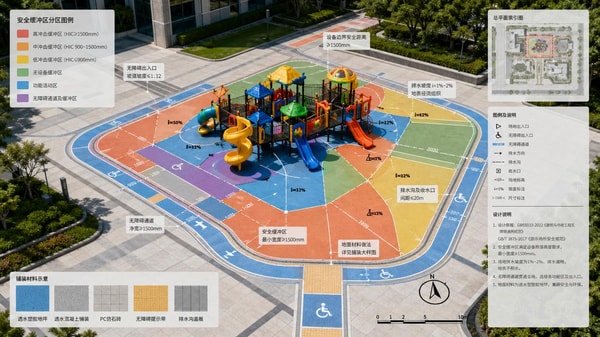
One of the most common toddler playground layout failures is poor age separation. In many projects, toddler play panels, low climbers, or mini slides are placed too close to equipment intended for older children. This creates conflict zones where toddlers may wander into higher-speed movement paths such as swings, spinning elements, or running loops.
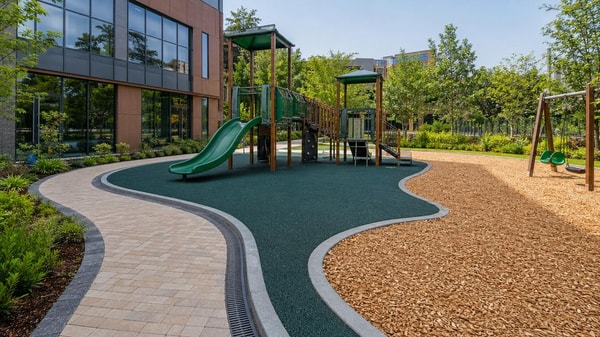
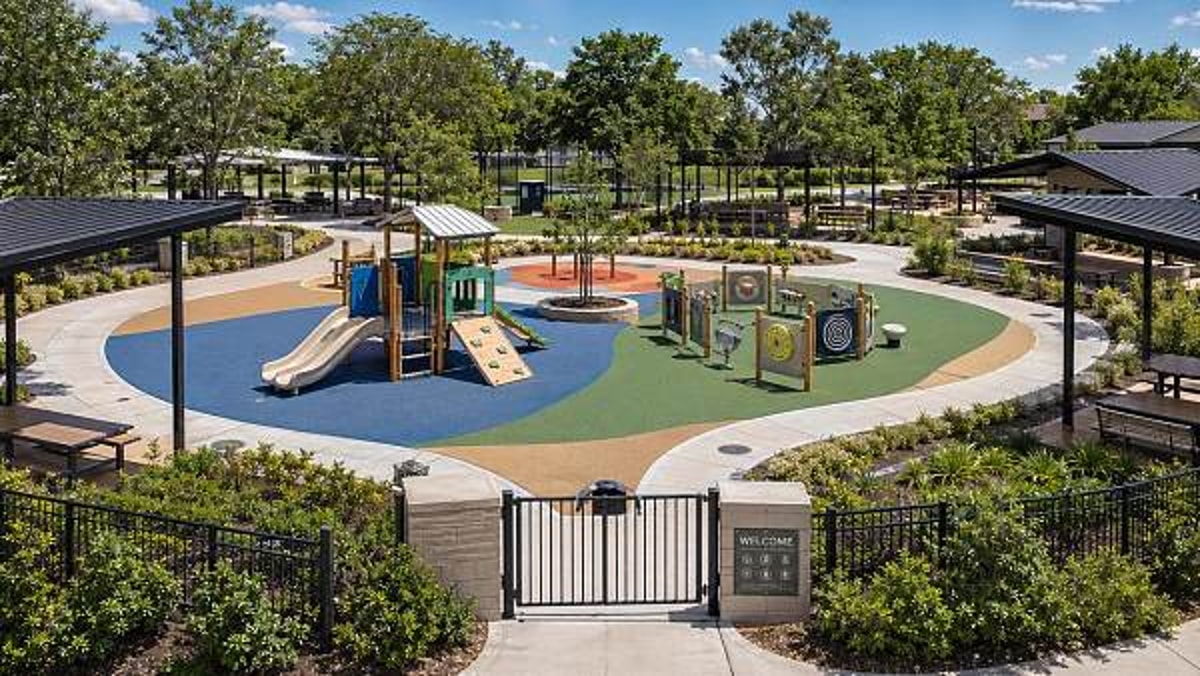
This mistake is especially risky in municipal parks, residential compounds, and destination leisure sites where siblings of different ages use the space together. Designers often assume that surface color or signage alone can define zones. In practice, physical separation, buffer planting, low fencing, changes in circulation path, and clear visual cues work far better than labels.
For project managers, the key question is not whether the toddler playground includes toddler-rated equipment, but whether a toddler can safely reach and use that equipment without crossing higher-risk movement areas. If the answer is no, the site is not genuinely toddler-centered.
Mistake 2: unsafe circulation between entry points, seating, and play zones
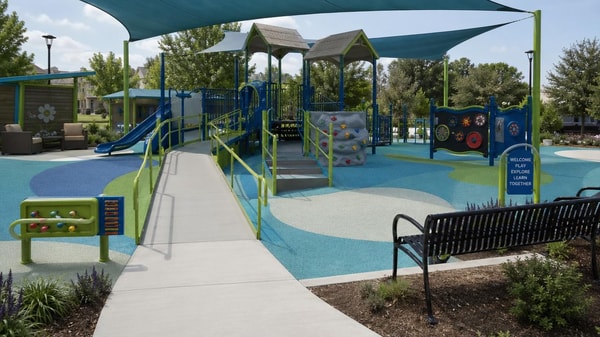
Circulation is often treated as a leftover space between equipment footprints, yet it strongly influences both safety and operational efficiency. A toddler playground should have intuitive and slow-speed movement routes, especially near gates, seating clusters, stroller parking, and adjacent public paths.
In commercial and hospitality settings, poor circulation often appears when designers prioritize aesthetics over family movement. For example, a resort may place benches and shade structures at the edge of the zone, but force caregivers to cross the active play area to reach them. A retail property may position a toddler playground beside a busy aisle without transitional space. In both cases, toddlers can drift into unsafe traffic patterns, while adults struggle to supervise from practical positions.
A better approach is to map all likely routes before finalizing the layout: child entry, caregiver waiting, maintenance access, emergency access, stroller movement, and peak crowd flow. If any of those paths cut through the center of play activity, redesign is usually needed.
Mistake 3: limited visibility caused by decorative features or poor equipment placement
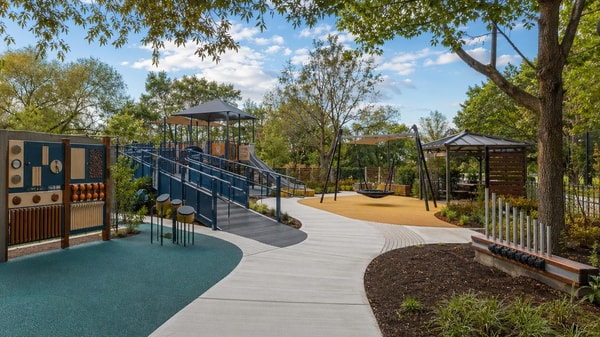
A safe toddler playground depends on constant visibility. Yet many layouts include blind spots created by tall panels, dense landscaping, elevated features, storage walls, or curved plan forms that look premium in renderings but perform poorly on site. This issue is especially relevant for schools, childcare centers, and hospitality environments where adults are expected to monitor multiple children at once.
Project teams should think in terms of supervision geometry. Can one caregiver see access points, climbers, slides, and quiet play corners from a seated or standing position? Can staff maintain line of sight during busy periods? Can CCTV, if used, complement but not replace direct observation? When visibility is fragmented, response times increase and low-level risks become harder to manage.
In a toddler playground, visual openness is usually more valuable than excessive thematic complexity. Custom design can still be attractive, but the plan should avoid hidden recesses, layered barriers, or oversized statement pieces that interrupt supervision.
Mistake 4: ignoring how toddlers transition between active, quiet, and sensory play
Toddlers do not use playgrounds in the same way older children do. Their play is more repetitive, exploratory, and transition-based. A layout that clusters all motion-based equipment together without rest, sensory, or low-stimulation areas can lead to congestion, frustration, and collision risks. This mistake is common in compact urban sites where every square meter is pushed toward visible activity.
For schools and early-learning facilities, balanced zoning is especially important. Quiet areas near the perimeter can support language development, social interaction, and self-regulation. In hotels and mixed-use developments, these zones also help caregivers manage children who are tired or overwhelmed. A toddler playground should therefore offer a logical sequence: arrival, exploration, active movement, pause, and re-entry into play.
When layout planning ignores these transitions, users bunch around entrances, slides, and interactive panels. The result is a space that technically contains age-appropriate features but still feels chaotic and less safe.
Mistake 5: poor relationship between the toddler playground and surrounding site functions
A toddler playground does not operate in isolation. It is part of a wider site ecosystem that may include parking, service routes, cafés, pools, drop-off areas, classrooms, public toilets, or retail circulation. Layout mistakes often happen when the play area is inserted late in the project and forced to adapt to leftover space rather than integrated planning.
In hotels, proximity to water features may create slipping risks or distraction points. In residential projects, placing the toddler playground beside internal vehicle routes can undermine passive safety. In commercial developments, nearby food service can improve dwell time, but only if waste, queuing, and delivery access are kept separate. The best layouts support family convenience without exposing toddlers to non-play hazards.
For engineering teams, this means reviewing adjacency, drainage, shade, acoustics, lighting, and maintenance access as part of the same layout decision. Safe play cannot be delivered by equipment selection alone.
How layout priorities differ by project type
The following matrix can help project stakeholders evaluate which issues deserve the earliest attention in each use case.
Practical layout recommendations for project managers and engineering leads
If you are specifying a toddler playground within a broader commercial or public project, several decision filters can reduce redesign risk. First, define the supervision model early. Will parents sit nearby, stand inside the zone, or rotate in and out? Will staff monitor continuously or only periodically? That answer affects visibility, seating placement, and entry design.
Second, separate circulation from play before choosing equipment. Once equipment anchoring and surfacing are planned, fixing poor movement patterns becomes expensive. Third, test the layout using real user journeys rather than only CAD clearances. Walk through arrival, stroller access, child wandering, sibling crossover, and emergency response scenarios. Fourth, review the toddler playground at peak-use conditions, not just average use. Congestion often exposes design weaknesses that seem minor during low occupancy.
Finally, align the layout with relevant safety standards, local codes, maintenance practices, and warranty requirements. Compliance is the baseline, but true project value comes from a toddler playground that remains safe, legible, and commercially effective after opening.
Common misjudgments that delay approval or reduce long-term value
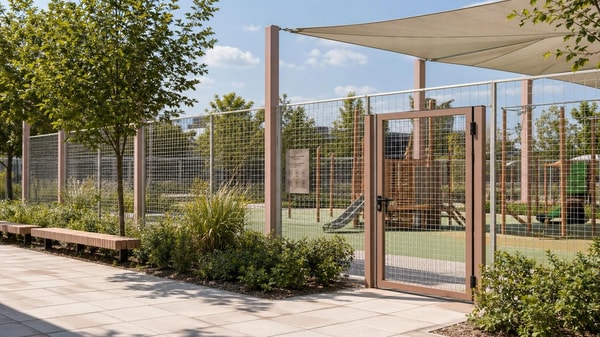
Several recurring assumptions create problems during design review and post-installation assessment. One is believing that compact sites should simply scale down equipment while keeping the same layout logic. In reality, small sites often need even stricter zoning and simpler circulation. Another is treating shade, drainage, fencing, and seating as accessories rather than core safety infrastructure. These elements strongly affect whether a toddler playground is usable in daily operations.
A third misjudgment is overestimating signage. Signs can support behavior, but they cannot compensate for a confusing plan. If a toddler can directly run from a low climber into a bike path, no sign will solve that. The strongest layouts reduce the need for correction by making safe behavior intuitive.
Final planning checklist before confirming a toddler playground layout
Before approving drawings or sourcing equipment packages, confirm these questions: Is the toddler playground physically and visually separated from faster, older-age play? Can caregivers supervise all main activity points without moving constantly? Do entry and exit routes avoid direct conflict with active play? Is there a clear transition between active, sensory, and quiet use? Are adjacent site functions helping or weakening safe play? And does the final plan reflect the actual operating scenario rather than a generic template?
For project managers, this scenario-based review process helps protect budget, compliance, user satisfaction, and site reputation. A successful toddler playground is not only attractive and standards-aligned; it is carefully matched to the way families, staff, and children will use the space every day. If your team is comparing concepts, suppliers, or custom fabrication options, the best next step is to validate layout decisions against your specific project type, supervision model, and traffic patterns before procurement is finalized.
Search News
Hot Articles
- Musical InstrumentsChina Table Tennis Team Departs for London; BS EN 14904:2021 Takes EffectMay 01, 2026
- Outdoor RidesSanya Asian Beach Games Closure Triggers Halal Certification Demand for Sand Sports EquipmentMay 01, 2026
- Outdoor RidesAI Football Training Robots Export Surge After Man Utd MatchMay 01, 2026
Popular Tags
Need ExpertConsultation?
Connect with our specialized leisureengineering team for procurementstrategies.
Recommended News
 May 01, 2026Playground Borders That Reduce Mess and Keep Zones ClearPlayground borders reduce mess, define activity zones, and improve maintenance control. Discover durable, site-smart solutions for safer, cleaner, more organized play areas.● Theme Park Strategist
 May 01, 2026Inclusive Playground Features Families Notice Right AwayInclusive playground features families notice first: step-free access, stable surfacing, sensory balance, and shared play. Use this practical guide to evaluate safer, truly welcoming spaces.● Theme Park Strategist
 May 01, 2026Toddler Playground Layout Mistakes That Limit Safe PlayToddler playground layout mistakes can quietly increase risk. Learn how better zoning, circulation, and visibility create safer, compliant play spaces for every project.● Theme Park Strategist
 May 01, 2026What Makes a Sensory Playground Feel Inclusive in Real UseSensory playground design feels truly inclusive when access, calm zones, shared play, and caregiver comfort work in real use. Discover what makes spaces more welcoming.● Theme Park Strategist
 May 01, 2026How Playground Swings Affect Safety Zones and Site PlanningPlayground swings shape safety zones, circulation, and site efficiency. Learn how to plan compliant, high-performing layouts that reduce redesign risk and improve project value.● Theme Park Strategist
 Apr 30, 2026CBA Game Sparks Southeast Asia Demand for Chinese Interactive Playground WallsCBA game sparks urgent demand for Chinese basketball-themed interactive playground walls across Southeast Asia—AR, pressure-sensor tech, SNI/IEC-certified.● Theme Park Strategist
 Apr 30, 2026Vietnam Mandates Anti-Pinch Sensors for Indoor Playground EquipmentAnti-pinch sensors now mandatory for indoor playground equipment in Vietnam — comply by July 1, 2026 to avoid customs rejection and market access delays.● Theme Park Strategist
 Apr 30, 2026When a playground consultant saves more than an in-house planPlayground consultant advice can prevent costly design errors, compliance gaps, and vendor mistakes. See when expert support beats an in-house plan and protects budget.● Theme Park Strategist
 Apr 30, 2026A smarter playground layout starts with traffic flowPlayground layout starts with traffic flow. Discover how smarter circulation improves safety, accessibility, capacity, and long-term commercial performance.● Theme Park Strategist
 Apr 30, 2026Playground certification steps that delay launch datesPlayground certification delays can add weeks to launch dates. Learn the key bottlenecks, hidden compliance risks, and practical steps to keep projects on schedule.● Theme Park Strategist
 Apr 30, 2026Playground climbers that keep kids challenged without bottlenecksPlayground climbers that reduce bottlenecks keep more kids engaged, improve flow, and suit schools, resorts, parks, and leisure venues. Learn what to specify before you buy.● Theme Park Strategist
 Apr 30, 2026What playground inspection reports often reveal too latePlayground inspection reports often reveal hidden risks too late. Learn how to catch design, installation, and safety issues earlier to avoid delays, rework, and costly project setbacks.● Theme Park Strategist
 Apr 30, 2026Playground accessibility details that change real usabilityPlayground accessibility details shape real usability beyond ramps. Explore transfer points, sensory zones, sightlines, and circulation tips that help buyers choose truly inclusive play spaces.● Theme Park Strategist
 Apr 30, 2026Playground shade structures that improve comfort in hot seasonsPlayground shade structures improve comfort, safety, and usability in hot seasons. Explore smart, durable solutions for schools, parks, and commercial projects.● Theme Park Strategist
 Apr 30, 2026Commercial slides and the maintenance issues often overlookedCommercial slides often fail on maintenance, not design. Learn the overlooked wear, cleaning, access, and compliance issues that affect safety, uptime, and long-term cost.● Theme Park Strategist
 Apr 30, 2026Why playground theme matters more than many layouts suggestPlayground theme shapes engagement, brand value, and repeat visits more than many layouts suggest. Learn how to choose the right concept for hotels, malls, and family venues.● Theme Park Strategist
 Apr 30, 2026Outdoor play structures that stay engaging across age groupsOutdoor play structures that engage ages 2–12: discover how schools, parks, and resorts can choose safer, durable, multi-age designs that boost replay value and buyer confidence.● Theme Park Strategist
 Apr 30, 2026Choosing a playground contractor without missing red flagsPlayground contractor selection made smarter: learn how to spot red flags early, reduce safety and cost risks, and choose a reliable partner with confidence.● Theme Park Strategist
 Apr 30, 2026Playground planning errors that create costly redesigns laterPlayground planning mistakes can trigger costly redesigns, delays, and compliance issues. Learn how to avoid common risks and deliver safer, smarter projects on budget.● Theme Park Strategist
 Apr 30, 2026How playground fencing affects safety without feeling restrictivePlayground fencing shapes safety, visibility, and comfort. Discover how to choose secure, open-feel fencing that protects children without making play spaces feel closed in.● Theme Park Strategist
 Apr 29, 2026Adventure Playground Safety Mistakes to Avoid Before InstallationAdventure playground safety mistakes can delay opening and raise liability. Learn the key pre-installation checks for materials, site planning, surfacing, and compliance.● Theme Park Strategist
 Apr 29, 2026Chinese Tennis Robot Demand Rises in Europe After Zheng Qinwen's Madrid RunChinese tennis robot demand surges in Europe after Zheng Qinwen's Madrid Open run—CE-certified AI training systems now sought by German & Spanish academies.● Theme Park Strategist
 Apr 29, 2026Vietnam Mandates Child Finger-Trap Sensors for Indoor Play EquipmentVietnam mandates child finger-trap sensors for indoor play equipment—key compliance update for exporters, suppliers & certifiers. Act now before Oct 1, 2026.● Theme Park Strategist
 Apr 29, 2026CBA Guangdong’s Loss Spurs Export Inquiries for Indoor Playground EquipmentCBA Guangdong’s playoff loss sparks urgent export inquiries for EN1176-compliant indoor playground equipment — basketball-themed, rapid-assembly modules for ASEAN family entertainment centers.● Theme Park Strategist