Playground Borders That Reduce Mess and Keep Zones Clear
Well-designed playground borders do more than frame a play area—they help reduce mess, separate activity zones, and improve site organization for safer, more efficient project delivery. For project managers and engineering leads, choosing the right playground borders can support maintenance control, user flow, and long-term durability while keeping the overall layout clear, compliant, and visually consistent.
What playground borders are and why they matter
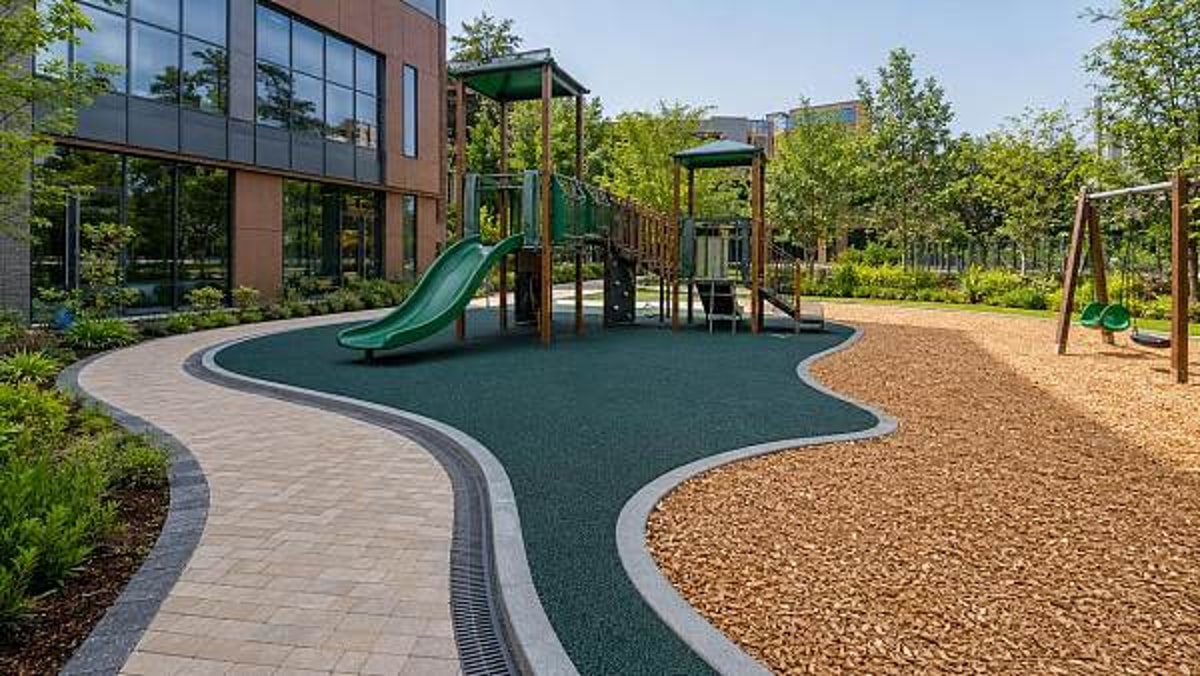
In commercial and institutional site planning, playground borders are edge-defining systems used to contain surfacing materials, organize circulation, and distinguish one activity area from another. They may be made from recycled plastic, rubber, metal, treated timber, concrete, or composite materials, depending on the site’s design intent and performance needs. While they often appear simple, these perimeter elements affect drainage, cleaning, access, safety perception, and the overall readability of a play environment.
For project leaders responsible for schools, hospitality properties, family leisure venues, mixed-use developments, or public parks, playground borders are not only landscape details. They are small infrastructure components with operational impact. A border that fails to hold loose-fill material in place can increase maintenance cycles. A border that creates trip hazards can compromise user safety. A border that is difficult to align with ramps, paths, or inspection zones can slow installation and future servicing.
That is why the topic deserves attention early in project development. Borders influence how the playground performs after handover, not just how it looks on opening day. In a sector where end users expect clean, organized, and durable environments, the right playground borders help protect both capital investment and daily site standards.
Why the industry is paying closer attention
Across commercial environments, outdoor spaces are increasingly expected to deliver structured experiences rather than loosely defined recreation zones. Hotels with family amenities, education campuses, amusement venues, residential developments, and destination retail projects all use play areas to support longer dwell time and stronger visitor satisfaction. As these spaces become more curated, the demand for clearer zoning and lower maintenance naturally rises.
At the same time, operators are under pressure to control lifecycle costs. Loose materials migrating into walkways, water collecting at the edge of play areas, and blurred boundaries between age groups all create operational friction. In this context, playground borders contribute to a broader site-management strategy. They support cleanliness, visual order, and easier separation between active play, quiet play, circulation, seating, landscaping, and service access.
This matters especially in global commercial projects where procurement teams, designers, and contractors must align aesthetic goals with safety guidance and regional standards. GCT’s market perspective shows that buyers no longer evaluate site components only by unit price. They increasingly assess sourcing reliability, material longevity, compliance compatibility, and integration with the full guest or user experience.
Core functions that make playground borders valuable
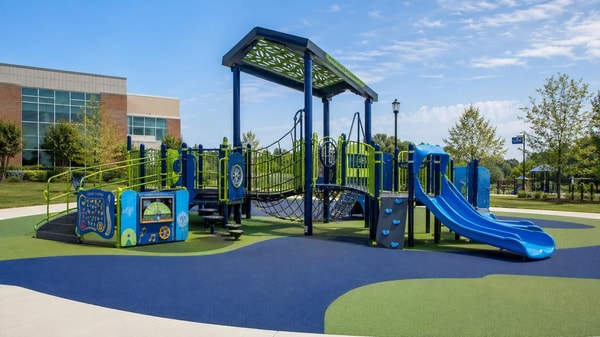
The most immediate benefit of playground borders is mess reduction. In playgrounds that use engineered wood fiber, rubber mulch, sand, pea gravel, or other loose-fill surfaces, material movement is constant. Wind, traffic, and play activity push surfacing beyond the intended area. Without a stable edge, surrounding pavements and planted zones quickly become harder to maintain. A proper border helps keep material in place and reduces the spread of debris into adjacent circulation routes.
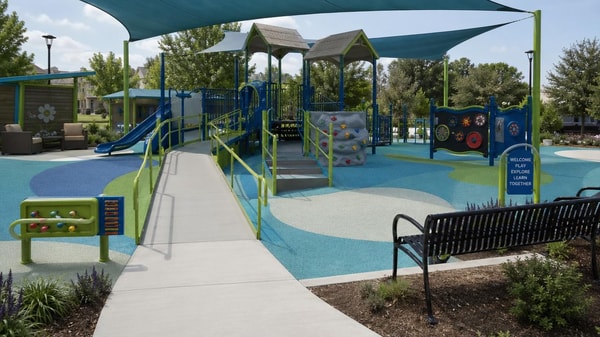
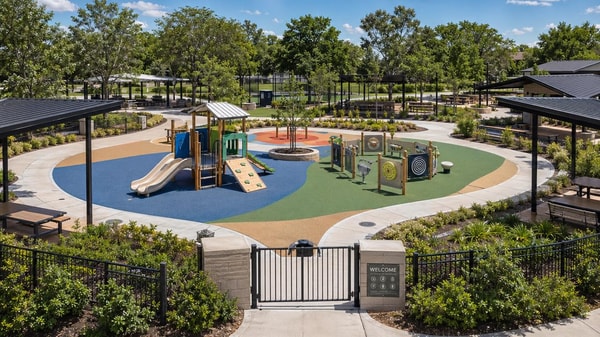
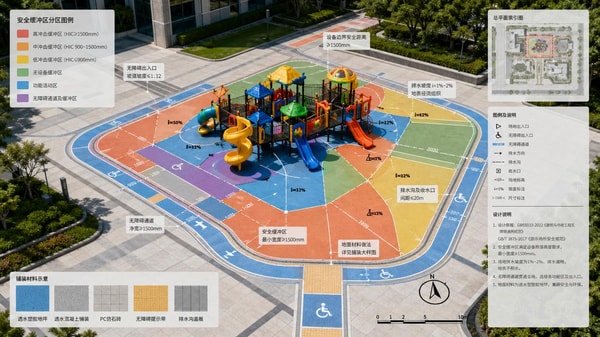
The second major benefit is zone clarity. Playgrounds often combine multiple functions in a compact footprint: climbing, swinging, sensory play, toddler use, group gathering, and spectator seating. Borders can reinforce these distinctions physically and visually. Even low-profile edging helps users understand where one zone ends and another begins, which supports smoother movement and better supervision.
A third value lies in site protection. When borders are coordinated with grading and drainage, they can reduce erosion at the edges of play areas and preserve the intended depth of impact-attenuating surfacing. They also help maintain cleaner transitions between soft and hard surfaces, which benefits both appearance and long-term function.
Finally, playground borders improve project control. From layout accuracy during construction to inspection consistency after opening, defined edges make it easier to measure, maintain, and manage the playground as a complete system.
Industry overview: where border decisions have the most impact
The relevance of playground borders varies by commercial setting, but their contribution to organization and maintenance is widely recognized. The table below outlines common priorities by project type.
Common types of playground borders and their practical fit
Not all playground borders serve the same operating model. Material selection should reflect surfacing type, expected traffic, climate exposure, maintenance resources, and visual goals.
For engineering leads, the best answer is rarely the most decorative option alone. The border must perform within the complete playground system, including drainage layers, accessible routes, surfacing depth, and nearby hardscape connections.
Application value for project managers and engineering teams
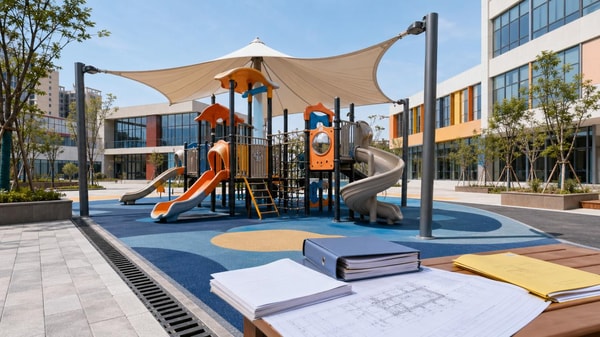
From a delivery standpoint, playground borders help reduce ambiguity. During planning, they give designers and contractors a precise line for excavation, surfacing containment, and interface detailing. During construction, they support sequencing by establishing fixed edges before surfacing placement and adjacent landscape works. During operation, they simplify inspection because maintenance teams can quickly identify material loss, displacement, or transition damage.
They also support risk management. Clearly defined borders reduce the likelihood of loose-fill migration onto paths where slips or wheel obstruction might occur. In family-oriented hospitality or public-use environments, that distinction matters for both safety and housekeeping efficiency. Borders can also improve user guidance, especially when they help separate younger children from more active play zones or direct caregivers toward viewing areas.
Commercial buyers should also consider the reputational aspect. A play space that looks contained, orderly, and well maintained communicates quality. In premium environments, such visual discipline aligns with broader brand expectations. For institutional sites, it signals responsible facility management and long-term planning.
What to evaluate before specifying playground borders
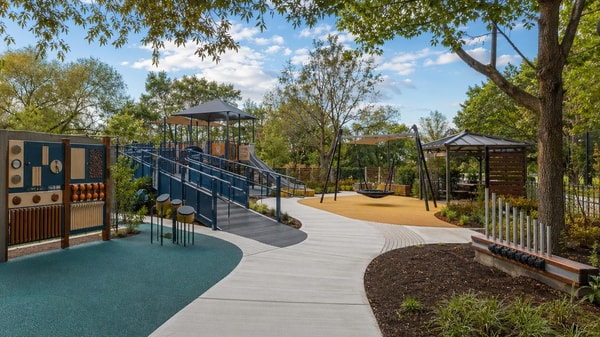
A strong specification begins with surfacing strategy. Poured-in-place rubber, synthetic turf, and loose-fill systems create different edge demands. If the chosen surfacing requires depth retention, the border must be sized and anchored to maintain that depth under repeated use. If accessibility is a core requirement, transitions at entry points must remain smooth and practical for wheel-based mobility.
Drainage is another critical factor. Playground borders should not trap water or disrupt runoff patterns. Poor edge detailing can turn a neat-looking perimeter into a maintenance problem after the first wet season. Coordinate border design with sub-base preparation, slope direction, and adjacent paving elevations.
Material behavior under climate exposure should also be reviewed carefully. UV, freeze-thaw cycles, heavy rainfall, coastal air, and high foot traffic all influence product lifespan. For international sourcing, request evidence of testing, installation guidance, and relevant compliance information. This is where a reliable B2B sourcing framework becomes valuable: verified suppliers and data-backed comparisons reduce the risk of selecting a border system that looks suitable but performs poorly in field conditions.
Finally, think beyond installation. Ask how easily the playground borders can be cleaned, repaired, replaced in sections, or integrated with future upgrades. Lifecycle practicality often separates a successful project from a costly one.
Implementation guidance for clearer, cleaner play zones
In practice, the most effective playground borders are those planned as part of the site system rather than added at the end. Start by mapping user flow: entry points, caregiver waiting zones, active routes, and service access. Then define where containment is essential, where visual guidance is enough, and where barrier-free transition is required.
Keep edge geometry simple where possible. Overly complex curves may look attractive in concept drawings but can complicate installation and create irregular maintenance lines. Where separate zones meet, ensure the border language is consistent enough to help users read the space intuitively. In premium commercial landscapes, this consistency also strengthens overall design coherence.
It is also wise to involve maintenance stakeholders before final approval. Grounds teams, facility operators, and site managers often identify practical issues that are not obvious in the design phase, such as how debris is cleared, how edging interacts with mowing equipment, or where repeated impact is likely to occur. Their input can improve border selection without altering the project concept.
Conclusion: a small component with outsized site value
Playground borders may appear secondary compared with major play equipment or surfacing systems, but for commercial and institutional projects they play a central role in keeping spaces organized, clean, and durable. They reduce mess, preserve zone clarity, support user flow, and contribute to maintenance efficiency over the full life of the site.
For project managers and engineering decision-makers, the best results come from evaluating playground borders through both design and operational lenses. Consider surfacing containment, transition safety, drainage coordination, climate performance, and long-term serviceability. When these factors are addressed early, borders become more than an edge treatment—they become a practical tool for delivering better commercial experiences.
If your team is comparing solutions across education, hospitality, leisure, or public-space projects, a structured sourcing approach can help identify playground borders that align with compliance, durability, and brand expectations at the same time. That combination is what turns a defined perimeter into a reliable project asset.
Search News
Hot Articles
- Musical InstrumentsChina Table Tennis Team Departs for London; BS EN 14904:2021 Takes EffectMay 01, 2026
- Outdoor RidesSanya Asian Beach Games Closure Triggers Halal Certification Demand for Sand Sports EquipmentMay 01, 2026
- Outdoor RidesAI Football Training Robots Export Surge After Man Utd MatchMay 01, 2026
Popular Tags
Need ExpertConsultation?
Connect with our specialized leisureengineering team for procurementstrategies.
Recommended News
 May 01, 2026Playground Borders That Reduce Mess and Keep Zones ClearPlayground borders reduce mess, define activity zones, and improve maintenance control. Discover durable, site-smart solutions for safer, cleaner, more organized play areas.● Theme Park Strategist
 May 01, 2026Inclusive Playground Features Families Notice Right AwayInclusive playground features families notice first: step-free access, stable surfacing, sensory balance, and shared play. Use this practical guide to evaluate safer, truly welcoming spaces.● Theme Park Strategist
 May 01, 2026Toddler Playground Layout Mistakes That Limit Safe PlayToddler playground layout mistakes can quietly increase risk. Learn how better zoning, circulation, and visibility create safer, compliant play spaces for every project.● Theme Park Strategist
 May 01, 2026What Makes a Sensory Playground Feel Inclusive in Real UseSensory playground design feels truly inclusive when access, calm zones, shared play, and caregiver comfort work in real use. Discover what makes spaces more welcoming.● Theme Park Strategist
 May 01, 2026How Playground Swings Affect Safety Zones and Site PlanningPlayground swings shape safety zones, circulation, and site efficiency. Learn how to plan compliant, high-performing layouts that reduce redesign risk and improve project value.● Theme Park Strategist
 Apr 30, 2026CBA Game Sparks Southeast Asia Demand for Chinese Interactive Playground WallsCBA game sparks urgent demand for Chinese basketball-themed interactive playground walls across Southeast Asia—AR, pressure-sensor tech, SNI/IEC-certified.● Theme Park Strategist
 Apr 30, 2026Vietnam Mandates Anti-Pinch Sensors for Indoor Playground EquipmentAnti-pinch sensors now mandatory for indoor playground equipment in Vietnam — comply by July 1, 2026 to avoid customs rejection and market access delays.● Theme Park Strategist
 Apr 30, 2026When a playground consultant saves more than an in-house planPlayground consultant advice can prevent costly design errors, compliance gaps, and vendor mistakes. See when expert support beats an in-house plan and protects budget.● Theme Park Strategist
 Apr 30, 2026A smarter playground layout starts with traffic flowPlayground layout starts with traffic flow. Discover how smarter circulation improves safety, accessibility, capacity, and long-term commercial performance.● Theme Park Strategist
 Apr 30, 2026Playground certification steps that delay launch datesPlayground certification delays can add weeks to launch dates. Learn the key bottlenecks, hidden compliance risks, and practical steps to keep projects on schedule.● Theme Park Strategist
 Apr 30, 2026Playground climbers that keep kids challenged without bottlenecksPlayground climbers that reduce bottlenecks keep more kids engaged, improve flow, and suit schools, resorts, parks, and leisure venues. Learn what to specify before you buy.● Theme Park Strategist
 Apr 30, 2026What playground inspection reports often reveal too latePlayground inspection reports often reveal hidden risks too late. Learn how to catch design, installation, and safety issues earlier to avoid delays, rework, and costly project setbacks.● Theme Park Strategist
 Apr 30, 2026Playground accessibility details that change real usabilityPlayground accessibility details shape real usability beyond ramps. Explore transfer points, sensory zones, sightlines, and circulation tips that help buyers choose truly inclusive play spaces.● Theme Park Strategist
 Apr 30, 2026Playground shade structures that improve comfort in hot seasonsPlayground shade structures improve comfort, safety, and usability in hot seasons. Explore smart, durable solutions for schools, parks, and commercial projects.● Theme Park Strategist
 Apr 30, 2026Commercial slides and the maintenance issues often overlookedCommercial slides often fail on maintenance, not design. Learn the overlooked wear, cleaning, access, and compliance issues that affect safety, uptime, and long-term cost.● Theme Park Strategist
 Apr 30, 2026Why playground theme matters more than many layouts suggestPlayground theme shapes engagement, brand value, and repeat visits more than many layouts suggest. Learn how to choose the right concept for hotels, malls, and family venues.● Theme Park Strategist
 Apr 30, 2026Outdoor play structures that stay engaging across age groupsOutdoor play structures that engage ages 2–12: discover how schools, parks, and resorts can choose safer, durable, multi-age designs that boost replay value and buyer confidence.● Theme Park Strategist
 Apr 30, 2026Choosing a playground contractor without missing red flagsPlayground contractor selection made smarter: learn how to spot red flags early, reduce safety and cost risks, and choose a reliable partner with confidence.● Theme Park Strategist
 Apr 30, 2026Playground planning errors that create costly redesigns laterPlayground planning mistakes can trigger costly redesigns, delays, and compliance issues. Learn how to avoid common risks and deliver safer, smarter projects on budget.● Theme Park Strategist
 Apr 30, 2026How playground fencing affects safety without feeling restrictivePlayground fencing shapes safety, visibility, and comfort. Discover how to choose secure, open-feel fencing that protects children without making play spaces feel closed in.● Theme Park Strategist
 Apr 29, 2026Adventure Playground Safety Mistakes to Avoid Before InstallationAdventure playground safety mistakes can delay opening and raise liability. Learn the key pre-installation checks for materials, site planning, surfacing, and compliance.● Theme Park Strategist
 Apr 29, 2026Chinese Tennis Robot Demand Rises in Europe After Zheng Qinwen's Madrid RunChinese tennis robot demand surges in Europe after Zheng Qinwen's Madrid Open run—CE-certified AI training systems now sought by German & Spanish academies.● Theme Park Strategist
 Apr 29, 2026Vietnam Mandates Child Finger-Trap Sensors for Indoor Play EquipmentVietnam mandates child finger-trap sensors for indoor play equipment—key compliance update for exporters, suppliers & certifiers. Act now before Oct 1, 2026.● Theme Park Strategist
 Apr 29, 2026CBA Guangdong’s Loss Spurs Export Inquiries for Indoor Playground EquipmentCBA Guangdong’s playoff loss sparks urgent export inquiries for EN1176-compliant indoor playground equipment — basketball-themed, rapid-assembly modules for ASEAN family entertainment centers.● Theme Park Strategist