Buffet Chafing Dishes in Bulk: Which Materials Age Better
When evaluating buffet chafing dishes in bulk, procurement teams need more than a low unit price—they need materials that preserve appearance, withstand heavy service, and reduce replacement costs over time. From stainless steel to aluminum and alternative finishes, the right choice affects durability, maintenance, and brand presentation. This guide helps buyers compare which materials truly age better in demanding commercial environments.
Why material choice in buffet chafing dishes bulk is becoming a sharper procurement issue
A few years ago, many buyers treated buffet chafing dishes bulk orders as a straightforward cost exercise: compare unit prices, confirm capacity, and place the order. That approach is changing. Hotels, catering groups, institutional kitchens, cruise operators, and event venues are under greater pressure to keep buffet lines visually premium while controlling labor, replacement cycles, and cleaning time. As a result, the question is no longer simply which chafer looks good at delivery, but which material still looks acceptable after repeated heating, transport, washing, stacking, and front-of-house exposure.
This shift matters because buffet service is now tied more closely to guest perception. In high-volume hospitality environments, scratched lids, warped pans, pitted surfaces, and faded finishes create a visible mismatch between brand promise and service reality. For procurement teams, aging performance has become a practical KPI: it affects lifecycle value, maintenance frequency, replacement planning, and even food presentation standards.
The strongest market signal is that buyers are increasingly asking suppliers not only about material grade, but also about finish retention, hinge durability, resistance to chloride corrosion, compatibility with induction or electric heating, and availability of replacement parts. In other words, the buffet chafing dishes bulk conversation is moving from purchase price to total operating resilience.
What is changing in commercial buffet environments
Several operating changes are reshaping how materials are judged. First, buffet formats are becoming more design-led. Open kitchens, curated breakfast stations, premium banqueting, and branded serving lines require chafers that remain presentable over long service lives. Second, labor shortages are pushing buyers toward equipment that is easier to clean and less prone to cosmetic decline. Third, cross-border sourcing has widened supplier choice, but it has also increased quality variation, making material verification more important than ever.
Another change is the broader move toward mixed heating systems. Traditional fuel chafers still matter, but electric and induction-compatible models are more common in modern hotels and institutional dining. That shift puts more emphasis on base stability, heat distribution, and metal behavior under repeated controlled heating rather than only occasional banquet use. Materials that tolerate thermal cycling well tend to age more gracefully.
At the same time, sustainability expectations are influencing buying decisions. Procurement teams are under pressure to reduce waste, avoid frequent replacement, and document durable asset choices. For many organizations, buying better-aging buffet chafing dishes bulk is no longer a premium option; it is part of responsible asset management.
Which materials age better: a practical market view
In commercial use, “aging better” usually means four things: maintaining structural integrity, preserving surface appearance, resisting corrosion or staining, and remaining serviceable with normal maintenance. Different materials perform differently depending on use intensity, wash chemistry, storage conditions, and front-of-house expectations.
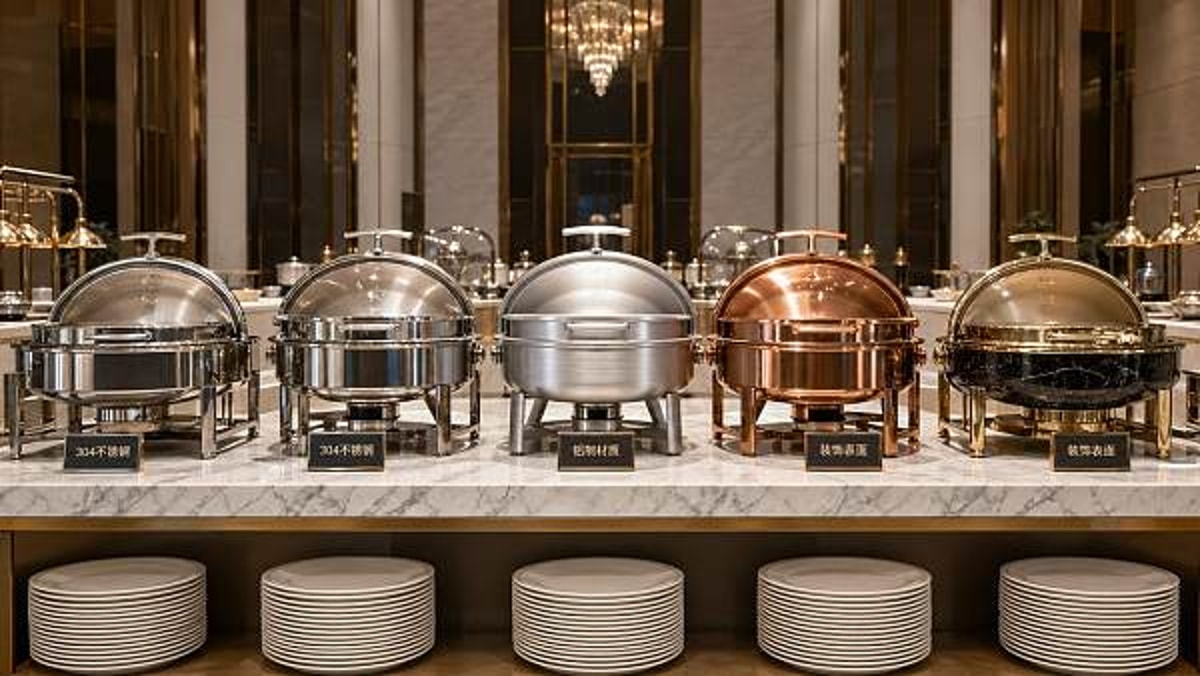
For most commercial buyers, 304 stainless steel remains the strongest baseline for buffet chafing dishes bulk procurement. It is not perfect, but it typically offers the best combination of corrosion resistance, cleaning compatibility, structural stability, and long-term visual consistency. In contrast, lower-grade stainless options may reduce initial spend but can age unevenly in humid kitchens, coastal environments, or operations using aggressive detergents.
Aluminum has a clear role where weight matters, especially in mobile catering or event setups requiring frequent loading and unloading. However, it usually loses cosmetic appeal faster than quality stainless steel. If a venue prioritizes premium buffet presentation, aluminum may create higher visible wear over time even if it remains technically usable.
The hidden drivers behind better-aging materials
Material performance does not exist in isolation. How buffet chafing dishes bulk age is shaped by a wider set of operational and sourcing variables. Procurement teams should watch these drivers closely because they often explain why similar-looking products age very differently.
1. Cleaning chemistry and water quality
Hard water, chlorides, harsh descalers, and incorrect detergent concentrations can accelerate staining and surface damage. A chafer that performs well in one property may age faster in another if dishwashing practices differ. This is why supplier discussions should include care compatibility, not only metal type.
2. Finish quality
Polished, satin, brushed, hammered, PVD-colored, and powder-coated finishes all age differently. Some hide fingerprints and minor scratches better; others show every abrasion. Procurement teams sourcing buffet chafing dishes bulk for luxury service should assess how the finish will look after six months of wiping, stacking, and transport—not only on a showroom sample.
3. Construction details
Weak welds, thin gauge metal, unstable hinges, and low-quality handles can make a product “age” badly even when the base material sounds acceptable on paper. In bulk purchases, material grade must be checked alongside thickness, edge finishing, frame rigidity, and lid mechanism reliability.
4. Service intensity
Daily breakfast buffets, banquet rotation, and long holding times put very different stress on chafers. The stronger the usage frequency, the more valuable better-aging materials become. For light seasonal use, a mid-tier option may be sufficient. For continuous hospitality service, lifecycle quality usually wins.
Who feels the impact most when materials age poorly
Aging is not only a maintenance issue. It affects multiple stakeholders across the commercial chain.
This is why the best buffet chafing dishes bulk decision is often cross-functional. A procurement team focused only on purchase price may miss the downstream costs that operations and brand teams will eventually carry. More buyers are therefore aligning specification reviews with chefs, F&B managers, housekeeping, engineering, and finance before final approval.
Key signals procurement teams should watch before placing buffet chafing dishes bulk orders
In a market with many visually similar products, better decisions come from better questions. Buyers should pay close attention to whether suppliers can clearly state stainless grade, provide finish details, explain weld and hinge construction, and support spare part supply. Ambiguous specifications are often an early warning sign.
Another signal is how a supplier discusses use conditions. Stronger manufacturers usually ask where the units will be used, how often they will be cleaned, what heating system is involved, and whether the property is coastal or high-humidity. That level of discussion suggests a product is being matched to the application rather than sold as a generic chafer.
Buyers should also review consistency across large lots. For buffet chafing dishes bulk, aging performance must be stable across the shipment, not only in a sample. Uneven polishing, inconsistent metal thickness, or variation in lid alignment can signal wider quality control issues that become visible after several months of operation.
How to judge value beyond the unit price
The most useful procurement shift is moving from upfront cost comparison to service-life comparison. Instead of asking only, “Which chafer is cheaper today?” ask, “Which option keeps its appearance, function, and compliance fit for the longest practical period?” For many commercial projects, especially hospitality and institutional dining, that question changes the ranking of suppliers.
A better value model for buffet chafing dishes bulk includes expected years of use, cleaning labor, finish retention, breakage or dent risk, replacement part availability, and brand presentation impact. Even small differences in these areas can outweigh a modest gap in unit price. This is especially true in premium service environments where worn equipment becomes customer-facing evidence of declining standards.
What smart buyers should do next
For current sourcing cycles, the most practical direction is to segment purchases by usage profile. Use higher-grade stainless steel for flagship buffets, luxury banquet service, and high-frequency hotel breakfast operations. Reserve lighter or lower-cost material options for back-up inventory, lower-visibility service zones, or temporary event use. This reduces overspending without sacrificing front-line quality.
It is also wise to request sample evaluation under real operating conditions. Test staining, handling, hinge movement, cleaning response, and finish retention before scaling buffet chafing dishes bulk orders. Short pilot runs often reveal aging risks that catalogs cannot show.
Finally, procurement teams should document a material standard for future tenders. Defining acceptable stainless grade, finish type, thickness range, and replacement support creates stronger consistency across properties and lowers quality variation over time.
Final judgment for commercial buyers
The market direction is clear: buyers are rewarding buffet equipment that lasts better, cleans faster, and protects brand presentation longer. For most professional applications, quality stainless steel—especially 304—continues to age better than lighter or lower-grade alternatives. Aluminum still has value in mobile or weight-sensitive operations, while decorative finishes require closer scrutiny because visual aging can be less forgiving.
If your team is comparing buffet chafing dishes bulk options, the most important next step is to confirm not just what the product is made from, but how that material will behave in your actual service environment. Focus on corrosion resistance, finish retention, construction quality, cleaning compatibility, and lot consistency. Those are the factors most likely to determine whether a low-cost purchase stays economical—or becomes an early replacement problem.
Search News
Hot Articles
- Musical InstrumentsChina Table Tennis Team Departs for London; BS EN 14904:2021 Takes EffectMay 01, 2026
- Outdoor RidesSanya Asian Beach Games Closure Triggers Halal Certification Demand for Sand Sports EquipmentMay 01, 2026
- Outdoor RidesAI Football Training Robots Export Surge After Man Utd MatchMay 01, 2026
Popular Tags
Need ExpertConsultation?
Connect with our specialized leisureengineering team for procurementstrategies.
Recommended News
 May 01, 2026Hotel and Catering Equipment Trends Shaping 2026 RenovationsHotel & Catering Equipment trends for 2026 renovations reveal smarter, cleaner, and more flexible solutions that cut risk, improve efficiency, and elevate guest experience.● Hospitality Sourcing Dir
 May 01, 2026Outdoor Patio Heaters: What Changes in Windy Dining AreasOutdoor patio heaters in windy dining areas need more than high output. Learn how wind changes comfort, efficiency, safety, and placement to choose smarter commercial heating solutions.● Hospitality Sourcing Dir
 May 01, 2026Food Warmers Commercial Models That Keep Texture, Not Just HeatFood warmers commercial buyers trust do more than hold heat—they preserve crispness, moisture, and presentation. Discover how to reduce waste and improve service quality.● Hospitality Sourcing Dir
 May 01, 2026Bakery Dough Mixers Sized Right for Batch ConsistencyBakery dough mixers sized right improve batch consistency, dough quality, and efficiency. Learn how to match capacity, torque, and dough type for reliable bakery performance.● Hospitality Sourcing Dir
 May 01, 2026Buffet Chafing Dishes in Bulk: Which Materials Age BetterBuffet chafing dishes bulk guide: compare 304 stainless steel, 201 stainless, aluminum, and coated finishes to see which materials age better, cut replacement costs, and protect buffet presentation.● Hospitality Sourcing Dir
 May 01, 2026Commercial Range Hoods and the Ventilation Problems They Actually SolveCommercial range hoods solve smoke, grease, heat, and air balance problems in commercial kitchens. Learn how they improve safety, compliance, and operating efficiency.● Hospitality Sourcing Dir
 May 01, 2026Commercial Deep Fryers: Gas or Electric for Busy Kitchens?Commercial deep fryers compared: gas or electric? Discover which option delivers faster recovery, better consistency, lower operating costs, and the right fit for busy kitchens.● Hospitality Sourcing Dir
 May 01, 2026Stainless Steel Kitchen Prep Tables and the Hygiene Details Often MissedStainless steel kitchen prep tables demand more than the right material. Discover the hidden hygiene details that impact sanitation, durability, compliance, and smarter buying.● Hospitality Sourcing Dir
 May 01, 2026Commercial Refrigerators Wholesale: Common Spec Mistakes to AvoidCommercial refrigerators wholesale buyers can avoid costly spec mistakes by checking usable capacity, temperature stability, materials, and cooling performance before bulk orders.● Hospitality Sourcing Dir
 May 01, 2026Commercial Ice Makers: When Higher Capacity Stops Saving MoneyCommercial ice makers can cut costs—but only to a point. Learn when higher capacity starts wasting energy, water, space, and budget, and how to size smarter for better ROI.● Hospitality Sourcing Dir
 May 01, 2026Bakery Ovens Commercial Models Compared by Output and FootprintBakery ovens commercial models compared by output and footprint. See which oven fits your bakery, kitchen, or production line for better efficiency, space use, and buying decisions.● Hospitality Sourcing Dir
 May 01, 2026Commercial Espresso Coffee Machines Worth Upgrading in 2026Espresso coffee machines commercial buyers planning 2026 upgrades can compare features, energy efficiency, workflow fit, and sourcing priorities to choose smarter, higher-value solutions.● Hospitality Sourcing Dir
 May 01, 2026Walk In Coolers Wholesale: What Impacts Lead Time the MostWalk in coolers wholesale lead times depend on customization, component supply, factory capacity, and shipping. Learn the biggest delay risks and how to keep projects on schedule.● Hospitality Sourcing Dir
 May 01, 2026Industrial Meat Grinders and the Hidden Cost of UndersizingIndustrial meat grinders that are too small can drive up labor, maintenance, and quality risks. Learn the hidden cost of undersizing and choose equipment that protects efficiency.● Hospitality Sourcing Dir
 May 01, 2026Soft Serve Ice Cream Machines That Fit Small Shop DemandSoft serve ice cream machines for small shops: compare compact capacity, footprint, cleaning, and long-term cost to find the right fit for cafés, kiosks, and dessert counters.● Hospitality Sourcing Dir
 May 01, 2026Why Glassware Sets Wholesale Prices Vary More Than ExpectedGlassware sets wholesale prices vary due to material, production, packaging, compliance, and freight. Learn what drives cost and source smarter with less risk.● Hospitality Sourcing Dir
 May 01, 2026What Separates Reliable Commercial Dishwashers from Costly OnesCommercial dishwashers differ by fit, hygiene, uptime, and lifecycle cost. Learn how to identify reliable models, avoid hidden expenses, and choose smarter for long-term value.● Hospitality Sourcing Dir
 May 01, 2026Ceramic Dinnerware for Restaurants That Lasts Through Daily ServiceCeramic dinnerware restaurant buyers trust should combine durability, style, and efficiency. Discover how to choose long-lasting pieces that reduce replacement costs and elevate guest experience.● Hospitality Sourcing Dir
 Apr 28, 2026What Hidden Costs Appear After New Hotel Equipment Is Installed?Hotel equipment hidden costs explained: hotel beds, hotel chairs, hotel tables, hotel furniture, custom furniture, and luxury furniture. Learn risks, TCO, and smarter sourcing.● Hospitality Sourcing Dir
 Apr 28, 2026Hotel Equipment Lists Often Miss the Items That Drive Daily OperationsHotel equipment gaps hurt daily operations. Discover how hotel furniture, hotel beds, hotel chairs, hotel tables, custom furniture and luxury furniture improve efficiency.● Hospitality Sourcing Dir
 Apr 21, 2026How hospitality procurement plans reduce replacement costsHospitality procurement cuts replacement costs by sourcing durable hotel furniture, hotel beds, hotel chairs, and hotel tables with long-term planning. Explore smarter commercial furniture strategies.● Hospitality Sourcing Dir
 Apr 21, 2026Hospitality procurement delays often start with approvalsHospitality procurement delays often begin with approvals. Learn how hotel furniture, luxury furniture, hotel beds, hotel chairs, and hotel tables sourcing can stay on schedule.● Hospitality Sourcing Dir
 Apr 21, 2026When catering equipment saves labor but slows serviceExplore how catering equipment can save labor yet slow service in hotel furniture environments. Learn smarter hospitality procurement for luxury furniture, hotel equipment, and smoother guest flow.● Hospitality Sourcing Dir
 Apr 21, 2026Catering equipment costs that often get missed at launchCatering equipment costs often missed at launch: uncover hidden expenses in hotel furniture, hotel beds, hotel chairs, soundproofing materials, and hospitality procurement to avoid delays and overspending.● Hospitality Sourcing Dir