Outdoor Patio Heaters: What Changes in Windy Dining Areas
In windy dining areas, outdoor patio heaters behave very differently than they do in sheltered layouts. For technical evaluators, the real challenge is not just heat output, but how wind affects efficiency, safety, mounting strategy, fuel use, and guest comfort. This article outlines the key performance changes, specification priorities, and site-level considerations that matter when selecting reliable heating solutions for exposed commercial spaces.
Why do outdoor patio heaters perform differently in windy dining areas?
In calm environments, outdoor patio heaters can be assessed with relatively simple criteria: rated output, coverage radius, mounting type, and energy source. In exposed restaurant terraces, rooftop lounges, hotel pool decks, open-air food halls, and amusement park dining zones, wind changes the physics of heat delivery. Warm air no longer stays where guests sit. It lifts, disperses, or shifts laterally, which reduces the practical benefit of nominal power ratings.
For technical teams, this creates a common procurement problem. A heater that looks adequate on paper may underperform once installed near corridor openings, corner voids, elevated decks, waterfront dining areas, or high-traffic service paths. The result is guest discomfort, higher fuel consumption, repeated complaints, and pressure to retrofit with screens, different mounting angles, or additional units.
This matters across the broader commercial sector. Hospitality operators want longer outdoor dwell time. Campus and institutional facilities want safe, predictable heating for semi-open gathering areas. Leisure venues want comfort without visual clutter. In each case, outdoor patio heaters must be evaluated as part of the site system, not as isolated products.
- Wind reduces perceived warmth faster than many catalog specifications suggest.
- Air movement changes the effective coverage shape, not only the coverage size.
- Open commercial layouts often need combined decisions on heater type, placement, shielding, and controls.
- Safety clearances and stability become more critical when gusts, awnings, umbrellas, and pedestrian flow interact.
What wind changes first: comfort, efficiency, or safety?
All three change, but comfort usually fails first. Guests feel the loss of radiant warmth before facility teams detect energy inefficiency on utility reports. As wind speed rises, the body loses heat more quickly, and the heater’s warm zone becomes inconsistent. A table by the façade may feel acceptable while the next table, only a few meters away and exposed to crossflow, feels cold.
Efficiency then declines because operators compensate by increasing runtime, selecting higher power settings, or adding more units than originally planned. Safety risks appear when portable equipment is used in gust-prone areas without sufficient weighting, anchoring, clearance management, or flame protection.
Which outdoor patio heater types hold up better in wind?
Technical evaluators often compare gas mushroom heaters, pyramid heaters, wall-mounted electric infrared units, ceiling-mounted electric heaters, and commercial-grade gas radiant systems. In windy dining areas, the key distinction is whether the heater mainly warms air or delivers directional radiant heat to people and surfaces. Wind disrupts convective heating more aggressively than focused radiant output.
The table below compares common outdoor patio heaters from a windy-site assessment perspective. It is not a universal ranking; local climate, electrical capacity, service model, and canopy design still matter. However, it helps identify which technologies deserve deeper review for exposed commercial spaces.
For many windy dining areas, electric infrared outdoor patio heaters offer better control because they can target seating directly instead of trying to hold warm air in a moving environment. That said, the result depends on height, angle, obstruction, and circuit planning. Gas systems may still be appropriate where electrical infrastructure is limited or where large permanent installations justify centralized fuel planning.
Why radiant direction matters more than nameplate output
A high output number does not guarantee usable comfort in a windy dining area. Technical evaluators should ask a more practical question: where does the heat land, and how long does it remain effective when wind shifts? Directional radiant heat aimed at the upper body and table zone often outperforms a visually larger unit that primarily loses energy into the air column above guests.
What specifications should technical evaluators prioritize?
When selecting outdoor patio heaters for exposed commercial use, technical review should move beyond marketing language. Evaluators need a structured set of specifications tied to real operating conditions: wind exposure, occupancy density, dwell time, service access, and energy availability. A heater that suits a sheltered courtyard may be a poor fit for a coastal rooftop bar or a campus plaza edge.
Core parameters to review before shortlisting
- Heat delivery method: Confirm whether the unit is primarily radiant, convective, or mixed, since wind penalizes convective performance first.
- Mounting height and angle range: A heater with good adjustability is easier to tune for seating lines, façade drafts, and partially screened zones.
- Ingress protection and exterior suitability: Outdoor patio heaters used near sea air, mist, or frequent cleaning need enclosure ratings appropriate for the installation environment.
- Power or fuel logistics: Electrical capacity, gas refill procedures, and connection routing affect both uptime and service cost.
- Stability and anchoring: Freestanding units in windy dining areas need robust anti-tip measures and clear operating procedures.
- Control strategy: Zoned switching, timers, occupancy logic, and staged output can reduce waste in variable weather.
The next table translates these parameters into practical review points for specification teams. It is especially useful for hospitality groups, procurement departments, project engineers, and consultants evaluating multiple supplier offers.
This parameter-based approach helps technical evaluators avoid a common mistake: comparing outdoor patio heaters only by list price or headline wattage. In exposed commercial projects, the more useful metric is site-adjusted performance per occupied seat or per usable dining zone.
How should placement and layout change in exposed commercial spaces?
Wind rarely affects a site uniformly. One edge may be shielded by a parapet, while another acts like a wind tunnel because of open corners, vehicle lanes, service doors, or building pressure differences. That is why outdoor patio heaters should be mapped against airflow patterns, not simply distributed in equal spacing.
Site-level placement principles
- Identify high-loss zones first. Corner tables, perimeter seating, elevated decks, and passage-adjacent areas usually require targeted heating or partial wind mitigation.
- Match heater direction to seated body position. In windy layouts, heating the table surface alone is not enough; the torso and upper legs often need better radiant exposure.
- Use zoning rather than blanket coverage. Dining areas rarely fill evenly, and staged zones reduce wasted runtime during partial occupancy.
- Review canopy, umbrella, and façade interactions. These elements can help or harm performance depending on height, reflectivity, and trapped heat behavior.
- Plan for service circulation. Waitstaff movement, cleaning routes, and furniture reconfiguration should not compromise clearance or create repeated impact risk.
For technical evaluators, one practical method is to divide the dining area into microclimate bands: sheltered, semi-exposed, exposed, and highly exposed. Then assign heater types and mounting strategies to each band. This often yields better outcomes than applying one heater model across the entire venue.
When wind screens help and when they do not
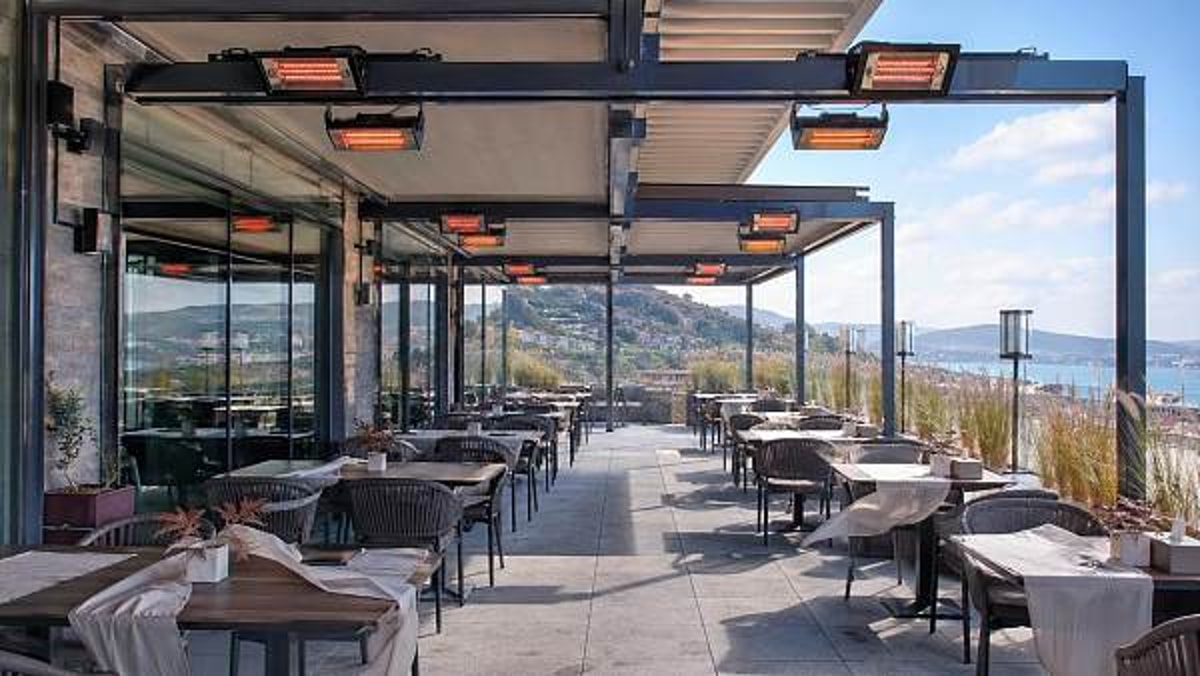
Partial wind screens, planter barriers, glazed partitions, or architectural fins can improve the usefulness of outdoor patio heaters, but they are not always enough on their own. Screens work best when they interrupt lateral gusts without creating problematic turbulence or code issues. They should be assessed together with egress, cleaning, sightlines, and brand aesthetics.
What are the main safety, compliance, and operational risks?
Windy dining areas increase the importance of installation discipline. Even when outdoor patio heaters are correctly chosen, poor compliance review can create unacceptable risk. Technical teams should verify local requirements for fuel storage, electrical protection, combustion safety, public access separation, and exterior mounting. Requirements vary by market, so project documentation should align with the destination jurisdiction.
- For electric systems, check suitability for outdoor exposure, connection protection, isolation procedures, and maintenance access.
- For gas systems, review ventilation, ignition safety, cylinder handling, leak testing, and clearance from fabrics, umbrellas, and decorative materials.
- For portable units, confirm anti-tip provisions, base stability, and operator procedures for gusty weather or overnight storage.
- For all systems, evaluate user reach, guest contact temperature, signage needs, and emergency shutdown accessibility.
International project teams often also review general frameworks such as electrical equipment standards, gas appliance requirements, ingress protection conventions, and fire safety practices relevant to commercial venues. The exact applicable standards depend on the market and product category, but technical evaluators should insist on clear compliance documentation before approval.
How do cost, energy use, and alternatives change under windy conditions?
Wind increases operating cost in two ways. First, heaters may run longer or at higher output to achieve the same guest comfort. Second, venues often overspecify quantity after early underperformance. The wrong outdoor patio heaters can therefore appear affordable during tendering but become expensive in service.
The best commercial decision is not always the lowest unit cost. Technical evaluators should compare installed cost, energy infrastructure impact, maintenance demands, replacement intervals, and layout adaptability. In some cases, combining moderate heating with wind management delivers a better return than simply purchasing larger heaters.
Common alternatives or complements to consider
- Architectural wind reduction, such as screens, planters, or façade modifications, to lower heat loss before adding more power.
- Targeted zoning controls that activate only occupied areas during peak service windows.
- Furniture layout changes that move guests away from high-draft edges without sacrificing capacity.
- Semi-covered structures that improve heater efficiency while supporting premium dining experiences.
For sourcing teams handling multiple markets, this is where a data-led procurement partner becomes useful. Cross-border supply decisions must consider not only heater selection, but also lead times, regional compliance pathways, replacement part planning, and whether the same concept can scale across hotels, campuses, leisure venues, or mixed-use developments.
A practical procurement checklist for technical evaluators
Before issuing approval or finalizing a supplier shortlist, technical evaluators can use the following checklist to improve decision quality for outdoor patio heaters in windy dining areas.
- Map wind exposure by zone instead of treating the terrace or deck as one uniform area.
- Verify whether published coverage figures come from sheltered, semi-sheltered, or exposed test conditions.
- Review mounting height, angle, and clearances against real furniture layout and pedestrian paths.
- Compare energy source implications, including electrical upgrades or gas handling routines.
- Assess serviceability, spare part access, and cleaning procedures for high-turnover commercial environments.
- Request documentation relevant to the destination market’s safety and compliance expectations.
- Consider a mixed solution if microclimates differ significantly across the site.
This checklist is especially relevant for buyers managing brand consistency across multiple properties. Standardizing a single heater model may simplify procurement, but exposed locations often require localized engineering judgment. A sourcing strategy should preserve design coherence while allowing technical adaptation.
FAQ: common questions about outdoor patio heaters in windy dining areas
Are electric outdoor patio heaters always better than gas in wind?
Not always. Electric infrared units often perform well because they deliver directional radiant heat with fast response and easier zoning. However, if the site lacks sufficient electrical capacity, if mounting positions are poor, or if the dining area is very large and permanent, a commercial gas radiant solution may be more practical. The right answer depends on infrastructure, layout, compliance, and service model.
How much should coverage assumptions be reduced in exposed layouts?
There is no single reduction factor because wind behavior differs by geometry, height, orientation, and surrounding structures. Technical evaluators should treat catalog coverage as a starting point, then adjust through site review, zoning logic, and supplier clarification. For exposed sites, relying on nominal coverage without environmental adjustment is risky.
What is the most common procurement mistake with outdoor patio heaters?
The most common mistake is buying by output number or decorative appearance alone. In windy dining areas, placement, direction, control strategy, and environmental fit usually matter more than headline power. Another frequent error is ignoring operational realities such as cylinder replacement, cleaning access, or guest circulation.
Should freestanding heaters be avoided in windy dining areas?
Not necessarily, but they need stricter review. Freestanding outdoor patio heaters can work where layouts change often or where permanent mounting is impossible. Still, exposed settings require close attention to stability, anti-tip design, positioning, and staff procedures during gusty conditions. Permanent mounted solutions are often easier to optimize for repeatable commercial performance.
Why work with us on sourcing outdoor patio heaters for exposed commercial projects?
Global Commercial Trade supports buyers who need more than a basic product list. For technical evaluators in hospitality, education, leisure, and premium commercial environments, the challenge is to connect site conditions, compliance needs, design intent, and supply reliability into one sourcing decision. That is where structured market intelligence and cross-sector procurement insight create value.
If you are reviewing outdoor patio heaters for windy dining areas, we can help you clarify the questions that affect performance before you commit to a supplier or rollout plan. This is especially useful for groups managing rooftop dining, waterfront hospitality, open campus gathering areas, food service terraces, or mixed-use outdoor commercial zones.
- Parameter confirmation: compare heater types, mounting assumptions, and likely performance under exposed site conditions.
- Product selection support: narrow options based on energy source, layout, service model, and user safety requirements.
- Delivery planning: discuss lead times, multi-market sourcing feasibility, and spare part considerations for commercial deployment.
- Customization review: evaluate finish, mounting format, project-specific integration, and OEM or ODM possibilities where relevant.
- Compliance alignment: organize the certification and documentation questions that should be addressed before procurement approval.
- Sample and quotation coordination: support initial comparison, budget framing, and supplier communication for commercial-grade solutions.
If your project team is balancing comfort, energy efficiency, design consistency, and operational safety, a targeted sourcing discussion can prevent costly overspecification or underperformance. Contact us to review your layout assumptions, heater shortlist, certification concerns, and project timeline before final procurement.
Search News
Hot Articles
- Musical InstrumentsChina Table Tennis Team Departs for London; BS EN 14904:2021 Takes EffectMay 01, 2026
- Outdoor RidesSanya Asian Beach Games Closure Triggers Halal Certification Demand for Sand Sports EquipmentMay 01, 2026
- Outdoor RidesAI Football Training Robots Export Surge After Man Utd MatchMay 01, 2026
Popular Tags
Need ExpertConsultation?
Connect with our specialized leisureengineering team for procurementstrategies.
Recommended News
 May 01, 2026Hotel and Catering Equipment Trends Shaping 2026 RenovationsHotel & Catering Equipment trends for 2026 renovations reveal smarter, cleaner, and more flexible solutions that cut risk, improve efficiency, and elevate guest experience.● Hospitality Sourcing Dir
 May 01, 2026Outdoor Patio Heaters: What Changes in Windy Dining AreasOutdoor patio heaters in windy dining areas need more than high output. Learn how wind changes comfort, efficiency, safety, and placement to choose smarter commercial heating solutions.● Hospitality Sourcing Dir
 May 01, 2026Food Warmers Commercial Models That Keep Texture, Not Just HeatFood warmers commercial buyers trust do more than hold heat—they preserve crispness, moisture, and presentation. Discover how to reduce waste and improve service quality.● Hospitality Sourcing Dir
 May 01, 2026Bakery Dough Mixers Sized Right for Batch ConsistencyBakery dough mixers sized right improve batch consistency, dough quality, and efficiency. Learn how to match capacity, torque, and dough type for reliable bakery performance.● Hospitality Sourcing Dir
 May 01, 2026Buffet Chafing Dishes in Bulk: Which Materials Age BetterBuffet chafing dishes bulk guide: compare 304 stainless steel, 201 stainless, aluminum, and coated finishes to see which materials age better, cut replacement costs, and protect buffet presentation.● Hospitality Sourcing Dir
 May 01, 2026Commercial Range Hoods and the Ventilation Problems They Actually SolveCommercial range hoods solve smoke, grease, heat, and air balance problems in commercial kitchens. Learn how they improve safety, compliance, and operating efficiency.● Hospitality Sourcing Dir
 May 01, 2026Commercial Deep Fryers: Gas or Electric for Busy Kitchens?Commercial deep fryers compared: gas or electric? Discover which option delivers faster recovery, better consistency, lower operating costs, and the right fit for busy kitchens.● Hospitality Sourcing Dir
 May 01, 2026Stainless Steel Kitchen Prep Tables and the Hygiene Details Often MissedStainless steel kitchen prep tables demand more than the right material. Discover the hidden hygiene details that impact sanitation, durability, compliance, and smarter buying.● Hospitality Sourcing Dir
 May 01, 2026Commercial Refrigerators Wholesale: Common Spec Mistakes to AvoidCommercial refrigerators wholesale buyers can avoid costly spec mistakes by checking usable capacity, temperature stability, materials, and cooling performance before bulk orders.● Hospitality Sourcing Dir
 May 01, 2026Commercial Ice Makers: When Higher Capacity Stops Saving MoneyCommercial ice makers can cut costs—but only to a point. Learn when higher capacity starts wasting energy, water, space, and budget, and how to size smarter for better ROI.● Hospitality Sourcing Dir
 May 01, 2026Bakery Ovens Commercial Models Compared by Output and FootprintBakery ovens commercial models compared by output and footprint. See which oven fits your bakery, kitchen, or production line for better efficiency, space use, and buying decisions.● Hospitality Sourcing Dir
 May 01, 2026Commercial Espresso Coffee Machines Worth Upgrading in 2026Espresso coffee machines commercial buyers planning 2026 upgrades can compare features, energy efficiency, workflow fit, and sourcing priorities to choose smarter, higher-value solutions.● Hospitality Sourcing Dir
 May 01, 2026Walk In Coolers Wholesale: What Impacts Lead Time the MostWalk in coolers wholesale lead times depend on customization, component supply, factory capacity, and shipping. Learn the biggest delay risks and how to keep projects on schedule.● Hospitality Sourcing Dir
 May 01, 2026Industrial Meat Grinders and the Hidden Cost of UndersizingIndustrial meat grinders that are too small can drive up labor, maintenance, and quality risks. Learn the hidden cost of undersizing and choose equipment that protects efficiency.● Hospitality Sourcing Dir
 May 01, 2026Soft Serve Ice Cream Machines That Fit Small Shop DemandSoft serve ice cream machines for small shops: compare compact capacity, footprint, cleaning, and long-term cost to find the right fit for cafés, kiosks, and dessert counters.● Hospitality Sourcing Dir
 May 01, 2026Why Glassware Sets Wholesale Prices Vary More Than ExpectedGlassware sets wholesale prices vary due to material, production, packaging, compliance, and freight. Learn what drives cost and source smarter with less risk.● Hospitality Sourcing Dir
 May 01, 2026What Separates Reliable Commercial Dishwashers from Costly OnesCommercial dishwashers differ by fit, hygiene, uptime, and lifecycle cost. Learn how to identify reliable models, avoid hidden expenses, and choose smarter for long-term value.● Hospitality Sourcing Dir
 May 01, 2026Ceramic Dinnerware for Restaurants That Lasts Through Daily ServiceCeramic dinnerware restaurant buyers trust should combine durability, style, and efficiency. Discover how to choose long-lasting pieces that reduce replacement costs and elevate guest experience.● Hospitality Sourcing Dir
 Apr 28, 2026What Hidden Costs Appear After New Hotel Equipment Is Installed?Hotel equipment hidden costs explained: hotel beds, hotel chairs, hotel tables, hotel furniture, custom furniture, and luxury furniture. Learn risks, TCO, and smarter sourcing.● Hospitality Sourcing Dir
 Apr 28, 2026Hotel Equipment Lists Often Miss the Items That Drive Daily OperationsHotel equipment gaps hurt daily operations. Discover how hotel furniture, hotel beds, hotel chairs, hotel tables, custom furniture and luxury furniture improve efficiency.● Hospitality Sourcing Dir
 Apr 21, 2026How hospitality procurement plans reduce replacement costsHospitality procurement cuts replacement costs by sourcing durable hotel furniture, hotel beds, hotel chairs, and hotel tables with long-term planning. Explore smarter commercial furniture strategies.● Hospitality Sourcing Dir
 Apr 21, 2026Hospitality procurement delays often start with approvalsHospitality procurement delays often begin with approvals. Learn how hotel furniture, luxury furniture, hotel beds, hotel chairs, and hotel tables sourcing can stay on schedule.● Hospitality Sourcing Dir
 Apr 21, 2026When catering equipment saves labor but slows serviceExplore how catering equipment can save labor yet slow service in hotel furniture environments. Learn smarter hospitality procurement for luxury furniture, hotel equipment, and smoother guest flow.● Hospitality Sourcing Dir
 Apr 21, 2026Catering equipment costs that often get missed at launchCatering equipment costs often missed at launch: uncover hidden expenses in hotel furniture, hotel beds, hotel chairs, soundproofing materials, and hospitality procurement to avoid delays and overspending.● Hospitality Sourcing Dir