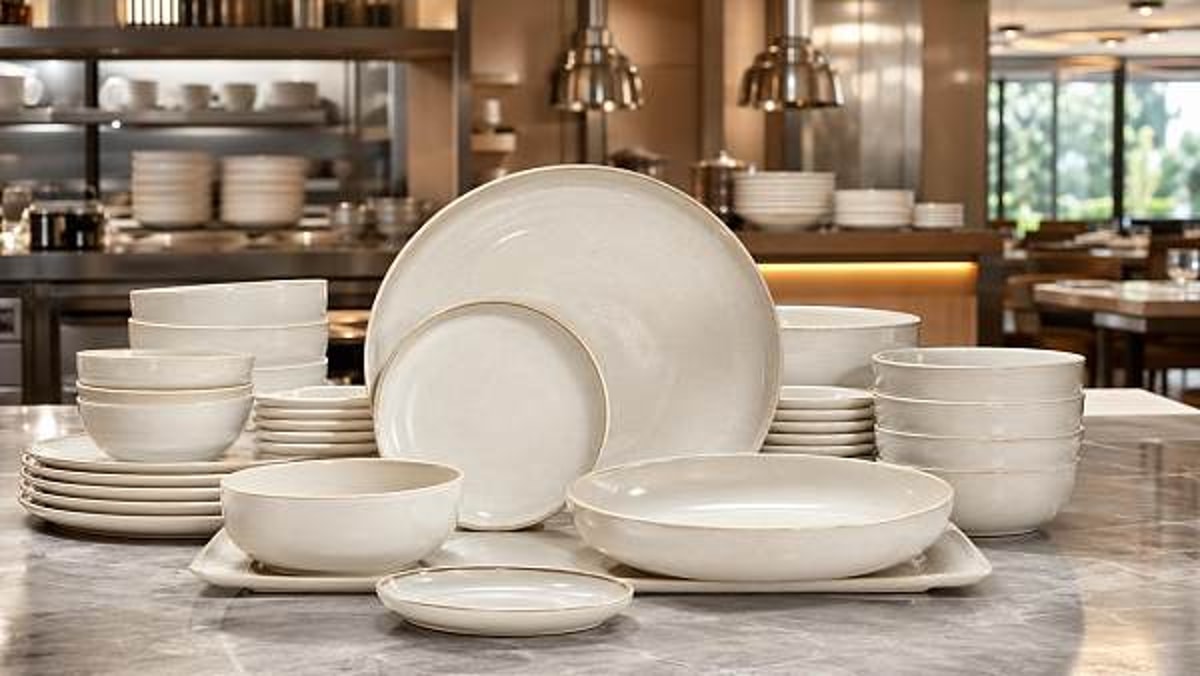
Ceramic Dinnerware for Restaurants That Lasts Through Daily Service
Choosing ceramic dinnerware restaurant buyers can rely on is about more than style—it directly affects durability, service efficiency, and guest perception. For restaurants facing constant turnover, heat exposure, and repeated washing, the right ceramic dinnerware must balance design, strength, and long-term value. This guide explores what decision-makers should evaluate before sourcing pieces built for daily commercial service.
Understanding ceramic dinnerware in the restaurant setting
In commercial foodservice, ceramic dinnerware refers to plates, bowls, platters, side dishes, and serving pieces made from fired clay-based materials such as porcelain, stoneware, or vitrified ceramic blends. While consumers often choose tableware for appearance alone, restaurant operators need a broader view. Ceramic dinnerware restaurant programs must support daily service cycles, maintain a consistent brand image, and hold up under stacking, transport, dishwashing, and temperature variation.
This is why ceramic remains a leading category in hospitality and catering equipment. It offers a premium feel, stable heat retention, flexible design options, and strong compatibility with both casual and upscale concepts. A well-selected ceramic dinnerware restaurant collection can improve plating presentation without creating operational headaches in the back of house.
For information researchers, the key point is simple: durability is not a single feature. It results from the interaction of material composition, firing quality, glaze performance, edge design, and how the item is used in real restaurant workflows.
Why the industry pays close attention to long-lasting ceramic dinnerware
Restaurants operate in a high-frequency service environment. A dinner plate may be used multiple times per shift, cleared quickly, washed in commercial machines, restacked, reheated, and returned to the floor with little downtime. Under these conditions, poor-quality pieces chip early, glaze surfaces dull, and replacement costs rise faster than many buyers expect.
The interest in ceramic dinnerware restaurant buyers can trust is also connected to changing guest expectations. Diners now notice more than menu quality. They judge table setting consistency, plating aesthetics, and the perceived care of the operation. Mismatched replacements, visible chips, and scratched surfaces create a lower-value impression even if the food itself remains strong.
At the same time, global sourcing has made options wider but evaluation more complex. Buyers increasingly compare OEM and ODM capabilities, compliance standards, production consistency, and replenishment reliability. For hospitality groups, chains, hotels, and institutional catering operators, sourcing decisions are no longer just transactional. They are part of brand management, lifecycle cost control, and service quality planning.
Core material types and what they mean for commercial use
Not all ceramic formats perform the same way. Understanding the main categories helps narrow the most practical direction for a restaurant program.
For many operators, the best ceramic dinnerware restaurant solution is not the most decorative option but the one that aligns with service pace, brand positioning, and replacement planning. Material selection should therefore be linked to real operating conditions, not just showroom appearance.
Business value beyond appearance
Ceramic dinnerware influences several business outcomes at once. First, it shapes perceived quality. The weight, finish, rim shape, and color tone of a plate can change how guests interpret portion value and presentation standards. Second, it affects labor efficiency. Stackable, balanced pieces reduce handling difficulty in kitchens and dish areas. Third, it contributes to cost stability. A collection that lasts longer and can be replenished consistently lowers disruption over time.
This multi-layer value is especially important in sectors covered by commercial sourcing platforms such as hotels, restaurants, institutional dining, premium retail hospitality, and food-led leisure venues. In each case, ceramic dinnerware restaurant teams select becomes part of the total commercial experience. It supports not only food service but also visual identity, social media presentation, and the guest’s sense of trust in the venue’s standards.
Key performance factors buyers should evaluate
When assessing ceramic dinnerware restaurant operators intend to use every day, buyers should focus on performance criteria that connect directly to operational reality.
Body density and firing quality
A dense, well-fired body generally resists moisture absorption and structural weakness better than lower-quality alternatives. Consistent firing also supports dimensional accuracy, helping pieces stack properly and fit service systems more reliably.
Glaze durability
Commercial glazing should resist scratching, utensil marking, staining, and chemical wear from repeated machine washing. Buyers should ask how the surface performs after extended cycles, not just when new.
Edge and rim resistance
Many failures happen at rims and corners. Reinforced edges, well-considered profiles, and balanced thickness can significantly reduce visible chipping during service and storage.
Thermal compatibility
Restaurant dinnerware often moves between hot pass stations, ambient dining areas, and dishwashing systems. Thermal shock resistance matters, particularly in high-turnover operations or venues using warming cabinets and hot plating practices.
Weight and handling balance
Heavier pieces may communicate quality, but excessive weight slows service and increases staff fatigue. The right ceramic dinnerware restaurant teams use should feel substantial without becoming inefficient for carrying, bussing, or stacking.
Typical restaurant scenarios and suitable priorities
Different service formats place different demands on dinnerware. A practical sourcing review should map product characteristics to the operating model.
This scenario-based view helps avoid a common mistake: choosing one style standard for every outlet type. In practice, ceramic dinnerware restaurant groups use across brands or service formats often needs a shared visual language with different performance specifications underneath.
What sourcing teams should look for in suppliers
Because dinnerware is a repeat-use asset, supplier capability matters almost as much as product design. Reliable partners should provide clear specifications, commercial testing data where available, stable color control, and replenishment support. For larger projects, buyers may also need OEM or ODM flexibility, logo application, custom shape development, and packaging suited to international transport.
Consistency is essential. Even attractive ceramic dinnerware restaurant buyers source at launch can become a problem if later batches vary in glaze tone, plate diameter, or base profile. This is why many professional buyers evaluate sample sets, production tolerances, quality assurance processes, and lead time reliability before scaling up orders.
For globally oriented procurement teams, compliance and documentation are also part of the decision. Food-contact safety, manufacturing transparency, and shipping resilience all contribute to long-term sourcing confidence.
Practical evaluation steps before committing
A structured evaluation process helps turn product interest into usable operational insight. Instead of relying only on catalog claims, buyers should test dinnerware under conditions close to actual service.
- Review sample pieces for balance, rim strength, and visible glaze uniformity.
- Run dishwashing and stacking trials to observe wear, marking, and handling practicality.
- Check how pieces perform with actual menu items, including plating space and temperature retention.
- Confirm replacement availability for core items, not only launch quantities.
- Assess packaging quality for transit protection, especially for international sourcing.
These steps are especially valuable for information researchers preparing supplier shortlists or advising broader procurement decisions. They connect abstract product quality with measurable service outcomes.
Balancing aesthetics, durability, and long-term value
The strongest ceramic dinnerware restaurant strategy is usually balanced rather than extreme. Highly delicate statement pieces may impress initially but fail in daily rotation. Overly utilitarian items may last longer yet weaken the dining experience. The best programs create a practical middle ground: visually aligned with the concept, durable enough for the service pace, and supported by stable replenishment pathways.
That balance is increasingly important in a market shaped by premiumization and experiential consumption. Restaurants, hotels, and hospitality-driven venues are expected to deliver not only food but also a coherent commercial atmosphere. Dinnerware is one of the most visible physical touchpoints in that experience, making careful evaluation worthwhile.
Conclusion and next-step guidance
For decision-makers researching ceramic dinnerware restaurant use, the central takeaway is clear: long-lasting performance depends on more than visual appeal. Material type, glaze integrity, edge resistance, thermal suitability, supplier consistency, and replenishment support all shape whether a collection truly survives daily commercial service.
If you are reviewing options for a restaurant, hotel dining outlet, or broader hospitality project, begin with the service environment first, then match product style to operational needs. A disciplined approach to ceramic dinnerware restaurant sourcing can reduce replacement costs, protect guest perception, and support a stronger commercial experience over time. For teams comparing international supply options, using verified market intelligence and supplier capability analysis can further improve confidence before committing to large-scale adoption.
Search News
Hot Articles
- Musical InstrumentsChina Table Tennis Team Departs for London; BS EN 14904:2021 Takes EffectMay 01, 2026
- Outdoor RidesSanya Asian Beach Games Closure Triggers Halal Certification Demand for Sand Sports EquipmentMay 01, 2026
- Outdoor RidesAI Football Training Robots Export Surge After Man Utd MatchMay 01, 2026
Popular Tags
Need ExpertConsultation?
Connect with our specialized leisureengineering team for procurementstrategies.
Recommended News
 May 01, 2026Hotel and Catering Equipment Trends Shaping 2026 RenovationsHotel & Catering Equipment trends for 2026 renovations reveal smarter, cleaner, and more flexible solutions that cut risk, improve efficiency, and elevate guest experience.● Hospitality Sourcing Dir
 May 01, 2026Outdoor Patio Heaters: What Changes in Windy Dining AreasOutdoor patio heaters in windy dining areas need more than high output. Learn how wind changes comfort, efficiency, safety, and placement to choose smarter commercial heating solutions.● Hospitality Sourcing Dir
 May 01, 2026Food Warmers Commercial Models That Keep Texture, Not Just HeatFood warmers commercial buyers trust do more than hold heat—they preserve crispness, moisture, and presentation. Discover how to reduce waste and improve service quality.● Hospitality Sourcing Dir
 May 01, 2026Bakery Dough Mixers Sized Right for Batch ConsistencyBakery dough mixers sized right improve batch consistency, dough quality, and efficiency. Learn how to match capacity, torque, and dough type for reliable bakery performance.● Hospitality Sourcing Dir
 May 01, 2026Buffet Chafing Dishes in Bulk: Which Materials Age BetterBuffet chafing dishes bulk guide: compare 304 stainless steel, 201 stainless, aluminum, and coated finishes to see which materials age better, cut replacement costs, and protect buffet presentation.● Hospitality Sourcing Dir
 May 01, 2026Commercial Range Hoods and the Ventilation Problems They Actually SolveCommercial range hoods solve smoke, grease, heat, and air balance problems in commercial kitchens. Learn how they improve safety, compliance, and operating efficiency.● Hospitality Sourcing Dir
 May 01, 2026Commercial Deep Fryers: Gas or Electric for Busy Kitchens?Commercial deep fryers compared: gas or electric? Discover which option delivers faster recovery, better consistency, lower operating costs, and the right fit for busy kitchens.● Hospitality Sourcing Dir
 May 01, 2026Stainless Steel Kitchen Prep Tables and the Hygiene Details Often MissedStainless steel kitchen prep tables demand more than the right material. Discover the hidden hygiene details that impact sanitation, durability, compliance, and smarter buying.● Hospitality Sourcing Dir
 May 01, 2026Commercial Refrigerators Wholesale: Common Spec Mistakes to AvoidCommercial refrigerators wholesale buyers can avoid costly spec mistakes by checking usable capacity, temperature stability, materials, and cooling performance before bulk orders.● Hospitality Sourcing Dir
 May 01, 2026Commercial Ice Makers: When Higher Capacity Stops Saving MoneyCommercial ice makers can cut costs—but only to a point. Learn when higher capacity starts wasting energy, water, space, and budget, and how to size smarter for better ROI.● Hospitality Sourcing Dir
 May 01, 2026Bakery Ovens Commercial Models Compared by Output and FootprintBakery ovens commercial models compared by output and footprint. See which oven fits your bakery, kitchen, or production line for better efficiency, space use, and buying decisions.● Hospitality Sourcing Dir
 May 01, 2026Commercial Espresso Coffee Machines Worth Upgrading in 2026Espresso coffee machines commercial buyers planning 2026 upgrades can compare features, energy efficiency, workflow fit, and sourcing priorities to choose smarter, higher-value solutions.● Hospitality Sourcing Dir
 May 01, 2026Walk In Coolers Wholesale: What Impacts Lead Time the MostWalk in coolers wholesale lead times depend on customization, component supply, factory capacity, and shipping. Learn the biggest delay risks and how to keep projects on schedule.● Hospitality Sourcing Dir
 May 01, 2026Industrial Meat Grinders and the Hidden Cost of UndersizingIndustrial meat grinders that are too small can drive up labor, maintenance, and quality risks. Learn the hidden cost of undersizing and choose equipment that protects efficiency.● Hospitality Sourcing Dir
 May 01, 2026Soft Serve Ice Cream Machines That Fit Small Shop DemandSoft serve ice cream machines for small shops: compare compact capacity, footprint, cleaning, and long-term cost to find the right fit for cafés, kiosks, and dessert counters.● Hospitality Sourcing Dir
 May 01, 2026Why Glassware Sets Wholesale Prices Vary More Than ExpectedGlassware sets wholesale prices vary due to material, production, packaging, compliance, and freight. Learn what drives cost and source smarter with less risk.● Hospitality Sourcing Dir
 May 01, 2026What Separates Reliable Commercial Dishwashers from Costly OnesCommercial dishwashers differ by fit, hygiene, uptime, and lifecycle cost. Learn how to identify reliable models, avoid hidden expenses, and choose smarter for long-term value.● Hospitality Sourcing Dir
 May 01, 2026Ceramic Dinnerware for Restaurants That Lasts Through Daily ServiceCeramic dinnerware restaurant buyers trust should combine durability, style, and efficiency. Discover how to choose long-lasting pieces that reduce replacement costs and elevate guest experience.● Hospitality Sourcing Dir
 Apr 28, 2026What Hidden Costs Appear After New Hotel Equipment Is Installed?Hotel equipment hidden costs explained: hotel beds, hotel chairs, hotel tables, hotel furniture, custom furniture, and luxury furniture. Learn risks, TCO, and smarter sourcing.● Hospitality Sourcing Dir
 Apr 28, 2026Hotel Equipment Lists Often Miss the Items That Drive Daily OperationsHotel equipment gaps hurt daily operations. Discover how hotel furniture, hotel beds, hotel chairs, hotel tables, custom furniture and luxury furniture improve efficiency.● Hospitality Sourcing Dir
 Apr 21, 2026How hospitality procurement plans reduce replacement costsHospitality procurement cuts replacement costs by sourcing durable hotel furniture, hotel beds, hotel chairs, and hotel tables with long-term planning. Explore smarter commercial furniture strategies.● Hospitality Sourcing Dir
 Apr 21, 2026Hospitality procurement delays often start with approvalsHospitality procurement delays often begin with approvals. Learn how hotel furniture, luxury furniture, hotel beds, hotel chairs, and hotel tables sourcing can stay on schedule.● Hospitality Sourcing Dir
 Apr 21, 2026When catering equipment saves labor but slows serviceExplore how catering equipment can save labor yet slow service in hotel furniture environments. Learn smarter hospitality procurement for luxury furniture, hotel equipment, and smoother guest flow.● Hospitality Sourcing Dir
 Apr 21, 2026Catering equipment costs that often get missed at launchCatering equipment costs often missed at launch: uncover hidden expenses in hotel furniture, hotel beds, hotel chairs, soundproofing materials, and hospitality procurement to avoid delays and overspending.● Hospitality Sourcing Dir