How to Choose Commercial Bar Stools for High-Traffic Venues
Choosing the right commercial bar stools for high-traffic venues is about more than style alone. Procurement teams must balance durability, safety, comfort, maintenance, and brand image to ensure long-term value in demanding hospitality environments. This guide explores the key factors that help buyers source seating solutions that perform reliably, support guest experience, and meet the practical needs of busy commercial spaces.
For procurement professionals, the core search intent behind this topic is practical and decision-driven: how to identify bar stools that will withstand constant use, fit the venue concept, reduce replacement costs, and meet operational and compliance requirements. In other words, buyers are not simply looking for design inspiration. They want a sourcing framework that helps them avoid product failure, guest complaints, and budget waste.
The biggest concerns usually center on five questions: Will the stools last in a high-turnover environment? Are they safe and stable? How easy are they to clean and maintain? Do they support guest comfort without slowing table turnover? And can the supplier deliver consistent quality at scale? Those are the issues that matter most in hospitality, foodservice, entertainment, and mixed-use commercial environments.
This article focuses on those high-value buying criteria first. Rather than spending too much time on generic furniture trends, it breaks down how to evaluate material durability, frame construction, seat ergonomics, operational fit, compliance, and supplier capability. For buyers responsible for long-term asset value, these are the factors that most directly affect total cost of ownership and venue performance.
Start with Venue Demands, Not Product Catalogs
The best way to choose commercial bar stools is to begin with the venue’s operating reality. A rooftop cocktail bar, hotel breakfast counter, stadium lounge, casino floor, and quick-service dining concept may all use bar-height seating, but their performance requirements are very different. Traffic volume, guest dwell time, cleaning frequency, floor conditions, and brand positioning should shape the specification from the start.
High-traffic venues place repeated stress on seating through constant movement, shifting weight, spills, dragging, stacking, and accelerated wear at footrests and joints. If procurement teams start by comparing finishes or colors before defining usage intensity, they risk selecting products that look attractive in a showroom but fail quickly in operation.
A practical first step is to document the seating environment in measurable terms. Identify whether the stools will be used for short-stay or long-stay seating, whether guests are likely to sit in groups or alone, whether service staff need to move stools frequently, and whether the area is exposed to moisture, UV, grease, or abrasion. These details help determine the right frame material, seat shape, upholstery, and protective finish.
It is also important to clarify whether the stools support revenue-driving space efficiency. In many high-volume venues, seating density matters. A bulky stool may reduce guest capacity, obstruct circulation, or create service bottlenecks. Procurement decisions should therefore align not only with furniture quality but with the venue’s business model and operational flow.
Durability Should Be the First Filter for Commercial Bar Stools
In high-traffic environments, durability is not a premium feature. It is the baseline requirement. A visually appealing stool that loosens, scratches, or collapses under commercial use quickly becomes more expensive than a higher-priced model built for continuous service. For this reason, buyers should evaluate durability before aesthetics, not after.
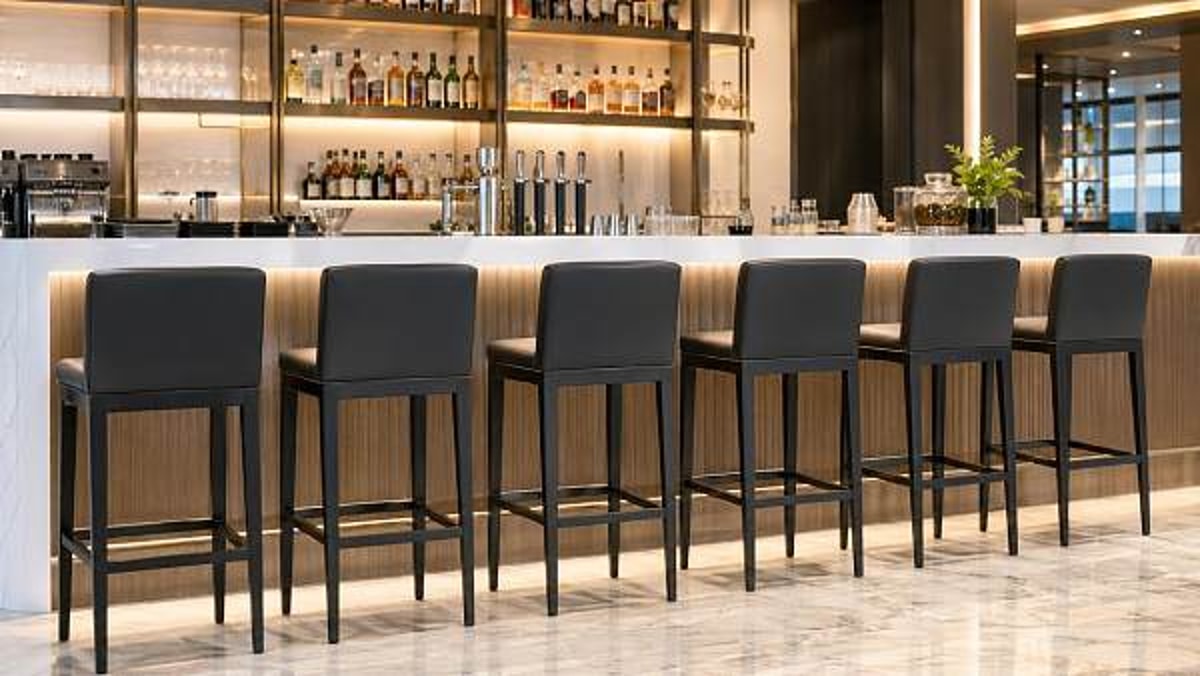
Frame construction is one of the most important indicators of longevity. Steel and aluminum frames are common in commercial applications because they offer strong structural performance when properly engineered. Solid wood can also perform well in the right setting, but it requires quality joinery, stable moisture control, and protective finishing. Lightweight or poorly reinforced frames often fail at stress points such as leg connections, footrests, and seat mounts.
Footrests deserve special attention because they are among the first areas to show wear. In busy bars and foodservice counters, guests repeatedly place body weight on the front rail or side support when sitting down or shifting position. If the footrest tubing is thin, weakly welded, or poorly attached, premature fatigue is likely.
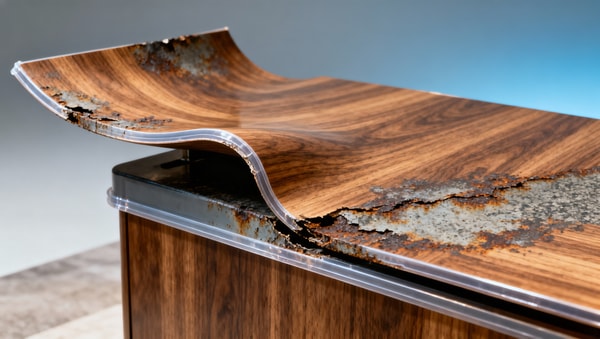
Finish performance matters just as much as structural strength. Powder-coated metal generally offers better resistance to scratches and corrosion than lower-grade painted finishes. For wood stools, buyers should ask about sealants, stain consistency, and edge protection. In hospitality spaces where stools are frequently moved, the finish must resist impact and abrasion without quickly showing damage.
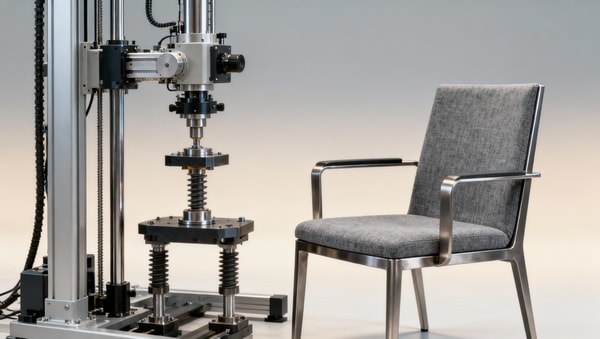
Commercial testing data can support better decisions. If a supplier can provide load testing, cycle testing, or hospitality-grade performance documentation, procurement teams gain more confidence in product reliability. While not every venue requires the same certification level, serious suppliers should be able to explain how their stools are engineered for repeated commercial use.
Safety and Stability Are Non-Negotiable in Busy Venues
Safety is one of the most critical purchasing criteria for commercial bar stools, especially in high-traffic venues where guest turnover is constant and staff cannot monitor every seating interaction. Even a minor stability problem can lead to accidents, liability exposure, negative reviews, and damage to brand reputation.
Stool height must match counter or bar height accurately. A mismatch creates awkward entry and exit, increases tipping risk, and reduces comfort. As a general rule, procurement teams should verify seat height in relation to the finished counter surface and confirm sufficient leg clearance. A few centimeters of error can materially affect usability.
Base footprint and weight distribution also matter. A narrow stool with a high center of gravity may look elegant but perform poorly in busy settings. Stability becomes even more important in venues serving alcohol, family entertainment spaces, or locations where guests may shift, rotate, or lean unpredictably. Buyers should assess whether the stool remains stable under dynamic movement, not just static display conditions.
Glides and floor contact points are often overlooked. Poor-quality glides can create wobble, damage flooring, or wear unevenly over time. In some venues, adjustable glides may be useful to compensate for minor floor irregularities. Non-slip contact surfaces can also improve stability, particularly on polished or hard-surface floors.
If the design includes swivel, return mechanisms, or upholstered backs, those features should be checked for safe operation in crowded layouts. A stool that rotates too freely, catches on adjacent furniture, or obstructs aisle movement may create operational problems. Safety should always be evaluated in the context of real traffic patterns.
Comfort Affects Guest Experience and Dwell Time
Comfort may seem secondary to durability during procurement, but in hospitality and experiential venues it directly influences guest satisfaction and spending behavior. The right stool should support the intended guest experience, whether that means quick coffee service, casual social drinking, premium lounge seating, or longer dining occasions.
Seat shape is a major factor. A flat, hard seat may be acceptable for short stays, but longer dwell times generally benefit from contoured support or light cushioning. Backrests are another strategic choice. Backless stools can save space and create a cleaner visual line, but stools with supportive backs usually improve comfort for longer visits and broader guest demographics.
Footrest placement is essential for ergonomic comfort. If guests cannot place their feet naturally, they tend to shift more often, feel unstable, and leave with a less favorable impression. This is especially relevant in hotel bars, premium foodservice environments, and executive lounges where guest comfort influences the perceived quality of the venue.
That said, procurement teams should match comfort to business objectives. Not every operation wants maximum lounge-style seating comfort. In some fast-turn commercial settings, moderately comfortable seating may be more appropriate because it supports efficient turnover without feeling cheap. The right balance depends on the venue’s commercial strategy.
Material Selection Should Reflect Cleaning, Wear, and Brand Positioning
Material choice is where operational practicality and visual identity meet. The best commercial bar stools should reinforce the venue’s concept while standing up to the cleaning routines, spills, temperature shifts, and abrasion levels of the environment.
Metal stools are popular for high-traffic use because they are durable, relatively easy to maintain, and available in many finishes. They work especially well in contemporary bars, food halls, institutional hospitality, and entertainment venues. However, buyers should verify coating quality and weld consistency, as poor finishing can lead to visible wear and rust in demanding conditions.
Wood stools are often chosen for upscale, warm, or design-led hospitality spaces. They can communicate quality and comfort effectively, but commercial suitability depends on species, construction quality, and finish durability. Buyers should be careful with wood in environments with high humidity fluctuations or very aggressive cleaning routines.
Upholstered seats can significantly improve comfort and premium appeal, but they also increase maintenance considerations. Vinyl, performance faux leather, and certain commercial textiles are often better suited than residential fabrics for high-volume use. Buyers should ask about abrasion resistance, stain performance, seam durability, and cleanability with standard hospitality-grade products.
In outdoor or semi-outdoor settings, material selection becomes even more critical. UV resistance, corrosion protection, drainage, and temperature tolerance must all be reviewed. A stool that performs well indoors may deteriorate quickly in covered terrace bars, poolside service areas, or open-air venues if not specifically engineered for those conditions.
Maintenance Requirements Have a Direct Impact on Total Cost
Many procurement mistakes happen because buyers focus heavily on unit price while underestimating maintenance and replacement costs. In high-traffic venues, easy-care seating often delivers better long-term value than lower-cost products that stain, loosen, or require frequent repairs.
Cleaning efficiency should be evaluated early in the selection process. Complex shapes, deep seams, textured surfaces, and delicate finishes may increase labor time for housekeeping or front-of-house teams. In operations where cleaning happens multiple times per day, even small design inefficiencies can create meaningful labor costs over a year.
Replaceable components can add value. For example, stools with replaceable glides, seat pads, or standard hardware may be easier to keep in service over time. This is particularly useful for hotel groups, chain restaurants, and large venue operators that want to extend furniture life without fully replacing units.
Buyers should also ask suppliers about touch-up options, spare parts availability, and lead times for replacement units. A stool line that cannot be replenished consistently can create visual inconsistency across the venue when damage occurs. Lifecycle planning should be part of the sourcing conversation, not an afterthought.
Supplier Capability Matters as Much as the Stool Itself
Even a strong product specification can fail if the supplier lacks commercial manufacturing discipline. For procurement teams sourcing at scale, supplier evaluation should cover quality control, production consistency, packaging standards, documentation, and after-sales responsiveness.
Ask whether the supplier has experience serving hospitality, foodservice, or contract furniture markets. Commercial projects have different requirements from residential retail orders. Tolerance consistency, batch finish matching, packaging protection, and on-time delivery are much more important when a venue opening depends on coordinated installation.
Sampling is essential, but a single sample should not be the only basis for approval. Procurement teams should verify whether the supplier can maintain the same material quality, finish, and construction standards across production runs. If possible, request project references, factory audit information, or quality assurance documentation.
Customization can also be valuable, especially for branded hospitality groups or concept-driven venues. However, custom options should not come at the expense of tested reliability. A supplier that can adapt seat finishes, upholstery, or frame color while keeping core structural integrity intact offers a stronger sourcing proposition than one focused only on appearance.
Use a Practical Evaluation Checklist Before You Place the Order
To reduce sourcing risk, procurement teams should assess each option through a structured commercial lens. The most effective decisions usually come from comparing shortlisted stools against the same operational criteria rather than relying on visual preference alone.
A useful checklist includes: seat height compatibility, frame strength, footrest durability, finish resistance, stability on actual flooring, comfort for expected dwell time, cleaning ease, compliance documentation, spare parts availability, warranty terms, and supplier production reliability. This approach helps buyers compare true commercial value instead of headline pricing.
It is also wise to test the stool in the intended environment whenever possible. Place samples at the real bar or counter, observe ingress and egress, check spacing between units, and gather input from operations staff. Designers may focus on look, but service teams often notice issues related to movement, cleaning, and usability that affect long-term performance.
Finally, think beyond immediate procurement. The right bar stool supports guest perception, operational flow, maintenance efficiency, and asset durability all at once. In high-traffic venues, those combined effects often determine whether a purchase proves cost-effective over several years.
Conclusion: Choose for Commercial Reality, Not Just Visual Appeal
When sourcing commercial bar stools for high-traffic venues, the smartest procurement decisions come from balancing brand aesthetics with operational reality. Durability, safety, comfort, maintenance, and supplier reliability should all be treated as core buying criteria, not secondary considerations.
If a stool can withstand heavy use, remain stable, support the intended guest experience, and stay presentable with efficient maintenance, it is far more likely to deliver long-term value. For procurement professionals, that is the real goal: selecting seating that protects budget, supports operations, and strengthens the overall commercial experience.
In practice, the best product is rarely the one that only looks good in a catalog. It is the one that performs consistently under pressure, fits the venue’s service model, and comes from a supplier capable of delivering dependable quality at scale. That is the standard buyers should use when evaluating any commercial seating investment.
Search News
Hot Articles
- Musical InstrumentsChina Table Tennis Team Departs for London; BS EN 14904:2021 Takes EffectMay 01, 2026
- Outdoor RidesSanya Asian Beach Games Closure Triggers Halal Certification Demand for Sand Sports EquipmentMay 01, 2026
- Outdoor RidesAI Football Training Robots Export Surge After Man Utd MatchMay 01, 2026
Popular Tags
Need ExpertConsultation?
Connect with our specialized leisureengineering team for procurementstrategies.
Recommended News
 May 01, 2026Restaurant Booth Seating That Saves Space Without Feeling TightRestaurant booth seating that saves space without feeling cramped—discover smart dimensions, durable specs, and layout tips to boost comfort, traffic flow, and revenue.● Hospitality Sourcing Dir
 May 01, 2026How to Choose Commercial Bar Stools for High-Traffic VenuesCommercial bar stools for high-traffic venues: learn how to compare durability, safety, comfort, maintenance, and supplier reliability to choose seating that lasts and performs.● Hospitality Sourcing Dir
 Apr 28, 2026Why Hotel Tables Often Fail at Edges, Bases, and Surface FinishHotel tables often fail at edges, bases, and surface finish. Compare hotel furniture, custom furniture, luxury furniture, hotel chairs, hotel beds, and hotel equipment before you buy.● Hospitality Sourcing Dir
 Apr 28, 2026Hotel Tables With Stone Tops or Wood Tops: Which Performs Better?Hotel tables with stone tops or wood tops? Compare ROI, durability, and style across hotel furniture, custom furniture, hotel chairs, and hotel beds to choose smarter.● Hospitality Sourcing Dir
 Apr 28, 2026The Best Hotel Chairs Balance Comfort, Stackability, and DurabilityHotel chairs that balance comfort, stackability, and durability. Explore hotel furniture, custom furniture, hotel tables, hotel beds, and luxury furniture solutions for hospitality buyers.● Hospitality Sourcing Dir
 Apr 28, 2026Hotel Chairs: What Causes Wobbling, Cracks, and Early Wear?Hotel chairs buying guide: learn what causes wobbling, cracks, and early wear, and how to compare hotel furniture, custom furniture, hotel tables, hotel beds, and luxury furniture for lasting value.● Hospitality Sourcing Dir
 Apr 21, 2026Hotel tables that stay stable on uneven flooringHotel tables that stay stable on uneven flooring: a practical guide for hospitality procurement covering hotel furniture, commercial furniture, luxury furniture, and specs that reduce wobble, risk, and maintenance.● Hospitality Sourcing Dir
 Apr 21, 2026Round or rectangular hotel tables for tighter layouts?Hotel tables for tight layouts: compare round vs rectangular hotel furniture for better flow, seating, and hospitality procurement decisions. Find the best fit for compact hotel room furniture.● Hospitality Sourcing Dir
 Apr 21, 2026Why hotel chairs fail early in banquet spacesHotel chairs in banquet spaces fail early due to stacking, impact, and weak specs. Learn how hotel furniture and commercial furniture choices cut costs and improve hospitality procurement.● Hospitality Sourcing Dir
 Apr 21, 2026Hotel chairs that look elegant and still hold upHotel chairs that blend luxury furniture appeal with commercial furniture durability. Discover how hotel furniture works with hotel tables, hotel desks, and hotel room furniture for smarter hospitality procurement.● Hospitality Sourcing Dir
 Apr 23, 2026How to Choose Commercial Furniture That LastsCommercial furniture buying guide for hotels, schools, and leisure venues—covering hotel tables, playground safety, sensory playgrounds, and durable amusement equipment.● Hospitality Sourcing Dir
 Apr 23, 2026When Commercial Furniture Fails in High-Traffic VenuesLearn why commercial furniture fails in busy venues and how to choose safer hotel tables, playground borders, sensory playground solutions, amusement equipment, and hotel equipment that last.● Hospitality Sourcing Dir
 Apr 20, 2026Hotel tables with edge seams that trap moisture and moldHotel tables, park benches & commercial furniture with mold-trapping edge seams? Discover seamless, moisture-resistant hotel furniture solutions—luxury, custom, and compliant.● Hospitality Sourcing Dir
 Apr 20, 2026Hotel chairs rated for 100,000 cycles—but tested how?Discover how top hotel chairs, park benches & commercial furniture are truly tested for 100,000 cycles—backed by BIFMA, EN & GB/T standards. Get verified luxury furniture insights.● Hospitality Sourcing Dir
 Apr 19, 2026Hotel tables that warp under daily cleaning chemicalsHotel tables, hotel chairs, hotel beds & park benches—discover why chemical warping fails luxury furniture & commercial furniture specs. Get expert OEM insights on durable hotel furniture & equipment.● Hospitality Sourcing Dir
 Apr 19, 2026Hotel chairs with hidden wear patterns no one tests forHotel chairs, luxury furniture & commercial furniture buyers: uncover hidden wear patterns in hotel chairs, hotel beds, and custom furniture—before failure hits ROI.● Hospitality Sourcing Dir
 Apr 18, 2026Custom furniture quoting errors—how small measurement gaps become big cost overrunsAvoid costly overruns: Fix custom furniture quoting errors before they derail hotel beds, theme park rides, playground structures & soundproofing materials.● Hospitality Sourcing Dir
 Apr 17, 2026Restaurant furniture that handles spills, scratches, and constant turnoverCommercial furniture built for spills, scratches & turnover—ideal for playground borders, sensory playgrounds, hotel tables, amusement equipment & more.● Hospitality Sourcing Dir
 Apr 16, 2026Custom fabrication for restaurant furniture: When ‘made-to-order’ becomes ‘wait-for-3-months’Custom fabrication for hotel furniture, designer eyewear & jewelry—solve supply chain delays with OEM manufacturing expertise. Get on-time, cross-sector solutions.● Hospitality Sourcing Dir
 Apr 15, 2026Restaurant furniture durability tests don’t match real dining room stressCommercial furniture, playground safety & amusement equipment tested for real-world stress—not just labs. Discover field-validated durability for hotel tables, sensory playgrounds, climbers & more.● Hospitality Sourcing Dir
 Apr 12, 2026Custom furniture for play spaces: When 'bespoke' means higher liability, not better fitOutdoor playground & inclusive playground design demands caution: custom furniture, playground swings, and theme park rides raise liability—discover safer, certified alternatives.● Hospitality Sourcing Dir
 Apr 12, 2026Custom furniture lead times ballooning in 2026—what’s really causing the 14-week delaysOutdoor playground, inclusive playground, and theme park rides face 14-week custom furniture delays in 2026—discover root causes & proven mitigation strategies now.● Hospitality Sourcing Dir
 Apr 07, 2026Custom furniture lead times in 2026: Why ‘standard’ finishes now take longer than premiumCustom furniture, outdoor playground & hotel furniture lead times surged in 2026—discover why standard finishes now lag premium. Get data-backed sourcing strategies for inclusive playground, soundproofing materials & instrument cables.● Hospitality Sourcing Dir
 Apr 04, 2026Restaurant Furniture Buyers Are Asking Office Supplies Factories for Modular Desk Systems — And Getting YesTop office supplies manufacturer & OEM supplier delivers NSF/BIFMA-certified modular desk systems for restaurants—fast, compliant, factory-direct.● Hospitality Sourcing Dir