When Commercial Furniture Fails in High-Traffic Venues
In high-traffic venues, commercial furniture rarely fails because of a single bad product. More often, it fails because the specification did not match the real use environment. For buyers in hotels, amusement venues, education spaces, music environments, and public leisure facilities, that failure shows up as wobbling tables, cracked seating, loose joints, damaged finishes, unstable playground borders, and unsafe user experiences. The business impact is immediate: more maintenance, more complaints, more replacements, and more operational risk. The smarter approach is to understand why furniture and related commercial fixtures fail, then evaluate products by load profile, material performance, safety compliance, and lifecycle cost instead of purchase price alone.
From hotel tables and hotel equipment to amusement equipment, playground climbers, sensory playground installations, educational supplies, and music accessories, procurement teams need a practical framework for making durable sourcing decisions. This article explains the most common failure causes, what buyers should check before approving a supplier, and how to reduce total ownership risk in high-traffic commercial environments.
Why commercial furniture fails faster in high-traffic venues
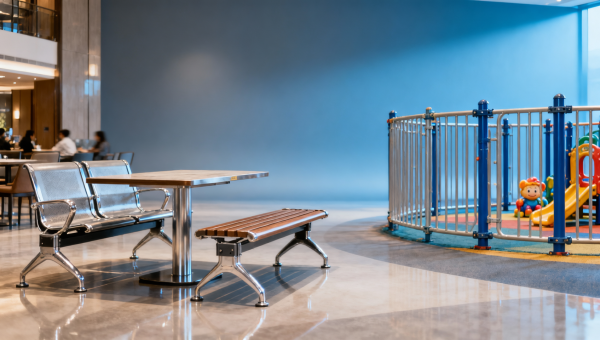
High-traffic environments put furniture under a completely different level of stress than light commercial or residential settings. A chair in a busy hotel lounge, a table in a foodservice zone, or a seating unit near playground safety areas may be used hundreds of times per day by users with different body types, movement patterns, and expectations. In these spaces, even a small weakness in engineering or material selection becomes visible very quickly.
The most common reason for failure is specification mismatch. A product may look suitable in a catalog, but if it was originally designed for moderate office use, it may not survive hospitality turnover, repeated impact, outdoor exposure, or public misuse. In amusement and leisure settings, products also face vibration, humidity, UV exposure, aggressive cleaning chemicals, and constant movement from children, families, and large groups.
For procurement and evaluation teams, the key insight is simple: heavy-use venues require performance-based sourcing, not appearance-based sourcing.
What buyers should worry about most: safety, downtime, and lifecycle cost
For information researchers and procurement professionals, the real concern is not just whether a product breaks. It is what that breakage triggers.
Safety risk is the first priority. A loose table base, split bench edge, unstable playground climber, or degraded sensory playground component can create injury exposure and compliance issues. In hotels, educational spaces, and leisure venues, even minor failures can quickly become legal or reputational problems.
Operational downtime is the second issue. When furniture fails in guest-facing environments, spaces become partially unusable. A damaged seating zone in a hotel lobby, failed borders around a play area, or broken support fixtures in amusement equipment environments can interrupt operations and reduce capacity.
Lifecycle cost is often underestimated. A lower purchase price may look attractive during tender evaluation, but frequent repair, replacement labor, shipping delays, and customer dissatisfaction usually make the cheapest option the most expensive one over time.
This is why commercial buyers increasingly assess products on total cost of ownership, maintenance burden, and service continuity—not just unit price.
The most common failure points in high-traffic commercial furniture
Although failure patterns vary by venue type, several weak points appear repeatedly across commercial projects.
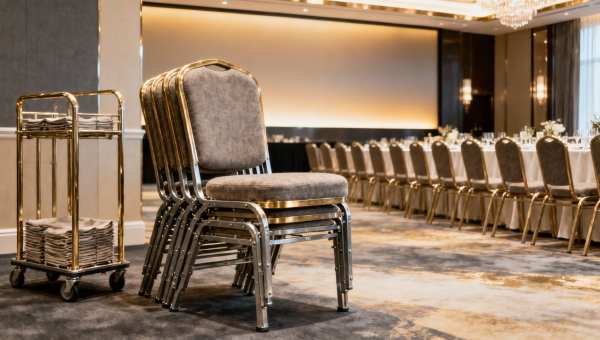
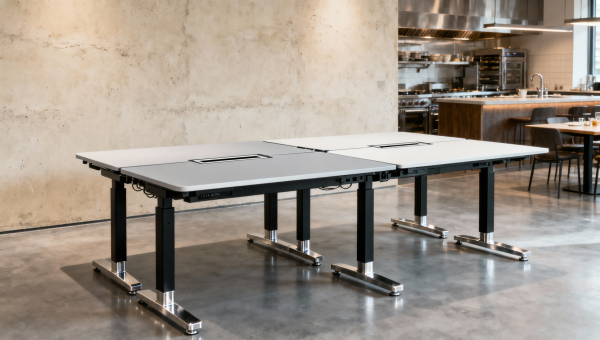
Joint and connection failure. Screwed, welded, or bonded connections are often the first components to fail under repeated movement and side loading. This is especially common in hotel tables, banquet furniture, stackable seating, and multi-user educational supplies.
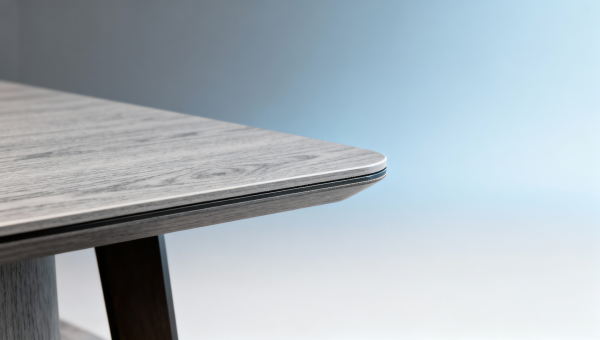
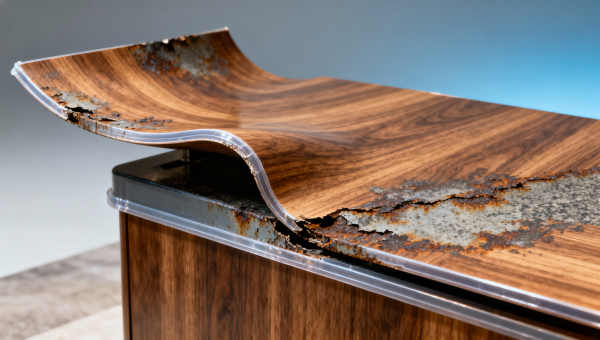
Surface breakdown. Laminate peeling, veneer chipping, powder coating wear, corrosion, and edge damage happen quickly in environments with frequent cleaning, moisture, or impact. In foodservice and hospitality, this affects both appearance and hygiene.
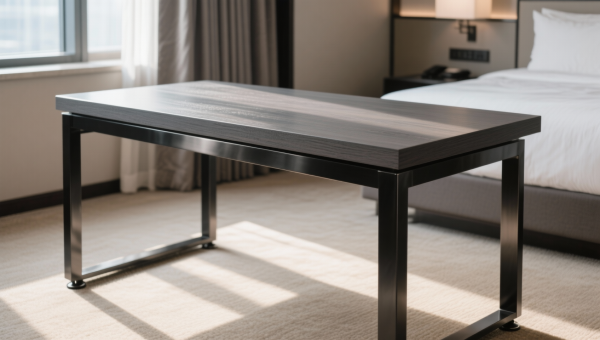
Frame fatigue. Metal frames can bend or crack if wall thickness, weld quality, or structural geometry is insufficient. Wood structures may loosen or split when exposed to fluctuating humidity or excessive load concentration.
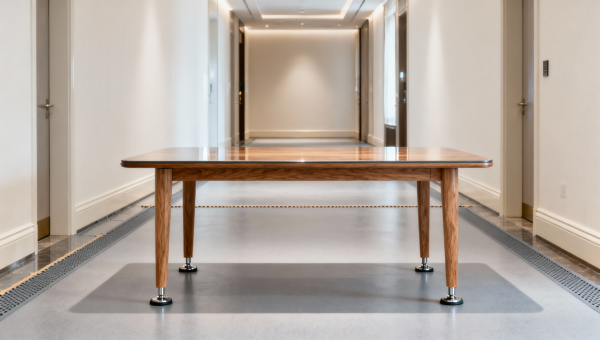
Base instability. Uneven weight distribution, poor anchoring, or undersized support structures cause rocking, tipping, or uneven wear. This is a critical concern in public seating, outdoor fixtures, and playground-related installations.
Material incompatibility with environment. Indoor-grade products used outdoors, low-density foam in public seating, or finishes not designed for disinfectants can all fail prematurely. The same issue applies to playground borders, sensory playground elements, and components near water, heat, or UV exposure.
How venue type changes the durability requirements
Not all traffic is the same. Buyers should assess furniture and equipment by actual use conditions rather than broad labels like “commercial grade.”
Hotels and catering spaces require a balance of aesthetics, stain resistance, structural strength, and fast maintenance. Hotel equipment and furniture often need to perform under luggage impact, frequent layout changes, and high guest turnover while still preserving brand image.
Amusement and leisure parks place stronger emphasis on impact resistance, weather durability, anti-corrosion performance, and public safety. Amusement equipment environments also expose nearby furniture and fixtures to vibration, rough use, and family-heavy circulation patterns.
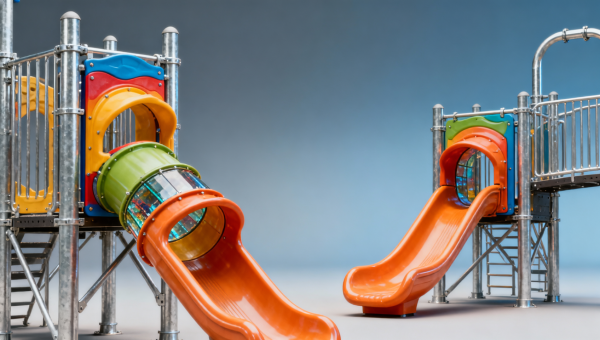
Playground environments require more than basic durability. Playground climbers, playground borders, and sensory playground installations must be evaluated for safety edges, anchoring integrity, non-toxic materials, and compliance with relevant standards for public play use.
Educational and campus settings demand high repeat-use performance, easy cleaning, modularity, and strong replacement support. Educational supplies integrated into shared spaces often fail not because they are low quality, but because they were not designed for multi-shift use.
Music and performance spaces need furniture and accessories that can withstand repeated movement, setup changes, acoustic equipment interaction, and transport. Music accessories and support fixtures often fail at hinges, grips, and connection points due to repetitive adjustment.
What procurement teams should verify before shortlisting a supplier
To reduce sourcing risk, buyers should move beyond brochures and ask for evidence tied to performance.
1. Usage classification and test data
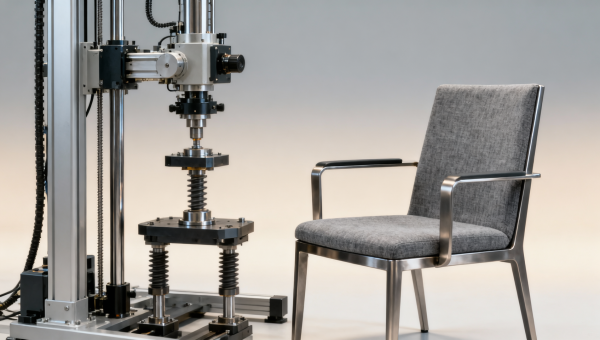
Ask what environments the product was designed for and request load testing, cycle testing, impact testing, and finish durability data where applicable. If a supplier cannot explain performance under heavy use, the risk is high.
2. Material specification transparency
Request details on metal gauge, wood species or panel composition, coating type, foam density, fabric abrasion rating, UV resistance, and hardware grade. Vague answers usually signal inconsistent manufacturing control.
3. Safety and compliance documentation
For public-use environments, especially playground safety applications and amusement-related installations, documentation matters. Buyers should review relevant certifications, fire performance data where required, chemical safety information, and installation guidelines.
4. OEM/ODM capability
In many high-traffic projects, standard catalog products are not enough. Buyers may need reinforced structures, custom finishes, anti-microbial surfaces, or venue-specific dimensions. A capable OEM/ODM supplier can adapt products to actual operational needs.
5. Spare parts and after-sales support
For dealers, distributors, and project buyers, serviceability is a major commercial factor. Ask whether parts such as glides, hinges, upholstery panels, edge trims, and anchors can be replaced without full product disposal.
Why low-cost sourcing often leads to higher commercial risk
In competitive tenders, price pressure is unavoidable. But in high-traffic venues, overly aggressive cost reduction usually shows up in hidden ways: thinner metal, weaker fasteners, lower-quality coatings, less stable bases, inconsistent welding, and limited quality control.
This becomes especially risky when buyers source for premium hospitality, institutional procurement, or public-facing leisure venues. A visually acceptable sample can still fail after a short use cycle if the internal construction was optimized only for cost.
For business evaluation teams, the better question is not “What is the cheapest compliant option?” but “Which option delivers reliable performance over the intended service life with acceptable maintenance cost?” That distinction directly affects ROI, warranty exposure, and long-term brand perception.
A practical evaluation framework for commercial buyers
If your team is comparing hotel furniture, public seating, educational supplies, playground-related structures, or music accessories for heavy-use environments, use a simple decision framework:
Define the real-use scenario.
Estimate user volume, weight variation, cleaning frequency, indoor/outdoor exposure, movement frequency, and misuse risk.
Identify the main failure consequence.
Will failure create safety risk, guest dissatisfaction, maintenance labor, or full operational interruption?
Match product construction to exposure level.
Check whether the materials, joints, finishes, and support systems are appropriate for that setting.
Request proof, not promises.
Use technical sheets, test reports, compliance records, project references, and sample inspections.
Calculate lifecycle value.
Compare purchase price, expected service life, replacement frequency, maintenance cost, and supplier responsiveness.
Review installation and maintenance requirements.
Many failures are worsened by poor installation, incorrect anchoring, or unsuitable cleaning methods. Make sure the supplier provides clear guidance.
How distributors and sourcing partners can add value
For distributors, agents, and sourcing intermediaries, the opportunity is not only to offer products but to reduce decision risk for end buyers. Commercial clients increasingly expect sourcing partners to provide technical interpretation, compliance guidance, and realistic durability recommendations.
This is particularly important in complex categories such as hotel equipment, amusement equipment, playground safety systems, and specialized educational or music environments. Partners who can explain why a product is appropriate for a specific use case become more valuable than those competing on catalog breadth alone.
In practice, this means curating suppliers with verifiable manufacturing controls, stable lead times, project reference history, and customization capability. It also means steering buyers away from under-specified products that may create warranty disputes later.
Conclusion: failure prevention starts at the sourcing stage
When commercial furniture fails in high-traffic venues, the root problem is usually not bad luck. It is a mismatch between product design and commercial reality. For procurement teams, business evaluators, and distribution partners, the most effective way to prevent failure is to source according to usage intensity, safety exposure, material suitability, and lifecycle economics.
Whether the project involves hotel tables, hotel equipment, amusement equipment, playground climbers, playground borders, sensory playground installations, educational supplies, music accessories, or broader playground safety solutions, the buying decision should focus on long-term performance, not short-term savings. In high-traffic environments, durable specification is not an upgrade—it is the baseline for safe operations, consistent user experience, and stronger return on investment.
Search News
Hot Articles
Popular Tags
Need ExpertConsultation?
Connect with our specialized leisureengineering team for procurementstrategies.
Recommended News
 Apr 21, 2026Hotel tables that stay stable on uneven flooringHotel tables that stay stable on uneven flooring: a practical guide for hospitality procurement covering hotel furniture, commercial furniture, luxury furniture, and specs that reduce wobble, risk, and maintenance.● Hospitality Sourcing Dir
 Apr 21, 2026Round or rectangular hotel tables for tighter layouts?Hotel tables for tight layouts: compare round vs rectangular hotel furniture for better flow, seating, and hospitality procurement decisions. Find the best fit for compact hotel room furniture.● Hospitality Sourcing Dir
 Apr 21, 2026Why hotel chairs fail early in banquet spacesHotel chairs in banquet spaces fail early due to stacking, impact, and weak specs. Learn how hotel furniture and commercial furniture choices cut costs and improve hospitality procurement.● Hospitality Sourcing Dir
 Apr 21, 2026Hotel chairs that look elegant and still hold upHotel chairs that blend luxury furniture appeal with commercial furniture durability. Discover how hotel furniture works with hotel tables, hotel desks, and hotel room furniture for smarter hospitality procurement.● Hospitality Sourcing Dir
 Apr 23, 2026When Commercial Furniture Fails in High-Traffic VenuesLearn why commercial furniture fails in busy venues and how to choose safer hotel tables, playground borders, sensory playground solutions, amusement equipment, and hotel equipment that last.● Hospitality Sourcing Dir
 Apr 20, 2026Hotel tables with edge seams that trap moisture and moldHotel tables, park benches & commercial furniture with mold-trapping edge seams? Discover seamless, moisture-resistant hotel furniture solutions—luxury, custom, and compliant.● Hospitality Sourcing Dir
 Apr 20, 2026Hotel chairs rated for 100,000 cycles—but tested how?Discover how top hotel chairs, park benches & commercial furniture are truly tested for 100,000 cycles—backed by BIFMA, EN & GB/T standards. Get verified luxury furniture insights.● Hospitality Sourcing Dir
 Apr 19, 2026Hotel tables that warp under daily cleaning chemicalsHotel tables, hotel chairs, hotel beds & park benches—discover why chemical warping fails luxury furniture & commercial furniture specs. Get expert OEM insights on durable hotel furniture & equipment.● Hospitality Sourcing Dir
 Apr 19, 2026Hotel chairs with hidden wear patterns no one tests forHotel chairs, luxury furniture & commercial furniture buyers: uncover hidden wear patterns in hotel chairs, hotel beds, and custom furniture—before failure hits ROI.● Hospitality Sourcing Dir
 Apr 18, 2026Custom furniture quoting errors—how small measurement gaps become big cost overrunsAvoid costly overruns: Fix custom furniture quoting errors before they derail hotel beds, theme park rides, playground structures & soundproofing materials.● Hospitality Sourcing Dir
 Apr 17, 2026Restaurant furniture that handles spills, scratches, and constant turnoverCommercial furniture built for spills, scratches & turnover—ideal for playground borders, sensory playgrounds, hotel tables, amusement equipment & more.● Hospitality Sourcing Dir
 Apr 16, 2026Custom fabrication for restaurant furniture: When ‘made-to-order’ becomes ‘wait-for-3-months’Custom fabrication for hotel furniture, designer eyewear & jewelry—solve supply chain delays with OEM manufacturing expertise. Get on-time, cross-sector solutions.● Hospitality Sourcing Dir
 Apr 15, 2026Restaurant furniture durability tests don’t match real dining room stressCommercial furniture, playground safety & amusement equipment tested for real-world stress—not just labs. Discover field-validated durability for hotel tables, sensory playgrounds, climbers & more.● Hospitality Sourcing Dir
 Apr 12, 2026Custom furniture for play spaces: When 'bespoke' means higher liability, not better fitOutdoor playground & inclusive playground design demands caution: custom furniture, playground swings, and theme park rides raise liability—discover safer, certified alternatives.● Hospitality Sourcing Dir
 Apr 12, 2026Custom furniture lead times ballooning in 2026—what’s really causing the 14-week delaysOutdoor playground, inclusive playground, and theme park rides face 14-week custom furniture delays in 2026—discover root causes & proven mitigation strategies now.● Hospitality Sourcing Dir
 Apr 07, 2026Custom furniture lead times in 2026: Why ‘standard’ finishes now take longer than premiumCustom furniture, outdoor playground & hotel furniture lead times surged in 2026—discover why standard finishes now lag premium. Get data-backed sourcing strategies for inclusive playground, soundproofing materials & instrument cables.● Hospitality Sourcing Dir
 Apr 04, 2026Restaurant Furniture Buyers Are Asking Office Supplies Factories for Modular Desk Systems — And Getting YesTop office supplies manufacturer & OEM supplier delivers NSF/BIFMA-certified modular desk systems for restaurants—fast, compliant, factory-direct.● Hospitality Sourcing Dir
 Apr 01, 2026What happens to hotel tables when placed on floating floors—real case data from 2026Discover how hotel tables, chairs, desks & sofas interact with soundproofing materials on floating floors—real 2026 data reveals critical acoustic & stability insights for hospitality furniture buyers.● Hospitality Sourcing Dir
 Mar 31, 2026Hotel tables that don’t rattle—what makes the difference in real roomsDiscover hotel tables engineered with soundproofing materials & precision construction—eliminate rattling, elevate guest experience. Premium hotel furniture, desks, chairs, sofas & more.● Hospitality Sourcing Dir
 Mar 31, 2026Hotel reception furniture that ships on time—then arrives with mismatched wood grain batchesCommercial sourcing for hotel reception furniture, amusement park lighting & playground development—guaranteed batch consistency, on-time delivery, and full compliance.● Hospitality Sourcing Dir
 Mar 30, 2026Restaurant furniture from Tier-2 suppliers: durability claims vs. real-world spill cyclesCommercial sourcing of hotel restaurant furniture, amusement park lighting & playground development gear—tested under real spill cycles. Discover durable Tier-2 suppliers.● Hospitality Sourcing Dir
 Mar 30, 2026Hotel bar furniture orders that pass QA—but fail the ‘three-drink test’Hotel bar furniture that passes QA—and the real-world 'three-drink test'. Trusted commercial sourcing for hotel restaurant & reception furniture, amusement park lighting, playground compliance, and electronic music gear.● Hospitality Sourcing Dir
 Mar 30, 2026Hotel reception furniture that looks premium—until the first guest leans on itDiscover durable hotel reception furniture built for real traffic—plus commercial sourcing support for amusement park lighting, playground development, and more.● Hospitality Sourcing Dir
 Mar 28, 2026Restaurant furniture ordered for 'luxury aesthetic'—then reconfigured three times before openingLuxury furniture, trampoline park fixtures, arcade games & park benches—engineered for iterative layouts and premium experiential integrity. Discover adaptive sourcing.● Hospitality Sourcing Dir