Hotel chairs rated for 100,000 cycles—but tested how?
When sourcing hotel chairs rated for 100,000 cycles, procurement professionals don’t just ask ‘how durable?’—they demand verifiable test protocols, compliance with global commercial furniture standards, and seamless integration with luxury furniture ecosystems. At Global Commercial Trade (GCT), we dissect real-world validation methods behind hotel chairs, hotel tables, hotel beds, and park benches—from fatigue testing labs to ISO-certified OEM facilities. Whether you’re evaluating custom furniture for a boutique hotel or scaling commercial furniture supply chains, our E-E-A-T–driven insights empower dealers, institutional buyers, and hospitality groups to move beyond specs and into strategic, trust-backed sourcing decisions.
How Are “100,000-Cycle” Hotel Chairs Actually Tested?
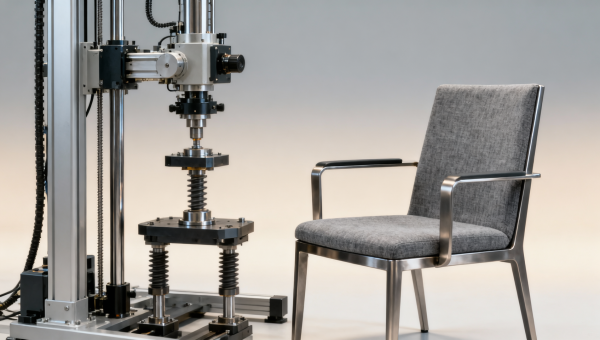
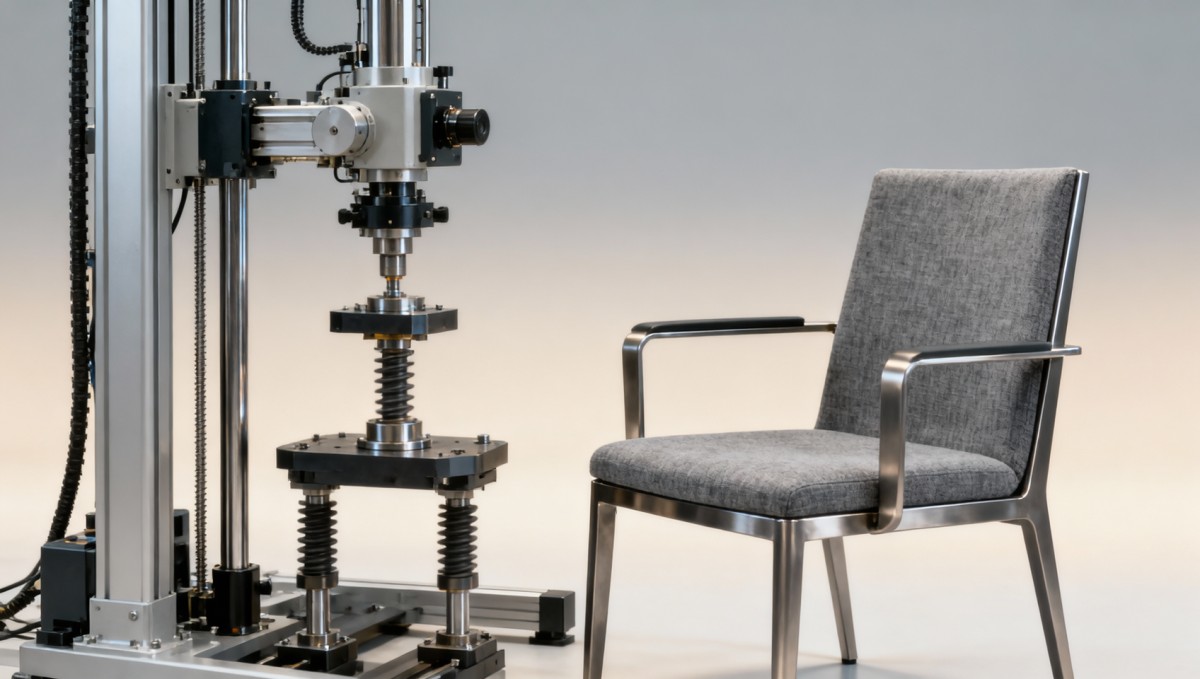
A “100,000-cycle rating” is not a marketing claim—it’s a benchmark rooted in standardized mechanical fatigue testing. For commercial-grade hotel chairs, this figure refers to the number of simulated user load/unload repetitions a chair must withstand without structural failure, joint deformation, or upholstery delamination under controlled lab conditions.
Testing follows internationally recognized protocols—including BIFMA X5.1 (U.S.), EN 16139 (EU), and GB/T 22803 (China)—each defining specific load weights (e.g., 113.6 kg static, 136 kg dynamic), actuation frequency (typically 10–15 cycles/minute), and environmental parameters (20°C ± 2°C, 50% ± 5% RH). Real-world validation adds 3 additional stress layers: seat pan torsion, backrest recline endurance, and castor roll resistance over 10 km on ASTM F1977-rated flooring.
Crucially, cycle count alone is insufficient. GCT verifies whether testing was conducted on fully assembled, production-line units—not prototypes—and whether results include post-test dimensional stability checks (±0.8 mm tolerance) and material tensile retention reports (≥85% original strength after cycling).
What Do Procurement Teams Overlook in Cycle-Rated Chair Evaluation?
Many buyers assume “100,000 cycles” guarantees longevity across all environments—but that’s only true when paired with correct application context. A chair passing 100,000 cycles in a climate-controlled lab may degrade in under 25,000 cycles in high-humidity coastal resorts or high-traffic airport lounges due to accelerated corrosion, UV-induced polymer breakdown, or repeated cleaning chemical exposure.
Three critical oversights routinely impact ROI:
- Ignoring upholstery abrasion ratings: Fabrics rated below Martindale 30,000 cycles will fail long before frame fatigue occurs—even if the chair structure remains intact.
- Skipping castor compatibility verification: Hard-surface castors tested on carpeted floors (or vice versa) generate up to 40% higher lateral stress on leg joints—invalidating published cycle claims.
- Overlooking assembly integrity: Chairs requiring field assembly often lose 15–22% of rated cycle life if torque specifications aren’t enforced during installation (e.g., 8.5 N·m ± 0.3 N·m for aluminum-to-steel fasteners).
GCT cross-references OEM test logs with third-party audit reports from SGS, TÜV Rheinland, and Intertek to validate real-world applicability—not just compliance.
Comparing Testing Standards Across Key Markets
Global procurement requires understanding how “100,000 cycles” translates across regulatory frameworks. While the number appears consistent, test methodology, pass/fail criteria, and reporting transparency vary significantly.
This table reveals why a chair certified to BIFMA alone may fall short in EU tenders—or why Chinese OEMs increasingly dual-certify to both EN and GB/T to serve global hotel chains. GCT maps these equivalencies for every supplier we vet, eliminating compliance guesswork.
Procurement Checklist: 5 Non-Negotiable Verification Steps
Before approving a 100,000-cycle hotel chair, institutional buyers must complete these five validation checkpoints—each tied to documented evidence, not vendor statements:
- Request full test report PDFs—not summaries—with timestamps, lab accreditation numbers (e.g., ISO/IEC 17025), and signature pages.
- Verify batch traceability: Match chair serial prefix to test sample ID in the report (e.g., “CH-24-0872” must appear in both production log and test certificate).
- Confirm upholstery has separate Martindale or Wyzenbeek abrasion certification (minimum 30,000 cycles for high-traffic lobbies).
- Require castor durability data: Rolling resistance, static load capacity (≥150 kg per wheel), and floor-type-specific wear rates.
- Validate warranty alignment: A true 100,000-cycle product carries ≥5-year structural warranty with clear exclusions (e.g., “excludes misuse, chemical exposure, or non-approved cleaning agents”).
GCT pre-validates all listed suppliers against this checklist—saving procurement teams an average of 11.2 hours per evaluation cycle.
Why Partner With GCT for Hotel Furniture Sourcing?
You need more than catalog specs—you need decision-grade intelligence backed by real OEM test infrastructure, cross-market compliance mapping, and procurement-grade documentation. GCT delivers exactly that.
We connect you directly with ISO 9001–certified manufacturers who operate in-house BIFMA/EN-compliant fatigue labs—and provide verified access to test videos, dimensional scan archives, and batch-level material certifications. Our platform surfaces only suppliers who meet 3 non-negotiable thresholds: 100% traceable test records, dual-market certification (e.g., BIFMA + EN), and minimum 5-year structural warranty with enforceable terms.
Whether you’re specifying for a 200-room luxury resort in Dubai, validating seating for a new airport terminal in Singapore, or scaling procurement across 12 APAC properties—contact GCT today for:
- Custom test report review & gap analysis
- OEM facility audit scheduling (virtual or on-site)
- Cycle-rated chair comparison matrix by application (lobby, restaurant, conference, poolside)
- Lead time confirmation for certified stock lots (standard: 6–9 weeks; expedited: 3 weeks with 15% premium)
- Sample coordination with full compliance dossier (including upholstery abrasion, fire retardancy, and VOC emission reports)
Search News
Hot Articles
Popular Tags
Need ExpertConsultation?
Connect with our specialized leisureengineering team for procurementstrategies.
Recommended News
 Apr 20, 2026Hotel tables with edge seams that trap moisture and moldHotel tables, park benches & commercial furniture with mold-trapping edge seams? Discover seamless, moisture-resistant hotel furniture solutions—luxury, custom, and compliant.● Hospitality Sourcing Dir
 Apr 20, 2026Hotel chairs rated for 100,000 cycles—but tested how?Discover how top hotel chairs, park benches & commercial furniture are truly tested for 100,000 cycles—backed by BIFMA, EN & GB/T standards. Get verified luxury furniture insights.● Hospitality Sourcing Dir
 Apr 19, 2026Hotel tables that warp under daily cleaning chemicalsHotel tables, hotel chairs, hotel beds & park benches—discover why chemical warping fails luxury furniture & commercial furniture specs. Get expert OEM insights on durable hotel furniture & equipment.● Hospitality Sourcing Dir
 Apr 19, 2026Hotel chairs with hidden wear patterns no one tests forHotel chairs, luxury furniture & commercial furniture buyers: uncover hidden wear patterns in hotel chairs, hotel beds, and custom furniture—before failure hits ROI.● Hospitality Sourcing Dir
 Apr 18, 2026Custom furniture quoting errors—how small measurement gaps become big cost overrunsAvoid costly overruns: Fix custom furniture quoting errors before they derail hotel beds, theme park rides, playground structures & soundproofing materials.● Hospitality Sourcing Dir
 Apr 17, 2026Restaurant furniture that handles spills, scratches, and constant turnoverCommercial furniture built for spills, scratches & turnover—ideal for playground borders, sensory playgrounds, hotel tables, amusement equipment & more.● Hospitality Sourcing Dir
 Apr 16, 2026Custom fabrication for restaurant furniture: When ‘made-to-order’ becomes ‘wait-for-3-months’Custom fabrication for hotel furniture, designer eyewear & jewelry—solve supply chain delays with OEM manufacturing expertise. Get on-time, cross-sector solutions.● Hospitality Sourcing Dir
 Apr 15, 2026Restaurant furniture durability tests don’t match real dining room stressCommercial furniture, playground safety & amusement equipment tested for real-world stress—not just labs. Discover field-validated durability for hotel tables, sensory playgrounds, climbers & more.● Hospitality Sourcing Dir
 Apr 12, 2026Custom furniture for play spaces: When 'bespoke' means higher liability, not better fitOutdoor playground & inclusive playground design demands caution: custom furniture, playground swings, and theme park rides raise liability—discover safer, certified alternatives.● Hospitality Sourcing Dir
 Apr 12, 2026Custom furniture lead times ballooning in 2026—what’s really causing the 14-week delaysOutdoor playground, inclusive playground, and theme park rides face 14-week custom furniture delays in 2026—discover root causes & proven mitigation strategies now.● Hospitality Sourcing Dir
 Apr 07, 2026Custom furniture lead times in 2026: Why ‘standard’ finishes now take longer than premiumCustom furniture, outdoor playground & hotel furniture lead times surged in 2026—discover why standard finishes now lag premium. Get data-backed sourcing strategies for inclusive playground, soundproofing materials & instrument cables.● Hospitality Sourcing Dir
 Apr 04, 2026Restaurant Furniture Buyers Are Asking Office Supplies Factories for Modular Desk Systems — And Getting YesTop office supplies manufacturer & OEM supplier delivers NSF/BIFMA-certified modular desk systems for restaurants—fast, compliant, factory-direct.● Hospitality Sourcing Dir
 Apr 01, 2026What happens to hotel tables when placed on floating floors—real case data from 2026Discover how hotel tables, chairs, desks & sofas interact with soundproofing materials on floating floors—real 2026 data reveals critical acoustic & stability insights for hospitality furniture buyers.● Hospitality Sourcing Dir
 Mar 31, 2026Hotel tables that don’t rattle—what makes the difference in real roomsDiscover hotel tables engineered with soundproofing materials & precision construction—eliminate rattling, elevate guest experience. Premium hotel furniture, desks, chairs, sofas & more.● Hospitality Sourcing Dir
 Mar 31, 2026Hotel reception furniture that ships on time—then arrives with mismatched wood grain batchesCommercial sourcing for hotel reception furniture, amusement park lighting & playground development—guaranteed batch consistency, on-time delivery, and full compliance.● Hospitality Sourcing Dir
 Mar 30, 2026Restaurant furniture from Tier-2 suppliers: durability claims vs. real-world spill cyclesCommercial sourcing of hotel restaurant furniture, amusement park lighting & playground development gear—tested under real spill cycles. Discover durable Tier-2 suppliers.● Hospitality Sourcing Dir
 Mar 30, 2026Hotel bar furniture orders that pass QA—but fail the ‘three-drink test’Hotel bar furniture that passes QA—and the real-world 'three-drink test'. Trusted commercial sourcing for hotel restaurant & reception furniture, amusement park lighting, playground compliance, and electronic music gear.● Hospitality Sourcing Dir
 Mar 30, 2026Hotel reception furniture that looks premium—until the first guest leans on itDiscover durable hotel reception furniture built for real traffic—plus commercial sourcing support for amusement park lighting, playground development, and more.● Hospitality Sourcing Dir
 Mar 28, 2026Restaurant furniture ordered for 'luxury aesthetic'—then reconfigured three times before openingLuxury furniture, trampoline park fixtures, arcade games & park benches—engineered for iterative layouts and premium experiential integrity. Discover adaptive sourcing.● Hospitality Sourcing Dir
 Mar 27, 2026What restaurant furniture buyers overlook when evaluating commercial procurement terms for bulk ordersDiscover expert supply chain solutions, ODM services & OEM manufacturing for amusement park equipment, catering equipment, and commercial procurement—beyond price sheets.● Hospitality Sourcing Dir
 Mar 19, 2026Hospitality Procurement Leaders Are Shifting Budgets From Restaurant Furniture to Indoor Playground UpgradesDiscover how adventure playgrounds, trampoline parks & theme park rides are reshaping hospitality procurement—prioritizing playground safety, indoor playground innovation, and soundproofing materials over traditional furniture.● Hospitality Sourcing Dir
 Mar 19, 2026Restaurant Furniture Sourcing Mistakes That Trigger 30% Higher Installation DelaysAvoid 30% installation delays in commercial furniture sourcing for amusement parks, hotel equipment & luxury jewelry—discover critical ODM/OEM pitfalls and data-backed vetting strategies.● Hospitality Sourcing Dir