Commercial Furniture Materials That Hold Up Better Outdoors
For buyers specifying commercial furniture for outdoor venues, material choice directly affects lifespan, safety, and maintenance costs. From hotel tables in resort terraces to amusement equipment near sensory playground zones, durable options matter. This guide explores which materials perform best outdoors while supporting playground safety, playground borders, and playground climbers in high-traffic recreational and hospitality settings.
For most commercial outdoor projects, the best-performing furniture materials are powder-coated aluminum, marine-grade stainless steel, high-density polyethylene (HDPE), performance-treated hardwoods, and contract-grade synthetic wicker over rust-resistant frames. The right choice depends less on appearance alone and more on exposure conditions, traffic intensity, cleaning demands, and compliance expectations. Buyers in hospitality, leisure, and recreation typically get the best long-term value by comparing total cost of ownership rather than upfront price.
What buyers are really trying to decide when choosing outdoor commercial furniture materials
When procurement teams, specifiers, and distributors search for outdoor furniture materials, they are usually not looking for a generic list. They want to know which materials will last in real commercial use, which ones create fewer warranty issues, and which options are suitable for spaces exposed to sun, rain, chlorine, salt air, food spills, and constant public use.
In sports, leisure, and hospitality environments, this decision often has added complexity. Outdoor seating may sit beside pools, playground borders, splash zones, or amusement waiting areas. In those locations, furniture has to do more than resist weather. It should also support safe circulation, remain structurally stable, avoid sharp failures, and stay visually consistent with the broader guest experience.
That means the most useful evaluation criteria are:
- Resistance to corrosion, fading, cracking, and warping
- Ease of cleaning and sanitation
- Performance in UV-heavy, wet, coastal, or chemically treated environments
- Weight and stability in windy or high-traffic areas
- Repairability and replacement cycle
- Brand image and design fit for premium venues
- Suitability near family recreation areas, including playground climbers and playground safety zones
Which outdoor furniture materials generally hold up best in commercial settings
There is no single best material for every site, but a few consistently outperform others in commercial outdoor use.
Powder-coated aluminum: best all-around choice for many hospitality and recreation venues
Powder-coated aluminum is one of the most reliable outdoor commercial furniture materials because it combines corrosion resistance, manageable weight, and design flexibility. It does not rust like untreated steel, and high-quality powder coating improves weather resistance while allowing a wide range of finishes.
It is especially suitable for:
- Hotel terraces and rooftop lounges
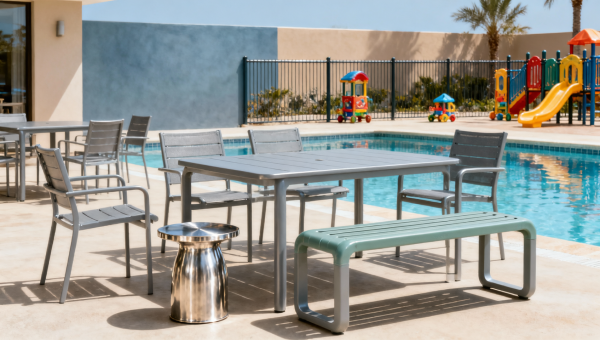
- Poolside dining zones
- Outdoor café seating
- Amusement park rest areas
Buyers should still verify coating quality, weld integrity, and frame thickness. Lower-grade aluminum furniture may dent, wobble, or show coating failure under heavy commercial use.
Marine-grade stainless steel: strongest option for harsh, premium, or coastal environments
For buyers dealing with coastal air, heavy rain, or demanding premium aesthetics, marine-grade stainless steel is often a top-tier choice. It offers excellent structural durability and strong resistance to corrosion when the correct grade is specified, such as 316 stainless steel for more aggressive outdoor environments.
This material works well for:
- Luxury resorts near the sea
- High-end outdoor dining furniture
- Public-use benches and tables in exposed conditions
- Spaces needing long-term strength with a polished visual finish
The main limitation is cost. Stainless steel usually carries a higher purchase price, but in severe conditions it can reduce replacement frequency and maintenance risk.
HDPE and commercial-grade recycled plastic: excellent for low maintenance and family recreation zones
HDPE is one of the most practical choices for outdoor recreational settings because it resists moisture, insects, rot, and many common stains. It does not require painting and is easy to clean, making it ideal for parks, family resorts, playground-adjacent seating, and casual dining areas.
It is particularly useful near:
- Playground borders
- Sensory playground waiting areas
- Water-play environments
- Community leisure spaces with frequent cleaning cycles
For procurement teams, the advantage is predictable maintenance. The main point to check is whether the product is truly commercial grade. Residential-grade plastic furniture often becomes brittle, fades quickly, or loosens at connection points.
Teak and other durable hardwoods: strong visual appeal, but maintenance must be planned
Hardwoods such as teak remain popular in upscale outdoor hospitality furniture because of their natural appearance and good weather performance. Teak contains oils that help it resist moisture and decay better than many other woods.
However, wood is rarely the lowest-maintenance option. It can weather to a silver-gray tone, require periodic treatment depending on the desired appearance, and vary in quality based on sourcing and construction. For buyers, hardwood furniture makes sense when aesthetics and premium guest perception matter enough to justify ongoing upkeep.
Synthetic wicker over aluminum frames: good for style-focused hospitality projects
Contract-grade synthetic wicker can perform well outdoors when woven over rust-resistant aluminum frames. It gives a softer, resort-oriented look and is commonly used in lounges, cabanas, and hotel terrace seating.
The key is to avoid low-quality wicker that becomes brittle under UV exposure. Buyers should ask about UV stabilization, weave density, frame material, and replacement support for cushions or woven elements.
Which materials tend to fail faster outdoors and create avoidable replacement costs
Some materials can look acceptable at purchase but perform poorly in demanding commercial environments.
Untreated or low-grade steel
Steel can be strong, but if it is not properly galvanized, treated, or coated, it is vulnerable to rust, especially in wet or coastal settings. Once coatings chip, corrosion can spread quickly and affect both appearance and safety.
Low-grade plastics
Cheaper plastics often crack, fade, and become structurally weak under prolonged sun exposure. In family recreation spaces or near playground climbers, that can create both brand damage and user safety concerns.
Softwoods and poorly sealed wood products
These materials are more likely to absorb moisture, warp, split, or develop finish failure. They may be acceptable for temporary or decorative use, but they usually do not offer the durability commercial buyers need.
Mixed-material designs with weak connection points
Even when the main material is strong, low-quality hardware, poor joinery, and weak welds can shorten lifespan. Many outdoor furniture failures begin at joints, feet, hinges, or fasteners rather than in the primary frame material itself.
How to match material choice to the actual outdoor environment
One of the most common procurement mistakes is choosing based on showroom appearance instead of exposure conditions. Materials should be selected according to the environment they will face every day.
For coastal locations
Prioritize marine-grade stainless steel, high-quality aluminum, and HDPE. Salt air accelerates corrosion, so untreated steel and low-grade hardware should be avoided.
For poolside and splash zones
Choose non-rusting materials that tolerate moisture and cleaning chemicals. Aluminum, HDPE, and certain synthetic materials usually perform well. Cushions and fabrics should also be quick-drying and mildew resistant.
For playground-adjacent seating and leisure parks
Focus on rounded edges, easy cleaning, color stability, and stable construction. Furniture near playground safety areas should avoid splintering, sharp breakage, or materials that become dangerously hot in full sun.
For premium hotel terraces and outdoor dining
Balance durability with image. Teak, stainless steel, powder-coated aluminum, and contract-grade woven furniture are all viable depending on concept, maintenance staff capacity, and expected guest positioning.
For high-traffic public venues
Favor materials with low maintenance and strong structural consistency. HDPE, heavy-duty aluminum, and robust steel with proper protective treatment often work best when furniture is moved often or used continuously.
What procurement teams should ask suppliers before approving a material
Strong sourcing decisions depend on more than catalog descriptions. Buyers should pressure-test supplier claims with specific commercial questions.
- What exact material grade is used for the frame, hardware, and exposed surfaces?
- Is the product designed for commercial outdoor use or adapted from a residential line?
- What UV, corrosion, and load tests have been completed?
- Which environments has this product already been installed in?
- What is the warranty coverage for frame, finish, and surface material?
- Are replacement parts available for glides, fasteners, slats, cushions, or woven sections?
- How should the furniture be cleaned in hospitality or recreation settings?
- Does the design support safe use in family and public environments?
For distributors and commercial evaluators, supplier reliability matters as much as product specification. Consistent OEM quality, documentation, and after-sales support reduce risk in large projects.
Why total cost of ownership matters more than initial unit price
Outdoor commercial furniture is often purchased under cost pressure, but the lowest unit price rarely delivers the best value. A cheaper material may require earlier replacement, more labor-intensive cleaning, or frequent refinishing. In high-traffic leisure and hospitality environments, those hidden costs add up quickly.
Total cost of ownership should include:
- Expected service life
- Maintenance frequency and labor cost
- Replacement part availability
- Downtime or disruption during replacement
- Impact on guest perception and brand standards
- Risk of complaints, instability, or visible deterioration
For example, a premium aluminum or HDPE solution may cost more upfront than basic painted steel or low-grade plastic, but it often performs better over multiple seasons with fewer operational headaches.
Best practical material recommendations by commercial use case
To simplify evaluation, here is a practical shortlist by scenario.
- Resort terrace dining: powder-coated aluminum, teak, marine-grade stainless steel
- Poolside lounges: aluminum frames, HDPE elements, quick-dry textiles, synthetic wicker over aluminum
- Amusement park rest areas: HDPE, heavy-duty aluminum, properly protected steel for fixed installations
- Playground-adjacent seating: HDPE and rounded-edge aluminum furniture with low maintenance surfaces
- Coastal hospitality venues: 316 stainless steel, marine-grade aluminum, HDPE
- Public recreation spaces: commercial recycled plastic, HDPE, vandal-resistant coated metal systems
Final takeaway for buyers comparing outdoor commercial furniture materials
The outdoor furniture materials that hold up best in commercial use are usually those engineered to match real environmental stress, not just visual design trends. For most buyers, powder-coated aluminum offers the best overall balance of durability, cost control, and versatility. Marine-grade stainless steel is ideal for premium or corrosive settings. HDPE is highly effective for recreation, family, and low-maintenance applications. Teak and synthetic wicker can also perform well when quality is high and maintenance expectations are realistic.
If your project includes hospitality terraces, leisure zones, or furniture near playground borders and playground climbers, focus on material grade, structural quality, maintenance demands, and long-term operational cost. The best sourcing decision is the one that protects guest experience, reduces replacement cycles, and supports safe, reliable use season after season.
Search News
Hot Articles
Popular Tags
Need ExpertConsultation?
Connect with our specialized leisureengineering team for procurementstrategies.
Recommended News
 Apr 14, 2026Fuzhou Hospital's Office Supply Tender Fails Due to Lack of BiddersFuzhou Hospital's office supply tender failed due to lack of qualified bidders, exposing gaps in regional suppliers' compliance and procurement experience. Learn key considerations for international buyers evaluating Chinese vendors.● Institutional Buyer
 Apr 14, 2026Chongqing Launches Office Supplies Procurement with 2-Hour Delivery FocusChongqing's office supplies procurement (KZQ26A00105) sets new standards with 2-hour delivery focus and 60% SME quota. Discover how this 886,700 RMB tender impacts logistics and supply chains in China's evolving B2B market.● Institutional Buyer
 Apr 11, 2026Henan Justice Department Office Supplies Procurement: Kehai Smart Tech Wins BidHenan Kehai Smart Tech wins Henan Justice Department office supplies procurement bid, showcasing China's 'one-order, multi-point delivery' trend. Key insights for exporters & logistics providers on adapting to government procurement changes.● Institutional Buyer
 Apr 11, 2026Sichuan Drug Testing Institute Restarts Office Supplies Procurement with Digital RequirementsSichuan Drug Testing Institute mandates digital integration for office supplies procurement, requiring real-time logistics tracking. Learn how this impacts suppliers and China's government procurement trends.● Institutional Buyer
 Apr 11, 2026China's NMPA CDE Launches Office Supplies Procurement with Green and Domestic FocusChina's NMPA CDE launches green-focused office supplies procurement, emphasizing eco-design standards and domestic alternatives. Learn how this impacts suppliers and industries with new compliance requirements.● Institutional Buyer
 Apr 21, 2026What size hotel desks work in compact guest roomsHotel desks for compact guest rooms: discover the right hotel furniture sizes, layouts, and hospitality procurement tips to maximize space, comfort, and luxury furniture appeal.● Institutional Buyer
 Apr 21, 2026Hotel desks with built in power are now expectedHotel desks with built in power are redefining hotel furniture and hotel room furniture. Explore smarter commercial furniture choices for hospitality procurement and better guest satisfaction.● Institutional Buyer
 Apr 23, 2026Commercial Furniture Materials That Hold Up Better OutdoorsCommercial furniture that lasts outdoors: compare hotel tables, amusement equipment, playground borders, sensory playground seating, and playground safety-focused materials.● Institutional Buyer
 Apr 23, 2026Custom Furniture or Stock Which WinsCompare custom furniture vs stock for hotels and leisure park projects. From hotel beds, catering equipment, and soundproofing materials to playground swings and theme park rides, find the best-fit solution.● Institutional Buyer
 Apr 20, 2026Commercial furniture upholstery stains that won’t lift—even with pro cleanersCommercial furniture stains won’t lift? Discover stain-resistant solutions for hotel beds, park benches, luxury furniture & more—backed by lab data & real-world performance.● Institutional Buyer
 Apr 19, 2026Commercial furniture fire ratings that change mid-projectCommercial furniture fire ratings—especially for hotel beds, park benches, hotel chairs, and luxury custom furniture—can shift mid-project. Avoid delays, cost overruns, and non-compliance with real-time, E-E-A-T–validated fire safety intelligence.● Institutional Buyer
 Apr 17, 2026Why commercial furniture specs matter more than price in 2026Commercial furniture, playground borders, sensory playgrounds & more—why specs trump price in 2026 for safety, ROI & brand trust. Discover how.● Institutional Buyer
 Apr 17, 2026Office furniture & equip: How ‘modular’ claims fall apart after three reconfigurationscommercial furniture, playground safety & sensory playground systems—why 'modular' fails after 3 reconfigurations. Get data-backed validation for amusement equipment, hotel tables & educational supplies.● Institutional Buyer
 Apr 16, 2026Custom fabrication for office furniture: Why CAD files alone don’t guarantee fit-on-siteCustom fabrication for hotel furniture, designer eyewear & luxury watches demands real-world fit—not just CAD files. Discover why OEM manufacturing, supply chain solutions & precision matter on-site.● Institutional Buyer
 Apr 16, 2026Luxury furniture finishes that resist UV fading outdoorsDiscover UV-resistant luxury furniture finishes for park benches, music stands & outdoor playgrounds—engineered for colorfastness, compliance, and premium aesthetics under harsh sun.● Institutional Buyer
 Apr 15, 2026Luxury furniture materials that age well — and those that don’tDiscover luxury furniture materials that age gracefully—ideal for park benches, music stands, orchestral instruments & more. Avoid costly failures.● Institutional Buyer
 Apr 15, 2026Why commercial furniture specs matter more than price in 2026Commercial furniture specs—playground borders, sensory playgrounds, music accessories & more—drive safety, durability & experience in 2026. Stop choosing by price alone.● Institutional Buyer
") Apr 13, 2026Why contract furniture quotes vary by 40%—and what’s really included (or missing)Discover why hotel desks, commercial playgrounds & trampoline park manufacturer quotes vary by 40%—and what’s truly included in hospitality furniture, outdoor play structures, microphone systems & more.● Institutional Buyer
Apr 13, 2026Why contract furniture quotes vary by 40%—and what’s really included (or missing)Discover why hotel desks, commercial playgrounds & trampoline park manufacturer quotes vary by 40%—and what’s truly included in hospitality furniture, outdoor play structures, microphone systems & more.● Institutional Buyer Apr 13, 2026Contract furniture lead times in 2026: why ‘standard’ delivery now means 14+ weeksHotel desks, hospitality furniture & commercial playgrounds now face 14+ week lead times in 2026. Discover why—and how to mitigate delays for outdoor play structures, trampoline park manufacturing, stage equipment & more.● Institutional Buyer
 Apr 14, 2026Office furniture & equip that supports hybrid work—but fails silently in summer heatOffice supplies, arcade games & percussion instruments—engineered for hybrid work AND summer heat. Discover heat-resilient office furniture that won’t fail silently.● Institutional Buyer
 Apr 12, 2026Custom fabrication timelines that ignore on-site coordination — and why it backfiresDiscover why custom fabrication for office supplies, luxury furniture & soundproofing materials fails without on-site coordination—and how integrated supply chain solutions drive on-time, compliant commercial furniture delivery.● Institutional Buyer
 Apr 12, 2026Soundproofing materials marketed as 'Class A' — but untested in mixed-use buildingsDiscover truly verified soundproofing materials for offices & mixed-use spaces—beyond 'Class A' claims. Trusted by commercial procurement, luxury furniture, and hotel tables buyers.● Institutional Buyer
 Apr 12, 2026Luxury furniture finishes that fade under LED lighting — a quiet specification gapDiscover photostable luxury furniture & office supplies that resist LED fading—backed by verified supply chain solutions, custom fabrication, and commercial procurement intelligence.● Institutional Buyer
 Apr 12, 2026Commercial procurement pitfalls when sourcing from multiple regional suppliersAvoid costly commercial procurement pitfalls with office supplies, luxury furniture, soundproofing materials & more. Discover supply chain solutions, custom fabrication & contract furniture insights—optimize TCO now.● Institutional Buyer