Do Playground Borders Really Reduce Maintenance Problems?
For buyers evaluating amusement equipment and playground safety, a common question is whether playground borders truly cut maintenance costs over time. In commercial settings—from sensory playground projects to areas with playground climbers—well-designed borders can help control surfacing, improve safety, and reduce cleanup, but results depend on materials, layout, and usage. This article explores what procurement teams and distributors should know before making a decision.
Do playground borders actually reduce maintenance, or just shift the workload?
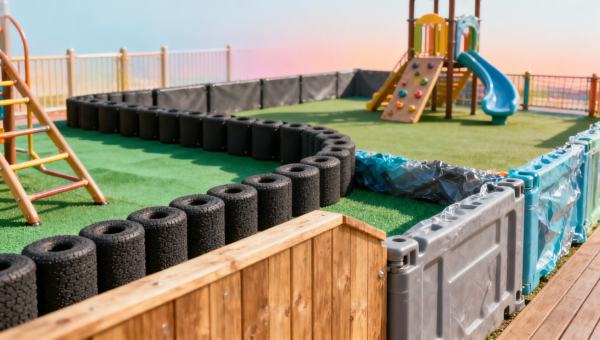
In the sports and entertainment sector, playground borders are not simply decorative edges. They act as containment systems for loose-fill surfacing, transition barriers between play zones and walkways, and visual boundaries for safer site organization. For procurement teams assessing lifecycle cost, the right question is not whether borders eliminate maintenance, but whether they reduce recurring labor, material loss, and surface migration over a 12–36 month operating window.
In many commercial playgrounds, loose materials such as engineered wood fiber, sand, or rubber mulch gradually move outside the intended use zone. This creates three common maintenance burdens: weekly cleanup, periodic top-off of surfacing, and edge repairs caused by erosion or foot traffic. A properly specified playground border can reduce these problems, especially in high-traffic parks, schools, resorts, and family entertainment venues where use frequency may range from daily operation to 6–7 days per week.
However, borders are not a universal cure. If drainage is poor, if the border height is mismatched to surfacing depth, or if entry points are badly planned, maintenance problems can persist. In some projects, a border even creates a new issue, such as trapping water or causing displacement at access openings. That is why commercial buyers should evaluate border design as part of the full surfacing and site system rather than as a standalone accessory.
For distributors and project specifiers, this distinction matters. End users often ask for a low-maintenance playground, but maintenance outcomes are driven by material choice, installation accuracy, expected user volume, and the interaction between play equipment and ground treatment. GCT supports sourcing decisions by helping buyers compare border options in a commercial context, where durability, compliance, replenishment cost, and delivery reliability all affect the total result.
What maintenance problems can a border realistically reduce?
A well-designed border typically helps with four practical issues. First, it limits lateral movement of surfacing materials. Second, it reduces contamination from grass, soil, and debris entering the play zone. Third, it improves edge definition for inspections and topping up. Fourth, it can protect adjacent paving, lawns, or synthetic turf from loose-fill spread. These are direct operational benefits that facility managers notice within the first 3–6 months of use.
- Surface containment: helps retain wood fiber, sand, pea gravel alternatives, or rubber mulch within the designed impact area.
- Cleaner perimeters: reduces sweep-up labor around playground climbers, swings, and circulation paths.
- Simpler inspections: makes it easier to identify low-fill zones, trip risks, and erosion points during weekly or monthly checks.
- Better space management: separates play surfacing from landscaping, seating areas, and stroller routes.
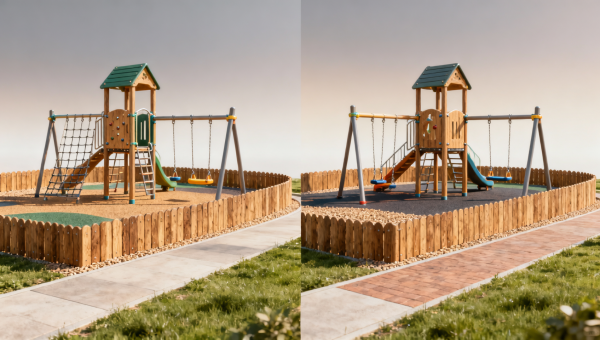
Still, buyers should remember that borders do less for unitary surfacing systems such as poured-in-place rubber or interlocking tiles, where maintenance concerns focus more on seam integrity, UV wear, drainage, and substrate stability. In those cases, the border may serve more as an edge restraint and finish detail than as a major maintenance reduction tool.
Which playground border materials perform best in commercial applications?
Material selection drives both maintenance performance and replacement frequency. In commercial amusement and leisure projects, the most common border categories include recycled plastic borders, timber borders, metal edging systems, precast concrete edges, and rubber curb-style products. The best fit depends on site climate, budget level, target lifespan, and whether the playground uses loose-fill or unitary surfacing.
For distributors and procurement officers, service life should be reviewed alongside appearance and installation speed. A low initial price may not be attractive if the material warps, cracks, rots, or shifts within 2–5 years. In hospitality, education, and public leisure settings, the edge detail also affects user perception. A border that looks unfinished or becomes uneven can undermine the perceived quality of the entire playground package.
The table below compares common playground border options from a maintenance and sourcing perspective. It is intended for early-stage evaluation, not as a substitute for site-specific engineering or local compliance review.
For most loose-fill commercial playgrounds, recycled plastic and engineered edging systems offer a practical balance between durability and maintenance reduction. Timber may remain viable in cost-sensitive projects, but buyers should account for more frequent inspection cycles, especially in humid or freeze-thaw environments. Concrete delivers strong containment, yet it is less flexible when future expansion or redesign is expected within 2–4 years.
How border height and layout affect performance
A common specification mistake is choosing a border based only on appearance. In practice, the edge height should coordinate with the intended surfacing depth, expected migration, and accessibility approach. If loose-fill depth is designed at a higher range for impact attenuation, the visible border height above finished surfacing must still allow containment without creating unnecessary access barriers.
Layout matters just as much. Straight runs are easier to install, but curved zones, transfer points, and inclusive access routes require closer planning. Procurement teams should confirm the number of openings, corner treatments, anchor spacing, and transitions to ramps or hardscape. These details often determine whether maintenance remains routine or becomes labor-intensive after the first rainy season.
Three specification details buyers often overlook
- Anchoring interval: loose or widely spaced anchors can allow shifting after repeated impact and seasonal ground movement.
- Drainage interface: poor drainage beside the border can accelerate material washout and undermine the base.
- Access transitions: openings for wheelchairs, maintenance carts, or strollers must be designed so surfacing does not spill excessively.
Where do playground borders make the biggest difference?
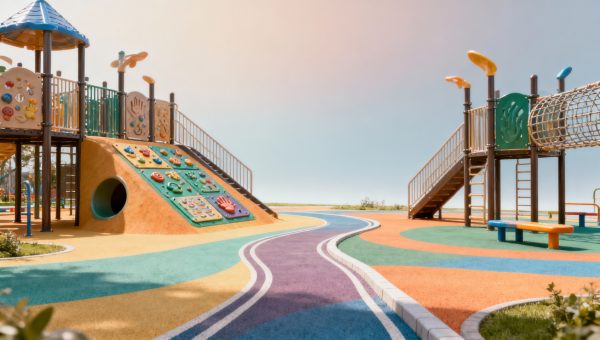
Playground borders usually deliver the strongest maintenance value in high-traffic, mixed-use, or exposed outdoor environments. In these settings, loose-fill movement can be significant within days rather than weeks. If the site includes multiple activity zones, sensory play equipment, and playground climbers, edge definition becomes even more important because users enter and exit the play area from many directions.
Hospitality groups often prefer visually clean, easy-to-manage play areas because maintenance staff already handle landscaping, guest circulation, and public area presentation. A border can reduce the spread of bark, sand, or rubber onto nearby pool decks, café terraces, and pedestrian paths. For schools and municipal buyers, the value is slightly different: easier inspections, improved housekeeping, and more consistent surfacing depth around fall zones.
Not every playground needs the same border strategy. Smaller indoor or semi-covered areas may rely on different surface control methods. Open-air sites exposed to wind, rain runoff, and frequent cleaning generally benefit more from robust edging. The following table helps procurement teams match border intensity to site conditions.
This comparison shows why context matters. In a resort or school project, the maintenance savings are often linked to housekeeping efficiency and surfacing control. In a public park, the same border may be chosen mainly to resist washout and define inspection limits. A distributor who understands the end-use environment is in a better position to recommend the right border system and avoid over- or under-specification.
Scenarios where borders may offer limited value
Borders may have less impact when the site already uses a bonded or unitary surfacing system, when the play zone is very small, or when hardscape fully surrounds the area with integrated restraints. In such cases, maintenance priorities may shift toward drainage, cleaning chemicals, UV resistance, seam repair, or substrate preparation rather than loose-fill containment.
Even then, a border can still support aesthetics and zone definition. The key for buyers is to avoid paying for a heavy-duty containment product when a simpler restraint detail would achieve the same operational result. This is especially important for projects with tight capex limits or phased rollout plans across multiple sites.
What should procurement teams evaluate before buying playground borders?
Commercial buyers should review at least five decision areas before issuing a purchase order: surfacing type, site drainage, user profile, installation method, and replacement planning. A border that performs well in one project may fail early in another because one of these variables was ignored. For business evaluators, the goal is to reduce downstream service calls, not only to lower the upfront price.
Lead time also matters. Depending on whether the product is standard or custom fabricated, typical supply windows may range from 2–4 weeks for common stock items to 6–10 weeks for project-specific colors, radiused sections, or integrated accessibility components. Dealers and agents should confirm packaging, freight volume, and spare-part availability before finalizing the sourcing plan.
If your project includes international shipping, it is advisable to review documentation for material composition, installation instructions, and any relevant test references tied to the overall playground system. While border products themselves may not carry the same certification burden as structural play equipment, they still influence compliance outcomes through edge safety, accessibility transitions, and surfacing retention.
A practical 6-point procurement checklist
- Confirm the surfacing system: loose-fill and unitary surfaces require different border functions.
- Check height and profile: match the border to intended depth, access needs, and edge safety.
- Review drainage conditions: slope, runoff direction, and water exit points should be clear before installation.
- Evaluate anchoring and joints: ask how the system behaves under repeated impact and seasonal movement.
- Assess maintenance access: routine top-up, inspections, and cleaning should not be obstructed.
- Plan replenishment and spares: for multi-site buyers, standardization can simplify future replacement orders.
For playground borders used around sensory playgrounds or specialized inclusive play spaces, procurement teams should also consider user movement patterns. Some layouts need smoother transitions or more forgiving edges. This is where project-level sourcing support becomes valuable. GCT helps commercial buyers compare manufacturers, material options, and supply configurations aligned with actual operational priorities rather than generic catalog claims.
Compliance and specification points worth checking
When reviewing playground border options, buyers should check whether the design works appropriately with the applicable playground safety and accessibility framework used in their market. Typical review points include trip-risk reduction, edge finish, compatibility with impact-attenuating surfacing, and safe transitions at entries. In projects supplied across regions, it is prudent to request clear technical drawings and installation guidance before container booking or site scheduling.
This is especially relevant for dealers serving schools, public parks, and hospitality operators, where specification changes during construction can be costly. A border that arrives without the required connector hardware, ramp detail, or corner configuration may delay installation by 7–15 days, affecting handover timing and labor coordination.
Cost, alternatives, and common misconceptions buyers should avoid
One common misconception is that adding playground borders always increases total project cost without measurable return. In reality, the financial outcome depends on how often the play area needs cleanup, how much surfacing is lost, and how expensive routine labor is at the site. Where loose-fill replenishment is frequent, a border may reduce operating expense over the first 1–3 years, even if the upfront package cost is higher.
Another mistake is assuming the cheapest border is the most economical choice. If low-cost timber requires early replacement, extra fasteners, or repeated alignment work, its lifecycle cost may exceed that of a more stable recycled plastic or engineered system. The opposite can also be true: an oversized heavy-duty border may be unnecessary for a small, controlled play area with limited traffic and good enclosure conditions.
Alternatives exist, but each has trade-offs. Some sites use integrated curbs, landscape edging, or hardscape containment. Others switch from loose-fill to unitary surfacing to reduce migration. These choices can lower some maintenance tasks while increasing others, such as substrate preparation cost, crack repair, or full-surface refurbishment intervals. The right answer depends on use intensity, climate exposure, cleaning practices, and budget timing.
FAQ: questions procurement teams often ask
Do playground borders work best with loose-fill surfacing?
Yes, that is where they usually deliver the clearest maintenance benefit. Loose-fill systems need containment to reduce spread and preserve designed depth. With poured-in-place rubber or tiles, the border still matters, but more for edge restraint, finish quality, and transition management than for reducing daily cleanup.
How often should bordered play areas be inspected?
A practical routine is visual checking weekly in busy sites and a more detailed review monthly or quarterly, depending on traffic and weather exposure. Buyers should inspect anchor stability, corner joints, surfacing level at the perimeter, and any signs of drainage-related movement. High-use public sites may require more frequent checks during wet seasons.
Can borders reduce long-term maintenance enough to justify the investment?
In many outdoor commercial environments, yes, especially where cleanup labor and surfacing replenishment are recurring issues. The savings are not always dramatic in the first month, but over 12–24 months, better containment and cleaner perimeters can improve operational efficiency. The result is strongest when border design, surfacing choice, and drainage are planned together.
What are the most common purchasing mistakes?
The top errors are choosing by appearance alone, ignoring drainage, underestimating access openings, and failing to standardize spare components for future maintenance. Another issue is buying a border before confirming the final surfacing depth and site elevations. These gaps can create trip concerns, containment failure, or change-order costs during installation.
Why work with GCT when sourcing playground borders and related amusement products?
For information researchers, procurement managers, business evaluators, and channel partners, the challenge is rarely just finding a supplier. The real challenge is comparing options across durability, compliance fit, lead time, customization, and commercial reliability. GCT is built for that sourcing reality. Within the amusement and leisure parks sector, we help buyers navigate product categories that affect both user experience and operational cost.
If you are reviewing playground borders for a school, resort, municipal project, or distribution portfolio, we can help you assess more than surface-level claims. Typical consultation topics include border material comparison, matching borders to loose-fill or unitary surfacing, confirming delivery timelines, checking installation documentation, and screening suppliers for OEM or ODM suitability. This is especially useful when projects involve multi-site rollout, regional dealer support, or customized design language.
Our value is strongest when a project sits between technical and commercial decision-making. Buyers may already know they need safer, cleaner, lower-maintenance playground edges, but still need help narrowing down 3–5 viable supply paths. GCT supports these decisions with sector-focused sourcing insight for commercial spaces, where aesthetics, safety, and repeatable supply matter at the same time.
If you want to move forward, contact GCT for support with parameter confirmation, border and surfacing selection, sample coordination, estimated production and delivery windows, customization feasibility, documentation review, and quotation comparison. For distributors and procurement teams, that means a faster path from product research to supplier shortlisting and a more controlled buying decision.
Search News
Hot Articles
Popular Tags
Need ExpertConsultation?
Connect with our specialized leisureengineering team for procurementstrategies.
Recommended News
 Apr 22, 2026Vietnam Mandates Child Finger-Trap Sensors for Indoor Playground EquipmentVietnam mandates child finger-trap sensors for indoor playground equipment—comply with QCVN 128:2026 & TCVN 9350:2023 before Oct 2026!● Theme Park Strategist
 Apr 21, 2026Vietnam Mandates Child Finger-Trap Sensors for Indoor Play EquipmentVietnam mandates child finger-trap sensors for indoor play equipment—comply with TCVN 9507:2023 by July 1, 2026 to clear customs & protect kids.● Theme Park Strategist
 Apr 20, 2026NES Launches Sports Community Curator ProgramSports Community Curator program launched by NES — join global fitness studios, uni clubs & outdoor groups to co-create, test gear & grow with Chinese sports brands.● Theme Park Strategist
 Apr 17, 2026CPSC AI Safety Alert: 200ms Delay in Child Playground AI Systems = HazardCPSC AI Safety Alert: 200ms delay in child playground AI systems = hazard. Learn how latency compliance impacts Target/Walmart listings, testing, and supply chain.● Theme Park Strategist
 Apr 17, 20262026 Shanghai Sailing Open Adopts Domestic SeaChronos Pro Timing SystemSeaChronos Pro timing system debuts at 2026 Shanghai Sailing Open — ITU-certified, millisecond-accurate, wind- and tide-integrated. A game-changer for marine sports tech.● Theme Park Strategist
 Apr 16, 2026FDA Proposes New Labeling Rules for Sports Nutrition Supplements with Chinese LabelsFDA's new labeling rules for sports nutrition supplements with Chinese labels take effect April 2026—learn compliance must-dos for U.S. importers, manufacturers & brands.● Theme Park Strategist
 Apr 15, 2026Saudi SASO Updates Amusement Ride Standards: VR Devices Now Require Mandatory EMC TestingSaudi SASO's new 2026 standard mandates EMC testing for VR amusement rides, impacting exporters. Learn key compliance strategies for Saudi market access.● Theme Park Strategist
 Apr 14, 2026Japan Mandates Multilingual E-Manuals for Fitness Equipment from April 2026Japan mandates multilingual e-manuals for fitness equipment from April 2026. Learn how this impacts manufacturers & importers with JIS T 0601-1 compliance requirements. Stay ahead of the regulation!● Theme Park Strategist
 Apr 13, 2026WTT Taiyuan Adopts Chinese AI Table Tennis Analysis System with ITTF Export CertificationWTT Taiyuan adopts Chinese AI table tennis analysis system with ITTF export certification, enabling real-time ball speed & spin tracking. A game-changer for sports tech in emerging markets like Southeast Asia & Middle East.● Theme Park Strategist
 Apr 13, 2026First Female Snooker Player Achieves Multiple Century Breaks as Chinese Table Gains WPBSA CertificationChinese snooker player Bai Yulu makes history with multiple century breaks using WPBSA-certified 'Tournament Pro X7' table, marking a milestone for Chinese manufacturing in professional snooker equipment. Discover how this impacts global markets.● Theme Park Strategist
 Apr 13, 2026RCEP Zero Tariff on China's TPU Sports Protective Gear Boosts ASEAN TradeRCEP's zero-tariff policy on China's TPU sports protective gear boosts ASEAN trade, giving Chinese exporters cost advantages over Korean rivals. Learn how manufacturers and distributors can capitalize on this opportunity.● Theme Park Strategist
 Apr 10, 2026Japan's JIS T 9001:2026 Sports Flooring Anti-Slip Standard Mandatory from April 2026Japan's JIS T 9001:2026 standard mandates anti-slip sports flooring (SCOF ≥ 0.6) from April 2026. Chinese exporters must adapt to meet new requirements. Learn key compliance strategies.● Theme Park Strategist
 Apr 10, 2026Bai Yulu Makes History at Snooker World Championship, Sparks Surge in Women's Sports Equipment DemandBai Yulu makes history at Snooker World Championship with two century breaks, sparking 185% surge in women's sports equipment demand. Discover how manufacturers, e-commerce & supply chains can capitalize on this trend.● Theme Park Strategist
 Apr 10, 20262026 Badminton Asia Championships Quarterfinals Schedule Announced, Shi Yuqi to Compete; Southeast Asia Racket Orders Face 6-8 Week Delays2026 Badminton Asia Championships quarterfinals schedule revealed with Shi Yuqi competing, while Southeast Asia faces 6-8 week racket delays. Learn how supply chain issues impact manufacturers and get strategies to navigate equipment shortages.● Theme Park Strategist
 Apr 10, 2026WTT Taiyuan Challenge Sparks Smart Equipment Demand: Japan Buyers Scrutinize AI Training TechDiscover how the WTT Taiyuan Challenge boosts demand for AI training tech as Japanese buyers evaluate smart sports equipment. Learn key opportunities for manufacturers with JIS-certified solutions.● Theme Park Strategist
 Apr 10, 2026Chinese Snooker Players' Success Spurs Global Demand for Cue AccessoriesChinese snooker players' success drives 210% global demand surge for cue accessories. Explore how manufacturers & exporters can capitalize on this trend with UK, German & Australian markets leading inquiries.● Theme Park Strategist
 Apr 10, 2026EU Updates EN 16830:2026 Eyewear Safety Standard, Impacting China's Sports Goggle ExportsEU's updated EN 16830:2026 eyewear safety standard impacts China's sports goggle exports with stricter CE certification requirements. Learn how manufacturers and exporters can adapt to new impact resistance, UV400+, and blue light blocking standards before the September 2026 deadline.● Theme Park Strategist
 Apr 23, 2026Sensory Playground Features Children Use More Than ExpectedExplore which sensory playground features children use most, from playground climbers and music accessories to playground safety and playground borders—smart insights for amusement equipment, educational supplies, commercial furniture, hotel tables, and hotel equipment buyers.● Theme Park Strategist
 Apr 23, 2026What Makes a Sensory Playground Feel Inclusive in Practice?Explore how a sensory playground becomes truly inclusive through playground safety, accessible playground borders, and playground climbers—smart sourcing insights for amusement equipment buyers.● Theme Park Strategist
 Apr 23, 2026Playground Borders: Rubber, Wood, or Recycled Plastic?Playground borders compared: rubber, wood, or recycled plastic? Discover the best option for playground safety, sensory playgrounds, and playground climbers with smart lifecycle value.● Theme Park Strategist
 Apr 23, 2026Do Playground Borders Really Reduce Maintenance Problems?Playground borders can cut cleanup and surfacing loss in amusement equipment areas. See how they improve playground safety in sensory playgrounds and around playground climbers.● Theme Park Strategist
 Apr 22, 2026Why Build an Inclusive Playground NowInclusive playground planning now boosts leisure park value with safer playground swings and playground structures, helping buyers reduce retrofit risk and attract more families.● Theme Park Strategist
 Apr 22, 2026What Makes Playground Structures LastPlayground structures that last depend on smart materials, weather resistance, and strong design. Explore how inclusive playground and playground swings buyers reduce lifecycle costs.● Theme Park Strategist
 Apr 22, 2026Which Playground Swings Are SafestPlayground swings safety guide: discover the safest playground swings for every leisure park or inclusive playground, with certified playground structures, surfacing, and buyer tips.● Theme Park Strategist