Playground Borders: Rubber, Wood, or Recycled Plastic?
Choosing the right playground borders can directly affect playground safety, maintenance costs, and the long-term value of amusement equipment investments. For buyers comparing rubber, wood, and recycled plastic, the best option depends on traffic levels, climate, design goals, and whether the site includes a sensory playground or playground climbers. This guide helps procurement teams and commercial decision-makers evaluate border materials with confidence.
For most commercial buyers, there is no single “best” playground border material for every project. Rubber borders are often preferred when impact safety, accessibility, and low maintenance are top priorities. Wood borders can work well for lower-budget projects or natural-themed sites, but they usually require more upkeep and have a shorter service life. Recycled plastic borders are often the best middle-ground choice for buyers looking for durability, weather resistance, and lower lifetime maintenance without the higher upfront cost of rubber systems.
If your project involves high foot traffic, public access, inclusive design, or long-term maintenance concerns, choosing based on total cost of ownership is more important than choosing based on purchase price alone. That is usually where many procurement mistakes happen.
What commercial buyers really need to compare before choosing playground borders
When procurement teams evaluate playground borders, the material itself is only one part of the decision. The better question is: which border option best fits the operating conditions of the site?
The most important decision factors usually include:
- Safety performance: Edge stability, trip risk, surface containment, and compatibility with safety surfacing.
- Accessibility: Whether the border supports inclusive routes for wheelchairs, strollers, and sensory playground access.
- Climate resistance: Exposure to moisture, UV, freeze-thaw cycles, or extreme heat.
- Maintenance burden: Repairs, replacement cycles, surface shifting, and cleaning needs.
- Visual design: Whether the site requires a natural look, bright colors, or a modern commercial appearance.
- Project lifecycle cost: Initial purchase, installation, maintenance, and replacement over time.
- Use case: Public parks, schools, resorts, family entertainment venues, and mixed-use commercial spaces all have different demands.
For B2B buyers, the border must also align with supplier reliability, compliance expectations, and installation practicality. A border that looks cost-effective in a quotation may become expensive if it fails early, shifts under heavy use, or increases maintenance calls.
Rubber playground borders: best for safety, accessibility, and high-traffic sites
Rubber playground borders are often chosen for commercial installations where safety and operational efficiency matter more than the lowest upfront price. They are commonly used around schools, municipalities, inclusive playgrounds, and busy recreation sites.
Main advantages of rubber borders:
- Soft, impact-friendly edge profile that can reduce injury risk
- Good compatibility with poured-in-place rubber, rubber mulch, and other safety surfacing systems
- Strong accessibility performance for inclusive playground layouts
- Lower splinter, rot, and corrosion concerns than traditional materials
- Available in multiple colors and molded profiles for design flexibility
Where rubber performs especially well:
- Sites with frequent use and active circulation
- Projects that include sensory playground features
- Areas around playground climbers where stable surfacing edges matter
- Commercial environments where appearance and lower maintenance support long-term value
Potential limitations:
- Higher initial material cost compared with wood
- Product quality can vary widely between suppliers
- Some systems require more careful installation to ensure long-term anchoring stability
For buyers managing long operating horizons, rubber often makes financial sense when reduced maintenance, improved user safety, and stronger accessibility are part of the project brief. This is especially true in public-facing commercial environments where injury claims, downtime, and visible wear carry business consequences.
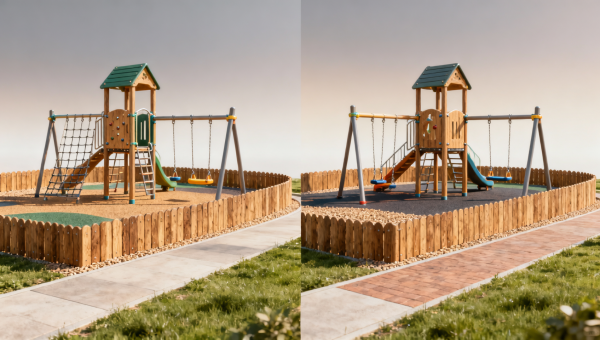
Wood playground borders: lower upfront cost, but higher maintenance risk
Wood playground borders remain common because they are familiar, easy to source, and often less expensive at the initial purchase stage. They can also suit projects that want a more natural appearance, especially in parks or landscape-led play areas.
Main advantages of wood borders:
- Lower upfront procurement cost in many markets
- Natural aesthetic that fits rustic or landscape-oriented designs
- Simple installation for some basic layouts
- Widely understood by local contractors
However, wood usually presents more long-term concerns:
- Susceptible to rot, moisture damage, insect attack, and warping
- Can splinter or crack over time, creating safety and maintenance issues
- May require chemical treatment, which some buyers prefer to avoid
- Typically shorter service life in wet or high-traffic environments
- May shift, loosen, or deteriorate faster around active equipment zones
Wood can still be a reasonable choice for low-intensity use, budget-driven projects, or sites where a natural finish is a high design priority and maintenance resources are available. But for procurement professionals, wood should be evaluated carefully against replacement frequency and maintenance labor. What looks cheaper in year one may not remain cheaper over five to ten years.
Recycled plastic playground borders: strong durability with low upkeep
Recycled plastic playground borders are increasingly attractive for commercial buyers who want a durable and sustainable alternative to wood. They are especially relevant in projects where weather resistance and lower maintenance are more important than achieving the soft edge profile of rubber.
Main advantages of recycled plastic borders:
- Resistant to rot, moisture, and insect damage
- Typically lower maintenance than wood
- Good durability in varied climates
- Often made from post-consumer or post-industrial recycled material
- Can support sustainability goals and environmental procurement narratives
Where recycled plastic works well:
- Schools, parks, and recreation sites needing durable perimeter containment
- Projects exposed to frequent rain or humidity
- Buyers seeking lower maintenance without choosing premium rubber borders
- Commercial tenders where environmental positioning adds value
Possible drawbacks:
- May not provide the same cushioned safety feel as rubber
- Visual finish may vary by manufacturer and formulation
- Lower-grade products can fade, deform, or feel less premium
For many commercial applications, recycled plastic offers one of the best lifecycle value profiles. It is often the practical choice when buyers need a durable border that performs better than wood in harsh conditions but does not require the higher investment of rubber systems.
Which material is best for safety, compliance, and inclusive playground design?
If the project includes accessibility goals, inclusive play, or risk-sensitive public use, safety performance should carry more weight than raw material cost. Borders help define the perimeter, retain surfacing, and influence how easy or difficult it is for users to enter and move around the play area.
In many cases:
- Rubber is the strongest option for accessibility and user-friendly edge transitions.
- Recycled plastic can provide good stability and durability, but product design matters.
- Wood may create more long-term concerns related to splinters, uneven edges, or deterioration.
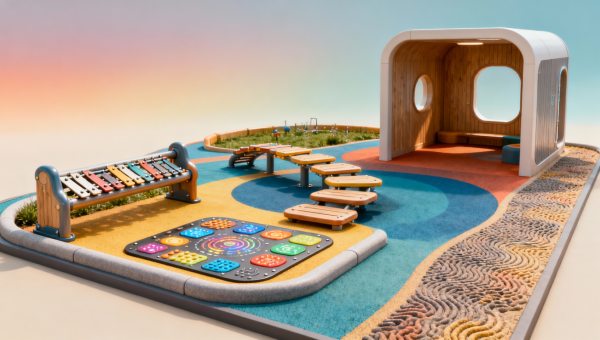
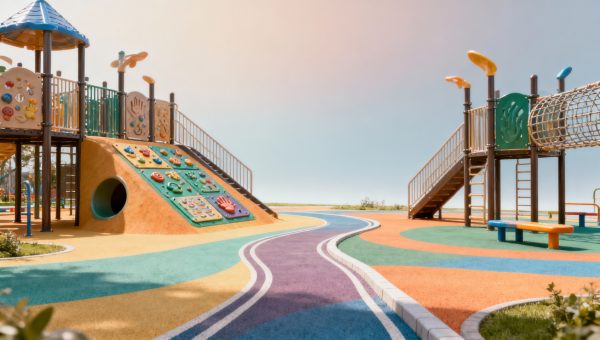
For sites with a sensory playground, border choice should support calm movement, safer transitions, and reduced physical barriers. For areas with playground climbers or high-energy play equipment, stable surfacing containment becomes even more important because displaced fill material or damaged edging can quickly become a maintenance and safety issue.
Buyers should also verify that border systems support the surfacing depth and fall-protection strategy specified for the equipment zone. A border is not only a visual edge; it is part of the broader safety system.
Total cost of ownership: the metric procurement teams should prioritize
One of the most useful ways to compare rubber, wood, and recycled plastic playground borders is through total cost of ownership rather than unit price.
Ask the following questions during evaluation:
- What is the expected service life in the target climate?
- How often will the material need repair or replacement?
- Will the border increase labor costs for routine maintenance?
- How likely is it to create user complaints or visible wear in a public-facing site?
- Does the material support premium design positioning or sustainability goals?
- What are the consequences if the border fails around critical equipment zones?
In practical terms:
- Wood may have the lowest initial cost but the highest maintenance exposure.
- Rubber may cost more upfront but can deliver strong long-term value in high-use and accessibility-focused environments.
- Recycled plastic often sits in the middle, balancing upfront spend with durability and reduced maintenance.
For distributors, sourcing agents, and commercial evaluators, this framework is more useful than generic product comparison lists because it reflects actual business outcomes.
How to choose the right playground border for your project type
Different project environments call for different priorities. A quick selection guide can help narrow the choice:
- Municipal playgrounds and public parks: Rubber or recycled plastic are usually stronger long-term choices due to weather exposure and public-use intensity.
- Schools and educational campuses: Rubber is often preferred for safety and inclusive access; recycled plastic is a good alternative where budget is tighter.
- Resorts, family entertainment venues, and premium leisure properties: Rubber often aligns best with safety, visual quality, and guest experience expectations.
- Nature-themed or low-budget community projects: Wood may be acceptable if maintenance planning is realistic and environmental conditions are favorable.
- Sustainability-driven tenders: Recycled plastic can be highly attractive when environmental positioning matters.
It is also wise to assess supplier quality, not just material category. Two products labeled “rubber” or “recycled plastic” may perform very differently depending on density, formulation, reinforcement, and installation design.
Final recommendation for buyers comparing rubber, wood, and recycled plastic
If you need the short answer, here it is:
- Choose rubber playground borders when safety, accessibility, premium appearance, and lower operational friction are your top priorities.
- Choose wood playground borders only when initial budget and natural aesthetics matter more than long-term maintenance efficiency.
- Choose recycled plastic playground borders when you want a durable, low-maintenance, weather-resistant solution with strong lifecycle value.
For most commercial and institutional buyers, the smartest decision is not the cheapest material at purchase. It is the border system that best protects safety, supports the intended play experience, reduces maintenance pressure, and performs reliably over time.
When evaluating suppliers, request lifecycle expectations, installation details, climate suitability data, and references from comparable projects. That level of due diligence will lead to better sourcing decisions than price comparison alone.
In short, rubber is often best for high-performance commercial installations, recycled plastic is the strongest practical all-rounder, and wood is best reserved for cases where budget and appearance outweigh durability concerns.
Search News
Hot Articles
Popular Tags
Need ExpertConsultation?
Connect with our specialized leisureengineering team for procurementstrategies.
Recommended News
 Apr 22, 2026Vietnam Mandates Child Finger-Trap Sensors for Indoor Playground EquipmentVietnam mandates child finger-trap sensors for indoor playground equipment—comply with QCVN 128:2026 & TCVN 9350:2023 before Oct 2026!● Theme Park Strategist
 Apr 21, 2026Vietnam Mandates Child Finger-Trap Sensors for Indoor Play EquipmentVietnam mandates child finger-trap sensors for indoor play equipment—comply with TCVN 9507:2023 by July 1, 2026 to clear customs & protect kids.● Theme Park Strategist
 Apr 20, 2026NES Launches Sports Community Curator ProgramSports Community Curator program launched by NES — join global fitness studios, uni clubs & outdoor groups to co-create, test gear & grow with Chinese sports brands.● Theme Park Strategist
 Apr 17, 2026CPSC AI Safety Alert: 200ms Delay in Child Playground AI Systems = HazardCPSC AI Safety Alert: 200ms delay in child playground AI systems = hazard. Learn how latency compliance impacts Target/Walmart listings, testing, and supply chain.● Theme Park Strategist
 Apr 17, 20262026 Shanghai Sailing Open Adopts Domestic SeaChronos Pro Timing SystemSeaChronos Pro timing system debuts at 2026 Shanghai Sailing Open — ITU-certified, millisecond-accurate, wind- and tide-integrated. A game-changer for marine sports tech.● Theme Park Strategist
 Apr 16, 2026FDA Proposes New Labeling Rules for Sports Nutrition Supplements with Chinese LabelsFDA's new labeling rules for sports nutrition supplements with Chinese labels take effect April 2026—learn compliance must-dos for U.S. importers, manufacturers & brands.● Theme Park Strategist
 Apr 15, 2026Saudi SASO Updates Amusement Ride Standards: VR Devices Now Require Mandatory EMC TestingSaudi SASO's new 2026 standard mandates EMC testing for VR amusement rides, impacting exporters. Learn key compliance strategies for Saudi market access.● Theme Park Strategist
 Apr 14, 2026Japan Mandates Multilingual E-Manuals for Fitness Equipment from April 2026Japan mandates multilingual e-manuals for fitness equipment from April 2026. Learn how this impacts manufacturers & importers with JIS T 0601-1 compliance requirements. Stay ahead of the regulation!● Theme Park Strategist
 Apr 13, 2026WTT Taiyuan Adopts Chinese AI Table Tennis Analysis System with ITTF Export CertificationWTT Taiyuan adopts Chinese AI table tennis analysis system with ITTF export certification, enabling real-time ball speed & spin tracking. A game-changer for sports tech in emerging markets like Southeast Asia & Middle East.● Theme Park Strategist
 Apr 13, 2026First Female Snooker Player Achieves Multiple Century Breaks as Chinese Table Gains WPBSA CertificationChinese snooker player Bai Yulu makes history with multiple century breaks using WPBSA-certified 'Tournament Pro X7' table, marking a milestone for Chinese manufacturing in professional snooker equipment. Discover how this impacts global markets.● Theme Park Strategist
 Apr 13, 2026RCEP Zero Tariff on China's TPU Sports Protective Gear Boosts ASEAN TradeRCEP's zero-tariff policy on China's TPU sports protective gear boosts ASEAN trade, giving Chinese exporters cost advantages over Korean rivals. Learn how manufacturers and distributors can capitalize on this opportunity.● Theme Park Strategist
 Apr 10, 2026Japan's JIS T 9001:2026 Sports Flooring Anti-Slip Standard Mandatory from April 2026Japan's JIS T 9001:2026 standard mandates anti-slip sports flooring (SCOF ≥ 0.6) from April 2026. Chinese exporters must adapt to meet new requirements. Learn key compliance strategies.● Theme Park Strategist
 Apr 10, 2026Bai Yulu Makes History at Snooker World Championship, Sparks Surge in Women's Sports Equipment DemandBai Yulu makes history at Snooker World Championship with two century breaks, sparking 185% surge in women's sports equipment demand. Discover how manufacturers, e-commerce & supply chains can capitalize on this trend.● Theme Park Strategist
 Apr 10, 20262026 Badminton Asia Championships Quarterfinals Schedule Announced, Shi Yuqi to Compete; Southeast Asia Racket Orders Face 6-8 Week Delays2026 Badminton Asia Championships quarterfinals schedule revealed with Shi Yuqi competing, while Southeast Asia faces 6-8 week racket delays. Learn how supply chain issues impact manufacturers and get strategies to navigate equipment shortages.● Theme Park Strategist
 Apr 10, 2026WTT Taiyuan Challenge Sparks Smart Equipment Demand: Japan Buyers Scrutinize AI Training TechDiscover how the WTT Taiyuan Challenge boosts demand for AI training tech as Japanese buyers evaluate smart sports equipment. Learn key opportunities for manufacturers with JIS-certified solutions.● Theme Park Strategist
 Apr 10, 2026Chinese Snooker Players' Success Spurs Global Demand for Cue AccessoriesChinese snooker players' success drives 210% global demand surge for cue accessories. Explore how manufacturers & exporters can capitalize on this trend with UK, German & Australian markets leading inquiries.● Theme Park Strategist
 Apr 10, 2026EU Updates EN 16830:2026 Eyewear Safety Standard, Impacting China's Sports Goggle ExportsEU's updated EN 16830:2026 eyewear safety standard impacts China's sports goggle exports with stricter CE certification requirements. Learn how manufacturers and exporters can adapt to new impact resistance, UV400+, and blue light blocking standards before the September 2026 deadline.● Theme Park Strategist
 Apr 23, 2026Sensory Playground Features Children Use More Than ExpectedExplore which sensory playground features children use most, from playground climbers and music accessories to playground safety and playground borders—smart insights for amusement equipment, educational supplies, commercial furniture, hotel tables, and hotel equipment buyers.● Theme Park Strategist
 Apr 23, 2026What Makes a Sensory Playground Feel Inclusive in Practice?Explore how a sensory playground becomes truly inclusive through playground safety, accessible playground borders, and playground climbers—smart sourcing insights for amusement equipment buyers.● Theme Park Strategist
 Apr 23, 2026Playground Borders: Rubber, Wood, or Recycled Plastic?Playground borders compared: rubber, wood, or recycled plastic? Discover the best option for playground safety, sensory playgrounds, and playground climbers with smart lifecycle value.● Theme Park Strategist
 Apr 23, 2026Do Playground Borders Really Reduce Maintenance Problems?Playground borders can cut cleanup and surfacing loss in amusement equipment areas. See how they improve playground safety in sensory playgrounds and around playground climbers.● Theme Park Strategist
 Apr 22, 2026Why Build an Inclusive Playground NowInclusive playground planning now boosts leisure park value with safer playground swings and playground structures, helping buyers reduce retrofit risk and attract more families.● Theme Park Strategist
 Apr 22, 2026What Makes Playground Structures LastPlayground structures that last depend on smart materials, weather resistance, and strong design. Explore how inclusive playground and playground swings buyers reduce lifecycle costs.● Theme Park Strategist
 Apr 22, 2026Which Playground Swings Are SafestPlayground swings safety guide: discover the safest playground swings for every leisure park or inclusive playground, with certified playground structures, surfacing, and buyer tips.● Theme Park Strategist