Sensory Playground Features Children Use More Than Expected
In today’s sensory playground design, some features consistently outperform expectations—shaping longer play sessions, better inclusion, and stronger buyer interest. From playground climbers and playground borders to music accessories and playground safety elements, these details matter not only for amusement equipment planners but also for buyers comparing educational supplies, commercial furniture, and hotel equipment for family-focused spaces.
For buyers and project evaluators, the short answer is this: the sensory playground features children use more than expected are usually not the biggest or most expensive items. They are the features that invite repeat interaction, support different developmental needs, reduce barriers to participation, and make children feel immediately confident using the space. In commercial terms, these are often the elements that improve dwell time, increase perceived value, strengthen inclusion credentials, and deliver better long-term return than headline structures alone.
This matters across public parks, schools, mixed-use developments, hospitality venues, indoor family zones, and leisure destinations. A climbing tower may attract initial attention, but sensory panels, low-height musical play, tactile pathways, shaded retreat areas, balance elements, and accessible motion equipment are often the parts children return to again and again. For procurement teams, distributors, and commercial planners, understanding this usage gap is essential when comparing suppliers, setting budgets, and evaluating product mix.
What Buyers Usually Get Wrong About Sensory Playground Demand
Many buying decisions still over-prioritize visual impact and under-prioritize actual play behavior. Large signature structures are useful for branding and first impressions, but they do not automatically generate the highest engagement across age groups and abilities. Children often spend more time with features that are easy to approach, quick to understand, and rewarding on repeat use.
In sensory playground environments, the most-used features typically share five characteristics:
- Low entry barrier: children can start using them without instruction
- Multi-sensory feedback: touch, sound, motion, texture, or visual response
- Inclusive access: they serve children with different physical, sensory, and social needs
- Repeatability: the feature remains interesting after the first use
- Social flexibility: children can use it alone, in parallel, or cooperatively
For commercial projects, this means the “best” equipment is not always the one with the largest footprint. It is the one that combines user frequency, broad accessibility, manageable maintenance, and clear value to the site operator.
Which Sensory Playground Features Children Actually Use More Than Expected
When usage is observed over time, several feature categories consistently outperform expectations.
1. Ground-level sensory panels
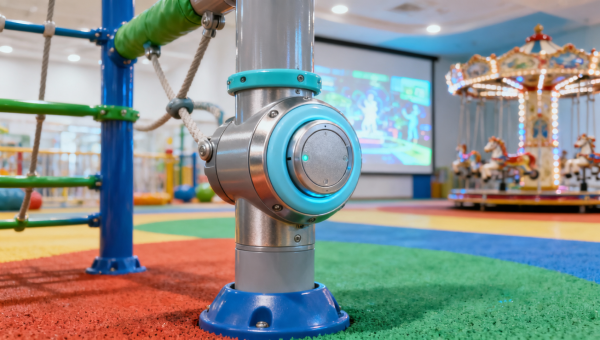
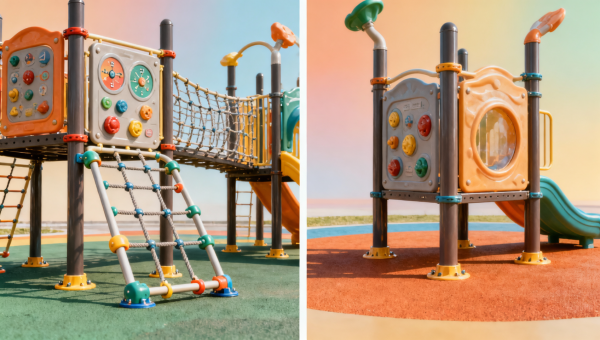
Panels with tactile surfaces, rotating elements, sliding tracks, color contrast, counting features, or cause-and-effect interaction are often used far more than buyers predict. They work because they are approachable, non-intimidating, and suitable for a wide age range. They also support inclusive playground design by serving children who may not want to climb or who benefit from predictable interaction.
2. Musical play accessories
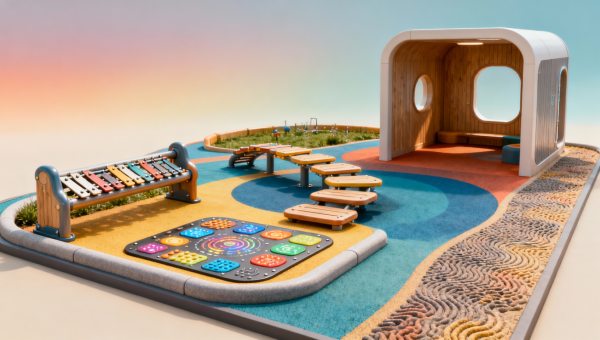
Outdoor drums, chimes, bells, and other music accessories often become high-frequency use points in both public and commercial spaces. They attract individual exploration and group play, and they work well in educational, hospitality, and family entertainment settings. For planners, music elements can also create a strong “experience value” in a relatively compact space.
3. Small balance and stepping elements
Stepping pods, low balance beams, textured stepping paths, and wobble platforms are often used continuously. They support physical development without the perceived risk of high structures. These features are especially effective in spaces where parents or supervisors prefer lower-height play options.
4. Accessible motion equipment
Inclusive spinners, group rocking equipment, and low-transfer motion play elements frequently outperform expectations because they offer shared excitement without excluding users who cannot access traditional climbing structures. These features also improve the social value of a playground by allowing more children to participate together.
5. Tactile surfacing and play paths
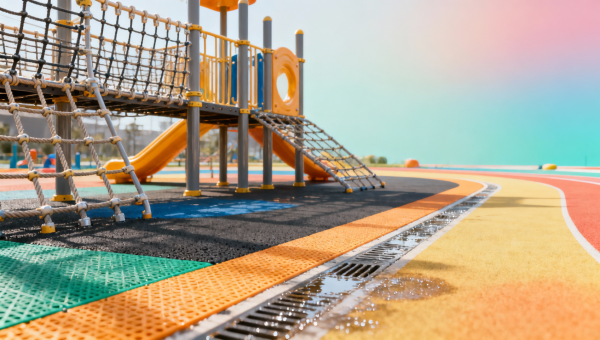
Children do not only interact with equipment; they interact with the route through the space. Sensory paths, textured surfaces, embedded graphics, and contrasting zones can become a major part of play behavior. This is one reason playground borders, route transitions, and material changes deserve more attention in project planning.
6. Quiet sensory retreat zones
Not all heavily used features are active ones. Small enclosed spaces, shaded nooks, calming panels, and low-stimulation corners are particularly valuable in inclusive and educational settings. These areas are frequently used by children who need to regulate before rejoining active play.
Why These Features Perform So Well in Real Projects
The strongest-performing sensory playground features succeed because they align with real child behavior rather than adult assumptions. Buyers often assume children want maximum complexity or scale. In practice, many children prefer features that offer immediate feedback, manageable challenge, and freedom to use the equipment in different ways.
There are also commercial reasons these features perform well:
- They distribute users better, reducing congestion around one hero structure
- They improve age-range flexibility, helping toddlers, early learners, and older children share the site
- They support inclusive procurement goals, which are increasingly important in public and institutional tenders
- They increase perceived completeness, making the playground feel more thoughtful and premium
- They strengthen parent approval, especially when safety and accessibility are obvious
For hotels, family resorts, educational campuses, and mixed-use commercial developments, this can translate into stronger guest satisfaction, longer family dwell time, and better space differentiation.
How to Evaluate Sensory Playground Features Before You Buy
For procurement teams and business evaluators, the key question is not simply whether a feature looks attractive in a catalog. The real question is whether it will be used frequently, safely, inclusively, and sustainably in your target environment.
Use the following evaluation criteria when comparing amusement equipment suppliers or reviewing a sensory play package:
User fit
Does the feature match the age group, supervision model, and user profile of the site? A school, municipal park, hotel, and indoor leisure venue may all need different sensory priorities.
Inclusion value
Can children with different mobility, sensory, cognitive, or social needs participate meaningfully? Inclusive value should be visible in more than one token element.
Repeat engagement
Will children return to the feature after the first minute? High-performing features usually allow variation, experimentation, or group interaction.
Safety and compliance
Check relevant standards, fall zone requirements, material safety, surfacing compatibility, and accessibility guidance. Playground safety should be considered together with user experience, not as an afterthought.
Maintenance profile
Musical components, moving parts, tactile finishes, and specialty coatings should be reviewed for wear resistance, replacement access, and cleaning needs. In high-traffic commercial environments, easy maintenance can significantly affect lifecycle cost.
Environmental suitability
Materials should match climate, UV exposure, humidity, salt air, and expected intensity of use. Outdoor hospitality and coastal applications especially require careful material review.
Space efficiency
Some low-footprint features generate very high usage. This is especially important when buyers are balancing play value with landscaping, circulation, seating, or adjacent commercial furniture.
Best Feature Combinations for Different Commercial Settings
Not every project needs the same sensory mix. A better sourcing strategy is to choose combinations based on site purpose and user expectations.
For schools and educational environments
- Tactile panels
- Music accessories
- sensory paths and balance routes
- calming corners
- accessible interactive stations
This mix supports developmental diversity, supervised play, and inclusive education goals.
For hotels and resorts
- Compact musical elements
- low-height climbers
- water-safe or easy-clean tactile play features where appropriate
- shaded sensory nooks
- high-visibility safety zoning and soft borders
These combinations work well in family-focused hospitality spaces where aesthetics, safety, and guest satisfaction matter equally.
For public parks and mixed-use developments
- Inclusive motion equipment
- multi-user sensory panels
- durable musical installations
- textured route design
- playground borders that organize space clearly
These projects benefit from equipment that can handle varied age groups, open access, and heavier traffic.
For indoor leisure and commercial family zones
- Sound-responsive play
- compact tactile walls
- small-group cooperative elements
- low-risk balance features
- retreat spaces for overstimulated users
This mix helps create repeat visit value in compact footprints.
How Sensory Features Influence Buyer ROI Beyond Play Value
For business buyers, the value of sensory playground design goes beyond child development. It also affects operational and commercial outcomes.
Well-selected sensory features can support:
- Higher utilization rates across more user types
- Stronger inclusion positioning in public bids and institutional purchasing
- Improved family appeal in hospitality and retail-adjacent spaces
- Longer dwell time in mixed-use and leisure environments
- More balanced wear patterns by dispersing activity across the site
- Better perceived project quality among parents, educators, and stakeholders
This is why experienced buyers increasingly assess sensory playground features as strategic components, not decorative add-ons. In many projects, smaller interactive items help justify the overall investment by improving actual usage quality.
Common Procurement Mistakes to Avoid
Several mistakes repeatedly reduce the value of sensory playground investments:
- Buying for visual impact only
- Adding one or two token sensory items instead of building a coherent sensory experience
- Ignoring route design, surfacing, and playground borders
- Overlooking acoustic effects of musical features in sensitive environments
- Failing to consider supervision patterns and user turnover
- Choosing components that are difficult to maintain or replace locally
- Treating accessibility and inclusion as compliance items rather than core design logic
For distributors, agents, and sourcing teams, these issues also affect after-sales satisfaction and brand reputation. The more accurately the equipment mix matches real use behavior, the better the long-term project outcome.
What a Strong Sensory Playground Specification Should Include
If you are drafting a specification or reviewing supplier proposals, a stronger sensory playground brief should include:
- Target age ranges and user mix
- Accessibility and inclusion objectives
- Active, tactile, auditory, visual, and quiet play requirements
- Material and finish expectations
- Safety and compliance standards by market
- Maintenance expectations and spare parts availability
- Climate and site-use conditions
- Desired balance between signature equipment and high-frequency sensory elements
This helps buyers compare OEM and ODM capability more accurately and reduces the risk of underperforming design choices.
Conclusion
The sensory playground features children use more than expected are usually the ones that make play easy to start, rewarding to repeat, and accessible to more users. Ground-level sensory panels, music accessories, balance routes, tactile surfacing, inclusive motion play, and quiet retreat areas often deliver more real-world engagement than buyers initially assume.
For information researchers, procurement professionals, business evaluators, and channel partners, the practical takeaway is clear: judge sensory playground equipment by observed use value, not by scale alone. The most successful projects combine safety, inclusion, maintenance practicality, and repeat interaction. When that balance is right, sensory features do more than support play—they improve commercial performance, user satisfaction, and long-term project credibility.
Search News
Hot Articles
- Indoor PlaygroundFan Zhendong Visits Silicon Valley as MLTT Investor, AI Ping-Pong Tech Draws AttentionApr 23, 2026
- Stage Lighting & Truss2026 FIBA Women's World Cup Draw Opens Export Window for Arena Lighting & Timing SystemsApr 23, 2026
- Pro Stage AudioChina Upgrades Security Compliance for International Sports EventsApr 23, 2026
Popular Tags
Need ExpertConsultation?
Connect with our specialized leisureengineering team for procurementstrategies.
Recommended News
 Apr 23, 2026Fan Zhendong Visits Silicon Valley as MLTT Investor, AI Ping-Pong Tech Draws AttentionAI ping-pong tech takes center stage as Fan Zhendong visits Silicon Valley as MLTT investor—key for smart sports hardware, AI coaching platforms & SaaS providers.● Theme Park Strategist
 Apr 23, 2026Vietnam Mandates Child Finger-Trap Sensors for Indoor Play EquipmentChild finger-trap sensors now mandatory for indoor play equipment in Vietnam—learn how QCVN 121:2026 impacts exporters, manufacturers & suppliers ahead of July 1, 2026 enforcement.● Theme Park Strategist
 Apr 22, 2026Vietnam Mandates Child Finger-Trap Sensors for Indoor Playground EquipmentVietnam mandates child finger-trap sensors for indoor playground equipment—comply with QCVN 128:2026 & TCVN 9350:2023 before Oct 2026!● Theme Park Strategist
 Apr 21, 2026Vietnam Mandates Child Finger-Trap Sensors for Indoor Play EquipmentVietnam mandates child finger-trap sensors for indoor play equipment—comply with TCVN 9507:2023 by July 1, 2026 to clear customs & protect kids.● Theme Park Strategist
 Apr 20, 2026NES Launches Sports Community Curator ProgramSports Community Curator program launched by NES — join global fitness studios, uni clubs & outdoor groups to co-create, test gear & grow with Chinese sports brands.● Theme Park Strategist
 Apr 17, 2026CPSC AI Safety Alert: 200ms Delay in Child Playground AI Systems = HazardCPSC AI Safety Alert: 200ms delay in child playground AI systems = hazard. Learn how latency compliance impacts Target/Walmart listings, testing, and supply chain.● Theme Park Strategist
 Apr 17, 20262026 Shanghai Sailing Open Adopts Domestic SeaChronos Pro Timing SystemSeaChronos Pro timing system debuts at 2026 Shanghai Sailing Open — ITU-certified, millisecond-accurate, wind- and tide-integrated. A game-changer for marine sports tech.● Theme Park Strategist
 Apr 16, 2026FDA Proposes New Labeling Rules for Sports Nutrition Supplements with Chinese LabelsFDA's new labeling rules for sports nutrition supplements with Chinese labels take effect April 2026—learn compliance must-dos for U.S. importers, manufacturers & brands.● Theme Park Strategist
 Apr 15, 2026Saudi SASO Updates Amusement Ride Standards: VR Devices Now Require Mandatory EMC TestingSaudi SASO's new 2026 standard mandates EMC testing for VR amusement rides, impacting exporters. Learn key compliance strategies for Saudi market access.● Theme Park Strategist
 Apr 14, 2026Japan Mandates Multilingual E-Manuals for Fitness Equipment from April 2026Japan mandates multilingual e-manuals for fitness equipment from April 2026. Learn how this impacts manufacturers & importers with JIS T 0601-1 compliance requirements. Stay ahead of the regulation!● Theme Park Strategist
 Apr 13, 2026WTT Taiyuan Adopts Chinese AI Table Tennis Analysis System with ITTF Export CertificationWTT Taiyuan adopts Chinese AI table tennis analysis system with ITTF export certification, enabling real-time ball speed & spin tracking. A game-changer for sports tech in emerging markets like Southeast Asia & Middle East.● Theme Park Strategist
 Apr 13, 2026First Female Snooker Player Achieves Multiple Century Breaks as Chinese Table Gains WPBSA CertificationChinese snooker player Bai Yulu makes history with multiple century breaks using WPBSA-certified 'Tournament Pro X7' table, marking a milestone for Chinese manufacturing in professional snooker equipment. Discover how this impacts global markets.● Theme Park Strategist
 Apr 13, 2026RCEP Zero Tariff on China's TPU Sports Protective Gear Boosts ASEAN TradeRCEP's zero-tariff policy on China's TPU sports protective gear boosts ASEAN trade, giving Chinese exporters cost advantages over Korean rivals. Learn how manufacturers and distributors can capitalize on this opportunity.● Theme Park Strategist
 Apr 10, 2026Japan's JIS T 9001:2026 Sports Flooring Anti-Slip Standard Mandatory from April 2026Japan's JIS T 9001:2026 standard mandates anti-slip sports flooring (SCOF ≥ 0.6) from April 2026. Chinese exporters must adapt to meet new requirements. Learn key compliance strategies.● Theme Park Strategist
 Apr 10, 2026Bai Yulu Makes History at Snooker World Championship, Sparks Surge in Women's Sports Equipment DemandBai Yulu makes history at Snooker World Championship with two century breaks, sparking 185% surge in women's sports equipment demand. Discover how manufacturers, e-commerce & supply chains can capitalize on this trend.● Theme Park Strategist
 Apr 10, 20262026 Badminton Asia Championships Quarterfinals Schedule Announced, Shi Yuqi to Compete; Southeast Asia Racket Orders Face 6-8 Week Delays2026 Badminton Asia Championships quarterfinals schedule revealed with Shi Yuqi competing, while Southeast Asia faces 6-8 week racket delays. Learn how supply chain issues impact manufacturers and get strategies to navigate equipment shortages.● Theme Park Strategist
 Apr 10, 2026WTT Taiyuan Challenge Sparks Smart Equipment Demand: Japan Buyers Scrutinize AI Training TechDiscover how the WTT Taiyuan Challenge boosts demand for AI training tech as Japanese buyers evaluate smart sports equipment. Learn key opportunities for manufacturers with JIS-certified solutions.● Theme Park Strategist
 Apr 10, 2026Chinese Snooker Players' Success Spurs Global Demand for Cue AccessoriesChinese snooker players' success drives 210% global demand surge for cue accessories. Explore how manufacturers & exporters can capitalize on this trend with UK, German & Australian markets leading inquiries.● Theme Park Strategist
 Apr 10, 2026EU Updates EN 16830:2026 Eyewear Safety Standard, Impacting China's Sports Goggle ExportsEU's updated EN 16830:2026 eyewear safety standard impacts China's sports goggle exports with stricter CE certification requirements. Learn how manufacturers and exporters can adapt to new impact resistance, UV400+, and blue light blocking standards before the September 2026 deadline.● Theme Park Strategist
 Apr 23, 2026What Playground Safety Complaints Usually Point to FirstPlayground safety complaints often first expose issues with playground borders, playground climbers, sensory playground surfacing, and amusement equipment planning. See what buyers should check.● Theme Park Strategist
 Apr 23, 2026Playground Safety Checks That Matter More Than CertificationsPlayground safety starts beyond certifications. Compare playground climbers, playground borders, sensory playground systems, and amusement equipment with practical checks that reduce risk and support smarter commercial projects.● Theme Park Strategist
 Apr 23, 2026Common Playground Climbers Mistakes That Limit Play ValuePlayground climbers mistakes can reduce play value, safety, and ROI. Learn how commercial furniture, playground borders, sensory playground design, and playground safety shape smarter amusement equipment choices.● Theme Park Strategist
 Apr 23, 2026Playground Climbers: Which Design Keeps Kids Engaged Longer?Playground climbers guide: compare designs that boost engagement, sensory playground value, playground safety, and playground borders for smarter amusement equipment buying.● Theme Park Strategist
 Apr 23, 2026Sensory Playground Features Children Use More Than ExpectedExplore which sensory playground features children use most, from playground climbers and music accessories to playground safety and playground borders—smart insights for amusement equipment, educational supplies, commercial furniture, hotel tables, and hotel equipment buyers.● Theme Park Strategist