Music Accessories That Improve Classroom Sound Setup
Creating a clear, balanced classroom audio environment takes more than speakers alone. The right music accessories can improve sound control, reduce distractions, and support better learning outcomes in spaces furnished with educational supplies and commercial furniture. For buyers, dealers, and sourcing teams evaluating school projects, understanding how these accessories fit into broader procurement needs—from hotel equipment to amusement equipment—helps build smarter, future-ready sound setups.
In music classrooms, rehearsal rooms, multipurpose halls, and small performance spaces, sound quality is shaped by much more than amplifier wattage or speaker size. Accessories such as microphone stands, cables, acoustic panels, DI boxes, headphone distribution systems, storage carts, and rack protection all affect clarity, safety, maintenance workload, and long-term operating cost.
For institutional procurement teams and channel partners in the sports and entertainment sector, the goal is rarely to buy isolated products. The real task is to specify a dependable classroom sound setup that supports music instruction, speech intelligibility, student performances, and shared campus use across 3 to 5 years or longer. That requires a sourcing approach that balances budget control, durability, installation efficiency, and after-sales support.
Why Music Accessories Matter in Classroom Sound Systems
A classroom sound setup often fails not because the core audio equipment is weak, but because supporting accessories are missing or poorly specified. In a typical 30 to 50 square meter music room, reflected sound, cable clutter, unstable mic placement, and uneven monitoring can quickly reduce speech clarity and create fatigue for both instructors and students.
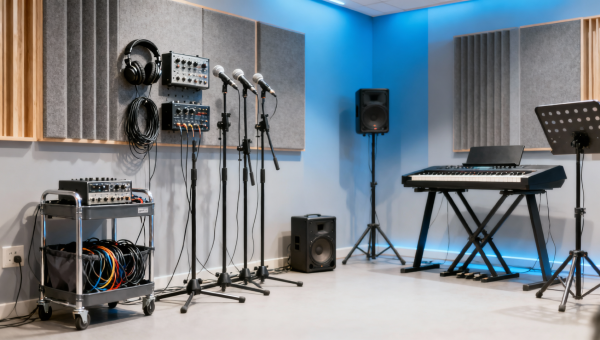
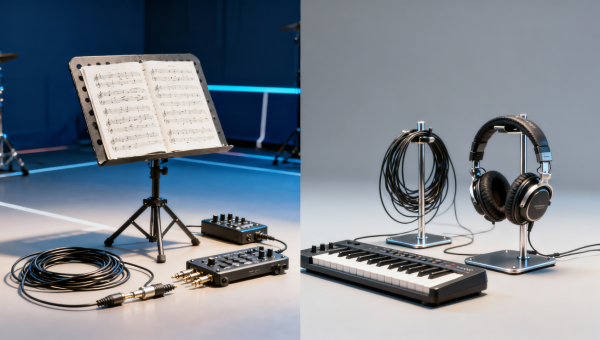
The most effective music accessories solve operational problems. Acoustic treatment reduces excessive reverberation. Proper stands improve microphone positioning. Cable management lowers trip risk. Headphone splitters support silent practice. Equipment racks protect signal processors and wireless receivers from dust, impact, and accidental tampering in shared educational environments.
For schools that also host dance programs, drama training, or light entertainment events, accessory selection becomes even more important. A room used 5 days per week for teaching and 1 to 2 evenings per month for performances needs flexible accessories that can transition between lecture mode, ensemble practice, and small live events without constant reconfiguration.
From a sourcing perspective, accessories usually represent a smaller share of project value than speakers or mixers, yet they have a disproportionate impact on user satisfaction. Many buyers find that a poorly planned accessory package adds hidden replacement costs within 6 to 12 months, especially when low-grade connectors, unstable stands, or insufficient storage are involved.
Common operational issues caused by missing accessories
- Uneven vocal pickup due to low-quality or non-adjustable microphone stands.
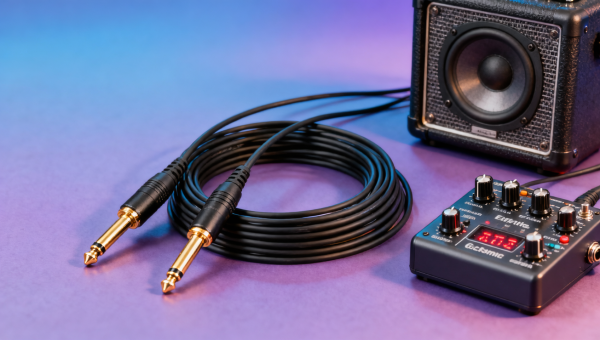
- Cable failures after repeated setup and teardown cycles, especially in multipurpose rooms.
- Distracting echo when wall and ceiling surfaces are hard and untreated.
- Slow lesson transitions because instruments, headphones, and small audio devices have no organized storage.
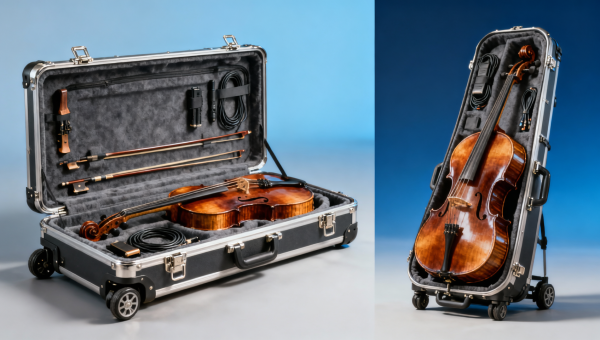
- Damage to portable gear during transport between classrooms, rehearsal spaces, and event zones.
These issues matter not only to teachers but also to procurement evaluators comparing total lifecycle value. In B2B education and entertainment supply projects, accessory quality is often a practical indicator of whether a vendor understands day-to-day operational use, not just product specification sheets.
Core Accessories That Improve Classroom Sound Setup
The best classroom audio accessory package depends on room size, teaching style, and whether the space is dedicated to music instruction or shared with other school activities. Still, several accessory categories appear consistently across successful installations in educational entertainment settings.
Acoustic panels are often the first upgrade buyers should assess. In small and mid-sized classrooms, placing panels on 15% to 25% of reflective wall area can noticeably improve intelligibility and reduce harsh reflections. This is especially valuable when students alternate between spoken instruction, singing, keyboard practice, and percussion work.
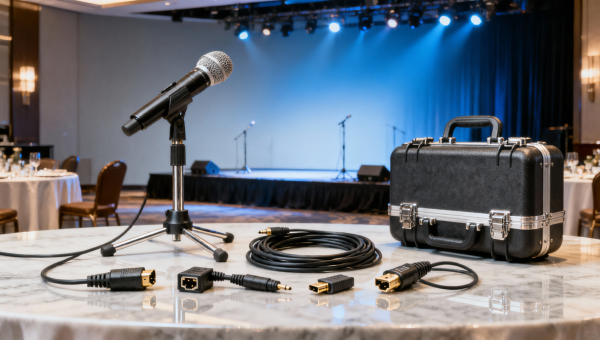
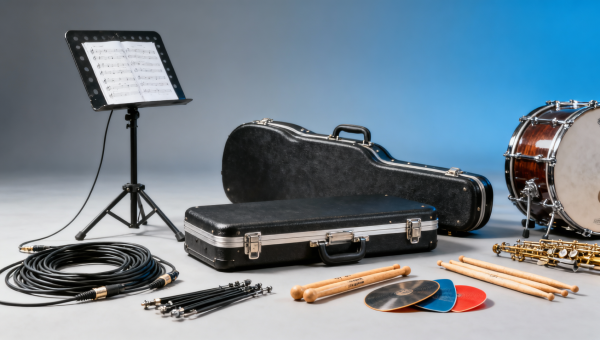
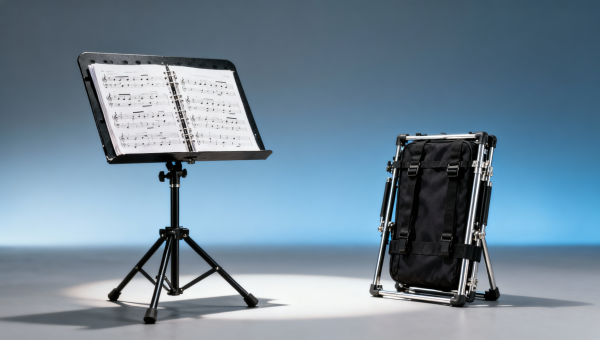
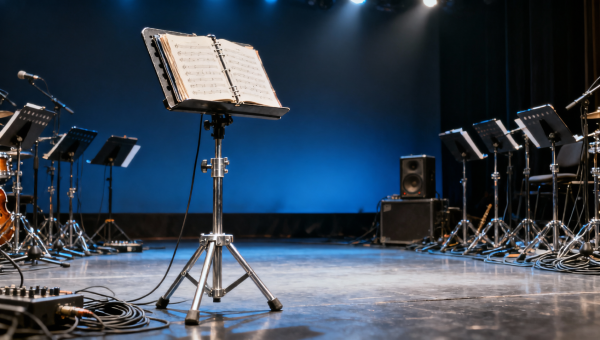
Stands, mounts, and suspension hardware are equally important. Adjustable boom microphone stands, speaker wall brackets, and tablet or sheet-music holders can streamline lesson flow. Commercial-grade accessories should withstand repeated height changes, daily movement, and occasional misuse by younger students without loosening after a few weeks.
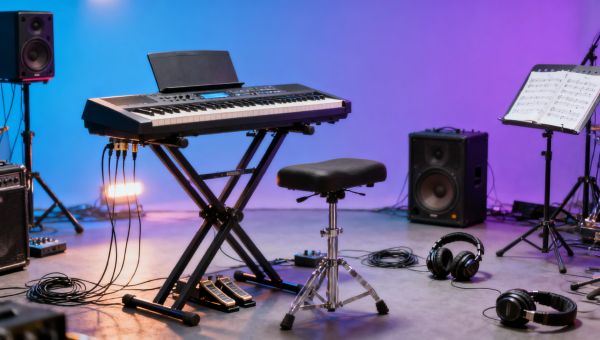
Signal and monitoring accessories also deserve attention. DI boxes help connect keyboards and digital instruments with lower noise. Headphone amplifiers or multi-output distribution units are useful for computer-based music labs with 8, 16, or 24 student positions. Instructors can maintain control while minimizing overall room noise during practice sessions.
Typical accessory categories for school music spaces
The following comparison helps procurement teams understand where each accessory adds measurable value in classroom sound setup planning.
The table shows that accessories are not interchangeable add-ons. Each item supports a distinct function in safety, workflow, or sound performance. Buyers who separate accessories by room type and lesson format usually achieve better usability than those who issue a single generic list for an entire campus.
Accessories often overlooked in tender documents
- Rack drawers and lockable cabinets for protecting wireless accessories and small adapters.
- Protective covers for speakers and keyboards used in mobile event setups.
- Floor cable covers for temporary performance layouts in sports and entertainment school zones.
- Color-coded labels for fast troubleshooting by non-technical staff.
These details are especially relevant for dealers and distributors serving schools with mixed-use entertainment facilities, where equipment may move between a classroom, a gym stage, and a student activity hall during the same week.
How Buyers Should Evaluate Specifications, Durability, and Safety
Procurement teams should evaluate music accessories with the same discipline used for larger commercial installations. A low-cost stand or cable can appear attractive in quotation comparison, yet the replacement cycle may shrink to less than 12 months in high-use classrooms. Durable accessories typically deliver better value when usage exceeds 20 hours per week.
Material choice is one of the clearest indicators. Steel stands and reinforced connectors usually perform better than thin lightweight alternatives in institutional settings. For acoustic panels, buyers should ask about surface finish, cleaning tolerance, edge protection, and how the panel behaves in humid conditions or rooms with fluctuating temperatures between 18°C and 28°C.
Safety is another priority. In schools and youth entertainment spaces, accessories must reduce trip hazards, avoid sharp edges, and remain stable when students interact with them. Cable routing, wall mounting load capacity, and lockable storage matter because one weak point can disrupt both class continuity and facility compliance checks.
Commercial buyers should also ask whether the accessory range is standardized across projects. A distributor supplying 10 schools or a campus with 6 music rooms benefits from using compatible hardware, spare parts, and packaging formats. Standardization can reduce training time, simplify inventory control, and lower emergency replacement delays from several weeks to a few days.
Practical evaluation checklist
The matrix below summarizes common evaluation points for procurement and business review teams.
The key takeaway is that classroom sound setup accessories should be reviewed as operational assets, not minor consumables. This approach is particularly valuable for agents and resellers building repeatable education and entertainment packages for tenders, campus expansion projects, and public procurement bids.
Four procurement questions worth asking suppliers
- What is the expected use cycle under daily classroom handling?
- Can the supplier support mixed orders across 3 to 5 accessory categories in one shipment?
- Are replacement parts or matching accessories available within a practical lead time such as 7 to 21 days?
- Does the product range support both fixed classroom use and mobile event applications?
Matching Accessories to Different Educational and Entertainment Use Cases
Not every classroom needs the same music accessory package. A keyboard lab, choir room, dance studio, and multi-use student activity area all require different sound control strategies. Buyers who specify by scenario rather than by generic category usually reduce overspending while improving end-user satisfaction.
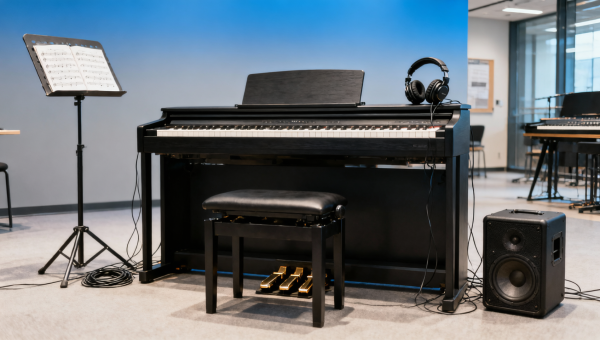
For example, a keyboard lab with 12 to 24 student stations benefits from headphone distribution, cable organization, and instructor monitoring tools. A choir room may place greater emphasis on acoustic absorption, microphone stands, and portable recording support. A flexible activity room that hosts music, sports presentations, and school entertainment events may need durable rolling storage and fast-deploy cable protection.
This scenario-based approach aligns well with broader commercial sourcing. Many institutional buyers now seek supplier networks that can support educational supplies, audio hardware, furniture coordination, and light event infrastructure in one procurement framework. That reduces fragmented decision-making and helps project teams compare installation readiness, maintenance demand, and future expansion potential.
For distributors and agents, use-case mapping also strengthens proposal quality. Instead of offering a generic accessory bundle, they can recommend fit-for-purpose packages that reflect room usage frequency, student age group, and whether the school plans 1, 2, or 3 event modes within the same space.
Application-based accessory planning
The following table outlines how accessory priorities change by learning and entertainment scenario.
The table highlights an important principle: classroom sound setup should follow activity type, not just room label. A buyer can often improve usability more by adjusting accessory mix than by increasing the number of core audio units.
Scenario planning tips for sourcing teams
- Group rooms into 3 categories: fixed instruction, semi-flexible practice, and fully multipurpose event use.
- Estimate handling frequency: less than 5 moves per month, 5 to 20 moves, or more than 20 moves.
- Separate hygiene-sensitive accessories, such as headphones and windscreens, from durable infrastructure items.
- Match storage accessories to furniture layout so that sound equipment does not conflict with classroom circulation paths.
Implementation, Maintenance, and Supplier Selection for Long-Term Value
Even a well-chosen accessory list can underperform if installation and maintenance planning are weak. In school and entertainment-oriented spaces, the most successful projects usually follow a 4-step process: room review, accessory matching, installation coordination, and periodic maintenance. This reduces misalignment between architectural finishes, furniture layout, and audio performance.
Installation timing should also be realistic. For a single classroom, accessory fitting may take 1 to 2 days if wall treatment and cable routing are straightforward. For a campus package involving multiple rooms, staged delivery over 2 to 4 weeks is often more practical, especially when furniture, electrical work, and educational technology vendors must coordinate access.
Maintenance is where accessory planning often proves its value. Cable testing every 3 to 6 months, stand tightening checks each term, and routine cleaning of shared headphones can prevent avoidable downtime. Schools without a simple maintenance routine frequently face performance complaints that are not caused by mixers or speakers at all, but by worn accessories.
Supplier selection should therefore go beyond unit price. Buyers should look for partners that understand commercial education and entertainment projects, can consolidate mixed-category orders, and provide documentation that helps facilities teams manage replacements. A sourcing partner with experience across pro audio, educational supplies, and related commercial environments is often better positioned to support expansion or refurbishment phases.
Implementation and service priorities
- Audit each room for reflective surfaces, furniture placement, power access, and traffic flow before final accessory confirmation.
- Define standard kits by room type so future purchases remain compatible across the site.
- Schedule staff orientation covering cable handling, storage, and basic inspection tasks.
- Set a maintenance interval of at least twice per academic year for high-use rooms.
- Track failure points by category to improve future procurement specifications.
Frequently asked sourcing questions
How many accessories should be budgeted relative to core audio equipment?
There is no universal ratio, but in many school music rooms, accessories become critical once multiple users share the space daily. Buyers should budget enough to cover mounting, signal routing, storage, protection, and room treatment rather than treating accessories as optional leftovers after speaker selection.
What is the most common mistake in classroom sound setup procurement?
A common mistake is buying strong headline equipment while under-specifying the support layer. Without acoustic treatment, cable planning, and durable handling accessories, the room may still sound uneven, and the maintenance burden rises quickly.
Which accessories deserve priority in smaller budgets?
If budget is limited, prioritize acoustic control, reliable cabling, stable stands, and basic storage protection. These four areas usually have the fastest impact on clarity, safety, and product lifespan.
Music accessories are not minor extras in a classroom sound setup. They directly influence speech intelligibility, room control, equipment safety, and the day-to-day usability of educational entertainment spaces. For information researchers, procurement officers, distributors, and business evaluators, the best results come from treating accessories as part of a complete operational system rather than a last-minute add-on list.
A structured sourcing strategy—based on room type, usage frequency, durability, and maintenance readiness—helps schools and commercial project teams build sound environments that perform reliably over time. If you are planning a music classroom, multipurpose student venue, or broader campus audio package, now is the right time to review accessory specifications in detail.
Contact us to discuss project requirements, request a tailored accessory shortlist, or explore more commercial sourcing solutions for educational and entertainment environments.
Search News
Hot Articles
- Indoor PlaygroundFan Zhendong Visits Silicon Valley as MLTT Investor, AI Ping-Pong Tech Draws AttentionApr 23, 2026
- Stage Lighting & Truss2026 FIBA Women's World Cup Draw Opens Export Window for Arena Lighting & Timing SystemsApr 23, 2026
- Pro Stage AudioChina Upgrades Security Compliance for International Sports EventsApr 23, 2026
Popular Tags
Need ExpertConsultation?
Connect with our specialized leisureengineering team for procurementstrategies.
Recommended News
 Apr 23, 2026Cheap Music Accessories Often Cost More LaterMusic accessories may seem cheap, but hidden costs rise fast. Explore smarter sourcing for hotel equipment, educational supplies, amusement equipment, sensory playground and playground safety.● Pro Audio Engineer
 Apr 23, 2026Music Accessories That Improve Classroom Sound SetupMusic accessories improve classroom sound setup with safer cable control, clearer audio, and durable solutions that pair with educational supplies, commercial furniture, and playground safety planning.● Pro Audio Engineer
 Apr 22, 2026Which Instrument Cables Sound BestWhich instrument cables sound best? Discover how capacitance, shielding, and durability affect performance, plus sourcing tips for instrument cables and related commercial needs.● Pro Audio Engineer
 Apr 22, 2026Why String Instruments Can Look Similar but Sound Very DifferentString instruments may look alike yet sound vastly different. Explore sourcing insights across musical instruments, plus comparisons with wind instruments and percussion instruments.● Pro Audio Engineer
 Apr 22, 2026String Instruments: Solid Wood or Laminate for Long-Term Use?String instruments guide: compare solid wood vs laminate for long-term use, durability, tone, and sourcing value across musical instruments. Click for smarter B2B buying insights.● Pro Audio Engineer
 Apr 22, 2026What Affects Tone Consistency in Student Wind Instruments?Wind instruments buying guide: discover what affects tone consistency in student musical instruments, with insights comparing percussion instruments and string instruments for smarter school sourcing.● Pro Audio Engineer
 Apr 22, 2026Wind Instruments That Need More Maintenance Than ExpectedWind instruments maintenance guide for buyers: compare musical instruments, string instruments and percussion instruments to reduce service costs and source smarter.● Pro Audio Engineer
 Apr 22, 2026Common Tuning Problems in Percussion Instruments and Their CausesPercussion instruments tuning problems explained for buyers of musical instruments, with practical tips on comparing percussion instruments, string instruments, and wind instruments for reliable commercial sourcing.● Pro Audio Engineer
 Apr 22, 2026Percussion Instruments That Handle Heavy Use Better in ClassroomsPercussion instruments built for classrooms: compare durable musical instruments, from percussion instruments to wind instruments and string instruments, for safer, longer-lasting school use.● Pro Audio Engineer
 Apr 22, 2026What Shortens the Lifespan of Musical Instruments in Daily Use?Musical instruments wear out faster from humidity, poor storage, and rough handling. Learn how string instruments, wind instruments, and percussion instruments last longer with smarter B2B care.● Pro Audio Engineer
 Apr 22, 2026Musical Instruments With the Strongest School Market DemandMusical instruments with strong school demand: compare percussion instruments, wind instruments, and string instruments to find durable, curriculum-ready solutions for smarter school sourcing.● Pro Audio Engineer
 Apr 21, 2026Choosing musical instruments for bands in small venuesMusical instruments for bands in small venues: learn how buyers choose compact, durable setups with better sound control, lower costs, and stronger audience appeal.● Pro Audio Engineer
 Apr 20, 2026Music Accessories Often Overlooked Until They Start Causing ProblemsMusic accessories often cause hidden issues across musical instruments, percussion instruments, wind instruments, string instruments, keyboard instruments, orchestral instruments, music stands, instrument cables, and pro audio equipment.● Pro Audio Engineer
 Apr 20, 2026When Orchestral Instruments Need Custom Cases and Why It MattersMusical instruments and orchestral instruments need custom cases to protect string instruments, wind instruments, percussion instruments, and keyboard instruments during transport. Learn when buyers should upgrade for safer logistics.● Pro Audio Engineer
 Apr 20, 2026Keyboard Instruments in 2026: What Features Are Becoming Standard?Keyboard instruments in 2026 are redefining musical instruments with smarter connectivity, durable builds, and seamless integration with pro audio equipment, instrument cables, music stands, and music accessories.● Pro Audio Engineer
 Apr 20, 2026Music Stands With Folding Designs: Convenient or Less Reliable?Music stands buyers compare folding convenience with long-term reliability across musical instruments, percussion instruments, wind instruments, string instruments, and pro audio equipment.● Pro Audio Engineer
 Apr 20, 2026String Instruments With Better Tuning Stability in Busy Use CyclesExplore string instruments with better tuning stability for busy venues. Compare musical instruments, percussion instruments, and wind instruments to source reliable, low-maintenance performance solutions.● Pro Audio Engineer
 Apr 20, 2026Why Wind Instruments React So Differently to Climate and StorageWind instruments react fast to climate and storage. Compare musical instruments, percussion instruments, string instruments, and music accessories to cut maintenance risk and buy smarter.● Pro Audio Engineer
 Apr 20, 2026Percussion Instruments for Shared Spaces: What Reduces Noise Most?Percussion instruments for shared spaces: discover what reduces noise most across musical instruments, with smart comparisons to wind instruments, string instruments, keyboard instruments, and practical accessories.● Pro Audio Engineer
 Apr 20, 2026How to Spot Musical Instruments That Look Fine but Wear Out FastDiscover how to spot musical instruments that look premium but wear out fast. Learn key checks for percussion instruments, wind instruments, string instruments, keyboard instruments, music stands, instrument cables, pro audio equipment, and music accessories before you buy.● Pro Audio Engineer
 Apr 20, 2026Music Accessories That Quietly Affect Daily Performance QualityExplore how music accessories shape daily performance quality—from music stands and instrument cables to pro audio equipment for musical instruments, percussion instruments, wind instruments, string instruments, and keyboard instruments.● Pro Audio Engineer
 Apr 20, 2026Orchestral Instruments With the Highest Repair RatesExplore which orchestral instruments have the highest repair rates across wind instruments, string instruments, percussion instruments, and keyboard instruments, with smart buying tips for musical instruments, music accessories, music stands, instrument cables, and pro audio equipment.● Pro Audio Engineer
 Apr 20, 2026Are Keyboard Instruments With Weighted Keys Worth the Extra Cost?Keyboard instruments with weighted keys: discover if the extra cost pays off for musical instruments buyers, with smart tips on music accessories, instrument cables, and pro audio equipment.● Pro Audio Engineer
 Apr 20, 2026Music Stands That Stay Stable on Stage: What Makes the Difference?Music stands for musical instruments: discover what keeps them stable on stage for string instruments, wind instruments, percussion instruments, and keyboard instruments—plus smart buying tips.● Pro Audio Engineer