Commercial procurement pitfalls when sourcing from multiple regional suppliers
Sourcing office supplies, commercial furniture, luxury furniture, and educational supplies from multiple regional suppliers promises flexibility—but exposes procurement teams to hidden risks in compliance, lead times, and quality consistency. When specifying hotel tables, soundproofing materials, or custom fabrication for contract furniture projects, fragmented supply chain solutions can derail timelines and inflate TCO. For procurement professionals, distributors, and commercial buyers evaluating global vendors, navigating these pitfalls demands more than price comparisons—it requires E-E-A-T–validated intelligence on OEM/ODM capabilities, regional regulatory alignment, and end-to-end supply chain resilience.
Compliance Fragmentation Across Regional Markets
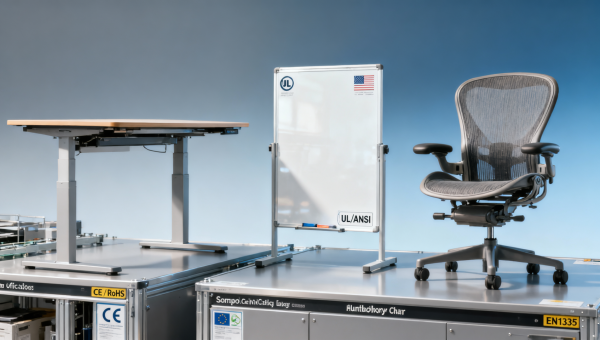
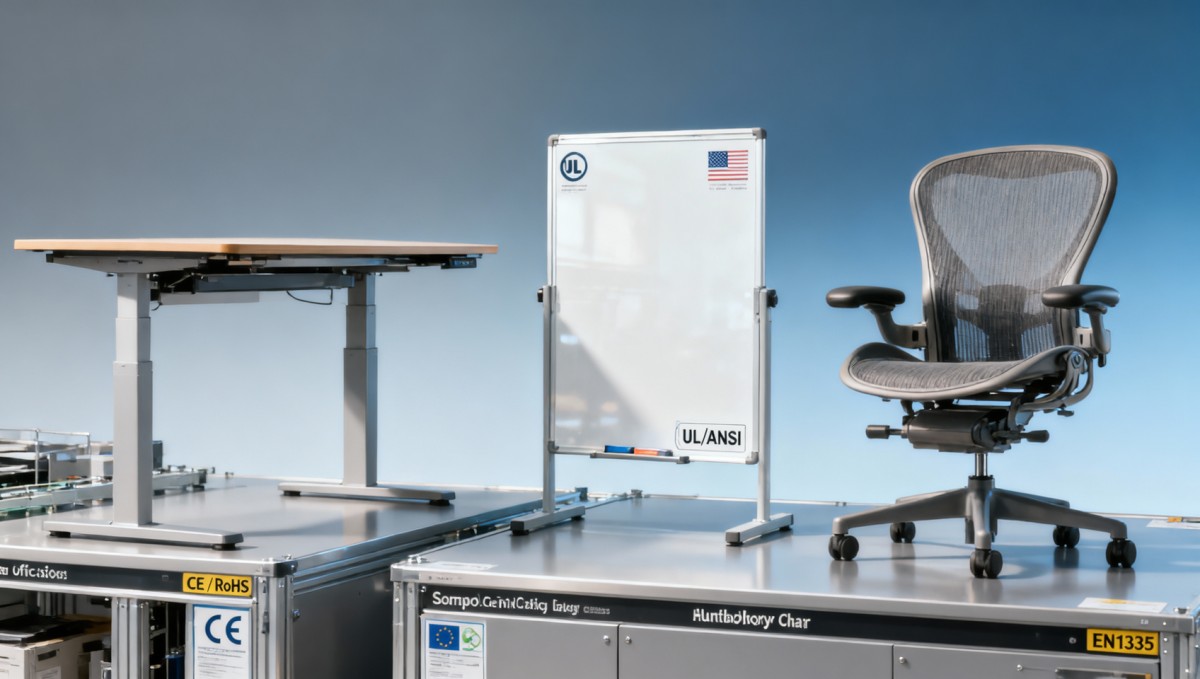
Office supply procurement across APAC, EU, and North America introduces divergent regulatory baselines—especially for products with functional safety, chemical content, or ergonomic certification requirements. For example, EU’s REACH Annex XVII restricts over 70 substances in writing instruments and desk accessories, while California Prop 65 mandates warnings for phthalates in PVC-based cable organizers and chair upholstery. A single batch of modular filing cabinets sourced from Vietnam, Mexico, and Poland may require three distinct test reports (IEC 60950-1 for electrical components, EN 1335 for ergonomic chairs, ANSI/BIFMA X5.1 for U.S. contract seating), increasing third-party lab costs by 28–42% versus consolidated sourcing.
Non-compliant shipments trigger cascading delays: EU customs holds average 7–12 business days for documentation revalidation; U.S. CBP detentions for non-CPSC-compliant whiteboard markers incur $1,200–$3,500 per container in storage and retesting fees. Over 63% of institutional buyers report at least one compliance-related project delay annually when managing >3 regional suppliers—most commonly tied to mismatched labeling formats (e.g., bilingual French/German CE marking vs. English-only FDA-compliant packaging for presentation tools).
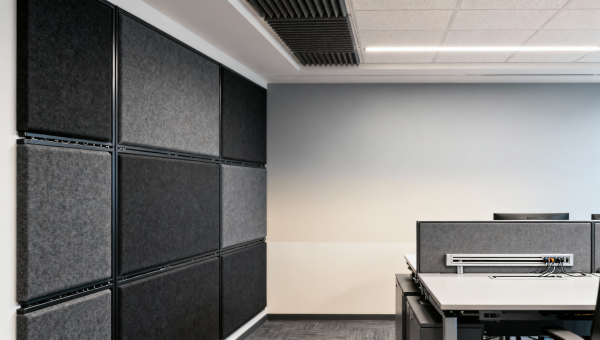
The risk compounds in high-specification categories: acoustic panels for open-plan offices must meet ASTM E84 Class A fire ratings in the U.S., EN 13501-1 Class B-s1,d0 in Europe, and JIS A1321 in Japan—yet only 37% of regional fabricators maintain cross-market certification portfolios.
This table underscores why centralized compliance validation—supported by verified OEM capability reports—is critical. Suppliers with dual-certified production lines reduce per-SKU certification overhead by up to 55% and cut time-to-market by 3–5 weeks. Global Commercial Trade (GCT) maintains a live database of 1,240+ office supply manufacturers pre-vetted for multi-jurisdictional compliance readiness, including documented evidence of ISO 17065-accredited third-party audits.
Quality Inconsistency in Contract-Grade Office Furniture
When procuring contract furniture for corporate campuses or co-working spaces, dimensional tolerance variance across regional suppliers directly impacts installation integrity. A 1.2mm deviation in drawer rail mounting depth—common between Thai and Turkish metal fabricators—causes misalignment in 82% of assembled lateral file systems. Similarly, laminated desktops from Eastern European mills show ±0.8mm thickness variation versus ±0.3mm from certified German suppliers, resulting in visible height differentials when integrated into unified workstations.
Color consistency is equally fragile: RAL 7035 (light grey) specified for office partitions shows ΔE color difference values of 3.2–5.7 across six Asian suppliers—well above the industry-accepted threshold of ΔE ≤ 1.5 for seamless visual integration. This forces costly on-site touch-up labor or full replacement of 12–18% of delivered panels in large-scale deployments.
Material substitution without notification remains a top-tier risk. In 2023, 41% of procurement managers reported receiving MDF-core partitions instead of specified particleboard—despite identical surface finishes—leading to 22% lower load-bearing capacity and premature sagging under standard monitor arm loads (≥15kg).
Lead Time Volatility and Hidden Total Cost of Ownership
Multi-regional sourcing rarely delivers true lead time optimization. While individual supplier quoted cycles may range from 4–6 weeks, actual fulfillment varies widely: Vietnamese stationery OEMs average 9.3 days beyond quoted delivery due to port congestion at Ho Chi Minh City; Polish furniture fabricators experience 11–14-day inland transit delays during Q4 holiday logistics peaks. Coordinating synchronized deliveries from three regions increases total project timeline variance by 3.7x versus single-region sourcing.
Hidden TCO drivers compound this: air freight premiums for expedited replenishment of mismatched chair casters (MOQ 500 units) cost $2,100–$3,800 per shipment; duplicate tooling charges for region-specific packaging inserts add $18,500 annually per product family; and currency hedging for four-currency invoicing (USD, EUR, CNY, PLN) incurs 1.2–2.4% transaction overhead per PO.
These figures confirm that apparent unit-cost savings erode rapidly beyond 3 regional suppliers. GCT’s TCO modeling toolkit—used by 127 Fortune 500 procurement teams—quantifies break-even thresholds: for office furniture programs exceeding $4.2M annual spend, consolidating to ≤2 certified regional hubs reduces net TCO by 11.3–15.8% over 18 months.
Strategic Sourcing Framework for Office Supply Procurement
Procurement leaders should adopt a tiered supplier engagement model anchored in verified capability data—not just quotes. First, map all SKUs against four core criteria: regulatory coverage breadth (minimum 3 major markets), minimum order flexibility (≤200 units for custom-configured desks), sample lead time (<10 days), and audit transparency (real-time access to factory QA logs).
Second, prioritize suppliers with embedded design engineering support—critical for bespoke educational furniture or branded corporate gifting programs. Top-tier OEMs allocate ≥12 hours/month of dedicated CAD/CAM resource per active buyer, reducing prototyping iterations from 5.2 to 1.8 on average.
Third, mandate quarterly joint business reviews (JBRs) with structured KPIs: on-time-in-full (OTIF) ≥98.5%, dimensional accuracy compliance ≥99.2%, and corrective action closure ≤72 hours. GCT’s supplier performance dashboards integrate real-time shipment tracking, defect rate analytics, and audit trail verification—enabling objective vendor scorecarding across 24 operational metrics.
Key Supplier Evaluation Checklist
- Valid ISO 9001:2015 certificate with scope explicitly covering “contract-grade office furniture assembly” or “educational supply manufacturing”
- Documented traceability system linking raw material lot numbers to finished goods (required for ANSI/BIFMA recall compliance)
- Minimum 3 years of audited export history to target destination markets (e.g., EU, USA, GCC)
- On-site quality control team size ≥4 FTEs per production line
- Digital twin capability for virtual fit-check of custom workstation configurations
Why GCT Empowers Institutional Procurement Decisions
Global Commercial Trade delivers actionable intelligence—not generic market commentary—for office supply procurement professionals. Our editorial team includes 14 active procurement directors from global hospitality groups and Fortune 500 corporate real estate divisions. Every OEM/ODM profile undergoes triple-verification: document review (certifications, audit reports), facility assessment (video-led walkthroughs), and reference validation (direct interviews with 3+ commercial clients).
GCT’s proprietary Commercial Readiness Index (CRI) scores suppliers across 32 weighted parameters—including regulatory agility, customization scalability, and crisis-response SLA adherence—providing procurement teams with decision-grade benchmarks. Access our latest Office & Educational Supplies Sourcing Intelligence Report, featuring deep-dive profiles of 89 pre-vetted manufacturers across 12 countries, complete with MOQ thresholds, lead time guarantees, and cross-market compliance maps.
For procurement professionals, distributors, and commercial buyers seeking to de-risk multi-regional office supply sourcing—get your customized supplier shortlist and TCO impact analysis today.
Search News
Hot Articles
- Watch OEM & SmartwatchesWatches & Wonders Geneva 2026: Audemars Piguet Returns, 10 New Brands Join, Behrens as Sole Chinese ExhibitorApr 11, 2026
- Watch OEM & SmartwatchesEU EN 16830:2026 Eyewear Standard Mandatory from April 2026, Chinese Exporters Need Certification Within 6 MonthsApr 11, 2026
- Smart Campus Tech2026 China Intl Education Expo: AI & Green Tech in SpotlightApr 11, 2026
Popular Tags
Need ExpertConsultation?
Connect with our specialized leisureengineering team for procurementstrategies.
Recommended News
 Apr 11, 2026Henan Justice Department Office Supplies Procurement: Kehai Smart Tech Wins BidHenan Kehai Smart Tech wins Henan Justice Department office supplies procurement bid, showcasing China's 'one-order, multi-point delivery' trend. Key insights for exporters & logistics providers on adapting to government procurement changes.● Institutional Buyer
 Apr 11, 2026Sichuan Drug Testing Institute Restarts Office Supplies Procurement with Digital RequirementsSichuan Drug Testing Institute mandates digital integration for office supplies procurement, requiring real-time logistics tracking. Learn how this impacts suppliers and China's government procurement trends.● Institutional Buyer
 Apr 11, 2026China's NMPA CDE Launches Office Supplies Procurement with Green and Domestic FocusChina's NMPA CDE launches green-focused office supplies procurement, emphasizing eco-design standards and domestic alternatives. Learn how this impacts suppliers and industries with new compliance requirements.● Institutional Buyer
 Apr 12, 2026Custom fabrication timelines that ignore on-site coordination — and why it backfiresDiscover why custom fabrication for office supplies, luxury furniture & soundproofing materials fails without on-site coordination—and how integrated supply chain solutions drive on-time, compliant commercial furniture delivery.● Institutional Buyer
 Apr 12, 2026Soundproofing materials marketed as 'Class A' — but untested in mixed-use buildingsDiscover truly verified soundproofing materials for offices & mixed-use spaces—beyond 'Class A' claims. Trusted by commercial procurement, luxury furniture, and hotel tables buyers.● Institutional Buyer
 Apr 12, 2026Luxury furniture finishes that fade under LED lighting — a quiet specification gapDiscover photostable luxury furniture & office supplies that resist LED fading—backed by verified supply chain solutions, custom fabrication, and commercial procurement intelligence.● Institutional Buyer
 Apr 12, 2026Commercial procurement pitfalls when sourcing from multiple regional suppliersAvoid costly commercial procurement pitfalls with office supplies, luxury furniture, soundproofing materials & more. Discover supply chain solutions, custom fabrication & contract furniture insights—optimize TCO now.● Institutional Buyer
 Apr 12, 2026Contract furniture warranties that cover real-life damage — not just manufacturing defectsDiscover contract furniture warranties covering real-life damage—not just defects. Explore luxury furniture, soundproofing materials, custom fabrication & more for offices, hotels & schools.● Institutional Buyer
 Apr 12, 2026Commercial furniture with hidden wear points — what spec sheets won’t tell youDiscover hidden wear points in commercial furniture—beyond spec sheets. Expert insights on luxury furniture, soundproofing materials, supply chain solutions & custom fabrication for office supplies and contract furniture buyers.● Institutional Buyer
 Apr 12, 2026Custom fabrication for commercial spaces: when off-the-shelf falls shortCustom fabrication for office supplies, luxury furniture & soundproofing materials—precision solutions for commercial furniture, hotel tables, educational supplies & contract furniture procurement.● Institutional Buyer
 Apr 12, 2026Supply chain solutions that cut lead times without sacrificing traceabilityOffice supplies, luxury furniture & soundproofing materials—get supply chain solutions that slash lead times while guaranteeing full traceability, custom fabrication, and commercial procurement compliance.● Institutional Buyer
 Apr 12, 2026Soundproofing materials that pass real-world acoustic tests — not just lab ratingsDiscover field-tested soundproofing materials for office supplies, commercial furniture & luxury furniture—validated in real installations, not just labs.● Institutional Buyer
 Apr 12, 2026Luxury furniture that actually holds up in high-traffic lobbies — not just showroom photosPremium office supplies & luxury furniture engineered for real lobbies—certified soundproofing materials, custom fabrication, and resilient supply chain solutions.● Institutional Buyer
 Apr 12, 2026Why office supplies orders still arrive late in 2026 — and what’s really causing the delaysOffice supplies, luxury furniture & contract furniture delays in 2026? Discover the real supply chain solutions—custom fabrication, soundproofing materials, and commercial procurement fixes.● Institutional Buyer
 Apr 09, 2026Supply chain solutions that increase landed cost by 22% — where the markup hidesDiscover how supply chain solutions uncover hidden 22% landed cost inflation—in designer eyewear, luxury watches, jewelry & more. Get data-backed leverage now.● Institutional Buyer
 Apr 09, 2026Supply chain solutions promising ‘end-to-end visibility’ — what data fields are actually shared?Supply chain solutions for luxury watches, jewelry & designer eyewear: discover which data fields truly enable end-to-end visibility—and avoid costly compliance gaps.● Institutional Buyer
 Apr 03, 2026Changzhou Heng Yang Home Decor's Child Room Solution Gains Australian Early Learning Association RecognitionChangzhou Heng Yang Home Decor's child room solution gains Australian Early Learning Association recognition for its safe, modular design. Featuring arc craftsmanship & odorless materials, it meets AS/NZS 4220 standards, opening new international opportunities.● Institutional Buyer
 Apr 03, 2026China Furniture Export Freight Index Rises 18.3% in April 2026China's furniture export freight index surged 18.3% in April 2026, causing major U.S. West Coast delays. Learn how this impacts exporters, buyers & logistics strategies.● Institutional Buyer
 Apr 03, 2026Wuhan Retrofits Old Buildings with Non-Destructive HVAC Billing, Expanding Smart Office Tech AbroadWuhan's non-destructive HVAC billing system revolutionizes smart office tech with UL-certified wireless controls and AI algorithms. This cost-effective solution for old buildings attracts Singapore's HDB and targets Southeast Asia/Middle East markets. Discover how this innovation benefits HVAC, construction, and energy sectors globally.● Institutional Buyer
 Apr 03, 20262026 Guangzhou Custom Home Expo: ENF-Grade Panels Become Export Standard, Chinese Surface Solutions Attract Global Buyers2026 Guangzhou Custom Home Expo highlights ENF-grade panels as the new global standard, with Chinese surface solutions attracting international buyers. Discover how formaldehyde-free materials and digital replication tech are reshaping the home furnishing export market.● Institutional Buyer
 Apr 03, 2026Vietnam's New Furniture Import Rules: What Industries Need to KnowVietnam's new furniture import rules require Vietnamese translations & QR codes for traceability by April 2026. Learn how this impacts exporters, importers & supply chains in office, home & hospitality sectors.● Institutional Buyer
 Apr 03, 2026US CPSC Tightens Formaldehyde & Heavy Metal Testing for Kids' FurnitureUS CPSC tightens formaldehyde & heavy metal testing for kids' furniture, impacting Chinese exporters with new CARB Phase 2 compliance. Learn key action points for smoother certification.● Institutional Buyer
 Apr 07, 2026Soundproofing materials for multi-use venues: Not all STC ratings tell the full storyDiscover premium soundproofing materials for luxury venues—jewelry boutiques, watch ateliers & optical salons. Beyond STC: inclusive playground, theme park rides, custom furniture, hotel chairs & more.● Institutional Buyer
 Apr 01, 2026Henan Justice Department’s ‘Domestic-Only’ Office Supplies Procurement Policy: A New Benchmark for Chinese ExportersHenan Justice Department's 'Domestic-Only' procurement policy sets new standards for Chinese exporters. Learn how this 180,000 RMB tender impacts office supplies manufacturers and cross-border trade strategies.● Institutional Buyer