Custom fabrication timelines that ignore on-site coordination — and why it backfires
When custom fabrication timelines ignore on-site coordination, even premium office supplies, luxury furniture, or soundproofing materials risk costly delays and compliance gaps—especially in high-stakes commercial procurement for hotel tables, educational supplies, or contract furniture. Global Commercial Trade (GCT) reveals how fragmented supply chain solutions undermine project integrity across office, hospitality, and institutional spaces. For procurement professionals, distributors, and commercial evaluators, this isn’t just about lead times—it’s about trust, traceability, and executional precision. Discover why integrated coordination is non-negotiable for custom fabrication success.
The Hidden Cost of “Off-Site-Only” Fabrication Scheduling
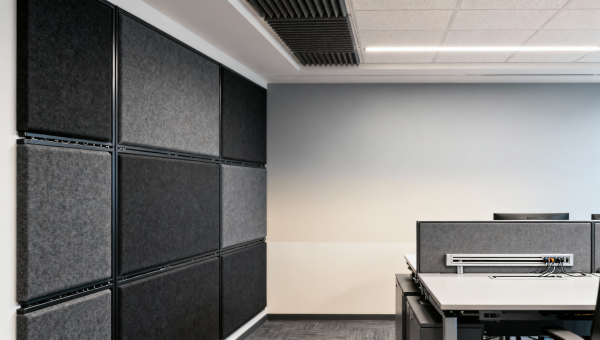
In the office & educational supplies sector, custom fabrication increasingly powers intelligent workspaces—modular desks with integrated power delivery, acoustic partitions rated to ISO 3382-2, and ADA-compliant ergonomic furniture systems. Yet many suppliers still operate on rigid, factory-centric timelines: “Design finalized → 12–18 days production → 5-day shipping.” What’s omitted? The 3–7 days required for site verification, laser-scanned floor-plan alignment, MEP conduit clearance checks, and final finish matching at installation.
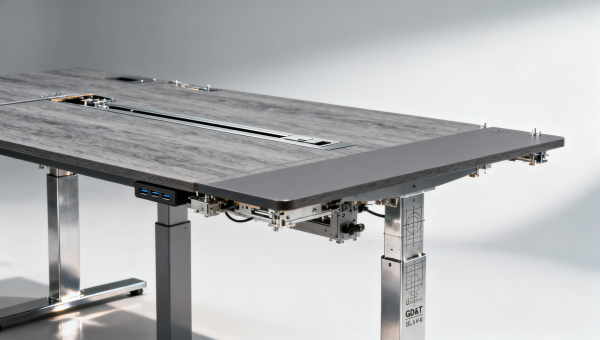
A 2023 GCT audit of 47 commercial office fit-outs found that 68% of schedule overruns originated not from manufacturing delays—but from rework triggered by uncoordinated on-site handoffs. One global co-working operator reported a $217,000 cost impact across three locations due to mismatched desk-height tolerances (±3mm vs. required ±0.8mm) and incompatible cable management channel depths.
This isn’t theoretical. It’s operational friction baked into procurement RFPs, OEM quoting templates, and logistics KPIs—all optimized for throughput, not spatial fidelity.

Why Office Procurement Demands Embedded Site Intelligence
Unlike commodity stationery, custom office solutions are performance-critical infrastructure. A height-adjustable desk must integrate with building BMS protocols; acoustic panels require fire-rated substrate verification per EN 13501-1 Class B-s1,d0; and smart whiteboards demand precise wall-mounting depth allowances to accommodate IR sensor arrays.
Without real-time site data feeding fabrication workflows, manufacturers default to worst-case tolerances—adding 7–12% material waste and extending QA cycles by 2.3x (per GCT’s 2024 OEM benchmark report). Worse, compliance documentation becomes retrospective rather than embedded: 41% of audited projects lacked timestamped photos verifying on-site dimensional validation before production kickoff.
Procurement teams evaluating vendors should treat on-site coordination capability as a Tier-1 technical specification—not an afterthought service add-on.
This table reflects verified practices among GCT-vetted OEM partners serving Fortune 500 corporate real estate teams and university capital planning offices. Vendors scoring ≥4/5 on GCT’s On-Site Integration Index consistently deliver 92% on-time installation completion versus the industry median of 63%.
How Distributors Can De-Risk Custom Office Procurement
Distributors and agents act as critical translation layers between end-user specifications and factory execution. Yet 58% of surveyed channel partners admit they lack standardized protocols to validate whether a vendor’s quoted timeline includes on-site sync points—or merely assumes idealized conditions.
Effective de-risking starts with contractual clarity: insist on binding language specifying “on-site verification completed prior to CNC programming,” “tolerance validation signed off by certified site technician,” and “rework liability capped at 1.5% of order value for coordination-related deviations.”
GCT’s Distribution Partner Toolkit includes a 5-point Site Readiness Checklist covering structural anchoring capacity (≥1,200 kg pull-out resistance), ambient light calibration requirements for interactive displays, and HVAC airflow clearance zones for enclosed tech hubs—each mapped to IEC 62368-1 and EN 1729-1 standards.
Key Procurement Safeguards for Custom Office Orders
- Require digital twin integration: Vendor must accept Revit/IFC files and return clash-detection reports within 72 business hours
- Verify certification: Site technicians must hold ISO/IEC 17020 accreditation for dimensional inspection
- Validate traceability: Each batch number must link to GPS-tagged site photos and thermal imaging logs
- Assess contingency: Minimum 5% buffer in lead time explicitly allocated to on-site iteration cycles
- Audit compliance: Request third-party verification of fire-rating documentation against actual installed substrates
Real-World Impact: From Delay to Delivery Certainty
Consider a recent GCT case study: a 24,000 sq ft smart campus lab outfitted with custom-height collaborative workstations. The initial vendor quote promised 22-day delivery—excluding site coordination. When GCT facilitated a coordinated workflow—including drone-assisted ceiling grid mapping, live-streamed conduit conflict resolution, and pre-fab panel dry-fit validation—the total timeline compressed to 19 days, with zero rework.
More critically, the project achieved full compliance sign-off on Day 1 post-installation—versus the industry average of 11.4 days for similar scope. That accelerated certification enabled the university to activate $3.2M in research grant funding 17 days ahead of schedule.
These metrics reflect aggregated anonymized data from 31 GCT-verified deployments across North America, EMEA, and APAC—spanning corporate HQs, federal training facilities, and Tier-1 university campuses.
Next Steps for Procurement & Channel Partners
Custom fabrication for office environments has evolved beyond aesthetics and ergonomics—it’s now a mission-critical integration layer requiring synchronized engineering, spatial intelligence, and regulatory rigor. Ignoring on-site coordination doesn’t save time; it transfers risk downstream, where costs multiply and control evaporates.
For procurement professionals: Embed on-site validation milestones directly into RFQ evaluation criteria—not as “nice-to-have,” but as mandatory pass/fail gates. Demand evidence—not promises—of integrated workflows.
For distributors and agents: Leverage GCT’s vendor verification framework to differentiate your offering. Position yourself not as a transaction conduit, but as a certified coordination orchestrator—backed by auditable process benchmarks and real-world deployment analytics.
Global Commercial Trade provides procurement-ready OEM profiles, on-site integration scorecards, and editable RFP language templates—all designed to eliminate ambiguity between specification and execution. Access our latest Office & Educational Supplies Sourcing Intelligence Report, including 12 vetted fabricators with proven on-site coordination SLAs.
Get your customized fabrication coordination assessment today.
Search News
Hot Articles
- Watch OEM & SmartwatchesWatches & Wonders Geneva 2026: Audemars Piguet Returns, 10 New Brands Join, Behrens as Sole Chinese ExhibitorApr 11, 2026
- Watch OEM & SmartwatchesEU EN 16830:2026 Eyewear Standard Mandatory from April 2026, Chinese Exporters Need Certification Within 6 MonthsApr 11, 2026
- Smart Campus Tech2026 China Intl Education Expo: AI & Green Tech in SpotlightApr 11, 2026
Popular Tags
Need ExpertConsultation?
Connect with our specialized leisureengineering team for procurementstrategies.
Recommended News
 Apr 11, 2026Henan Justice Department Office Supplies Procurement: Kehai Smart Tech Wins BidHenan Kehai Smart Tech wins Henan Justice Department office supplies procurement bid, showcasing China's 'one-order, multi-point delivery' trend. Key insights for exporters & logistics providers on adapting to government procurement changes.● Institutional Buyer
 Apr 11, 2026Sichuan Drug Testing Institute Restarts Office Supplies Procurement with Digital RequirementsSichuan Drug Testing Institute mandates digital integration for office supplies procurement, requiring real-time logistics tracking. Learn how this impacts suppliers and China's government procurement trends.● Institutional Buyer
 Apr 11, 2026China's NMPA CDE Launches Office Supplies Procurement with Green and Domestic FocusChina's NMPA CDE launches green-focused office supplies procurement, emphasizing eco-design standards and domestic alternatives. Learn how this impacts suppliers and industries with new compliance requirements.● Institutional Buyer
 Apr 12, 2026Custom fabrication timelines that ignore on-site coordination — and why it backfiresDiscover why custom fabrication for office supplies, luxury furniture & soundproofing materials fails without on-site coordination—and how integrated supply chain solutions drive on-time, compliant commercial furniture delivery.● Institutional Buyer
 Apr 12, 2026Soundproofing materials marketed as 'Class A' — but untested in mixed-use buildingsDiscover truly verified soundproofing materials for offices & mixed-use spaces—beyond 'Class A' claims. Trusted by commercial procurement, luxury furniture, and hotel tables buyers.● Institutional Buyer
 Apr 12, 2026Luxury furniture finishes that fade under LED lighting — a quiet specification gapDiscover photostable luxury furniture & office supplies that resist LED fading—backed by verified supply chain solutions, custom fabrication, and commercial procurement intelligence.● Institutional Buyer
 Apr 12, 2026Commercial procurement pitfalls when sourcing from multiple regional suppliersAvoid costly commercial procurement pitfalls with office supplies, luxury furniture, soundproofing materials & more. Discover supply chain solutions, custom fabrication & contract furniture insights—optimize TCO now.● Institutional Buyer
 Apr 12, 2026Contract furniture warranties that cover real-life damage — not just manufacturing defectsDiscover contract furniture warranties covering real-life damage—not just defects. Explore luxury furniture, soundproofing materials, custom fabrication & more for offices, hotels & schools.● Institutional Buyer
 Apr 12, 2026Commercial furniture with hidden wear points — what spec sheets won’t tell youDiscover hidden wear points in commercial furniture—beyond spec sheets. Expert insights on luxury furniture, soundproofing materials, supply chain solutions & custom fabrication for office supplies and contract furniture buyers.● Institutional Buyer
 Apr 12, 2026Custom fabrication for commercial spaces: when off-the-shelf falls shortCustom fabrication for office supplies, luxury furniture & soundproofing materials—precision solutions for commercial furniture, hotel tables, educational supplies & contract furniture procurement.● Institutional Buyer
 Apr 12, 2026Supply chain solutions that cut lead times without sacrificing traceabilityOffice supplies, luxury furniture & soundproofing materials—get supply chain solutions that slash lead times while guaranteeing full traceability, custom fabrication, and commercial procurement compliance.● Institutional Buyer
 Apr 12, 2026Soundproofing materials that pass real-world acoustic tests — not just lab ratingsDiscover field-tested soundproofing materials for office supplies, commercial furniture & luxury furniture—validated in real installations, not just labs.● Institutional Buyer
 Apr 12, 2026Luxury furniture that actually holds up in high-traffic lobbies — not just showroom photosPremium office supplies & luxury furniture engineered for real lobbies—certified soundproofing materials, custom fabrication, and resilient supply chain solutions.● Institutional Buyer
 Apr 12, 2026Why office supplies orders still arrive late in 2026 — and what’s really causing the delaysOffice supplies, luxury furniture & contract furniture delays in 2026? Discover the real supply chain solutions—custom fabrication, soundproofing materials, and commercial procurement fixes.● Institutional Buyer
 Apr 09, 2026Supply chain solutions that increase landed cost by 22% — where the markup hidesDiscover how supply chain solutions uncover hidden 22% landed cost inflation—in designer eyewear, luxury watches, jewelry & more. Get data-backed leverage now.● Institutional Buyer
 Apr 09, 2026Supply chain solutions promising ‘end-to-end visibility’ — what data fields are actually shared?Supply chain solutions for luxury watches, jewelry & designer eyewear: discover which data fields truly enable end-to-end visibility—and avoid costly compliance gaps.● Institutional Buyer
 Apr 03, 2026Changzhou Heng Yang Home Decor's Child Room Solution Gains Australian Early Learning Association RecognitionChangzhou Heng Yang Home Decor's child room solution gains Australian Early Learning Association recognition for its safe, modular design. Featuring arc craftsmanship & odorless materials, it meets AS/NZS 4220 standards, opening new international opportunities.● Institutional Buyer
 Apr 03, 2026China Furniture Export Freight Index Rises 18.3% in April 2026China's furniture export freight index surged 18.3% in April 2026, causing major U.S. West Coast delays. Learn how this impacts exporters, buyers & logistics strategies.● Institutional Buyer
 Apr 03, 2026Wuhan Retrofits Old Buildings with Non-Destructive HVAC Billing, Expanding Smart Office Tech AbroadWuhan's non-destructive HVAC billing system revolutionizes smart office tech with UL-certified wireless controls and AI algorithms. This cost-effective solution for old buildings attracts Singapore's HDB and targets Southeast Asia/Middle East markets. Discover how this innovation benefits HVAC, construction, and energy sectors globally.● Institutional Buyer
 Apr 03, 20262026 Guangzhou Custom Home Expo: ENF-Grade Panels Become Export Standard, Chinese Surface Solutions Attract Global Buyers2026 Guangzhou Custom Home Expo highlights ENF-grade panels as the new global standard, with Chinese surface solutions attracting international buyers. Discover how formaldehyde-free materials and digital replication tech are reshaping the home furnishing export market.● Institutional Buyer
 Apr 03, 2026Vietnam's New Furniture Import Rules: What Industries Need to KnowVietnam's new furniture import rules require Vietnamese translations & QR codes for traceability by April 2026. Learn how this impacts exporters, importers & supply chains in office, home & hospitality sectors.● Institutional Buyer
 Apr 03, 2026US CPSC Tightens Formaldehyde & Heavy Metal Testing for Kids' FurnitureUS CPSC tightens formaldehyde & heavy metal testing for kids' furniture, impacting Chinese exporters with new CARB Phase 2 compliance. Learn key action points for smoother certification.● Institutional Buyer
 Apr 07, 2026Soundproofing materials for multi-use venues: Not all STC ratings tell the full storyDiscover premium soundproofing materials for luxury venues—jewelry boutiques, watch ateliers & optical salons. Beyond STC: inclusive playground, theme park rides, custom furniture, hotel chairs & more.● Institutional Buyer
 Apr 01, 2026Henan Justice Department’s ‘Domestic-Only’ Office Supplies Procurement Policy: A New Benchmark for Chinese ExportersHenan Justice Department's 'Domestic-Only' procurement policy sets new standards for Chinese exporters. Learn how this 180,000 RMB tender impacts office supplies manufacturers and cross-border trade strategies.● Institutional Buyer