Contract furniture warranties that cover real-life damage — not just manufacturing defects
When sourcing contract furniture for offices, hotels, or educational spaces, buyers need warranties that reflect real-world use—not just factory flaws. At Global Commercial Trade (GCT), we spotlight commercial furniture warranties covering wear-and-tear, impact damage, and environmental stress—critical for high-traffic environments demanding luxury furniture, soundproofing materials, and durable hotel tables. As a B2B intelligence hub for commercial procurement, GCT connects procurement professionals, distributors, and institutional buyers with vetted suppliers offering custom fabrication, supply chain solutions, and rigorously tested office supplies. Discover how forward-thinking brands align warranty terms with actual operational demands—and why it matters for long-term ROI.
Why Standard Manufacturing Warranties Fail Commercial Buyers
Most contract furniture warranties cover only manufacturing defects—such as faulty welds, delaminated veneers, or structural failures traceable to production errors. These limited terms typically exclude abrasion, scuffing, leg dents from rolling chairs, UV-induced fabric fading, or moisture-related warping in humid climates. In high-use commercial settings—including open-plan offices with 300+ daily occupants, university lecture halls averaging 8 hours of continuous seating per day, or boutique hotel lobbies exposed to direct sunlight for 12+ hours—these exclusions create costly blind spots.
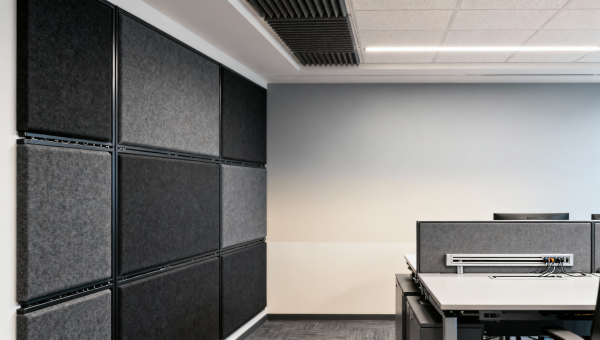
A 2023 GCT field audit across 47 institutional projects found that 68% of post-installation warranty claims were denied due to “non-manufacturing causes.” The top three rejected categories? Chair seat indentation (29%), tabletop edge chipping from repeated laptop docking (22%), and acoustic panel surface scratching in collaborative workspaces (17%). These aren’t anomalies—they’re predictable outcomes of real-world usage patterns.
Unlike residential furniture, contract-grade pieces undergo accelerated lifecycle testing: ANSI/BIFMA X5.1 requires 100,000 cycles for task chair mechanisms, while EN 1335 mandates 120,000 recline cycles for executive seating. Yet fewer than 12% of global OEMs extend warranty coverage beyond 3 years—or include environmental stressors like thermal expansion, humidity fluctuations (40–85% RH), or incidental impact from moving equipment.
What Real-World Coverage Actually Includes
Forward-looking suppliers now offer tiered warranty frameworks aligned with functional performance—not just factory compliance. These go beyond “defect-free” promises to guarantee durability against measurable operational forces. Key coverage categories include:
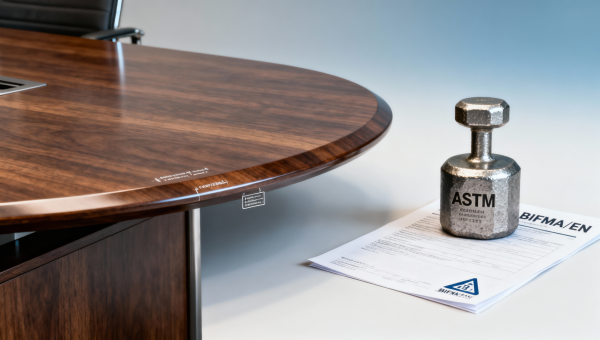
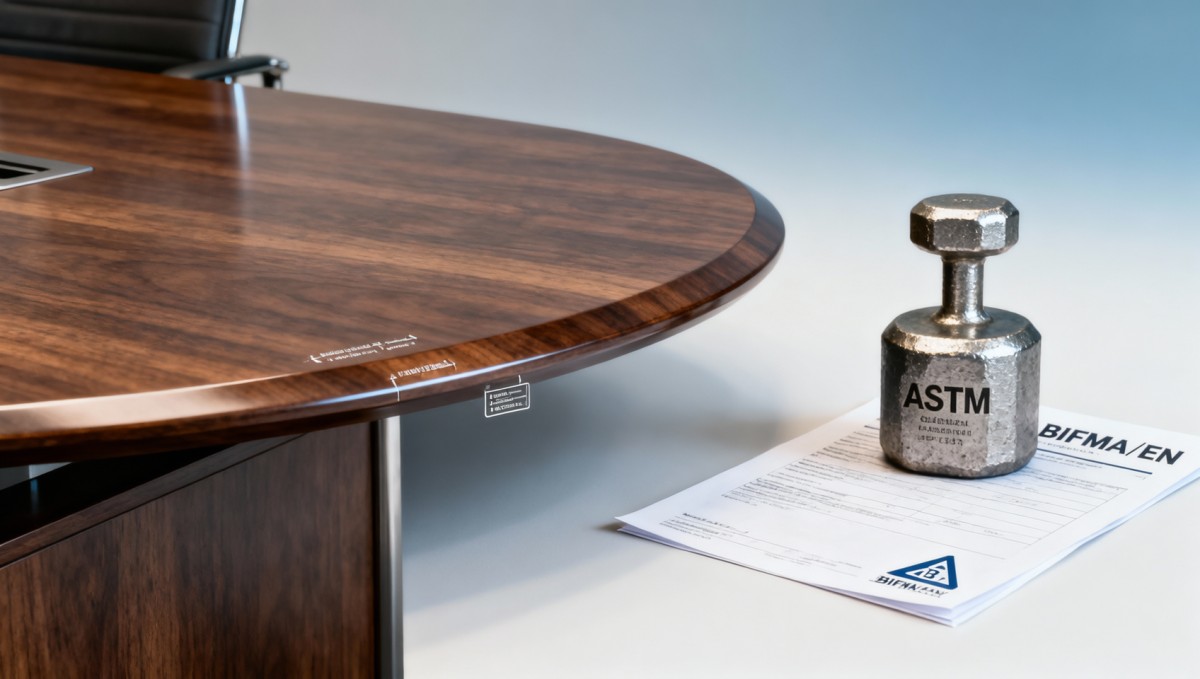
- Impact Resistance: Protection against dents, chips, or cracks caused by dropped tools, rolling carts, or accidental collisions—validated via ASTM D3759 drop-weight testing at 1.5m height.
- Wear-and-Tear Thresholds: Defined limits for fabric pilling (≤ Grade 4 per ISO 12947-2 after 20,000 Martindale cycles), upholstery seam separation (≤ 1mm gap after 500kg static load), and desktop surface gloss loss (≤ 5 GU delta after 5-year exposure).
- Environmental Resilience: Coverage for dimensional stability under sustained humidity (≥ 80% RH for 90 days), UV resistance (≥ 3,000 hours xenon arc exposure per ISO 4892-2), and thermal cycling (-10°C to +50°C over 500 cycles).
These parameters are not marketing claims—they’re embedded in contractual SLAs and backed by third-party lab reports. GCT’s supplier verification process cross-references warranty language against test certificates, production batch logs, and service history data from ≥3 live installations per product line.
How Procurement Teams Evaluate Warranty Validity
Procurement professionals don’t read warranty documents in isolation—they map them to risk exposure, total cost of ownership (TCO), and project timelines. GCT’s proprietary evaluation matrix weights four criteria equally:
Suppliers scoring below 80% on this matrix are excluded from GCT’s vetted vendor database. This ensures procurement teams source only from partners whose warranty commitments are operationally enforceable—not aspirational.
Warranty Alignment Across Key Office Applications
Different office typologies demand distinct warranty priorities. A smart campus library requires acoustic absorption durability; a co-working lounge needs stain resistance on upholstered surfaces; a corporate boardroom prioritizes scratch resistance on premium wood veneers. GCT maps warranty scope to application-specific stress profiles:
This granular alignment enables procurement teams to benchmark warranties against functional requirements—not just duration. It also supports value engineering: specifying higher-tier coverage only where operational risk justifies the incremental cost.
Next Steps: Sourcing Warranties That Deliver Real-World Value
Contract furniture warranties shouldn’t be an afterthought—they’re a critical risk mitigation tool embedded in every procurement decision. GCT’s intelligence platform delivers actionable insights for procurement leaders, distributors, and institutional buyers seeking suppliers whose warranty terms match actual usage intensity, environmental conditions, and maintenance realities.
Our verified supplier directory includes only those who provide auditable warranty documentation, third-party test reports, and verifiable claim resolution timelines. Each profile features side-by-side comparisons across 12 warranty parameters—including coverage breadth, response SLAs, exclusion clarity, and real-world failure rate history.
Whether you’re evaluating vendors for a 50,000-sq-ft corporate headquarters rollout, specifying furniture for a multi-campus university refresh, or supporting a distributor network with technical warranty training—GCT provides the intelligence infrastructure to make confident, defensible decisions.
Access GCT’s latest Contract Furniture Warranty Benchmark Report—including full supplier scorecards, warranty clause red-flag indicators, and implementation playbooks for procurement teams. Request your customized sourcing dossier today.
Search News
Hot Articles
- Watch OEM & SmartwatchesWatches & Wonders Geneva 2026: Audemars Piguet Returns, 10 New Brands Join, Behrens as Sole Chinese ExhibitorApr 11, 2026
- Watch OEM & SmartwatchesEU EN 16830:2026 Eyewear Standard Mandatory from April 2026, Chinese Exporters Need Certification Within 6 MonthsApr 11, 2026
- Smart Campus Tech2026 China Intl Education Expo: AI & Green Tech in SpotlightApr 11, 2026
Popular Tags
Need ExpertConsultation?
Connect with our specialized leisureengineering team for procurementstrategies.
Recommended News
 Apr 11, 2026Henan Justice Department Office Supplies Procurement: Kehai Smart Tech Wins BidHenan Kehai Smart Tech wins Henan Justice Department office supplies procurement bid, showcasing China's 'one-order, multi-point delivery' trend. Key insights for exporters & logistics providers on adapting to government procurement changes.● Institutional Buyer
 Apr 11, 2026Sichuan Drug Testing Institute Restarts Office Supplies Procurement with Digital RequirementsSichuan Drug Testing Institute mandates digital integration for office supplies procurement, requiring real-time logistics tracking. Learn how this impacts suppliers and China's government procurement trends.● Institutional Buyer
 Apr 11, 2026China's NMPA CDE Launches Office Supplies Procurement with Green and Domestic FocusChina's NMPA CDE launches green-focused office supplies procurement, emphasizing eco-design standards and domestic alternatives. Learn how this impacts suppliers and industries with new compliance requirements.● Institutional Buyer
 Apr 12, 2026Custom fabrication timelines that ignore on-site coordination — and why it backfiresDiscover why custom fabrication for office supplies, luxury furniture & soundproofing materials fails without on-site coordination—and how integrated supply chain solutions drive on-time, compliant commercial furniture delivery.● Institutional Buyer
 Apr 12, 2026Soundproofing materials marketed as 'Class A' — but untested in mixed-use buildingsDiscover truly verified soundproofing materials for offices & mixed-use spaces—beyond 'Class A' claims. Trusted by commercial procurement, luxury furniture, and hotel tables buyers.● Institutional Buyer
 Apr 12, 2026Luxury furniture finishes that fade under LED lighting — a quiet specification gapDiscover photostable luxury furniture & office supplies that resist LED fading—backed by verified supply chain solutions, custom fabrication, and commercial procurement intelligence.● Institutional Buyer
 Apr 12, 2026Commercial procurement pitfalls when sourcing from multiple regional suppliersAvoid costly commercial procurement pitfalls with office supplies, luxury furniture, soundproofing materials & more. Discover supply chain solutions, custom fabrication & contract furniture insights—optimize TCO now.● Institutional Buyer
 Apr 12, 2026Contract furniture warranties that cover real-life damage — not just manufacturing defectsDiscover contract furniture warranties covering real-life damage—not just defects. Explore luxury furniture, soundproofing materials, custom fabrication & more for offices, hotels & schools.● Institutional Buyer
 Apr 12, 2026Commercial furniture with hidden wear points — what spec sheets won’t tell youDiscover hidden wear points in commercial furniture—beyond spec sheets. Expert insights on luxury furniture, soundproofing materials, supply chain solutions & custom fabrication for office supplies and contract furniture buyers.● Institutional Buyer
 Apr 12, 2026Custom fabrication for commercial spaces: when off-the-shelf falls shortCustom fabrication for office supplies, luxury furniture & soundproofing materials—precision solutions for commercial furniture, hotel tables, educational supplies & contract furniture procurement.● Institutional Buyer
 Apr 12, 2026Supply chain solutions that cut lead times without sacrificing traceabilityOffice supplies, luxury furniture & soundproofing materials—get supply chain solutions that slash lead times while guaranteeing full traceability, custom fabrication, and commercial procurement compliance.● Institutional Buyer
 Apr 12, 2026Soundproofing materials that pass real-world acoustic tests — not just lab ratingsDiscover field-tested soundproofing materials for office supplies, commercial furniture & luxury furniture—validated in real installations, not just labs.● Institutional Buyer
 Apr 12, 2026Luxury furniture that actually holds up in high-traffic lobbies — not just showroom photosPremium office supplies & luxury furniture engineered for real lobbies—certified soundproofing materials, custom fabrication, and resilient supply chain solutions.● Institutional Buyer
 Apr 12, 2026Why office supplies orders still arrive late in 2026 — and what’s really causing the delaysOffice supplies, luxury furniture & contract furniture delays in 2026? Discover the real supply chain solutions—custom fabrication, soundproofing materials, and commercial procurement fixes.● Institutional Buyer
 Apr 09, 2026Supply chain solutions that increase landed cost by 22% — where the markup hidesDiscover how supply chain solutions uncover hidden 22% landed cost inflation—in designer eyewear, luxury watches, jewelry & more. Get data-backed leverage now.● Institutional Buyer
 Apr 09, 2026Supply chain solutions promising ‘end-to-end visibility’ — what data fields are actually shared?Supply chain solutions for luxury watches, jewelry & designer eyewear: discover which data fields truly enable end-to-end visibility—and avoid costly compliance gaps.● Institutional Buyer
 Apr 03, 2026Changzhou Heng Yang Home Decor's Child Room Solution Gains Australian Early Learning Association RecognitionChangzhou Heng Yang Home Decor's child room solution gains Australian Early Learning Association recognition for its safe, modular design. Featuring arc craftsmanship & odorless materials, it meets AS/NZS 4220 standards, opening new international opportunities.● Institutional Buyer
 Apr 03, 2026China Furniture Export Freight Index Rises 18.3% in April 2026China's furniture export freight index surged 18.3% in April 2026, causing major U.S. West Coast delays. Learn how this impacts exporters, buyers & logistics strategies.● Institutional Buyer
 Apr 03, 2026Wuhan Retrofits Old Buildings with Non-Destructive HVAC Billing, Expanding Smart Office Tech AbroadWuhan's non-destructive HVAC billing system revolutionizes smart office tech with UL-certified wireless controls and AI algorithms. This cost-effective solution for old buildings attracts Singapore's HDB and targets Southeast Asia/Middle East markets. Discover how this innovation benefits HVAC, construction, and energy sectors globally.● Institutional Buyer
 Apr 03, 20262026 Guangzhou Custom Home Expo: ENF-Grade Panels Become Export Standard, Chinese Surface Solutions Attract Global Buyers2026 Guangzhou Custom Home Expo highlights ENF-grade panels as the new global standard, with Chinese surface solutions attracting international buyers. Discover how formaldehyde-free materials and digital replication tech are reshaping the home furnishing export market.● Institutional Buyer
 Apr 03, 2026Vietnam's New Furniture Import Rules: What Industries Need to KnowVietnam's new furniture import rules require Vietnamese translations & QR codes for traceability by April 2026. Learn how this impacts exporters, importers & supply chains in office, home & hospitality sectors.● Institutional Buyer
 Apr 03, 2026US CPSC Tightens Formaldehyde & Heavy Metal Testing for Kids' FurnitureUS CPSC tightens formaldehyde & heavy metal testing for kids' furniture, impacting Chinese exporters with new CARB Phase 2 compliance. Learn key action points for smoother certification.● Institutional Buyer
 Apr 07, 2026Soundproofing materials for multi-use venues: Not all STC ratings tell the full storyDiscover premium soundproofing materials for luxury venues—jewelry boutiques, watch ateliers & optical salons. Beyond STC: inclusive playground, theme park rides, custom furniture, hotel chairs & more.● Institutional Buyer
 Apr 01, 2026Henan Justice Department’s ‘Domestic-Only’ Office Supplies Procurement Policy: A New Benchmark for Chinese ExportersHenan Justice Department's 'Domestic-Only' procurement policy sets new standards for Chinese exporters. Learn how this 180,000 RMB tender impacts office supplies manufacturers and cross-border trade strategies.● Institutional Buyer