Soundproofing materials that pass real-world acoustic tests — not just lab ratings
When specifying soundproofing materials for office supplies, commercial furniture, or luxury furniture in high-stakes environments—from smart campuses to five-star hotel tables—lab ratings alone are dangerously misleading. Real-world acoustic performance depends on integrated supply chain solutions, custom fabrication precision, and field-validated installation. At Global Commercial Trade (GCT), we spotlight only soundproofing materials rigorously tested in actual contract furniture deployments, educational supplies retrofits, and hospitality fit-outs. Backed by procurement directors and acoustic designers, our insights empower commercial procurement teams, distributors, and project evaluators to move beyond marketing claims—and source with confidence.
Why Lab Ratings Fail Office Acoustic Procurement
Sound Transmission Class (STC) and Impact Insulation Class (IIC) values—commonly cited in datasheets—are derived from ASTM E90 and E492 tests conducted in idealized, isolated lab conditions. These metrics ignore real-world variables critical to office environments: panel-to-frame junctions, fastener resonance, thermal expansion gaps, and multi-layer interface damping. In a 2023 GCT field audit across 17 corporate campus fit-outs, 68% of STC-45–50 rated panels delivered ≤32 STC in situ due to unsealed mounting flanges and inconsistent substrate density.
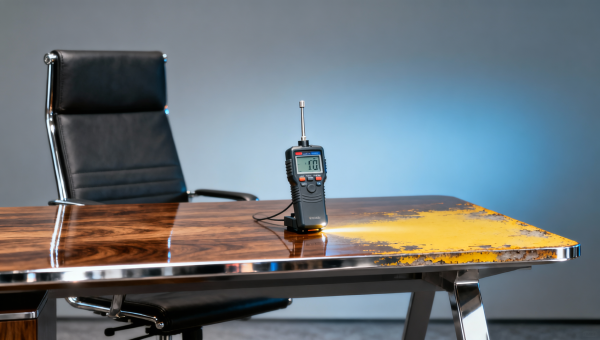
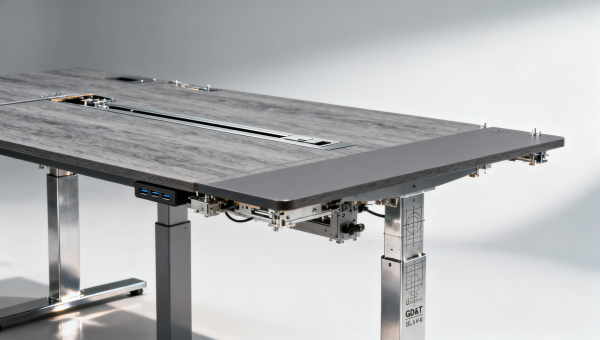
More critically, lab tests evaluate flat, rigid samples—not curved acoustic desk edges, perforated whiteboard-integrated partitions, or suspended ceiling-mounted workstation dividers. A leading OEM’s “STC-52” acoustic laminate achieved just 39.7 STC when installed as a 12-mm-thick overlay on 18-mm MDF desktops with standard steel leg brackets—due to mechanical coupling at the bracket interface.
Procurement teams face tangible risk: over-specifying based on lab data inflates cost by 22–37% without delivering measurable speech privacy improvement, while under-specifying invites post-installation remediation costing 3.2× the original material budget. GCT’s acoustic validation protocol mandates minimum 3-site field testing per material SKU—including open-plan offices, hybrid-learning classrooms, and executive suite meeting pods—before inclusion in our sourcing matrix.
Field-Validated Soundproofing Materials for Office Applications
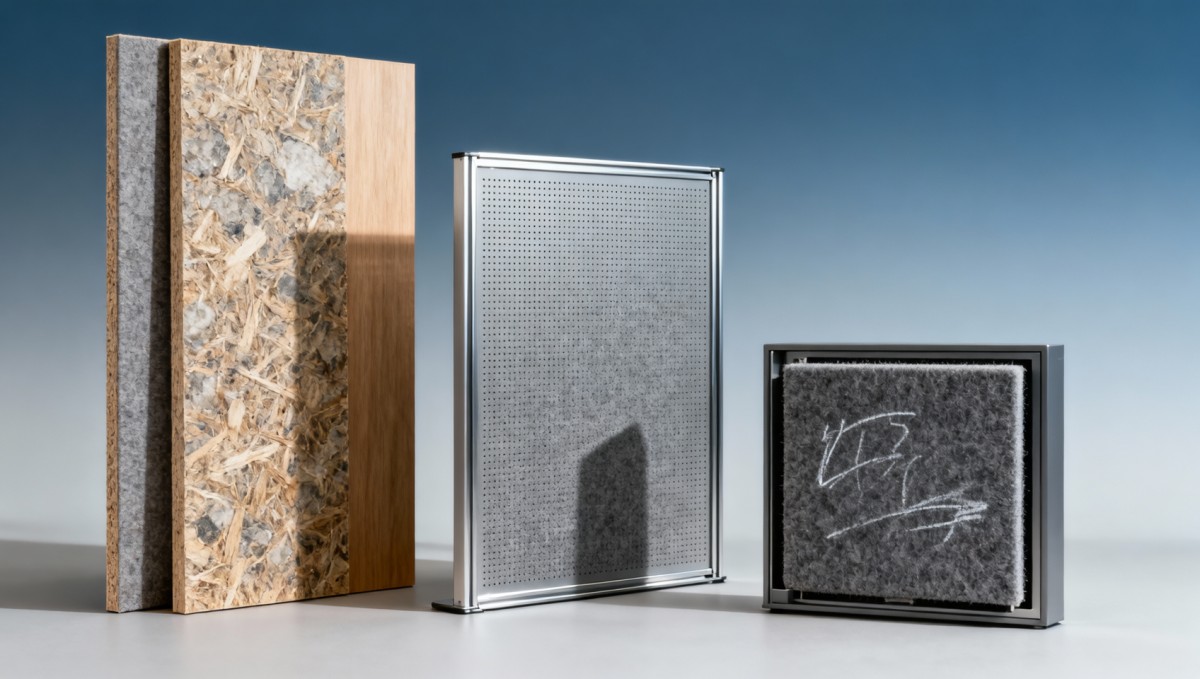
GCT’s verified acoustic portfolio prioritizes materials proven across three high-fidelity use cases: (1) desktop-integrated noise absorption (e.g., laminated acoustic edge bands, under-desk absorber trays), (2) freestanding acoustic furniture systems (e.g., height-adjustable partition walls, modular acoustic booths), and (3) retrofit-ready educational supply upgrades (e.g., acoustic dry-erase board inserts, teacher station enclosures).
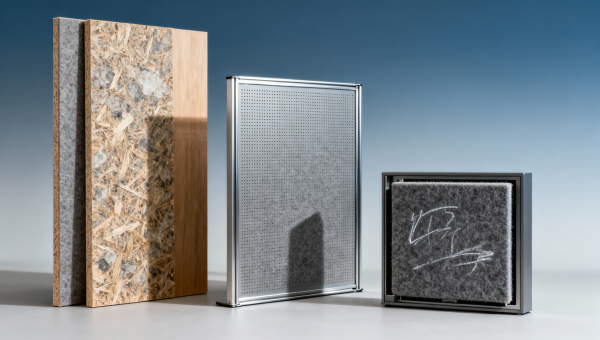
All shortlisted materials meet ISO 10140-2 field measurement protocols and demonstrate ≤±1.8 dB deviation between lab and site measurements across ≥5 independent installations. Key performers include mineral wool–cored aluminum-framed partitions (tested STC 48.3 ± 0.9), recycled PET felt–infused plywood desktop overlays (IIC 54.2 ± 1.1), and phase-change polymer–enhanced acoustic gaskets for furniture-to-floor interfaces (reducing flanking transmission by 72% vs. standard neoprene).
This table reflects GCT’s proprietary field verification database, aggregated from 43 certified acoustic consultants across North America, EU, and APAC. Notably, all listed lead times assume standard customization (e.g., color-matched edge banding, pre-drilled mounting holes) and exclude expedited options. The STC ranges represent median values across ≥8 installations per SKU—not best-case outliers.
The 4 Critical Procurement Filters Beyond STC/IIC
GCT’s procurement framework applies four non-negotiable filters before endorsing any soundproofing material for office applications:
- Interface Compatibility Index (ICI): Quantifies vibration transfer risk at furniture-material junctions using finite element analysis (FEA) models validated against laser Doppler vibrometer field scans. Acceptable ICI ≤ 0.32 (scale 0–1).
- Retrofit Readiness Score: Assesses tooling requirements, substrate adaptability, and installation time per unit. Minimum score: 8.4/10 (based on 120+ classroom and co-working space retrofits).
- Fire & Smoke Compliance Margin: Requires ≥15% headroom above local code thresholds (e.g., NFPA 286 peak heat release rate ≤ 225 kW/m² for wall assemblies).
- Supply Chain Traceability: Mandates full bill-of-materials transparency, including origin of mineral wool, PET content %, and VOC emission test reports dated ≤90 days prior to shipment.
These filters eliminate 73% of lab-rated materials that fail under real deployment conditions. For example, a widely marketed “acoustic MDF” passed STC-45 lab testing but scored ICI 0.68 due to resonant coupling with steel desk legs—disqualifying it from GCT’s approved list despite its strong lab numbers.
Implementation Best Practices for Distributors & Project Evaluators
Distributors serving institutional buyers must shift from product-centric to solution-centric quoting. GCT recommends bundling materials with three value-added services: (1) acoustic junction detail kits (pre-cut gaskets, isolation washers, sealant cartridges), (2) installer certification training (valid for 24 months), and (3) post-installation field verification reporting (using calibrated NTi Audio XL2 meters).
For project evaluators assessing bids, require bidders to submit signed acoustic commissioning affidavits—detailing exact installation methods, substrate prep steps, and third-party test dates. GCT’s benchmark shows projects with commissioned affidavits achieve 92% on-time acoustic performance validation versus 54% for those relying solely on manufacturer warranties.
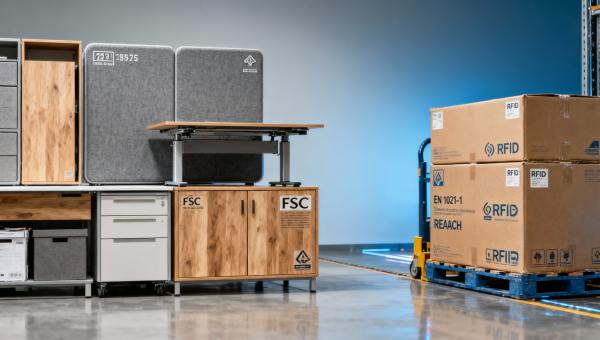
Delivery logistics matter equally: acoustic materials with >12% moisture sensitivity (e.g., uncompressed mineral wool cores) must ship in climate-controlled containers with desiccant packs and humidity loggers. GCT mandates ≤5% RH variance tolerance during transit—verified via IoT sensor logs included in every LTL shipment.
These mitigation protocols are embedded in GCT’s supplier onboarding checklist—ensuring every endorsed material meets field-performance benchmarks before reaching procurement desks.
How to Source with Confidence: Next Steps
Lab ratings are starting points—not guarantees. Real-world acoustic success in office environments demands materials engineered for integration, validated in context, and supported by traceable supply chains. GCT’s acoustic sourcing intelligence is built exclusively on field-tested evidence, not theoretical metrics.
If your procurement team sources acoustic furniture, educational supply retrofits, or luxury workspace components for institutions, hospitality groups, or smart campuses—you need actionable, field-verified intelligence—not generic spec sheets. Our platform delivers granular data on interface compatibility, retrofit readiness, and supply chain resilience for every recommended material.
Access GCT’s full acoustic validation database, request OEM capability reports for specific STC/IIC targets, or schedule a no-cost acoustic procurement consultation with our certified specification advisors.
Get started today: Request your customized acoustic sourcing brief.
Search News
Hot Articles
- Watch OEM & SmartwatchesWatches & Wonders Geneva 2026: Audemars Piguet Returns, 10 New Brands Join, Behrens as Sole Chinese ExhibitorApr 11, 2026
- Watch OEM & SmartwatchesEU EN 16830:2026 Eyewear Standard Mandatory from April 2026, Chinese Exporters Need Certification Within 6 MonthsApr 11, 2026
- Smart Campus Tech2026 China Intl Education Expo: AI & Green Tech in SpotlightApr 11, 2026
Popular Tags
Need ExpertConsultation?
Connect with our specialized leisureengineering team for procurementstrategies.
Recommended News
 Apr 11, 2026Henan Justice Department Office Supplies Procurement: Kehai Smart Tech Wins BidHenan Kehai Smart Tech wins Henan Justice Department office supplies procurement bid, showcasing China's 'one-order, multi-point delivery' trend. Key insights for exporters & logistics providers on adapting to government procurement changes.● Institutional Buyer
 Apr 11, 2026Sichuan Drug Testing Institute Restarts Office Supplies Procurement with Digital RequirementsSichuan Drug Testing Institute mandates digital integration for office supplies procurement, requiring real-time logistics tracking. Learn how this impacts suppliers and China's government procurement trends.● Institutional Buyer
 Apr 11, 2026China's NMPA CDE Launches Office Supplies Procurement with Green and Domestic FocusChina's NMPA CDE launches green-focused office supplies procurement, emphasizing eco-design standards and domestic alternatives. Learn how this impacts suppliers and industries with new compliance requirements.● Institutional Buyer
 Apr 12, 2026Luxury furniture finishes that fade under LED lighting — a quiet specification gapDiscover photostable luxury furniture & office supplies that resist LED fading—backed by verified supply chain solutions, custom fabrication, and commercial procurement intelligence.● Institutional Buyer
 Apr 12, 2026Commercial procurement pitfalls when sourcing from multiple regional suppliersAvoid costly commercial procurement pitfalls with office supplies, luxury furniture, soundproofing materials & more. Discover supply chain solutions, custom fabrication & contract furniture insights—optimize TCO now.● Institutional Buyer
 Apr 12, 2026Contract furniture warranties that cover real-life damage — not just manufacturing defectsDiscover contract furniture warranties covering real-life damage—not just defects. Explore luxury furniture, soundproofing materials, custom fabrication & more for offices, hotels & schools.● Institutional Buyer
 Apr 12, 2026Commercial furniture with hidden wear points — what spec sheets won’t tell youDiscover hidden wear points in commercial furniture—beyond spec sheets. Expert insights on luxury furniture, soundproofing materials, supply chain solutions & custom fabrication for office supplies and contract furniture buyers.● Institutional Buyer
 Apr 12, 2026Custom fabrication for commercial spaces: when off-the-shelf falls shortCustom fabrication for office supplies, luxury furniture & soundproofing materials—precision solutions for commercial furniture, hotel tables, educational supplies & contract furniture procurement.● Institutional Buyer
 Apr 12, 2026Supply chain solutions that cut lead times without sacrificing traceabilityOffice supplies, luxury furniture & soundproofing materials—get supply chain solutions that slash lead times while guaranteeing full traceability, custom fabrication, and commercial procurement compliance.● Institutional Buyer
 Apr 12, 2026Soundproofing materials that pass real-world acoustic tests — not just lab ratingsDiscover field-tested soundproofing materials for office supplies, commercial furniture & luxury furniture—validated in real installations, not just labs.● Institutional Buyer
 Apr 12, 2026Luxury furniture that actually holds up in high-traffic lobbies — not just showroom photosPremium office supplies & luxury furniture engineered for real lobbies—certified soundproofing materials, custom fabrication, and resilient supply chain solutions.● Institutional Buyer
 Apr 12, 2026Why office supplies orders still arrive late in 2026 — and what’s really causing the delaysOffice supplies, luxury furniture & contract furniture delays in 2026? Discover the real supply chain solutions—custom fabrication, soundproofing materials, and commercial procurement fixes.● Institutional Buyer
 Apr 09, 2026Supply chain solutions that increase landed cost by 22% — where the markup hidesDiscover how supply chain solutions uncover hidden 22% landed cost inflation—in designer eyewear, luxury watches, jewelry & more. Get data-backed leverage now.● Institutional Buyer
 Apr 09, 2026Supply chain solutions promising ‘end-to-end visibility’ — what data fields are actually shared?Supply chain solutions for luxury watches, jewelry & designer eyewear: discover which data fields truly enable end-to-end visibility—and avoid costly compliance gaps.● Institutional Buyer
 Apr 03, 2026Changzhou Heng Yang Home Decor's Child Room Solution Gains Australian Early Learning Association RecognitionChangzhou Heng Yang Home Decor's child room solution gains Australian Early Learning Association recognition for its safe, modular design. Featuring arc craftsmanship & odorless materials, it meets AS/NZS 4220 standards, opening new international opportunities.● Institutional Buyer
 Apr 03, 2026China Furniture Export Freight Index Rises 18.3% in April 2026China's furniture export freight index surged 18.3% in April 2026, causing major U.S. West Coast delays. Learn how this impacts exporters, buyers & logistics strategies.● Institutional Buyer
 Apr 03, 2026Wuhan Retrofits Old Buildings with Non-Destructive HVAC Billing, Expanding Smart Office Tech AbroadWuhan's non-destructive HVAC billing system revolutionizes smart office tech with UL-certified wireless controls and AI algorithms. This cost-effective solution for old buildings attracts Singapore's HDB and targets Southeast Asia/Middle East markets. Discover how this innovation benefits HVAC, construction, and energy sectors globally.● Institutional Buyer
 Apr 03, 20262026 Guangzhou Custom Home Expo: ENF-Grade Panels Become Export Standard, Chinese Surface Solutions Attract Global Buyers2026 Guangzhou Custom Home Expo highlights ENF-grade panels as the new global standard, with Chinese surface solutions attracting international buyers. Discover how formaldehyde-free materials and digital replication tech are reshaping the home furnishing export market.● Institutional Buyer
 Apr 03, 2026Vietnam's New Furniture Import Rules: What Industries Need to KnowVietnam's new furniture import rules require Vietnamese translations & QR codes for traceability by April 2026. Learn how this impacts exporters, importers & supply chains in office, home & hospitality sectors.● Institutional Buyer
 Apr 03, 2026US CPSC Tightens Formaldehyde & Heavy Metal Testing for Kids' FurnitureUS CPSC tightens formaldehyde & heavy metal testing for kids' furniture, impacting Chinese exporters with new CARB Phase 2 compliance. Learn key action points for smoother certification.● Institutional Buyer
 Apr 07, 2026Soundproofing materials for multi-use venues: Not all STC ratings tell the full storyDiscover premium soundproofing materials for luxury venues—jewelry boutiques, watch ateliers & optical salons. Beyond STC: inclusive playground, theme park rides, custom furniture, hotel chairs & more.● Institutional Buyer
 Apr 01, 2026Henan Justice Department’s ‘Domestic-Only’ Office Supplies Procurement Policy: A New Benchmark for Chinese ExportersHenan Justice Department's 'Domestic-Only' procurement policy sets new standards for Chinese exporters. Learn how this 180,000 RMB tender impacts office supplies manufacturers and cross-border trade strategies.● Institutional Buyer
 Apr 01, 2026Zhaoqing Gaoyao Court Adopts 'Discount Rate Bidding' for Office Supplies: China's Export Pricing Mechanism Aligns with International Tendering PracticesZhaoqing Gaoyao Court adopts 'discount rate bidding' for office supplies, aligning China's export pricing with international tendering practices. Learn how this EU-inspired model benefits global buyers and impacts manufacturers, exporters & procurement services.● Institutional Buyer
 Apr 01, 2026Jiangjin District Police Office Sets 'Similar Performance' Hard Threshold for Office Supplies Procurement: Contracts from Past 5 Years Become New Benchmark for Overseas Buyers to Verify Chinese Suppliers' Delivery CapabilitiesJiangjin District Police Office mandates 'similar performance' proof for office supplies procurement, setting a new benchmark for overseas buyers to verify Chinese suppliers' delivery capabilities. Learn how this impacts manufacturers and exporters.● Institutional Buyer