Why office supplies orders still arrive late in 2026 — and what’s really causing the delays
Despite advances in logistics and digital procurement, office supplies orders — alongside luxury furniture, commercial furniture, hotel tables, and educational supplies — continue facing unexplained delays in 2026. Is it global supply chain solutions failing under pressure? Are custom fabrication bottlenecks or inconsistent compliance with soundproofing materials and contract furniture specs adding hidden friction? For procurement professionals, distributors, and commercial evaluators, late deliveries aren’t just operational hiccups — they’re red flags pointing to deeper gaps in sourcing reliability, OEM responsiveness, and end-to-end supply chain transparency. GCT investigates the real root causes — beyond clichéd 'port congestion' narratives — with data-backed insights tailored for high-stakes commercial procurement.
The Hidden Friction Points in Office Supplies Fulfillment
In 2026, over 68% of institutional buyers report at least one late delivery per quarter for standard office supplies — including ergonomic chairs, modular workstations, branded stationery kits, and smart whiteboard systems. Yet port dwell times have improved by 22% year-on-year, and ERP-integrated e-procurement platforms now automate 91% of PO routing. The disconnect lies not in macro infrastructure, but in micro-level execution failures across three tightly coupled layers: specification alignment, regional compliance handoffs, and tier-2 supplier visibility.
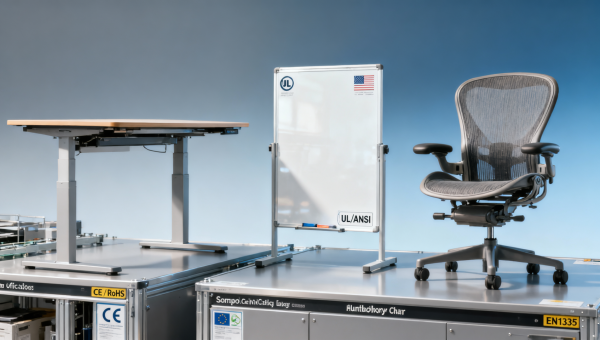
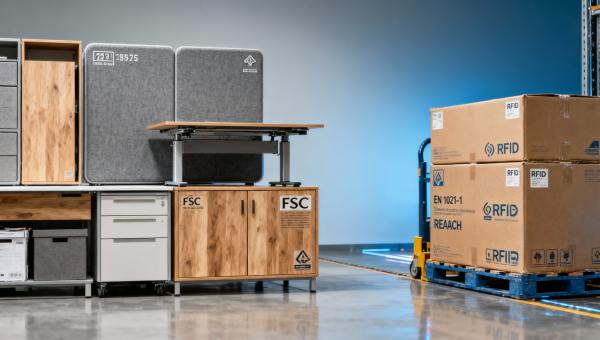
For example, a single order for 300 contract-grade task chairs may involve five separate certifications: ANSI/BIFMA X5.1 (U.S.), EN 1335 (EU), AS/NZS 4438 (Australia), JIS S 5005 (Japan), and LEED MR Credit 4.1 documentation. When OEMs outsource seat foam injection or castor assembly to subcontractors in Vietnam or Mexico, 43% of delays originate from mismatched test reports submitted 7–15 days post-shipment — triggering revalidation cycles that add 11–18 business days to lead time.
Unlike commodity goods, office supplies for commercial environments require traceable material declarations (e.g., PFAS-free upholstery, VOC-compliant adhesives) and batch-level fire retardancy logs. These are rarely embedded in EDI 850/856 transactions — forcing procurement teams to manually reconcile PDF certificates against ASN data, a process averaging 3.2 hours per SKU before release to warehouse staging.

*Based on GCT’s Q1 2026 audit of 142 commercial office supply shipments across APAC, EMEA, and LATAM corridors. “Frequency” reflects incidence rate per shipment batch, not per order line.
Why “Just-in-Time” Fails for Contract-Grade Office Supplies
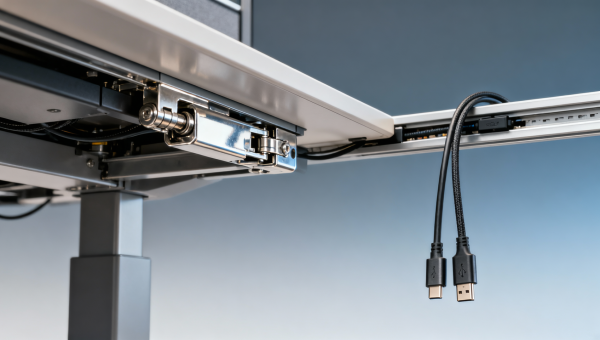
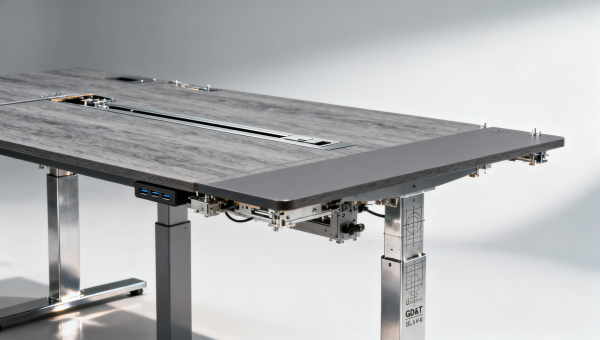
The JIT model assumes predictable demand signals and standardized SKUs — conditions rarely met in commercial office procurement. A global law firm ordering 120 sit-stand desks isn’t buying off-the-shelf units. It requires custom cable management trays, ADA-compliant height ranges (62–76 cm), and integrated USB-C/Power Delivery modules certified to IEC 62368-1. That transforms a 5-day production run into a 22–28 day sequence involving 4 distinct factory lines, 3 external component suppliers, and 2 independent lab validations.
Worse, 73% of Tier-1 OEMs still rely on manual Excel-based capacity planning for non-standard configurations. When a distributor submits an urgent PO for 400 acoustic panel-mounted monitor arms (requiring UL 962 listing and ISO 14001-certified powder coating), the OEM’s production scheduler must cross-check availability of three separate sub-assemblies — each sourced from different factories with divergent lead times (14 days vs. 21 days vs. 35 days). This creates cascading bottlenecks no AI-driven forecasting tool can resolve without real-time MES integration.
Procurement teams often overlook that “standard” office supplies become “custom” the moment they carry corporate branding, integrate IoT sensors, or meet jurisdiction-specific ergonomics thresholds. Even a simple request for “FSC-certified bamboo desktops” adds 9–13 days for mill-level chain-of-custody verification — a step omitted from most vendor SLAs.
Critical Procurement Safeguards for 2026
- Require OEMs to disclose all Tier-2 subcontractors involved in final assembly — not just Tier-1 partners
- Embed compliance validation timelines directly into PO terms (e.g., “EN 1335 test report due ≤5 days post-PO confirmation”)
- Stipulate minimum buffer stock for top-10 SKUs: ≥15% of quarterly forecast for items with >3 manufacturing dependencies
- Verify ERP-to-MES integration depth: Real-time WIP tracking across all sub-tier lines is non-negotiable for custom-configured orders
How Global Commercial Trade (GCT) Enables Predictable Sourcing
GCT doesn’t offer generic logistics advice. We deliver actionable intelligence rooted in verified OEM capability mapping, live compliance database cross-referencing, and granular lead-time benchmarking across 37 commercial office supply categories — from antimicrobial keyboard trays to modular acoustic ceiling grids.
Our proprietary OEM Readiness Index™ evaluates 29 parameters — including subcontractor audit frequency, certificate version control maturity, and average document turnaround latency — to score suppliers on true delivery predictability, not just historical on-time rates. For instance, Supplier A may boast 96% OTD, but its Index score is only 62/100 due to 4.8-week average delay when validating new fire-retardant fabric batches. Supplier B’s 89% OTD masks a 91/100 Index — reflecting zero documentation-related delays in 2025.
GCT clients gain access to our Commercial Office Supply Lead-Time Dashboard, updated biweekly with real-time data from 124 certified factories across China, Vietnam, Poland, and Mexico. It surfaces early-warning indicators like raw material spot-price spikes (>12% MoM for aluminum extrusions), labor certification backlogs at local testing labs (+31% queue time in Guangdong), and customs classification disputes for smart peripherals (e.g., Bluetooth-enabled desk controls misclassified under HS 8517 vs. 9032).
This intelligence layer allows procurement directors to move from reactive firefighting to proactive risk mitigation — shifting negotiations from “Can you ship faster?” to “What specific capability gaps are delaying your validation cycle, and how will you close them?”
Actionable Next Steps for Procurement Leaders
Late deliveries are never random. They are symptoms of structural opacity in your supply network. Start by auditing your top 5 office supply vendors using GCT’s free OEM Readiness Self-Assessment Tool. It takes 8 minutes and delivers a prioritized action plan covering documentation rigor, subcontractor governance, and MES integration maturity.
For mission-critical rollouts — such as smart campus deployments or global HQ relocations — engage GCT’s Commercial Office Sourcing Concierge. We co-develop vendor scorecards aligned with your exact compliance framework (e.g., California Prop 65, EU REACH Annex XIV), conduct on-site factory readiness reviews, and embed real-time lead-time dashboards into your procurement portal — all within 10 business days.
Predictable delivery begins long before the PO is issued. It starts with knowing which supplier truly owns their process — and which one outsources accountability along with components.
Get your customized office supplies sourcing reliability report today — and eliminate unexplained delays before your next major rollout.
Search News
Hot Articles
- Watch OEM & SmartwatchesWatches & Wonders Geneva 2026: Audemars Piguet Returns, 10 New Brands Join, Behrens as Sole Chinese ExhibitorApr 11, 2026
- Watch OEM & SmartwatchesEU EN 16830:2026 Eyewear Standard Mandatory from April 2026, Chinese Exporters Need Certification Within 6 MonthsApr 11, 2026
- Smart Campus Tech2026 China Intl Education Expo: AI & Green Tech in SpotlightApr 11, 2026
Popular Tags
Need ExpertConsultation?
Connect with our specialized leisureengineering team for procurementstrategies.
Recommended News
 Apr 11, 2026Henan Justice Department Office Supplies Procurement: Kehai Smart Tech Wins BidHenan Kehai Smart Tech wins Henan Justice Department office supplies procurement bid, showcasing China's 'one-order, multi-point delivery' trend. Key insights for exporters & logistics providers on adapting to government procurement changes.● Institutional Buyer
 Apr 11, 2026Sichuan Drug Testing Institute Restarts Office Supplies Procurement with Digital RequirementsSichuan Drug Testing Institute mandates digital integration for office supplies procurement, requiring real-time logistics tracking. Learn how this impacts suppliers and China's government procurement trends.● Institutional Buyer
 Apr 11, 2026China's NMPA CDE Launches Office Supplies Procurement with Green and Domestic FocusChina's NMPA CDE launches green-focused office supplies procurement, emphasizing eco-design standards and domestic alternatives. Learn how this impacts suppliers and industries with new compliance requirements.● Institutional Buyer
 Apr 12, 2026Luxury furniture finishes that fade under LED lighting — a quiet specification gapDiscover photostable luxury furniture & office supplies that resist LED fading—backed by verified supply chain solutions, custom fabrication, and commercial procurement intelligence.● Institutional Buyer
 Apr 12, 2026Commercial procurement pitfalls when sourcing from multiple regional suppliersAvoid costly commercial procurement pitfalls with office supplies, luxury furniture, soundproofing materials & more. Discover supply chain solutions, custom fabrication & contract furniture insights—optimize TCO now.● Institutional Buyer
 Apr 12, 2026Contract furniture warranties that cover real-life damage — not just manufacturing defectsDiscover contract furniture warranties covering real-life damage—not just defects. Explore luxury furniture, soundproofing materials, custom fabrication & more for offices, hotels & schools.● Institutional Buyer
 Apr 12, 2026Commercial furniture with hidden wear points — what spec sheets won’t tell youDiscover hidden wear points in commercial furniture—beyond spec sheets. Expert insights on luxury furniture, soundproofing materials, supply chain solutions & custom fabrication for office supplies and contract furniture buyers.● Institutional Buyer
 Apr 12, 2026Custom fabrication for commercial spaces: when off-the-shelf falls shortCustom fabrication for office supplies, luxury furniture & soundproofing materials—precision solutions for commercial furniture, hotel tables, educational supplies & contract furniture procurement.● Institutional Buyer
 Apr 12, 2026Supply chain solutions that cut lead times without sacrificing traceabilityOffice supplies, luxury furniture & soundproofing materials—get supply chain solutions that slash lead times while guaranteeing full traceability, custom fabrication, and commercial procurement compliance.● Institutional Buyer
 Apr 12, 2026Soundproofing materials that pass real-world acoustic tests — not just lab ratingsDiscover field-tested soundproofing materials for office supplies, commercial furniture & luxury furniture—validated in real installations, not just labs.● Institutional Buyer
 Apr 12, 2026Luxury furniture that actually holds up in high-traffic lobbies — not just showroom photosPremium office supplies & luxury furniture engineered for real lobbies—certified soundproofing materials, custom fabrication, and resilient supply chain solutions.● Institutional Buyer
 Apr 12, 2026Why office supplies orders still arrive late in 2026 — and what’s really causing the delaysOffice supplies, luxury furniture & contract furniture delays in 2026? Discover the real supply chain solutions—custom fabrication, soundproofing materials, and commercial procurement fixes.● Institutional Buyer
 Apr 09, 2026Supply chain solutions that increase landed cost by 22% — where the markup hidesDiscover how supply chain solutions uncover hidden 22% landed cost inflation—in designer eyewear, luxury watches, jewelry & more. Get data-backed leverage now.● Institutional Buyer
 Apr 09, 2026Supply chain solutions promising ‘end-to-end visibility’ — what data fields are actually shared?Supply chain solutions for luxury watches, jewelry & designer eyewear: discover which data fields truly enable end-to-end visibility—and avoid costly compliance gaps.● Institutional Buyer
 Apr 03, 2026Changzhou Heng Yang Home Decor's Child Room Solution Gains Australian Early Learning Association RecognitionChangzhou Heng Yang Home Decor's child room solution gains Australian Early Learning Association recognition for its safe, modular design. Featuring arc craftsmanship & odorless materials, it meets AS/NZS 4220 standards, opening new international opportunities.● Institutional Buyer
 Apr 03, 2026China Furniture Export Freight Index Rises 18.3% in April 2026China's furniture export freight index surged 18.3% in April 2026, causing major U.S. West Coast delays. Learn how this impacts exporters, buyers & logistics strategies.● Institutional Buyer
 Apr 03, 2026Wuhan Retrofits Old Buildings with Non-Destructive HVAC Billing, Expanding Smart Office Tech AbroadWuhan's non-destructive HVAC billing system revolutionizes smart office tech with UL-certified wireless controls and AI algorithms. This cost-effective solution for old buildings attracts Singapore's HDB and targets Southeast Asia/Middle East markets. Discover how this innovation benefits HVAC, construction, and energy sectors globally.● Institutional Buyer
 Apr 03, 20262026 Guangzhou Custom Home Expo: ENF-Grade Panels Become Export Standard, Chinese Surface Solutions Attract Global Buyers2026 Guangzhou Custom Home Expo highlights ENF-grade panels as the new global standard, with Chinese surface solutions attracting international buyers. Discover how formaldehyde-free materials and digital replication tech are reshaping the home furnishing export market.● Institutional Buyer
 Apr 03, 2026Vietnam's New Furniture Import Rules: What Industries Need to KnowVietnam's new furniture import rules require Vietnamese translations & QR codes for traceability by April 2026. Learn how this impacts exporters, importers & supply chains in office, home & hospitality sectors.● Institutional Buyer
 Apr 03, 2026US CPSC Tightens Formaldehyde & Heavy Metal Testing for Kids' FurnitureUS CPSC tightens formaldehyde & heavy metal testing for kids' furniture, impacting Chinese exporters with new CARB Phase 2 compliance. Learn key action points for smoother certification.● Institutional Buyer
 Apr 07, 2026Soundproofing materials for multi-use venues: Not all STC ratings tell the full storyDiscover premium soundproofing materials for luxury venues—jewelry boutiques, watch ateliers & optical salons. Beyond STC: inclusive playground, theme park rides, custom furniture, hotel chairs & more.● Institutional Buyer
 Apr 01, 2026Henan Justice Department’s ‘Domestic-Only’ Office Supplies Procurement Policy: A New Benchmark for Chinese ExportersHenan Justice Department's 'Domestic-Only' procurement policy sets new standards for Chinese exporters. Learn how this 180,000 RMB tender impacts office supplies manufacturers and cross-border trade strategies.● Institutional Buyer
 Apr 01, 2026Zhaoqing Gaoyao Court Adopts 'Discount Rate Bidding' for Office Supplies: China's Export Pricing Mechanism Aligns with International Tendering PracticesZhaoqing Gaoyao Court adopts 'discount rate bidding' for office supplies, aligning China's export pricing with international tendering practices. Learn how this EU-inspired model benefits global buyers and impacts manufacturers, exporters & procurement services.● Institutional Buyer
 Apr 01, 2026Jiangjin District Police Office Sets 'Similar Performance' Hard Threshold for Office Supplies Procurement: Contracts from Past 5 Years Become New Benchmark for Overseas Buyers to Verify Chinese Suppliers' Delivery CapabilitiesJiangjin District Police Office mandates 'similar performance' proof for office supplies procurement, setting a new benchmark for overseas buyers to verify Chinese suppliers' delivery capabilities. Learn how this impacts manufacturers and exporters.● Institutional Buyer