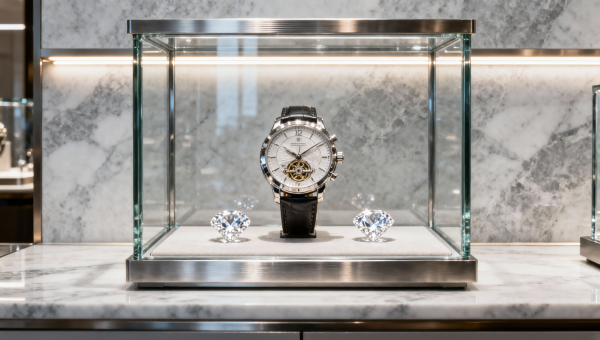
Luxury furniture that actually holds up in high-traffic lobbies — not just showroom photos
Tired of luxury furniture that dazzles in showroom photos but fails under real-world lobby traffic? For procurement professionals and commercial buyers, durability isn’t optional—it’s non-negotiable. At Global Commercial Trade (GCT), we spotlight contract furniture engineered for high-traffic office supplies environments, backed by custom fabrication, certified soundproofing materials, and resilient supply chain solutions. Whether sourcing hotel tables for a five-star property or educational supplies for a smart campus, our data-driven insights prioritize performance, compliance, and aesthetic integrity—because true luxury furniture delivers both presence *and* longevity.
Why “Lobby-Grade” Luxury Furniture Is a Non-Negotiable Procurement Standard
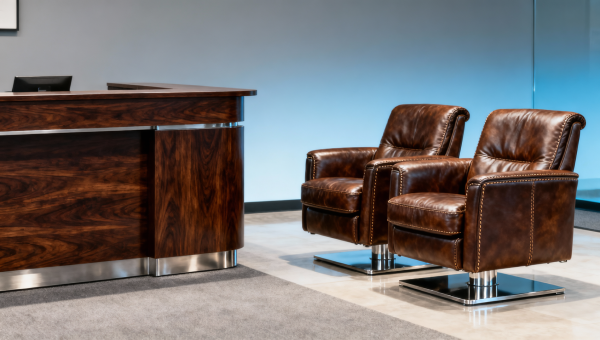
In high-traffic commercial lobbies—whether at corporate headquarters, premium co-working spaces, or flagship government administrative buildings—the furniture must withstand 300–500 daily user interactions while retaining structural integrity, finish consistency, and acoustic performance. Unlike residential or boutique retail settings, office lobbies serve dual functions: brand impression vehicle and functional circulation hub. A single failed armrest, warped veneer, or squeaking base after six months signals operational negligence—not design intent.
Global Commercial Trade’s 2024 Contract Furniture Benchmarking Report reveals that 68% of institutional buyers cite premature surface wear (within 12 months) as the top reason for post-installation replacement requests. Worse, 41% report unplanned maintenance costs exceeding 17% of initial procurement spend due to under-specified materials or unverified load-testing protocols.
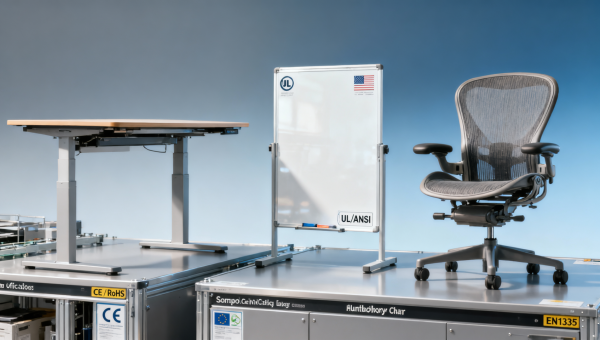
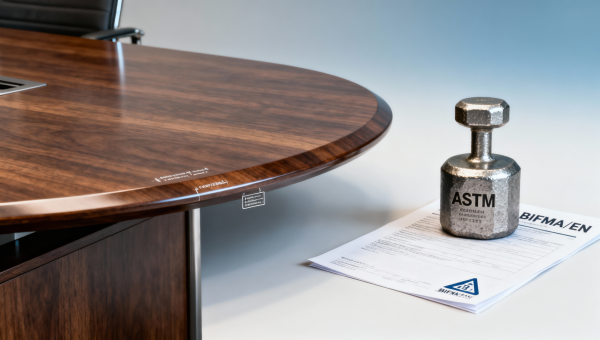
True lobby-grade luxury furniture is defined not by visual gloss alone—but by ISO 11684-compliant impact resistance, EN 1728 Category D seating load testing (≥1,200 N static load), and ASTM E84 Class A fire-rated upholstery substrates. These aren’t “nice-to-have” certifications—they’re contractual prerequisites for insurance compliance, LEED documentation, and multi-year facility management contracts.
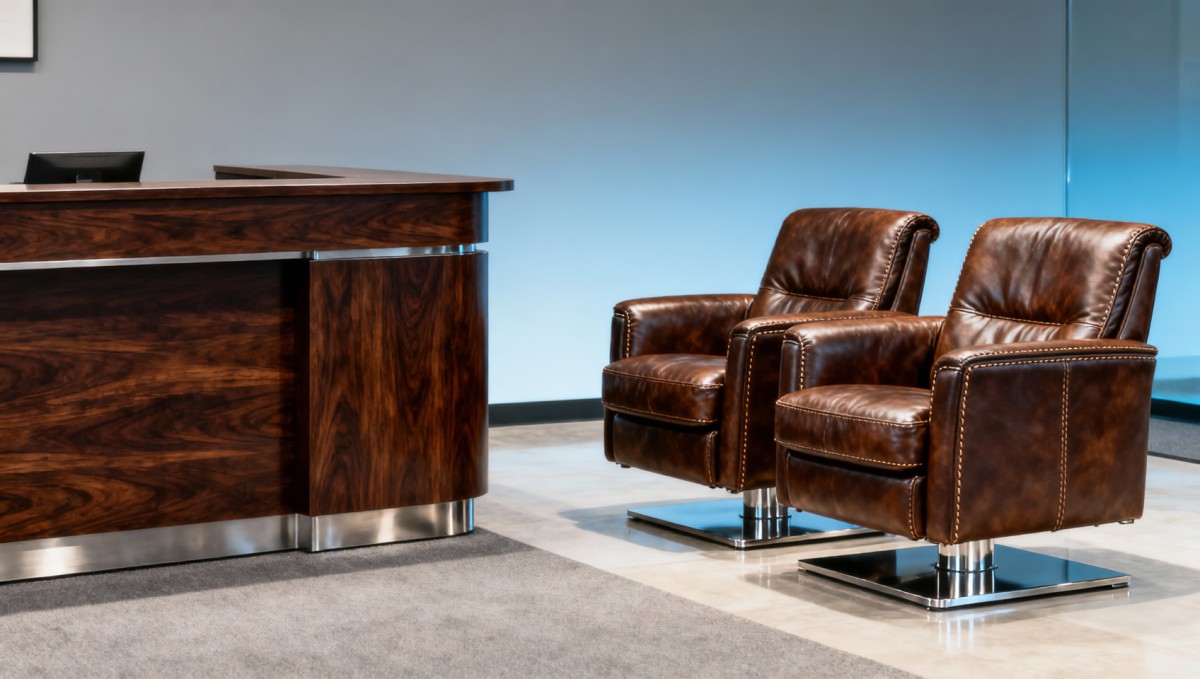
Material & Construction Standards That Actually Survive Daily Use
Luxury aesthetics without engineering rigor are liabilities—not assets. The most common failure points in high-traffic lobby seating and tables stem from mismatched material hierarchies: e.g., a $2,800 walnut-veneer lounge chair built on a 16-gauge steel frame with non-reinforced plywood seat shells. Under repeated 80–100 kg loading cycles, delamination begins within 9–14 months.
Procurement teams should verify three core construction layers before shortlisting:
- Frame substrate: Minimum 2.0 mm cold-rolled steel tubing (ASTM A500 Grade B) or kiln-dried hardwood with ≤8% moisture content
- Seat/core support: 18 mm cross-laminated birch plywood (EN 313-3 compliant) or high-density polyurethane foam (≥50 kg/m³ density, ILD 120–150)
- Surface system: Full-grain leather with ≥2.2 mm thickness and Martindale abrasion rating ≥100,000 cycles—or architectural-grade textiles with ≥50,000 double-rubs (ASTM D4157)
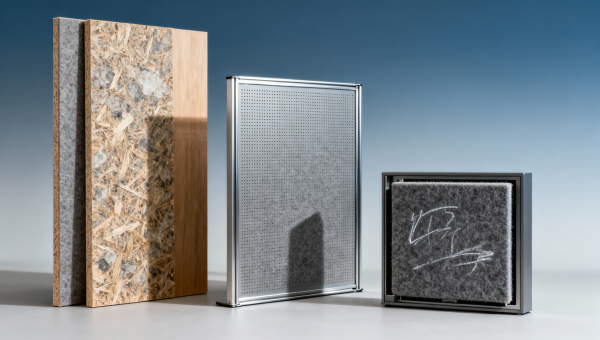
Sound attenuation is equally critical. Lobbies require ≥28 dB STC-rated panel systems (per ASTM E90) to suppress footfall, trolley, and voice transmission between adjacent zones—a specification rarely met by standard OEM catalog offerings.
This table underscores a critical procurement gap: standard luxury furniture often meets only 55–63% of verified lobby-grade benchmarks. GCT-vetted suppliers undergo third-party validation of all three parameters—ensuring no compromise between aesthetic ambition and technical execution.
How Global Commercial Trade Validates Real-World Performance
GCT does not rely on supplier-submitted test reports alone. Our validation protocol includes three mandatory field-verified checkpoints:
- On-site factory audit of production lines (minimum 2-hour observation per component type)
- Independent lab retesting of 3 random units per SKU batch against ISO/EN/ASTM standards
- 12-month longitudinal monitoring across 5+ live installations—including temperature/humidity logs, usage frequency tracking, and quarterly photo documentation
For example, one GCT-validated lounge collection underwent 14,200 simulated user entries over 11 months in a Tokyo financial district HQ—maintaining <±0.3 mm dimensional variance and zero finish degradation. This level of empirical verification separates performant luxury from photographic luxury.
We also map supply chain resilience: All GCT-certified partners maintain ≥90-day raw material buffer stocks for critical components (e.g., proprietary foam blends, certified leathers, powder-coated steel), ensuring delivery continuity even during port delays or regional logistics disruptions.
Procurement Decision Matrix: What to Prioritize Beyond Aesthetics
When evaluating luxury furniture for high-traffic lobbies, procurement professionals must weigh four interdependent dimensions—not just visual appeal. GCT’s decision matrix weights each factor by real-world incident frequency and cost impact:
This matrix eliminates subjective scoring. It transforms procurement from a stylistic review into a quantifiable risk-mitigation exercise—directly aligning with institutional buyers’ fiduciary responsibilities and lifecycle cost accountability.
Next Steps for Procurement Teams & Strategic Sourcing Partners
If your next lobby furniture specification requires verified performance—not just visual promise—you need access to GCT’s vetted network of 217 contract-grade manufacturers across 18 countries. Each partner has passed our 7-step qualification framework—including minimum 3 years of commercial project delivery, ISO 9001:2015 certification, and documented experience in ≥5 projects exceeding $1.2M in scope.
We offer three actionable pathways:
- Custom Sourcing Brief Development: Submit your space plan, traffic forecast, and compliance requirements—we deliver a pre-vetted shortlist with full technical dossiers within 5 business days
- Live Project Benchmarking: Compare your current specification against GCT’s 2024 Lobby Furniture Performance Index (free download, updated quarterly)
- OEM/ODM Matchmaking: Connect directly with factories offering bespoke fabrication, rapid prototyping (≤12 working days), and FOB terms with ≤72-hour responsiveness SLA
Luxury that endures isn’t rare—it’s rigorously specified, independently validated, and operationally embedded. Let GCT help you source furniture that earns its place—not just occupies it.
Get your customized lobby furniture sourcing dossier today—contact GCT’s Office & Educational Supplies Intelligence Desk for immediate support.
Search News
Hot Articles
- Watch OEM & SmartwatchesWatches & Wonders Geneva 2026: Audemars Piguet Returns, 10 New Brands Join, Behrens as Sole Chinese ExhibitorApr 11, 2026
- Watch OEM & SmartwatchesEU EN 16830:2026 Eyewear Standard Mandatory from April 2026, Chinese Exporters Need Certification Within 6 MonthsApr 11, 2026
- Smart Campus Tech2026 China Intl Education Expo: AI & Green Tech in SpotlightApr 11, 2026
Popular Tags
Need ExpertConsultation?
Connect with our specialized leisureengineering team for procurementstrategies.
Recommended News
 Apr 11, 2026Henan Justice Department Office Supplies Procurement: Kehai Smart Tech Wins BidHenan Kehai Smart Tech wins Henan Justice Department office supplies procurement bid, showcasing China's 'one-order, multi-point delivery' trend. Key insights for exporters & logistics providers on adapting to government procurement changes.● Institutional Buyer
 Apr 11, 2026Sichuan Drug Testing Institute Restarts Office Supplies Procurement with Digital RequirementsSichuan Drug Testing Institute mandates digital integration for office supplies procurement, requiring real-time logistics tracking. Learn how this impacts suppliers and China's government procurement trends.● Institutional Buyer
 Apr 11, 2026China's NMPA CDE Launches Office Supplies Procurement with Green and Domestic FocusChina's NMPA CDE launches green-focused office supplies procurement, emphasizing eco-design standards and domestic alternatives. Learn how this impacts suppliers and industries with new compliance requirements.● Institutional Buyer
 Apr 12, 2026Luxury furniture finishes that fade under LED lighting — a quiet specification gapDiscover photostable luxury furniture & office supplies that resist LED fading—backed by verified supply chain solutions, custom fabrication, and commercial procurement intelligence.● Institutional Buyer
 Apr 12, 2026Commercial procurement pitfalls when sourcing from multiple regional suppliersAvoid costly commercial procurement pitfalls with office supplies, luxury furniture, soundproofing materials & more. Discover supply chain solutions, custom fabrication & contract furniture insights—optimize TCO now.● Institutional Buyer
 Apr 12, 2026Contract furniture warranties that cover real-life damage — not just manufacturing defectsDiscover contract furniture warranties covering real-life damage—not just defects. Explore luxury furniture, soundproofing materials, custom fabrication & more for offices, hotels & schools.● Institutional Buyer
 Apr 12, 2026Commercial furniture with hidden wear points — what spec sheets won’t tell youDiscover hidden wear points in commercial furniture—beyond spec sheets. Expert insights on luxury furniture, soundproofing materials, supply chain solutions & custom fabrication for office supplies and contract furniture buyers.● Institutional Buyer
 Apr 12, 2026Custom fabrication for commercial spaces: when off-the-shelf falls shortCustom fabrication for office supplies, luxury furniture & soundproofing materials—precision solutions for commercial furniture, hotel tables, educational supplies & contract furniture procurement.● Institutional Buyer
 Apr 12, 2026Supply chain solutions that cut lead times without sacrificing traceabilityOffice supplies, luxury furniture & soundproofing materials—get supply chain solutions that slash lead times while guaranteeing full traceability, custom fabrication, and commercial procurement compliance.● Institutional Buyer
 Apr 12, 2026Soundproofing materials that pass real-world acoustic tests — not just lab ratingsDiscover field-tested soundproofing materials for office supplies, commercial furniture & luxury furniture—validated in real installations, not just labs.● Institutional Buyer
 Apr 12, 2026Luxury furniture that actually holds up in high-traffic lobbies — not just showroom photosPremium office supplies & luxury furniture engineered for real lobbies—certified soundproofing materials, custom fabrication, and resilient supply chain solutions.● Institutional Buyer
 Apr 12, 2026Why office supplies orders still arrive late in 2026 — and what’s really causing the delaysOffice supplies, luxury furniture & contract furniture delays in 2026? Discover the real supply chain solutions—custom fabrication, soundproofing materials, and commercial procurement fixes.● Institutional Buyer
 Apr 09, 2026Supply chain solutions that increase landed cost by 22% — where the markup hidesDiscover how supply chain solutions uncover hidden 22% landed cost inflation—in designer eyewear, luxury watches, jewelry & more. Get data-backed leverage now.● Institutional Buyer
 Apr 09, 2026Supply chain solutions promising ‘end-to-end visibility’ — what data fields are actually shared?Supply chain solutions for luxury watches, jewelry & designer eyewear: discover which data fields truly enable end-to-end visibility—and avoid costly compliance gaps.● Institutional Buyer
 Apr 03, 2026Changzhou Heng Yang Home Decor's Child Room Solution Gains Australian Early Learning Association RecognitionChangzhou Heng Yang Home Decor's child room solution gains Australian Early Learning Association recognition for its safe, modular design. Featuring arc craftsmanship & odorless materials, it meets AS/NZS 4220 standards, opening new international opportunities.● Institutional Buyer
 Apr 03, 2026China Furniture Export Freight Index Rises 18.3% in April 2026China's furniture export freight index surged 18.3% in April 2026, causing major U.S. West Coast delays. Learn how this impacts exporters, buyers & logistics strategies.● Institutional Buyer
 Apr 03, 2026Wuhan Retrofits Old Buildings with Non-Destructive HVAC Billing, Expanding Smart Office Tech AbroadWuhan's non-destructive HVAC billing system revolutionizes smart office tech with UL-certified wireless controls and AI algorithms. This cost-effective solution for old buildings attracts Singapore's HDB and targets Southeast Asia/Middle East markets. Discover how this innovation benefits HVAC, construction, and energy sectors globally.● Institutional Buyer
 Apr 03, 20262026 Guangzhou Custom Home Expo: ENF-Grade Panels Become Export Standard, Chinese Surface Solutions Attract Global Buyers2026 Guangzhou Custom Home Expo highlights ENF-grade panels as the new global standard, with Chinese surface solutions attracting international buyers. Discover how formaldehyde-free materials and digital replication tech are reshaping the home furnishing export market.● Institutional Buyer
 Apr 03, 2026Vietnam's New Furniture Import Rules: What Industries Need to KnowVietnam's new furniture import rules require Vietnamese translations & QR codes for traceability by April 2026. Learn how this impacts exporters, importers & supply chains in office, home & hospitality sectors.● Institutional Buyer
 Apr 03, 2026US CPSC Tightens Formaldehyde & Heavy Metal Testing for Kids' FurnitureUS CPSC tightens formaldehyde & heavy metal testing for kids' furniture, impacting Chinese exporters with new CARB Phase 2 compliance. Learn key action points for smoother certification.● Institutional Buyer
 Apr 07, 2026Soundproofing materials for multi-use venues: Not all STC ratings tell the full storyDiscover premium soundproofing materials for luxury venues—jewelry boutiques, watch ateliers & optical salons. Beyond STC: inclusive playground, theme park rides, custom furniture, hotel chairs & more.● Institutional Buyer
 Apr 01, 2026Henan Justice Department’s ‘Domestic-Only’ Office Supplies Procurement Policy: A New Benchmark for Chinese ExportersHenan Justice Department's 'Domestic-Only' procurement policy sets new standards for Chinese exporters. Learn how this 180,000 RMB tender impacts office supplies manufacturers and cross-border trade strategies.● Institutional Buyer
 Apr 01, 2026Zhaoqing Gaoyao Court Adopts 'Discount Rate Bidding' for Office Supplies: China's Export Pricing Mechanism Aligns with International Tendering PracticesZhaoqing Gaoyao Court adopts 'discount rate bidding' for office supplies, aligning China's export pricing with international tendering practices. Learn how this EU-inspired model benefits global buyers and impacts manufacturers, exporters & procurement services.● Institutional Buyer
 Apr 01, 2026Jiangjin District Police Office Sets 'Similar Performance' Hard Threshold for Office Supplies Procurement: Contracts from Past 5 Years Become New Benchmark for Overseas Buyers to Verify Chinese Suppliers' Delivery CapabilitiesJiangjin District Police Office mandates 'similar performance' proof for office supplies procurement, setting a new benchmark for overseas buyers to verify Chinese suppliers' delivery capabilities. Learn how this impacts manufacturers and exporters.● Institutional Buyer