Hotel Chairs: What Causes Wobbling, Cracks, and Early Wear?
From wobbling frames to cracked joints and early surface wear, hotel chairs often reveal deeper issues in material quality, design, and daily use. For buyers comparing hotel furniture, custom furniture, hotel tables, hotel beds, and even luxury furniture for large-scale projects, understanding these failure points is essential to making smarter sourcing decisions and protecting long-term commercial value.
For most commercial buyers, the key question is not simply why a hotel chair fails, but what that failure says about supplier quality, lifecycle cost, guest experience, and replacement risk. In practice, wobbling, cracks, and premature wear are rarely isolated defects. They usually point to weaknesses in frame engineering, joinery, finish systems, material selection, or the mismatch between product design and actual hospitality use conditions.
If you are sourcing for hotels, resorts, serviced apartments, restaurants, banquet venues, or distribution channels, the most useful approach is to evaluate chairs not as decorative items, but as high-frequency commercial assets. A chair that looks attractive in a showroom may still underperform on the floor if its structure, hardware, upholstery, and surface treatment are not built for repeated use, movement, stacking, cleaning, and varying guest weights. That is where better specification and supplier assessment make the difference.
What do wobbling, cracks, and early wear really mean in hotel chair sourcing?
These three visible problems often signal three different categories of failure.
Wobbling usually indicates instability in the frame, weak joints, poor machining precision, inadequate hardware retention, or uneven leg alignment. In hospitality environments, even a small wobble quickly becomes a guest complaint because chairs are moved constantly across hard flooring, carpet transitions, banquet spaces, and dining areas.
Cracks often point to stress concentration, low-grade timber, incorrect moisture control, brittle weld areas, poor casting quality, or under-engineered connection points. Cracks are especially serious because they can progress from cosmetic issues into safety risks and full structural failure.
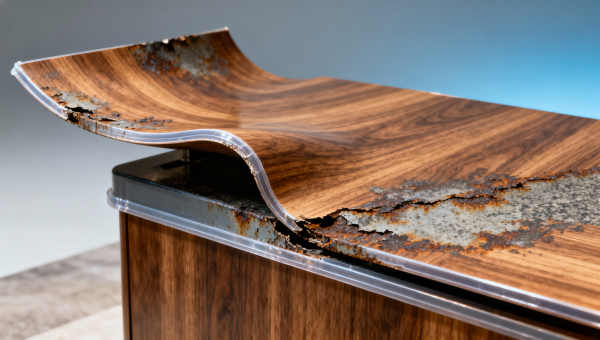
Early wear is typically linked to low-performance finishes, weak edge protection, thin veneers, poor upholstery abrasion resistance, substandard foam density, or cleaning chemicals that the chair was never designed to withstand. In a hotel setting, early wear damages brand perception just as much as it increases replacement frequency.
For procurement teams and commercial evaluators, these issues matter because they affect more than maintenance budgets. They influence guest satisfaction, property appearance, health and safety exposure, brand consistency, and total cost of ownership.
Why do hotel chairs start wobbling sooner than expected?
Wobbling is one of the earliest and most common complaints in hotel seating. It usually develops when repeated movement loosens the structural system faster than expected. The root cause is often a combination of design choices and production shortcuts.
The most common causes include:
- Weak joinery in wood chairs: dowels, screws, staples, or glue lines may be insufficient for commercial-duty use if not properly engineered.
- Poor weld quality in metal chairs: inconsistent weld penetration or weak weld points reduce long-term rigidity.
- Insufficient corner blocking or bracing: chairs without reinforcement at key stress points are more likely to loosen under side loads.
- Leg imbalance from poor manufacturing tolerance: if legs are not cut, drilled, or assembled consistently, instability appears immediately or after light wear.
- Loose fasteners and inserts: repeated guest use can quickly enlarge poorly fitted screw holes or threaded insert positions.
- Floor glide failure: worn or mismatched glides can create the impression of wobble, but they may also accelerate actual structural instability.
In hotels, chair stress rarely occurs in a perfectly vertical direction. Guests lean back, twist sideways, drag chairs instead of lifting them, and use them in ways that create torque on joints. A chair that passes a basic showroom test may still fail quickly if it was not designed for these real-world movement patterns.
For buyers, the takeaway is clear: ask not only about materials, but about joint construction, load testing, lateral stability, and manufacturing tolerance control.
What causes cracks in hotel chair frames and components?
Cracks are often blamed on rough use, but in many cases the root problem begins much earlier in material preparation or design. A well-made hotel chair should tolerate intensive daily use without cracking under normal commercial conditions.
Typical causes of cracking include:
- Improper wood moisture content: wood that is too wet or too dry during production can shrink, split, or deform after installation.
- Low-grade or poorly selected timber: knots, unstable grain direction, or internal defects weaken structural components.
- Thin cross-sections in high-stress areas: arms, back joints, and leg intersections often crack when aesthetics override structural logic.
- Weak metal tube thickness: lightweight frames may dent, fatigue, or crack under repeated dynamic loading.
- Stress from stacking or transport: banquet and event chairs are especially vulnerable if stack design and packaging are inadequate.
- Brittle finishes or laminates: what appears to be a “crack” may begin as a finish split caused by substrate movement or poor adhesion.
Cracks in upholstered hotel chairs may also originate below the visible surface. For example, a seat panel can fracture internally, causing a loose feel before a visible split appears. Similarly, hidden frame cracks may only become obvious after upholstery tension changes or foam compression reveals the defect.
This is why buyers should review not only the appearance sample, but also section details, frame drawings, and test evidence for critical stress areas.
Why does surface wear happen so quickly in hospitality environments?
Early wear is one of the most misunderstood chair problems because buyers often focus on structure first and appearance second. In hospitality, however, visual durability is commercial durability. Guests notice scratches, fading, peeling upholstery, chipped edges, and flattened seats long before a chair completely fails.
Surface wear usually comes from one or more of the following:
- Low abrasion resistance upholstery: fabrics or faux leathers that are not rated for hospitality traffic wear out quickly.
- Inadequate finish hardness: wood and metal surfaces may scratch, chip, or dull under frequent contact.
- Poor edge detailing: exposed edges on veneer, laminate, or upholstery are common wear points.
- Low-density foam: cushions lose shape early, making the chair look old even if the frame remains sound.
- Cleaning chemical incompatibility: disinfectants and commercial cleaning agents can break down coatings and upholstery if specifications are not matched.
- Improper use environment: UV exposure, humidity swings, poolside conditions, and banquet storage all accelerate wear if the chair is not designed for them.
For hotels, appearance degradation can be just as costly as physical breakage. Once chairs look worn, properties may replace them to protect guest perception even if they are still technically usable. That drives up lifecycle cost and creates inconsistency across rooms or venues.
Which chair design and material choices hold up better in hotel projects?
The best-performing hotel chairs are not always the most expensive or the most luxurious-looking. They are the ones whose design, material, and finish are aligned with the exact use case.
When comparing hotel furniture suppliers, buyers should assess chairs based on application:
- Guest room chairs: should balance aesthetics, comfort, and moderate-use durability, with attention to stain resistance and finish quality.
- Restaurant dining chairs: need high structural stability, frequent cleaning resistance, and durable seat upholstery.
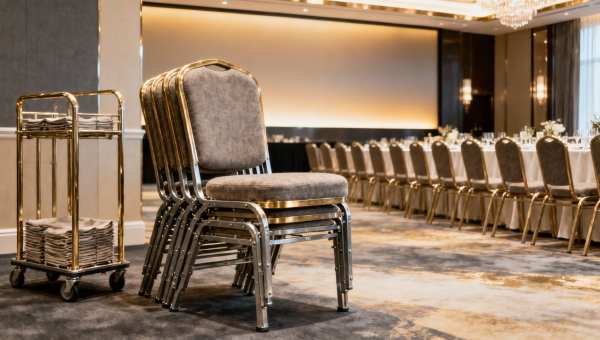
- Banquet chairs: require stackability, impact protection, reinforced frames, and consistent batch quality.
- Lobby and lounge seating: should prioritize premium appearance retention, stronger upholstery specifications, and robust internal framing.
- Outdoor or semi-outdoor hospitality chairs: must be engineered specifically for moisture, UV, and corrosion exposure.
In terms of materials:
- Solid hardwood can perform very well if moisture is controlled and joinery is properly engineered.
- Metal frames are often strong for high-traffic hospitality use, but weld quality, coating system, and tube thickness matter greatly.
- Plywood and engineered board components can be suitable in some upholstered designs, but only when thickness, density, and edge protection are appropriate.
- Commercial-grade fabrics and vinyls should be selected based on abrasion, cleanability, fire compliance, and stain performance.
For custom furniture and luxury furniture projects, aesthetics should never be approved independently from durability specifications. A beautiful custom profile with weak structure can become a warranty issue very quickly in a live hotel environment.
How should buyers evaluate supplier quality before placing a hotel chair order?
This is where many sourcing mistakes can be prevented. Buyers should move beyond catalog images and sample-room impressions and ask more technical questions during evaluation.
Useful checkpoints include:
- Frame construction details: request information on joinery, reinforcements, weld process, tube thickness, and stress-point design.
- Material specifications: confirm wood species, moisture control, hardware grade, foam density, upholstery performance, and finish system.
- Testing standards: ask whether the chair has been tested to relevant commercial seating standards for static load, fatigue, and stability.
- Tolerance control: review how the factory manages dimensional consistency across bulk production.
- Quality assurance process: check incoming material inspection, in-process inspection, final inspection, and packaging controls.
- Project references: ask for completed hospitality installations, especially those with similar usage intensity.
- Spare parts and after-sales support: verify whether glides, upholstery panels, and hardware can be replaced efficiently.
Whenever possible, commercial buyers should also conduct a practical review of pre-production samples. Sit, lean, drag, stack, inspect underside components, and examine how the chair behaves after repeated handling. A visually attractive sample may reveal hidden weaknesses during even simple physical checks.
What questions should procurement teams ask to reduce replacement risk?
For procurement personnel, business evaluators, and distributors, the right questions can expose whether a supplier truly understands commercial hospitality use.
Ask questions such as:
- What are the most common failure points for this chair model, and how have they been addressed?
- What commercial projects has this model or similar construction been used in?
- What load, fatigue, and stability tests has it passed?
- What is the upholstery abrasion rating and cleanability performance?
- How does the finish perform against alcohol, disinfectants, and routine cleaning chemicals?
- Can the supplier provide spare glides, touch-up materials, or replacement components?
- How are chairs packaged to prevent transit looseness, surface damage, or stacking pressure cracks?
- What warranty terms apply specifically to frame integrity, finish wear, and upholstery performance?
These questions shift the discussion from price alone to long-term asset performance. That is especially important in hotel furniture projects where chairs are purchased in quantity and replacement affects not only budget but also operational consistency.
Why total cost of ownership matters more than initial unit price
A lower-priced chair can become the more expensive option if it begins wobbling after months of use, develops cracks during the first operating year, or shows visible wear long before the hotel plans a refurbishment cycle.
When comparing offers, buyers should consider:
- Expected service life under real hospitality use
- Maintenance and repair frequency
- Replacement logistics across multiple properties or venues
- Guest perception impact when chairs look unstable or worn
- Brand image loss in premium or luxury environments
- Operational disruption caused by inconsistent furniture condition
This is particularly relevant for procurement teams sourcing not only hotel chairs, but broader hotel furniture packages that may include hotel tables, hotel beds, lounge seating, and custom furniture solutions. Weak quality control in one category often signals broader supplier risk across the entire package.
How to make a smarter hotel chair sourcing decision
The most reliable hotel chair is usually the result of disciplined specification, honest supplier evaluation, and a clear understanding of use conditions. Wobbling, cracks, and early wear are not random. They are predictable outcomes when commercial seating is underbuilt, improperly finished, or poorly matched to the environment.
For information researchers, procurement teams, business evaluators, and channel partners, the practical sourcing principle is simple: judge hotel chairs by structural logic, material suitability, test credibility, and lifecycle appearance retention, not by styling alone. A chair that performs well in hospitality should remain stable, resist cracking, and maintain its visual quality through repeated guest use, cleaning, movement, and operational pressure.
In summary, wobbling usually points to joint or stability problems, cracks suggest material or structural weakness, and early wear reveals poor finish, upholstery, or environmental suitability. Buyers who investigate these issues early can better compare suppliers, reduce replacement risk, and protect the long-term value of hotel furniture investments.
Search News
Hot Articles
- Stage Lighting & Truss2026 FIBA Women's World Cup Draw Sparks LED Timing Screen Upgrade DemandApr 28, 2026
- Pro Stage AudioKenyan Marathon WR Break Drives Demand for Timing Chips & Track SensorsApr 28, 2026
- Smart Campus Tech2026 Shanghai Smart Campus Expo: VR Teaching Devices Gain ITU & ISO/IEC 23053 CertificationApr 28, 2026
Popular Tags
Need ExpertConsultation?
Connect with our specialized leisureengineering team for procurementstrategies.
Recommended News
 Apr 28, 2026Why Hotel Tables Often Fail at Edges, Bases, and Surface FinishHotel tables often fail at edges, bases, and surface finish. Compare hotel furniture, custom furniture, luxury furniture, hotel chairs, hotel beds, and hotel equipment before you buy.● Hospitality Sourcing Dir
 Apr 28, 2026Hotel Tables With Stone Tops or Wood Tops: Which Performs Better?Hotel tables with stone tops or wood tops? Compare ROI, durability, and style across hotel furniture, custom furniture, hotel chairs, and hotel beds to choose smarter.● Hospitality Sourcing Dir
 Apr 28, 2026The Best Hotel Chairs Balance Comfort, Stackability, and DurabilityHotel chairs that balance comfort, stackability, and durability. Explore hotel furniture, custom furniture, hotel tables, hotel beds, and luxury furniture solutions for hospitality buyers.● Hospitality Sourcing Dir
 Apr 28, 2026Hotel Chairs: What Causes Wobbling, Cracks, and Early Wear?Hotel chairs buying guide: learn what causes wobbling, cracks, and early wear, and how to compare hotel furniture, custom furniture, hotel tables, hotel beds, and luxury furniture for lasting value.● Hospitality Sourcing Dir
 Apr 21, 2026Hotel tables that stay stable on uneven flooringHotel tables that stay stable on uneven flooring: a practical guide for hospitality procurement covering hotel furniture, commercial furniture, luxury furniture, and specs that reduce wobble, risk, and maintenance.● Hospitality Sourcing Dir
 Apr 21, 2026Round or rectangular hotel tables for tighter layouts?Hotel tables for tight layouts: compare round vs rectangular hotel furniture for better flow, seating, and hospitality procurement decisions. Find the best fit for compact hotel room furniture.● Hospitality Sourcing Dir
 Apr 21, 2026Why hotel chairs fail early in banquet spacesHotel chairs in banquet spaces fail early due to stacking, impact, and weak specs. Learn how hotel furniture and commercial furniture choices cut costs and improve hospitality procurement.● Hospitality Sourcing Dir
 Apr 21, 2026Hotel chairs that look elegant and still hold upHotel chairs that blend luxury furniture appeal with commercial furniture durability. Discover how hotel furniture works with hotel tables, hotel desks, and hotel room furniture for smarter hospitality procurement.● Hospitality Sourcing Dir
 Apr 23, 2026How to Choose Commercial Furniture That LastsCommercial furniture buying guide for hotels, schools, and leisure venues—covering hotel tables, playground safety, sensory playgrounds, and durable amusement equipment.● Hospitality Sourcing Dir
 Apr 23, 2026When Commercial Furniture Fails in High-Traffic VenuesLearn why commercial furniture fails in busy venues and how to choose safer hotel tables, playground borders, sensory playground solutions, amusement equipment, and hotel equipment that last.● Hospitality Sourcing Dir
 Apr 20, 2026Hotel tables with edge seams that trap moisture and moldHotel tables, park benches & commercial furniture with mold-trapping edge seams? Discover seamless, moisture-resistant hotel furniture solutions—luxury, custom, and compliant.● Hospitality Sourcing Dir
 Apr 20, 2026Hotel chairs rated for 100,000 cycles—but tested how?Discover how top hotel chairs, park benches & commercial furniture are truly tested for 100,000 cycles—backed by BIFMA, EN & GB/T standards. Get verified luxury furniture insights.● Hospitality Sourcing Dir
 Apr 19, 2026Hotel tables that warp under daily cleaning chemicalsHotel tables, hotel chairs, hotel beds & park benches—discover why chemical warping fails luxury furniture & commercial furniture specs. Get expert OEM insights on durable hotel furniture & equipment.● Hospitality Sourcing Dir
 Apr 19, 2026Hotel chairs with hidden wear patterns no one tests forHotel chairs, luxury furniture & commercial furniture buyers: uncover hidden wear patterns in hotel chairs, hotel beds, and custom furniture—before failure hits ROI.● Hospitality Sourcing Dir
 Apr 18, 2026Custom furniture quoting errors—how small measurement gaps become big cost overrunsAvoid costly overruns: Fix custom furniture quoting errors before they derail hotel beds, theme park rides, playground structures & soundproofing materials.● Hospitality Sourcing Dir
 Apr 17, 2026Restaurant furniture that handles spills, scratches, and constant turnoverCommercial furniture built for spills, scratches & turnover—ideal for playground borders, sensory playgrounds, hotel tables, amusement equipment & more.● Hospitality Sourcing Dir
 Apr 16, 2026Custom fabrication for restaurant furniture: When ‘made-to-order’ becomes ‘wait-for-3-months’Custom fabrication for hotel furniture, designer eyewear & jewelry—solve supply chain delays with OEM manufacturing expertise. Get on-time, cross-sector solutions.● Hospitality Sourcing Dir
 Apr 15, 2026Restaurant furniture durability tests don’t match real dining room stressCommercial furniture, playground safety & amusement equipment tested for real-world stress—not just labs. Discover field-validated durability for hotel tables, sensory playgrounds, climbers & more.● Hospitality Sourcing Dir
 Apr 12, 2026Custom furniture for play spaces: When 'bespoke' means higher liability, not better fitOutdoor playground & inclusive playground design demands caution: custom furniture, playground swings, and theme park rides raise liability—discover safer, certified alternatives.● Hospitality Sourcing Dir
 Apr 12, 2026Custom furniture lead times ballooning in 2026—what’s really causing the 14-week delaysOutdoor playground, inclusive playground, and theme park rides face 14-week custom furniture delays in 2026—discover root causes & proven mitigation strategies now.● Hospitality Sourcing Dir
 Apr 07, 2026Custom furniture lead times in 2026: Why ‘standard’ finishes now take longer than premiumCustom furniture, outdoor playground & hotel furniture lead times surged in 2026—discover why standard finishes now lag premium. Get data-backed sourcing strategies for inclusive playground, soundproofing materials & instrument cables.● Hospitality Sourcing Dir
 Apr 04, 2026Restaurant Furniture Buyers Are Asking Office Supplies Factories for Modular Desk Systems — And Getting YesTop office supplies manufacturer & OEM supplier delivers NSF/BIFMA-certified modular desk systems for restaurants—fast, compliant, factory-direct.● Hospitality Sourcing Dir
 Apr 01, 2026What happens to hotel tables when placed on floating floors—real case data from 2026Discover how hotel tables, chairs, desks & sofas interact with soundproofing materials on floating floors—real 2026 data reveals critical acoustic & stability insights for hospitality furniture buyers.● Hospitality Sourcing Dir
 Mar 31, 2026Hotel tables that don’t rattle—what makes the difference in real roomsDiscover hotel tables engineered with soundproofing materials & precision construction—eliminate rattling, elevate guest experience. Premium hotel furniture, desks, chairs, sofas & more.● Hospitality Sourcing Dir