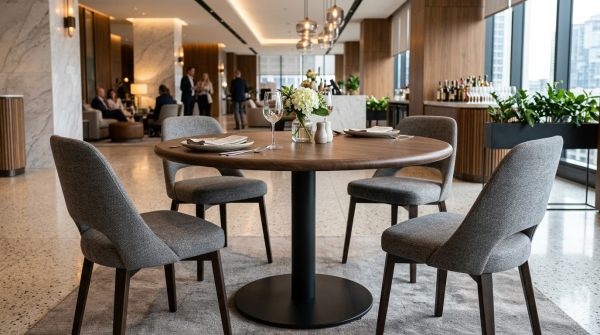
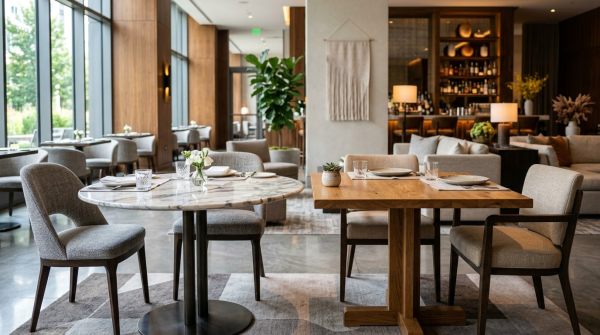
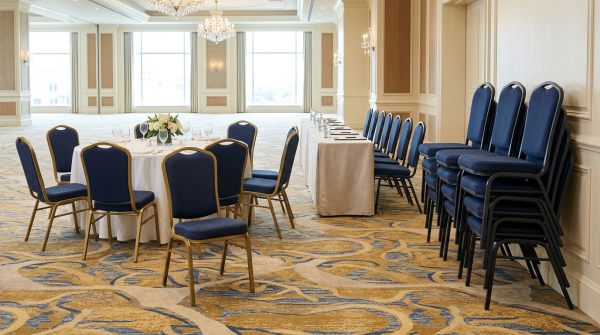
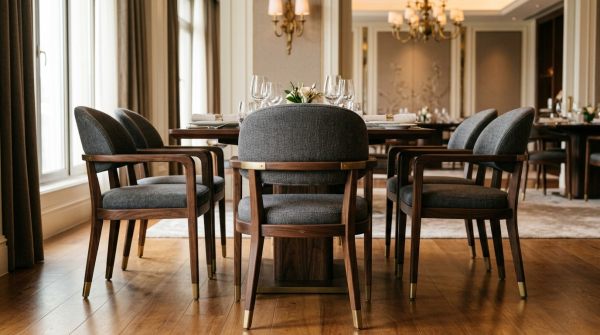
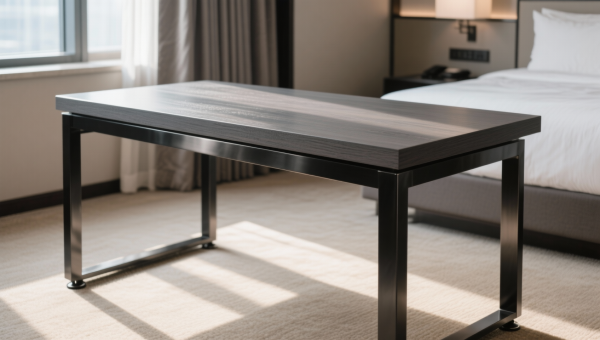
Why Hotel Tables Often Fail at Edges, Bases, and Surface Finish
In hospitality and commercial projects, poorly made hotel tables often fail first at the edges, bases, and surface finish—creating costly issues for buyers comparing hotel furniture, custom furniture, and luxury furniture. For procurement teams sourcing hotel chairs, hotel beds, park benches, hotel equipment, or even adjacent commercial categories like amusement equipment, understanding these failure points is essential to selecting durable, brand-aligned solutions.
For buyers, dealers, and commercial evaluators, a hotel table is rarely just a table. It is a high-touch asset exposed to luggage impact, cleaning chemicals, food service, frequent rearrangement, and daily guest contact. When failure begins at the edge, the base, or the finish, the problem quickly becomes visible to guests and expensive for operators.
This matters across furniture and decoration projects because hotel tables sit at the intersection of aesthetics, maintenance cost, brand positioning, and lifecycle performance. A table that looks refined on day 1 but chips, wobbles, or stains within 6–12 months can disrupt the perceived quality of a lobby, guestroom, restaurant, lounge, or meeting area.
For B2B sourcing teams, the smarter question is not only which table style matches a concept board, but also which construction details will survive 3–5 years of commercial use with manageable service costs. That is where edge design, base engineering, and surface finish specifications become practical procurement criteria rather than decorative details.
Why table edges fail first in commercial hospitality use
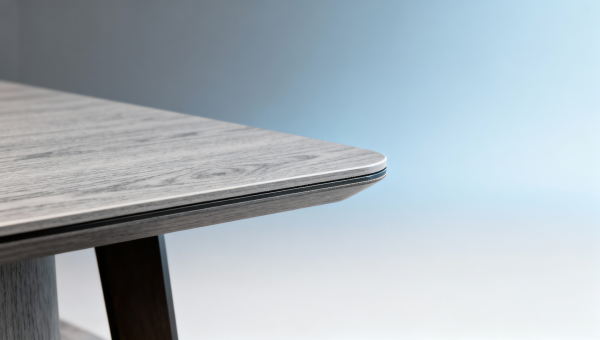
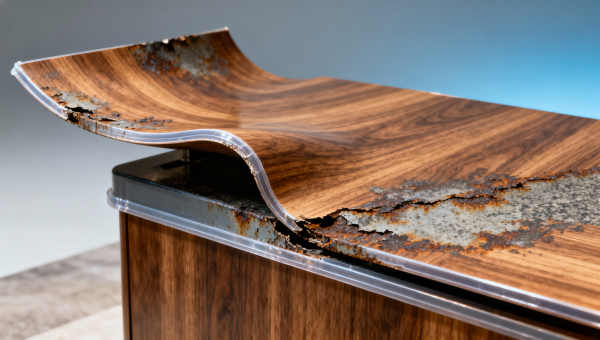
Edges are the most exposed part of a hotel table. They absorb knocks from suitcases, housekeeping carts, serving trays, stackable seating, and guest traffic. In many mid-range and poorly specified products, damage appears first within the outer 5–20 mm of the top, especially on dining tables, bedside tables, and occasional tables used in high-turnover zones.
The failure pattern usually starts with chipping, delamination, or veneer lifting. Sharp edge profiles are visually attractive in renderings, but in actual operation they are more vulnerable than eased, bullnose, or slightly radiused edges. A radius of 2–5 mm often performs better than a knife edge because it reduces direct point impact and helps finishes wrap more consistently.
Material mismatch is another common cause. A decorative veneer bonded over a weak substrate may perform adequately in low-use residential settings, but under hotel conditions the bond line can open after repeated humidity change, cleaning cycles, and side impact. Tables used near windows, buffet lines, or semi-outdoor hospitality spaces face even higher stress.
Buyers comparing custom furniture and luxury furniture should therefore examine edge construction as carefully as visible color or shape. Edge banding thickness, corner treatment, substrate density, adhesive selection, and finish overlap all influence service life. A premium look without edge durability usually leads to early refurbishment, guest complaints, or replacement orders.
Common edge failure mechanisms
In hotel furniture procurement, edge problems often come from four technical weaknesses rather than one single defect. These are usually detectable during sample review if the buyer asks the right questions and inspects cut sections, corner profiles, and test pieces instead of only approving finish swatches.
- Thin edge banding below about 1 mm may crack or peel faster in heavy-use food and beverage areas.
- Low-density substrate can crumble at corners after repeated bumping, making repairs difficult.
- Inconsistent adhesive application creates localized lifting, especially in humid conditions above normal indoor control ranges.
- Overly sharp corner geometry concentrates impact and accelerates visible damage in the first year of use.
What procurement teams should inspect during sampling
A practical sample inspection should include visual review, hand pressure checks, and corner impact sensitivity review. If a project includes 50, 100, or 300 tables across guest rooms and public areas, even a small edge weakness can scale into significant after-sales workload for the operator and the supplier network.
The table below summarizes edge-related decision points that matter during furniture evaluation for hotels, serviced apartments, resorts, and mixed-use commercial projects.
The key takeaway is simple: an elegant edge detail should not be approved only for appearance. In hotel furniture sourcing, edge geometry and build-up are early indicators of whether a table can hold its visual standard over thousands of guest interactions.
Why unstable bases create operational and safety problems
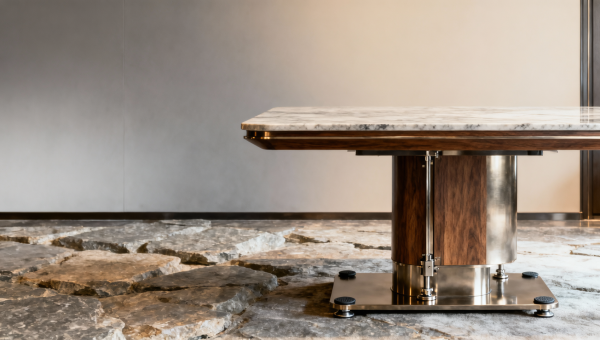
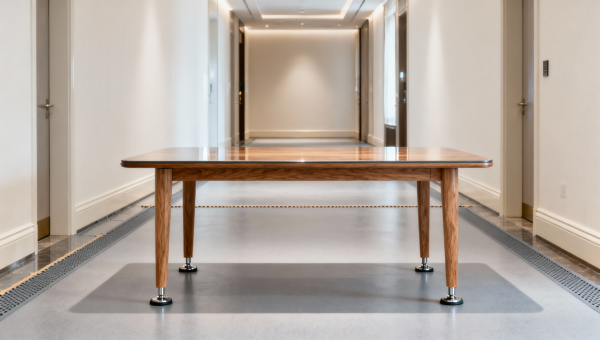
A hotel table base is the structural anchor of the entire unit, yet it is often under-specified during design review. Buyers may focus on top finish and decorative style, while ignoring weld quality, joinery strength, fastener design, and floor-leveling capability. As a result, wobble becomes one of the most frequent complaints in restaurants, lounges, meeting rooms, and guest suites.
Base failure is not limited to collapse. In commercial settings, the more common issue is progressive instability. After 3–9 months of movement, cleaning, and guest use, screws loosen, glides wear, metal plates distort, or the center of gravity proves inadequate for the top size. A table can still stand, yet feel poor quality every time a guest places a cup or laptop on it.
This is especially critical for custom furniture projects, where design-led forms may conflict with stability. Slim pedestal bases, oversized marble-look tops, mixed-material constructions, and sculptural legs can work well, but only when engineering is aligned with actual loading conditions. For hospitality use, decorative ambition must be balanced with structural logic.
Procurement teams should also remember that floor conditions vary. Stone floors, carpet, timber flooring, and outdoor-adjacent surfaces each influence stability. Adjustable glides, anti-loosening hardware, and proper weight distribution can significantly reduce service calls. A well-designed base should tolerate frequent repositioning, not just static showroom display.
Base designs that commonly underperform
Not every visually attractive base is suitable for hospitality use. The risk increases when top dimensions, expected load, and movement frequency are not reviewed together. In banquet, restaurant, and multi-purpose areas, tables may be moved several times per week, which accelerates stress on fasteners and joints.
- Single-column bases under wide tops may rock if the footprint is too narrow relative to tabletop size.
- Decorative metal frames with thin wall sections may deform under side load or repeated dragging.
- Wooden leg assemblies without strong corner blocks can loosen after seasonal humidity changes.
- Knock-down designs save freight volume, but poor connector systems can shorten lifecycle stability.
Recommended base evaluation criteria
A practical procurement review should include loading simulation, leveling assessment, and repeated movement checks. For projects involving hotel chairs, side tables, dining tables, and mixed-use public furniture packages, these evaluations help reduce inconsistent performance across different room types and operating zones.
The following comparison table can help buyers, distributors, and project managers identify which base features deserve closer attention before final order confirmation.
The most reliable sourcing approach is to evaluate the base as a working system rather than a decorative component. A stable base improves guest comfort, extends service life, and lowers the hidden cost of maintenance visits, spare parts, and negative quality perception.
How poor surface finish leads to visible wear and faster replacement
Surface finish failure is often what guests notice first. Rings from beverages, dull patches from cleaning, scratches from luggage, and discoloration under sunlight can make an otherwise sound hotel table appear old long before the furniture has reached the end of its structural life. In luxury furniture applications, even minor finish inconsistency can undermine the entire design language of a space.
The problem is that many buyers still evaluate finish by color match alone. In real hospitality use, the finish must withstand abrasion, heat, moisture, cleaning agents, and frequent wiping. Tabletops in restaurants, all-day dining areas, bars, and guest rooms face different exposure profiles, so a one-specification approach often fails across multiple zones.
A finish that looks excellent under showroom lighting may perform poorly after 90–180 days of operation. High-gloss coatings reveal scratches more quickly. Open-pore wood finishes can trap dirt in heavy-use environments. Thin decorative laminates may blister if exposed to steam or aggressive cleaning routines. Stone-effect finishes may chip along impact points if edge sealing is weak.
For hotel furniture buyers, the surface specification should be linked to use case, cleaning protocol, and maintenance capability. The right decision is not always the most expensive finish, but the one that matches the operator’s service pattern and expected refresh cycle, which may range from 3 years in high-traffic spaces to 7 years in lower-use guestrooms.
Finish selection by hospitality scenario
Different hospitality areas require different surface priorities. Guestroom writing desks need scratch and stain control. Restaurant tables need resistance to repeated cleaning and thermal exposure. Lobby accent tables require premium visual depth while still tolerating luggage contact and decorative object movement.
The table below outlines practical finish considerations that can support faster specification decisions for procurement teams, designers, and commercial furniture distributors.
The most important conclusion is that finish quality is not just a cosmetic issue. In commercial furniture sourcing, surface performance directly affects housekeeping efficiency, guest impression, replacement timing, and total ownership cost.
Questions buyers should ask about finish systems
- Which cleaning chemicals are considered safe for daily use, and how often can the surface be disinfected without visible degradation?
- Is the finish intended for light, medium, or heavy commercial use, and in which zones should it not be installed?
- How does the supplier manage color consistency across batches for orders split over 2–3 shipments?
- Can damaged pieces be repaired on site, or does the finish require full panel replacement to maintain appearance?
A practical sourcing framework for hotel tables, custom furniture, and luxury furniture
The most effective hotel table sourcing process combines design intent with performance verification. For commercial buyers, this means reviewing samples, technical drawings, usage scenarios, and after-sales support together. A table that suits a boutique lobby may not suit an all-day restaurant, and a guestroom table package may need different tolerances than public-area furniture.
Many procurement issues come from approving products too early in the concept phase. Teams may rely on mood boards and finish chips, but skip mock-up testing, packaging review, and handling analysis. In international projects, even shipping can affect outcomes. Long transit cycles of 4–8 weeks increase the importance of packaging design, moisture protection, and knock-down assembly quality.
For distributors and sourcing intermediaries, a structured evaluation model also makes it easier to compare suppliers objectively. It reduces subjective decision-making and helps communicate risks to hotel owners, designers, and project managers. This is particularly valuable when coordinating broader furniture and decoration packages that include hotel chairs, hotel beds, benches, and ancillary hotel equipment.
At GCT’s market-facing level, the priority is not merely finding a low unit price. It is aligning supplier capability with project expectations for durability, design consistency, compliance awareness, and commercial delivery discipline. In practice, the strongest sourcing decisions come from balancing aesthetics, lead time, specification accuracy, and maintainability.
Five-step evaluation workflow
- Define the use zone clearly: guestroom, restaurant, lounge, meeting area, or semi-outdoor location.
- Review edge, base, and finish details in drawings and physical samples, not only catalog photos.
- Test stability, surface cleanability, and corner durability under realistic operational handling.
- Confirm packaging, installation method, spare component policy, and estimated lead time, often 6–12 weeks for custom orders.
- Approve a control sample or mock-up before mass production, especially for orders above 50 units.
Common procurement mistakes to avoid
Several avoidable mistakes repeatedly cause project delays and quality disputes. One is specifying a luxury visual standard without allowing enough budget for structural and finish performance. Another is mixing too many custom details into a compressed schedule, leaving insufficient time for sample revision, color confirmation, and hardware optimization.
A further risk is evaluating hotel tables independently from surrounding furniture categories. In reality, table durability is connected to the chairs used around it, the cleaning program, floor condition, and room layout. A coordinated furniture package generally performs better than isolated product decisions.
FAQ for buyers, distributors, and project evaluators
How can buyers tell if a hotel table sample is underbuilt?
Start with three checks: inspect the edges closely, test the base for wobble on more than one floor type, and review the surface after cleaning simulation. If chips appear easily at corners, if the base shifts under light side pressure, or if the finish marks quickly after normal wiping, the product may be better suited to residential rather than commercial use.
What lead time should be expected for custom hotel tables?
Typical lead times vary by complexity and order size. Standard commercial models may ship in about 4–6 weeks, while custom furniture programs often require 6–12 weeks. If stone-look surfaces, special metal finishes, or multi-stage approvals are involved, additional time for mock-ups and corrections should be built into the project calendar.
Are luxury furniture specifications always the best choice for hotels?
Not always. Some luxury-oriented finishes and forms are designed for controlled residential settings, not heavy hospitality use. The best commercial choice is the one that preserves premium appearance while tolerating real operating conditions. In many cases, a slightly modified edge profile or lower-sheen finish delivers a better long-term result without compromising brand image.
Which areas should receive the highest durability specification?
Restaurant tables, lounge tables, and lobby pieces usually need the highest durability because they face the most traffic and cleaning frequency. Guestroom tables can often use a balanced specification, but writing desks and bedside tables still need reliable stain and scratch resistance because they are touched daily and strongly influence perceived room quality.
What should distributors ask manufacturers before representing a table line?
Ask for clarity on substrate options, edge details, finish maintenance requirements, knock-down construction method, packaging protection, spare-part availability, and recommended applications. It is also useful to confirm whether the supplier can maintain consistency across repeat orders, phased deliveries, and multi-country commercial projects.
Hotel tables often fail at the edges, bases, and surface finish because these are the points where design ambition meets operational reality. For information researchers, procurement professionals, business evaluators, and channel partners, the most reliable buying decisions come from checking construction details, matching specifications to usage intensity, and validating samples under commercial conditions.
When hotel furniture, custom furniture, and luxury furniture are sourced with lifecycle performance in mind, operators gain better appearance retention, fewer maintenance incidents, and stronger brand consistency across guestrooms and public spaces. If you are evaluating commercial table solutions or broader furniture and decoration sourcing strategies, contact GCT to discuss project requirements, compare supplier capabilities, and get a tailored sourcing plan for your next hospitality development.
Search News
Hot Articles
- Stage Lighting & Truss2026 FIBA Women's World Cup Draw Sparks LED Timing Screen Upgrade DemandApr 28, 2026
- Pro Stage AudioKenyan Marathon WR Break Drives Demand for Timing Chips & Track SensorsApr 28, 2026
- Smart Campus Tech2026 Shanghai Smart Campus Expo: VR Teaching Devices Gain ITU & ISO/IEC 23053 CertificationApr 28, 2026
Popular Tags
Need ExpertConsultation?
Connect with our specialized leisureengineering team for procurementstrategies.
Recommended News
 Apr 28, 2026Why Hotel Tables Often Fail at Edges, Bases, and Surface FinishHotel tables often fail at edges, bases, and surface finish. Compare hotel furniture, custom furniture, luxury furniture, hotel chairs, hotel beds, and hotel equipment before you buy.● Hospitality Sourcing Dir
 Apr 28, 2026Hotel Tables With Stone Tops or Wood Tops: Which Performs Better?Hotel tables with stone tops or wood tops? Compare ROI, durability, and style across hotel furniture, custom furniture, hotel chairs, and hotel beds to choose smarter.● Hospitality Sourcing Dir
 Apr 28, 2026The Best Hotel Chairs Balance Comfort, Stackability, and DurabilityHotel chairs that balance comfort, stackability, and durability. Explore hotel furniture, custom furniture, hotel tables, hotel beds, and luxury furniture solutions for hospitality buyers.● Hospitality Sourcing Dir
 Apr 28, 2026Hotel Chairs: What Causes Wobbling, Cracks, and Early Wear?Hotel chairs buying guide: learn what causes wobbling, cracks, and early wear, and how to compare hotel furniture, custom furniture, hotel tables, hotel beds, and luxury furniture for lasting value.● Hospitality Sourcing Dir
 Apr 21, 2026Hotel tables that stay stable on uneven flooringHotel tables that stay stable on uneven flooring: a practical guide for hospitality procurement covering hotel furniture, commercial furniture, luxury furniture, and specs that reduce wobble, risk, and maintenance.● Hospitality Sourcing Dir
 Apr 21, 2026Round or rectangular hotel tables for tighter layouts?Hotel tables for tight layouts: compare round vs rectangular hotel furniture for better flow, seating, and hospitality procurement decisions. Find the best fit for compact hotel room furniture.● Hospitality Sourcing Dir
 Apr 21, 2026Why hotel chairs fail early in banquet spacesHotel chairs in banquet spaces fail early due to stacking, impact, and weak specs. Learn how hotel furniture and commercial furniture choices cut costs and improve hospitality procurement.● Hospitality Sourcing Dir
 Apr 21, 2026Hotel chairs that look elegant and still hold upHotel chairs that blend luxury furniture appeal with commercial furniture durability. Discover how hotel furniture works with hotel tables, hotel desks, and hotel room furniture for smarter hospitality procurement.● Hospitality Sourcing Dir
 Apr 23, 2026How to Choose Commercial Furniture That LastsCommercial furniture buying guide for hotels, schools, and leisure venues—covering hotel tables, playground safety, sensory playgrounds, and durable amusement equipment.● Hospitality Sourcing Dir
 Apr 23, 2026When Commercial Furniture Fails in High-Traffic VenuesLearn why commercial furniture fails in busy venues and how to choose safer hotel tables, playground borders, sensory playground solutions, amusement equipment, and hotel equipment that last.● Hospitality Sourcing Dir
 Apr 20, 2026Hotel tables with edge seams that trap moisture and moldHotel tables, park benches & commercial furniture with mold-trapping edge seams? Discover seamless, moisture-resistant hotel furniture solutions—luxury, custom, and compliant.● Hospitality Sourcing Dir
 Apr 20, 2026Hotel chairs rated for 100,000 cycles—but tested how?Discover how top hotel chairs, park benches & commercial furniture are truly tested for 100,000 cycles—backed by BIFMA, EN & GB/T standards. Get verified luxury furniture insights.● Hospitality Sourcing Dir
 Apr 19, 2026Hotel tables that warp under daily cleaning chemicalsHotel tables, hotel chairs, hotel beds & park benches—discover why chemical warping fails luxury furniture & commercial furniture specs. Get expert OEM insights on durable hotel furniture & equipment.● Hospitality Sourcing Dir
 Apr 19, 2026Hotel chairs with hidden wear patterns no one tests forHotel chairs, luxury furniture & commercial furniture buyers: uncover hidden wear patterns in hotel chairs, hotel beds, and custom furniture—before failure hits ROI.● Hospitality Sourcing Dir
 Apr 18, 2026Custom furniture quoting errors—how small measurement gaps become big cost overrunsAvoid costly overruns: Fix custom furniture quoting errors before they derail hotel beds, theme park rides, playground structures & soundproofing materials.● Hospitality Sourcing Dir
 Apr 17, 2026Restaurant furniture that handles spills, scratches, and constant turnoverCommercial furniture built for spills, scratches & turnover—ideal for playground borders, sensory playgrounds, hotel tables, amusement equipment & more.● Hospitality Sourcing Dir
 Apr 16, 2026Custom fabrication for restaurant furniture: When ‘made-to-order’ becomes ‘wait-for-3-months’Custom fabrication for hotel furniture, designer eyewear & jewelry—solve supply chain delays with OEM manufacturing expertise. Get on-time, cross-sector solutions.● Hospitality Sourcing Dir
 Apr 15, 2026Restaurant furniture durability tests don’t match real dining room stressCommercial furniture, playground safety & amusement equipment tested for real-world stress—not just labs. Discover field-validated durability for hotel tables, sensory playgrounds, climbers & more.● Hospitality Sourcing Dir
 Apr 12, 2026Custom furniture for play spaces: When 'bespoke' means higher liability, not better fitOutdoor playground & inclusive playground design demands caution: custom furniture, playground swings, and theme park rides raise liability—discover safer, certified alternatives.● Hospitality Sourcing Dir
 Apr 12, 2026Custom furniture lead times ballooning in 2026—what’s really causing the 14-week delaysOutdoor playground, inclusive playground, and theme park rides face 14-week custom furniture delays in 2026—discover root causes & proven mitigation strategies now.● Hospitality Sourcing Dir
 Apr 07, 2026Custom furniture lead times in 2026: Why ‘standard’ finishes now take longer than premiumCustom furniture, outdoor playground & hotel furniture lead times surged in 2026—discover why standard finishes now lag premium. Get data-backed sourcing strategies for inclusive playground, soundproofing materials & instrument cables.● Hospitality Sourcing Dir
 Apr 04, 2026Restaurant Furniture Buyers Are Asking Office Supplies Factories for Modular Desk Systems — And Getting YesTop office supplies manufacturer & OEM supplier delivers NSF/BIFMA-certified modular desk systems for restaurants—fast, compliant, factory-direct.● Hospitality Sourcing Dir
 Apr 01, 2026What happens to hotel tables when placed on floating floors—real case data from 2026Discover how hotel tables, chairs, desks & sofas interact with soundproofing materials on floating floors—real 2026 data reveals critical acoustic & stability insights for hospitality furniture buyers.● Hospitality Sourcing Dir
 Mar 31, 2026Hotel tables that don’t rattle—what makes the difference in real roomsDiscover hotel tables engineered with soundproofing materials & precision construction—eliminate rattling, elevate guest experience. Premium hotel furniture, desks, chairs, sofas & more.● Hospitality Sourcing Dir