What Separates Reliable Commercial Dishwashers from Costly Ones
Choosing between reliable and costly commercial dishwashers is not just about price—it is about long-term performance, compliance, maintenance efficiency, and operational fit. For technical evaluators, the real question is which machines consistently deliver hygiene, durability, and energy efficiency without creating hidden lifecycle costs. This article explores the key factors that separate dependable commercial dishwashers from expensive purchasing mistakes.
In hotels, institutional kitchens, catering operations, staff canteens, and mixed-use commercial facilities, dishwashing equipment is a core utility asset rather than a simple appliance. A machine that looks competitive at purchase can become expensive within 12 to 24 months if it consumes excess water, demands frequent service calls, or fails to maintain rinse temperatures required for sanitation.
For technical assessment teams, the evaluation process must go beyond headline capacity or quoted price. Reliable commercial dishwashers are usually defined by consistency across five dimensions: wash results, uptime, serviceability, compliance, and lifecycle efficiency. Costly machines, by contrast, often hide their weaknesses in maintenance complexity, poor spare parts access, weak construction, or a mismatch between machine design and site workload.
Operational Reliability Starts with Fit, Not Price
One of the most common procurement mistakes is assuming that a higher purchase price automatically means better commercial dishwashers. In reality, reliability starts with correct application matching. A compact undercounter unit may work well for a 60-seat café processing 30 to 40 racks per hour, but the same machine will fail operationally in a banquet kitchen that peaks at 120 to 200 racks during a 90-minute service window.
Workload profile is the first technical filter
Before comparing brands or features, evaluators should define three baseline numbers: average hourly rack demand, peak period load, and daily operating hours. A machine running 3 hours per day under stable load has very different durability requirements from one running 10 to 14 hours across multiple meal periods. Many expensive purchasing mistakes happen because the selected machine is technically capable on paper but undersized for real service intensity.
- Hourly throughput target: typically 20–40 racks for small outlets, 40–80 for mid-volume kitchens, and 80+ for high-volume operations
- Peak recovery requirement: ability to maintain wash quality during back-to-back cycles over 30–90 minutes
- Operating rhythm: single shift, double shift, or near-continuous use
- Utility readiness: available power supply, inlet water condition, drainage capacity, and ventilation constraints
A reliable commercial dishwasher is not simply the one with the highest throughput figure. It is the one that sustains target performance under the site’s actual loading pattern without repeated thermal drops, cycle delays, or operator workarounds.
Machine type must match the commercial environment
Technical evaluators often compare undercounter, hood-type, passthrough, conveyor, and flight-type commercial dishwashers within a single budget discussion. That comparison is useful only when tied to space planning, labor flow, and service profile. A lower-cost machine can outperform a premium unit if it reduces bottlenecks in loading and unloading.
The table below shows how application fit often separates durable value from expensive mismatch.
The key conclusion is that reliability is contextual. A conveyor system in a low-volume site may waste water, energy, and labor, while an undercounter unit in a banquet kitchen may create constant operational stress. Both outcomes are costly, even if the machine itself is technically sound.
Three signs of poor operational fit
- Cycle stacking occurs during peak service, forcing staff to queue dirty ware for more than 10 to 15 minutes.
- Operators bypass normal loading patterns because racks, trays, or wash arms are not suited to the ware mix.
- Actual usage exceeds 80% to 90% of rated capacity for extended periods, accelerating wear on pumps, heaters, and seals.
Construction Quality and Hygiene Performance Matter More Than Brochure Claims
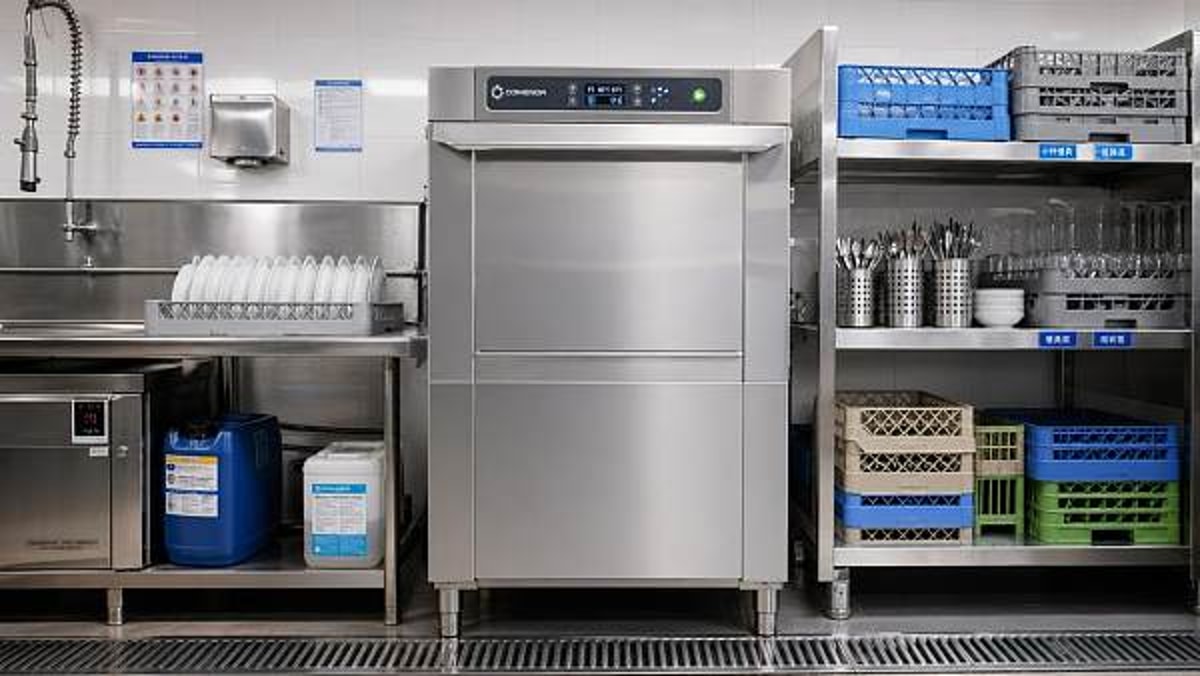
Reliable commercial dishwashers tend to share a practical engineering logic: fewer failure points, easier cleaning access, stable thermal control, and durable materials at contact and stress surfaces. Costly machines often look impressive in specification sheets but underperform in environments where grease, scale, chemical exposure, and repeated thermal cycles are daily realities.
Materials and build details reveal long-term durability
For technical evaluators, build quality should be inspected at component level. Stainless-steel body construction is common, but material thickness, weld quality, corner finishing, door hinge durability, and basket guide reinforcement can vary significantly. A machine installed in a busy commercial kitchen may complete hundreds of cycles each week, so weak latches or poorly supported doors can become service issues far earlier than expected.
Wash arms, filters, pump housings, heating elements, and control panels deserve special attention. If key components require excessive disassembly for cleaning or replacement, labor cost rises and preventive maintenance tends to be skipped. In practice, simple access often matters as much as premium component branding.
Sanitation depends on repeatable thermal and chemical control
Commercial dishwashers must deliver hygienic results repeatedly, not occasionally. For many foodservice applications, wash and rinse performance depends on stable temperature control, accurate dosing, and sufficient contact time. A machine that fluctuates under peak demand can leave visual cleanliness intact while compromising sanitation confidence.
- Booster heater recovery should support repeated cycles without extended waiting periods
- Rinse performance should remain consistent even when inlet water pressure varies
- Chemical dosing should be calibrated for the detergent and rinse aid chemistry used on site
- Filters and scrap systems should be easy to remove and clean at least once per shift
Where local regulations or client standards require documented hygiene assurance, the control interface should also support clear operator feedback. Temperature display, alarm logging, and fault indication reduce the risk of silent non-compliance, especially in hotels, hospitals, education, and contract catering settings.
What technical teams should physically inspect
A useful inspection checklist includes at least 6 points: door cycle robustness, ease of filter removal, wash arm cleaning access, tank drain design, seal replacement accessibility, and protection of electrical components from steam and splash exposure. These details rarely dominate sales presentations, but they strongly influence uptime after 6, 12, and 36 months of operation.
Hidden Costs Usually Appear in Utilities, Maintenance, and Downtime
Many commercial dishwashers become costly not because of initial purchase price but because of lifecycle drag. Energy draw, water consumption, chemical use, scaling frequency, labor time, and service response all affect total ownership cost. For technical evaluators, a machine should be assessed over a 5- to 7-year horizon rather than the quotation stage alone.
Water and energy efficiency must be interpreted carefully
Low water-per-cycle numbers look attractive, but they should be considered alongside rack throughput, rinse stability, and rewash rate. A machine that uses slightly more water per cycle may still be more efficient overall if it reduces repeat washing and shortens labor handling. Similarly, energy performance depends on insulation quality, standby controls, heat recovery options, and operating discipline.
The table below highlights lifecycle factors that often separate reliable commercial dishwashers from expensive assets.
The most expensive scenario is not always a high purchase invoice. It is often a lower-cost machine with poor support coverage, especially when a site cannot tolerate more than 24 hours of dishwashing disruption without affecting guest service or compliance operations.
Maintenance design directly affects uptime
Reliable commercial dishwashers are built for fast routine care. Daily clean-down should take minutes rather than a complex shutdown process. Weekly inspection points should be obvious. Service technicians should be able to access pumps, dosing lines, sensors, and electrical compartments without dismantling large sections of the machine.
Technical evaluators should ask for preventive maintenance intervals, recommended descaling frequency, and a list of common wear items. In hard-water areas, scaling can materially affect heating efficiency and rinse performance within a few months if water treatment is absent or underspecified.
Questions that expose hidden cost risk
- How many service visits are typically planned per year under normal commercial use?
- Which parts are considered wear items during the first 24 months?
- Can operators clean filters, arms, and scrap trays without tools?
- What is the typical spare-part lead time for pumps, boards, probes, and door seals?
Compliance, Integration, and Supplier Support Separate Safe Investments from Procurement Risk
Technical procurement does not end with machine specification. Reliable commercial dishwashers are usually backed by clear documentation, utility requirements, installation support, and service infrastructure. Costly machines often create friction at project handover because the supplier relationship is weak, the manuals are incomplete, or the site conditions were never properly reviewed.
Installation planning is part of equipment reliability
A technically sound machine can still fail in operation if drain falls, electrical loading, extraction, inlet pressure, or water treatment are misaligned. For new-build hospitality projects or institutional refurbishments, technical teams should validate at least 4 areas before approval: power supply, water quality, drainage layout, and operator workflow around loading and unloading zones.
Site readiness matters especially when commercial dishwashers are installed into compact back-of-house layouts. If access panels cannot open fully, if chemical containers are placed awkwardly, or if basket flow crosses with food prep traffic, the machine becomes difficult to use safely and consistently.
Supplier capability reduces technical uncertainty
For B2B buyers sourcing through international channels, supplier strength should be assessed with the same discipline as the machine itself. Documentation quality, parts planning, after-sales responsiveness, and customization support are critical when commercial dishwashers are part of larger hotel, education, healthcare, or mixed-facility procurement packages.
- Request installation drawings, utility schedules, and maintenance guides before final approval
- Confirm whether commissioning support is available remotely or on site
- Check if spare parts kits can be bundled for the first 12 months of operation
- Evaluate whether the supplier can support multiple project locations across regions
A practical 5-step evaluation framework
A disciplined sourcing process helps technical evaluators distinguish reliable commercial dishwashers from expensive liabilities. First, define actual throughput and ware profile. Second, verify utility compatibility and water conditions. Third, inspect maintenance access and parts logic. Fourth, compare lifecycle cost drivers over several years. Fifth, assess supplier support depth, including lead times, commissioning, and after-sales coverage.
This approach is especially valuable for organizations managing premium hospitality environments, educational campuses, institutional foodservice, and specialty commercial facilities where hygiene, continuity, and presentation standards directly affect user experience.
Common Evaluation Mistakes and How to Avoid Them
Mistake 1: Overweighting capital cost
A price-led shortlist may ignore labor, downtime, and service burden. When comparing commercial dishwashers, technical teams should build a simple ownership model using purchase cost, estimated annual maintenance, utility use, expected consumables, and probable disruption cost over at least 36 months.
Mistake 2: Ignoring site water quality
Hard water can shorten heater efficiency, increase spotting, and accelerate scaling. If water conditions are not addressed at the specification stage, even good commercial dishwashers may show reduced performance or higher service frequency. Water treatment should be assessed as part of the system, not as an optional add-on after problems appear.
Mistake 3: Accepting generic service promises
“Support available” is not the same as measurable service capability. Ask for response windows, spare-part stocking logic, and escalation procedures. In many commercial environments, a 48-hour disruption can be operationally significant, so clarity matters more than broad claims.
Mistake 4: Failing to test operator usability
If routine cleaning steps are inconvenient or controls are confusing, staff compliance drops. Over time, that affects both hygiene and machine life. Reliable commercial dishwashers support consistent use by real operators across long shifts, staff rotation, and varying skill levels.
Reliable commercial dishwashers are separated from costly ones by fit, construction quality, hygiene consistency, lifecycle efficiency, and supplier support. For technical evaluators, the smartest decision is rarely the cheapest or the most feature-heavy option. It is the machine that performs predictably under actual commercial load, integrates cleanly into the site, and can be maintained without friction over years of operation.
Global Commercial Trade helps professional buyers and project teams evaluate commercial equipment with a sourcing mindset grounded in performance, compliance, and long-term value. If you are reviewing commercial dishwashers for hotels, institutional kitchens, campuses, or specialty hospitality projects, contact us to discuss your application, request a tailored sourcing recommendation, or explore broader commercial equipment solutions.
Search News
Hot Articles
- Musical InstrumentsChina Table Tennis Team Departs for London; BS EN 14904:2021 Takes EffectMay 01, 2026
- Outdoor RidesSanya Asian Beach Games Closure Triggers Halal Certification Demand for Sand Sports EquipmentMay 01, 2026
- Outdoor RidesAI Football Training Robots Export Surge After Man Utd MatchMay 01, 2026
Popular Tags
Need ExpertConsultation?
Connect with our specialized leisureengineering team for procurementstrategies.
Recommended News
 May 01, 2026Hotel and Catering Equipment Trends Shaping 2026 RenovationsHotel & Catering Equipment trends for 2026 renovations reveal smarter, cleaner, and more flexible solutions that cut risk, improve efficiency, and elevate guest experience.● Hospitality Sourcing Dir
 May 01, 2026Outdoor Patio Heaters: What Changes in Windy Dining AreasOutdoor patio heaters in windy dining areas need more than high output. Learn how wind changes comfort, efficiency, safety, and placement to choose smarter commercial heating solutions.● Hospitality Sourcing Dir
 May 01, 2026Food Warmers Commercial Models That Keep Texture, Not Just HeatFood warmers commercial buyers trust do more than hold heat—they preserve crispness, moisture, and presentation. Discover how to reduce waste and improve service quality.● Hospitality Sourcing Dir
 May 01, 2026Bakery Dough Mixers Sized Right for Batch ConsistencyBakery dough mixers sized right improve batch consistency, dough quality, and efficiency. Learn how to match capacity, torque, and dough type for reliable bakery performance.● Hospitality Sourcing Dir
 May 01, 2026Buffet Chafing Dishes in Bulk: Which Materials Age BetterBuffet chafing dishes bulk guide: compare 304 stainless steel, 201 stainless, aluminum, and coated finishes to see which materials age better, cut replacement costs, and protect buffet presentation.● Hospitality Sourcing Dir
 May 01, 2026Commercial Range Hoods and the Ventilation Problems They Actually SolveCommercial range hoods solve smoke, grease, heat, and air balance problems in commercial kitchens. Learn how they improve safety, compliance, and operating efficiency.● Hospitality Sourcing Dir
 May 01, 2026Commercial Deep Fryers: Gas or Electric for Busy Kitchens?Commercial deep fryers compared: gas or electric? Discover which option delivers faster recovery, better consistency, lower operating costs, and the right fit for busy kitchens.● Hospitality Sourcing Dir
 May 01, 2026Stainless Steel Kitchen Prep Tables and the Hygiene Details Often MissedStainless steel kitchen prep tables demand more than the right material. Discover the hidden hygiene details that impact sanitation, durability, compliance, and smarter buying.● Hospitality Sourcing Dir
 May 01, 2026Commercial Refrigerators Wholesale: Common Spec Mistakes to AvoidCommercial refrigerators wholesale buyers can avoid costly spec mistakes by checking usable capacity, temperature stability, materials, and cooling performance before bulk orders.● Hospitality Sourcing Dir
 May 01, 2026Commercial Ice Makers: When Higher Capacity Stops Saving MoneyCommercial ice makers can cut costs—but only to a point. Learn when higher capacity starts wasting energy, water, space, and budget, and how to size smarter for better ROI.● Hospitality Sourcing Dir
 May 01, 2026Bakery Ovens Commercial Models Compared by Output and FootprintBakery ovens commercial models compared by output and footprint. See which oven fits your bakery, kitchen, or production line for better efficiency, space use, and buying decisions.● Hospitality Sourcing Dir
 May 01, 2026Commercial Espresso Coffee Machines Worth Upgrading in 2026Espresso coffee machines commercial buyers planning 2026 upgrades can compare features, energy efficiency, workflow fit, and sourcing priorities to choose smarter, higher-value solutions.● Hospitality Sourcing Dir
 May 01, 2026Walk In Coolers Wholesale: What Impacts Lead Time the MostWalk in coolers wholesale lead times depend on customization, component supply, factory capacity, and shipping. Learn the biggest delay risks and how to keep projects on schedule.● Hospitality Sourcing Dir
 May 01, 2026Industrial Meat Grinders and the Hidden Cost of UndersizingIndustrial meat grinders that are too small can drive up labor, maintenance, and quality risks. Learn the hidden cost of undersizing and choose equipment that protects efficiency.● Hospitality Sourcing Dir
 May 01, 2026Soft Serve Ice Cream Machines That Fit Small Shop DemandSoft serve ice cream machines for small shops: compare compact capacity, footprint, cleaning, and long-term cost to find the right fit for cafés, kiosks, and dessert counters.● Hospitality Sourcing Dir
 May 01, 2026Why Glassware Sets Wholesale Prices Vary More Than ExpectedGlassware sets wholesale prices vary due to material, production, packaging, compliance, and freight. Learn what drives cost and source smarter with less risk.● Hospitality Sourcing Dir
 May 01, 2026What Separates Reliable Commercial Dishwashers from Costly OnesCommercial dishwashers differ by fit, hygiene, uptime, and lifecycle cost. Learn how to identify reliable models, avoid hidden expenses, and choose smarter for long-term value.● Hospitality Sourcing Dir
 May 01, 2026Ceramic Dinnerware for Restaurants That Lasts Through Daily ServiceCeramic dinnerware restaurant buyers trust should combine durability, style, and efficiency. Discover how to choose long-lasting pieces that reduce replacement costs and elevate guest experience.● Hospitality Sourcing Dir
 Apr 28, 2026What Hidden Costs Appear After New Hotel Equipment Is Installed?Hotel equipment hidden costs explained: hotel beds, hotel chairs, hotel tables, hotel furniture, custom furniture, and luxury furniture. Learn risks, TCO, and smarter sourcing.● Hospitality Sourcing Dir
 Apr 28, 2026Hotel Equipment Lists Often Miss the Items That Drive Daily OperationsHotel equipment gaps hurt daily operations. Discover how hotel furniture, hotel beds, hotel chairs, hotel tables, custom furniture and luxury furniture improve efficiency.● Hospitality Sourcing Dir
 Apr 21, 2026How hospitality procurement plans reduce replacement costsHospitality procurement cuts replacement costs by sourcing durable hotel furniture, hotel beds, hotel chairs, and hotel tables with long-term planning. Explore smarter commercial furniture strategies.● Hospitality Sourcing Dir
 Apr 21, 2026Hospitality procurement delays often start with approvalsHospitality procurement delays often begin with approvals. Learn how hotel furniture, luxury furniture, hotel beds, hotel chairs, and hotel tables sourcing can stay on schedule.● Hospitality Sourcing Dir
 Apr 21, 2026When catering equipment saves labor but slows serviceExplore how catering equipment can save labor yet slow service in hotel furniture environments. Learn smarter hospitality procurement for luxury furniture, hotel equipment, and smoother guest flow.● Hospitality Sourcing Dir
 Apr 21, 2026Catering equipment costs that often get missed at launchCatering equipment costs often missed at launch: uncover hidden expenses in hotel furniture, hotel beds, hotel chairs, soundproofing materials, and hospitality procurement to avoid delays and overspending.● Hospitality Sourcing Dir