Stainless Steel Kitchen Prep Tables and the Hygiene Details Often Missed
Stainless steel kitchen prep tables are a standard choice in commercial food environments, but hygiene performance depends on more than surface material alone. For technical evaluators, critical details such as weld quality, corner radii, undershelf design, drainage, and cleanability often determine long-term compliance and maintenance efficiency. This article highlights the overlooked specification points that directly affect sanitation control, service life, and procurement decisions.
Why do stainless steel kitchen prep tables deserve closer hygiene scrutiny?
Many buyers assume that if a worktable is made from stainless steel, it is automatically sanitary. That assumption is risky. In real commercial kitchens, hygiene failures usually come from design details rather than the base material alone. A prep table may be built from acceptable stainless steel sheet, yet still trap food debris, retain moisture, or create inaccessible cleaning zones. For technical evaluation teams, this is where product differentiation becomes visible.
Stainless steel kitchen prep tables are exposed to repeated food contact, chemical cleaning, wet-dry cycles, impact from utensils, and high-frequency operator handling. Under these conditions, poor weld finishing, open seams, sharp internal corners, unstable backsplashes, and unsuitable shelf supports can accelerate contamination risk. A table that looks compliant in a catalog may become difficult to sanitize after only a short period of service.
For organizations sourcing through international supply networks, including hospitality groups, institutional kitchens, catering projects, and foodservice fit-out contractors, hygiene-oriented specification review also reduces downstream cost. It lowers cleaning labor, extends service life, improves inspection readiness, and decreases the probability of replacement due to corrosion, structural weakness, or failed sanitation audits.
What construction details matter most when evaluating stainless steel kitchen prep tables?
Technical evaluators should move beyond broad descriptions such as “304 stainless” or “heavy duty.” Those claims matter, but they do not fully define hygienic performance. The most important evaluation points are usually hidden in fabrication quality and geometry.
First, inspect weld execution. Continuous, smooth, properly ground welds are preferable because they reduce crevices where soil and moisture can accumulate. Spotty welds, rough beads, undercut edges, or visible pinholes may allow residue retention and make effective sanitizing difficult. In food preparation settings, a polished but incomplete weld is still a hygiene concern.
Second, review corner radii and edge treatment. Internal angles should not create sharp dirt traps. Rounded corners, coved transitions, and deburred edges support quicker wipe-down and safer handling. If the underside of the top includes hard-to-reach reinforcement channels with abrupt joins, cleaning crews may not be able to remove grease or moisture effectively.
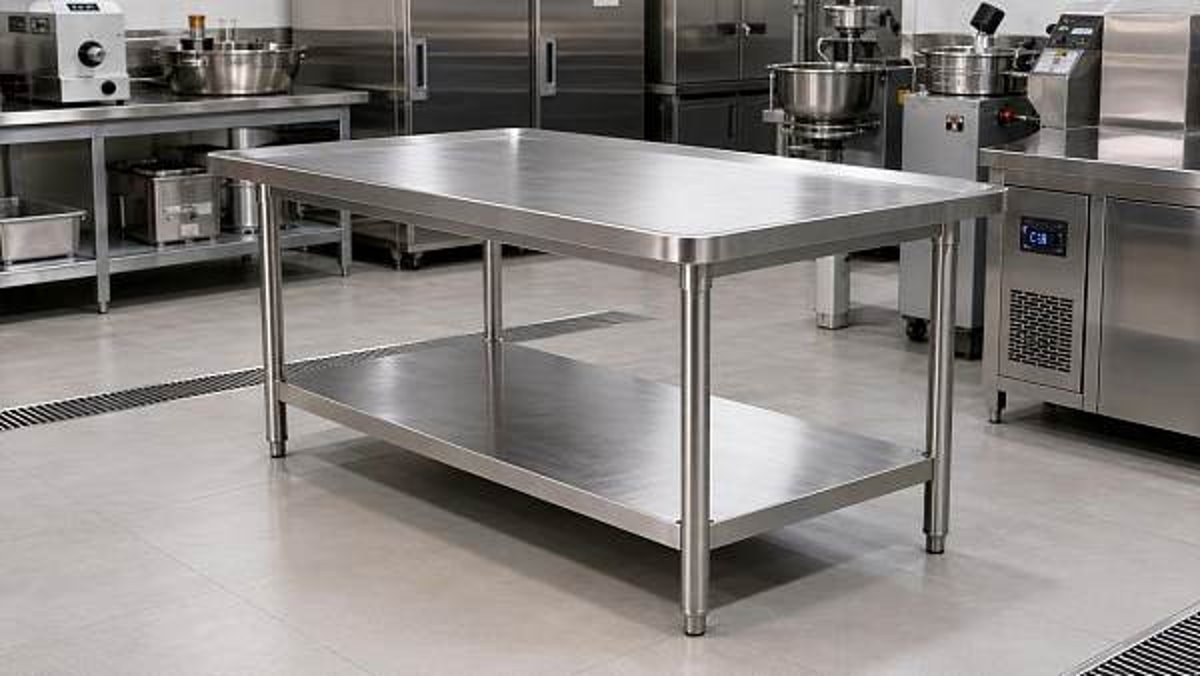
Third, assess the undershelf and support structure. An undershelf can improve storage efficiency, but it can also create hygiene challenges if support brackets are overly complex or if the shelf sits too close to the floor for proper cleaning access. Open tubular legs should be sealed; otherwise, water ingress and internal contamination can occur. Adjustable feet should be durable, stable, and easy to clean around.
Fourth, examine drainage behavior. Flat surfaces that appear visually acceptable may still retain water, sanitizing chemicals, or organic residue. Slightly sloped or well-finished surfaces often perform better in high-moisture operations. Around sinks, splash zones, and wash-down areas, drainage becomes even more important than nominal material grade.
How can you quickly compare critical hygiene checkpoints before procurement?
A structured comparison table helps technical teams avoid focusing only on price, thickness, or appearance. The checkpoints below are especially useful when reviewing quotations, factory drawings, or pre-shipment samples for stainless steel kitchen prep tables.
Is stainless grade the main factor, or are fabrication details more important?
Both matter, but fabrication details often determine whether the material can perform as intended. In many purchasing discussions, stainless steel kitchen prep tables are judged too heavily by whether the specification says 201 or 304 stainless steel. Grade selection is important for corrosion resistance, especially in humid, acidic, or chloride-exposed environments, but a higher grade alone will not fix a poor hygienic design.
For example, a 304 table with rough welds, exposed seams, and poorly sealed leg tubes may underperform compared with a better-fabricated unit designed for easy cleaning. Technical evaluators should therefore treat alloy grade as one layer of the decision, not the only one. In dry prep areas with controlled cleaning chemistry, some projects may accept alternative grades in non-critical sections, while insisting on stronger hygienic fabrication standards across all food-contact and splash-prone zones.
A practical approach is to align material grade with actual operating exposure. Ask how often chlorine-based cleaners are used, whether salt or acidic ingredients are processed nearby, whether wash-down is frequent, and whether the table will be positioned next to dishwashing or cooking lines. These answers help convert vague material discussions into measurable risk decisions.
What hygiene mistakes are most often missed during supplier evaluation?
One common mistake is approving stainless steel kitchen prep tables from photos alone. Product images often emphasize shine, not sanitation. They rarely reveal underside geometry, weld consistency across production batches, or whether backsplashes are fully integrated and sealed. Technical buyers should request detail photos, fabrication drawings, and where possible, sample inspection videos focused on joints, corners, feet, and undershelf areas.
Another mistake is focusing only on tabletop thickness. A thicker top may improve rigidity, but hygiene failure usually starts in joints and inaccessible spaces. If reinforcement channels beneath the work surface are installed with open gaps, cleaning becomes difficult regardless of gauge strength. Similarly, if the backsplash-to-top junction is not smoothly formed, food splash and moisture can stay trapped.
A third overlooked issue is maintenance compatibility. Tables should be assessed against the actual cleaning tools, sanitizer chemistry, and workflow of the end user. Some finishes show scratches quickly under abrasive pads. Some adjustable feet seize after repeated wet cleaning. Some shelf layouts force staff to move items constantly just to clean beneath them. These are not minor usability concerns; they directly affect whether hygiene protocols are followed consistently in operation.
Finally, buyers sometimes ignore verification discipline. A supplier may state compliance with foodservice expectations, but technical teams should still confirm dimensions, finish consistency, passivation or post-weld treatment if relevant, packaging protection, and inspection criteria for damage in transit. Small dents or surface breaches can compromise both appearance and long-term cleanability.
Which environments require more stringent specification of stainless steel kitchen prep tables?
Not every commercial kitchen carries the same hygienic load. The most demanding applications usually include central kitchens, hospital foodservice, high-volume catering production, institutional meal preparation, seafood or protein processing zones, pastry rooms with allergen control requirements, and premium hospitality kitchens where inspection standards and brand expectations are both high.
In these settings, stainless steel kitchen prep tables should be specified with extra attention to cleanability, chemical resistance, edge forming, and floor integration. Tables used for raw-to-ready workflows may need clearer segregation logic, easier disinfection access, and better compatibility with sanitation standard operating procedures. In open-kitchen or luxury hospitality concepts, hygiene design also intersects with visual finish quality, because the table may be visible to guests while still requiring industrial-grade performance.
For global sourcing teams, this is where a platform with sector-specific intelligence becomes useful. Procurement decisions in hotel and catering equipment are rarely isolated purchases; they sit within broader compliance, fit-out, and lifecycle planning. Evaluating a prep table correctly means understanding how it will interact with surrounding refrigeration, dishwashing, waste flow, ventilation, and operator movement.
What questions should technical evaluators ask suppliers before placing an order?
The best procurement outcomes usually come from disciplined pre-order questioning. Instead of asking only for price and lead time, evaluators should test the supplier’s understanding of hygienic fabrication. Start with manufacturing specifics: Are joints continuously welded or intermittently fixed? Are welds ground smooth in food-contact zones? Are tubular sections fully sealed? What is the underside reinforcement layout? How is the backsplash formed and attached?
Then ask about operational suitability: Which stainless grade is used for the top, shelf, legs, and brackets respectively? What cleaning chemicals can the finish tolerate? Is there any recommended maintenance routine to preserve corrosion resistance? Can feet be adjusted after installation without damaging the base? Are there options for castors, marine edges, sink integration, or custom shelf heights without compromising sanitation?
It is also wise to request quality assurance evidence. Ask for inspection checklists, weld finishing standards, surface protection methods for export packaging, and references from foodservice or hospitality projects with similar hygiene demands. If the order involves OEM or ODM adaptation, confirm whether design changes will alter cleanability. Even simple customizations can introduce unexpected dirt traps if not reviewed carefully.
How should buyers summarize the decision and move toward implementation?
The right stainless steel kitchen prep tables are not defined by appearance alone. For technical evaluators, the real decision framework is hygienic design plus fabrication discipline plus operational fit. Material grade matters, but so do weld continuity, corner geometry, drainage behavior, sealed structural members, accessible undershelves, and compatibility with the site’s actual cleaning regime. These factors have a direct impact on audit readiness, maintenance labor, corrosion risk, and replacement cycle.
A robust sourcing process should therefore compare suppliers on sanitation-oriented detail, not just unit cost. In international procurement, especially across hospitality, institutional, and specialty foodservice projects, buyers who define these details clearly are far more likely to secure durable and compliant equipment. If you need to move from evaluation to specification, the first topics to clarify are intended use zone, exposure level, required stainless grade by component, weld and finish expectations, underside geometry, customization limits, inspection method, lead time, and after-sales support for replacement parts or field issues.
For teams planning procurement, supplier qualification, or custom fabrication partnerships, those questions provide the most reliable starting point for selecting stainless steel kitchen prep tables that meet both hygiene standards and commercial performance goals.
Search News
Hot Articles
- Musical InstrumentsChina Table Tennis Team Departs for London; BS EN 14904:2021 Takes EffectMay 01, 2026
- Outdoor RidesSanya Asian Beach Games Closure Triggers Halal Certification Demand for Sand Sports EquipmentMay 01, 2026
- Outdoor RidesAI Football Training Robots Export Surge After Man Utd MatchMay 01, 2026
Popular Tags
Need ExpertConsultation?
Connect with our specialized leisureengineering team for procurementstrategies.
Recommended News
 May 01, 2026Hotel and Catering Equipment Trends Shaping 2026 RenovationsHotel & Catering Equipment trends for 2026 renovations reveal smarter, cleaner, and more flexible solutions that cut risk, improve efficiency, and elevate guest experience.● Hospitality Sourcing Dir
 May 01, 2026Outdoor Patio Heaters: What Changes in Windy Dining AreasOutdoor patio heaters in windy dining areas need more than high output. Learn how wind changes comfort, efficiency, safety, and placement to choose smarter commercial heating solutions.● Hospitality Sourcing Dir
 May 01, 2026Food Warmers Commercial Models That Keep Texture, Not Just HeatFood warmers commercial buyers trust do more than hold heat—they preserve crispness, moisture, and presentation. Discover how to reduce waste and improve service quality.● Hospitality Sourcing Dir
 May 01, 2026Bakery Dough Mixers Sized Right for Batch ConsistencyBakery dough mixers sized right improve batch consistency, dough quality, and efficiency. Learn how to match capacity, torque, and dough type for reliable bakery performance.● Hospitality Sourcing Dir
 May 01, 2026Buffet Chafing Dishes in Bulk: Which Materials Age BetterBuffet chafing dishes bulk guide: compare 304 stainless steel, 201 stainless, aluminum, and coated finishes to see which materials age better, cut replacement costs, and protect buffet presentation.● Hospitality Sourcing Dir
 May 01, 2026Commercial Range Hoods and the Ventilation Problems They Actually SolveCommercial range hoods solve smoke, grease, heat, and air balance problems in commercial kitchens. Learn how they improve safety, compliance, and operating efficiency.● Hospitality Sourcing Dir
 May 01, 2026Commercial Deep Fryers: Gas or Electric for Busy Kitchens?Commercial deep fryers compared: gas or electric? Discover which option delivers faster recovery, better consistency, lower operating costs, and the right fit for busy kitchens.● Hospitality Sourcing Dir
 May 01, 2026Stainless Steel Kitchen Prep Tables and the Hygiene Details Often MissedStainless steel kitchen prep tables demand more than the right material. Discover the hidden hygiene details that impact sanitation, durability, compliance, and smarter buying.● Hospitality Sourcing Dir
 May 01, 2026Commercial Refrigerators Wholesale: Common Spec Mistakes to AvoidCommercial refrigerators wholesale buyers can avoid costly spec mistakes by checking usable capacity, temperature stability, materials, and cooling performance before bulk orders.● Hospitality Sourcing Dir
 May 01, 2026Commercial Ice Makers: When Higher Capacity Stops Saving MoneyCommercial ice makers can cut costs—but only to a point. Learn when higher capacity starts wasting energy, water, space, and budget, and how to size smarter for better ROI.● Hospitality Sourcing Dir
 May 01, 2026Bakery Ovens Commercial Models Compared by Output and FootprintBakery ovens commercial models compared by output and footprint. See which oven fits your bakery, kitchen, or production line for better efficiency, space use, and buying decisions.● Hospitality Sourcing Dir
 May 01, 2026Commercial Espresso Coffee Machines Worth Upgrading in 2026Espresso coffee machines commercial buyers planning 2026 upgrades can compare features, energy efficiency, workflow fit, and sourcing priorities to choose smarter, higher-value solutions.● Hospitality Sourcing Dir
 May 01, 2026Walk In Coolers Wholesale: What Impacts Lead Time the MostWalk in coolers wholesale lead times depend on customization, component supply, factory capacity, and shipping. Learn the biggest delay risks and how to keep projects on schedule.● Hospitality Sourcing Dir
 May 01, 2026Industrial Meat Grinders and the Hidden Cost of UndersizingIndustrial meat grinders that are too small can drive up labor, maintenance, and quality risks. Learn the hidden cost of undersizing and choose equipment that protects efficiency.● Hospitality Sourcing Dir
 May 01, 2026Soft Serve Ice Cream Machines That Fit Small Shop DemandSoft serve ice cream machines for small shops: compare compact capacity, footprint, cleaning, and long-term cost to find the right fit for cafés, kiosks, and dessert counters.● Hospitality Sourcing Dir
 May 01, 2026Why Glassware Sets Wholesale Prices Vary More Than ExpectedGlassware sets wholesale prices vary due to material, production, packaging, compliance, and freight. Learn what drives cost and source smarter with less risk.● Hospitality Sourcing Dir
 May 01, 2026What Separates Reliable Commercial Dishwashers from Costly OnesCommercial dishwashers differ by fit, hygiene, uptime, and lifecycle cost. Learn how to identify reliable models, avoid hidden expenses, and choose smarter for long-term value.● Hospitality Sourcing Dir
 May 01, 2026Ceramic Dinnerware for Restaurants That Lasts Through Daily ServiceCeramic dinnerware restaurant buyers trust should combine durability, style, and efficiency. Discover how to choose long-lasting pieces that reduce replacement costs and elevate guest experience.● Hospitality Sourcing Dir
 Apr 28, 2026What Hidden Costs Appear After New Hotel Equipment Is Installed?Hotel equipment hidden costs explained: hotel beds, hotel chairs, hotel tables, hotel furniture, custom furniture, and luxury furniture. Learn risks, TCO, and smarter sourcing.● Hospitality Sourcing Dir
 Apr 28, 2026Hotel Equipment Lists Often Miss the Items That Drive Daily OperationsHotel equipment gaps hurt daily operations. Discover how hotel furniture, hotel beds, hotel chairs, hotel tables, custom furniture and luxury furniture improve efficiency.● Hospitality Sourcing Dir
 Apr 21, 2026How hospitality procurement plans reduce replacement costsHospitality procurement cuts replacement costs by sourcing durable hotel furniture, hotel beds, hotel chairs, and hotel tables with long-term planning. Explore smarter commercial furniture strategies.● Hospitality Sourcing Dir
 Apr 21, 2026Hospitality procurement delays often start with approvalsHospitality procurement delays often begin with approvals. Learn how hotel furniture, luxury furniture, hotel beds, hotel chairs, and hotel tables sourcing can stay on schedule.● Hospitality Sourcing Dir
 Apr 21, 2026When catering equipment saves labor but slows serviceExplore how catering equipment can save labor yet slow service in hotel furniture environments. Learn smarter hospitality procurement for luxury furniture, hotel equipment, and smoother guest flow.● Hospitality Sourcing Dir
 Apr 21, 2026Catering equipment costs that often get missed at launchCatering equipment costs often missed at launch: uncover hidden expenses in hotel furniture, hotel beds, hotel chairs, soundproofing materials, and hospitality procurement to avoid delays and overspending.● Hospitality Sourcing Dir