Stainless steel GN pans with reinforced corners last longer in busy kitchens
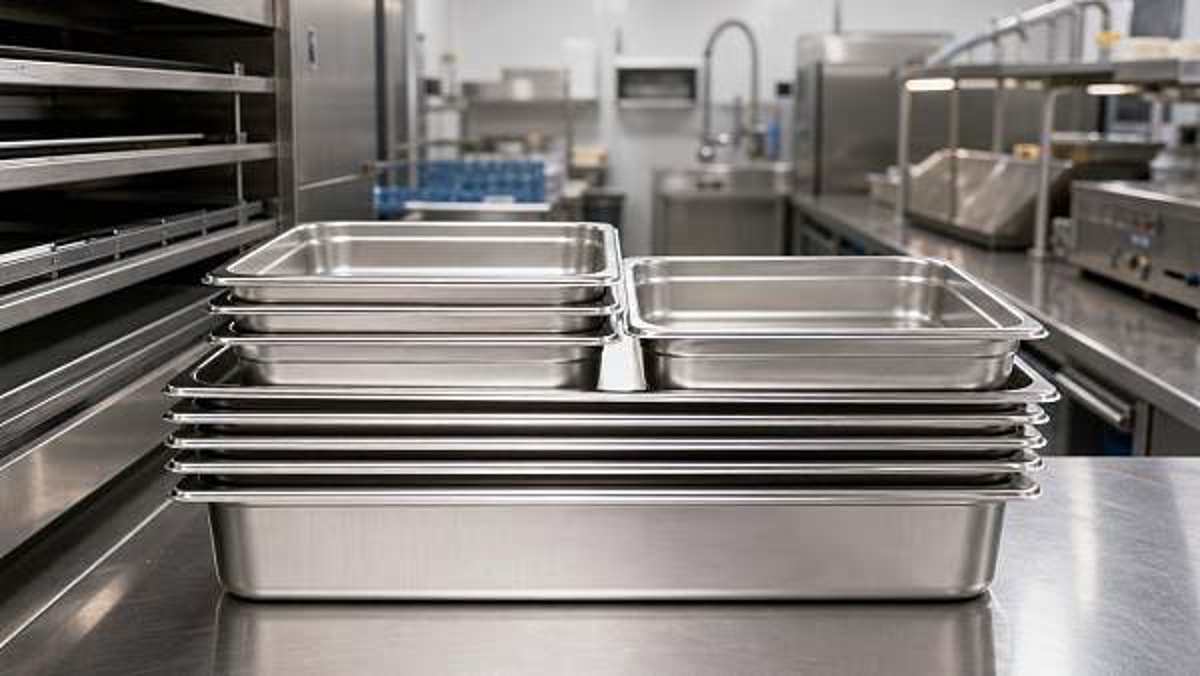
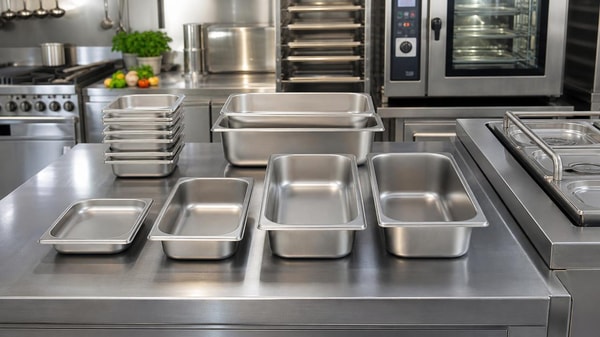
In high-volume foodservice operations, stainless steel GN pans with reinforced corners offer a practical edge that technical evaluators cannot ignore. Compared with standard options, these stainless steel GN pans resist warping, denting, and seam stress more effectively, helping kitchens maintain hygiene, durability, and workflow efficiency under constant use. This article examines why reinforced construction matters for long-term performance and sourcing decisions.
Why are reinforced-corner stainless steel GN pans getting more attention from technical evaluators?
Technical evaluation teams are no longer looking at gastronorm containers as simple commodity items. In busy hotels, institutional canteens, central kitchens, and catering chains, GN pans move constantly between prep tables, blast chillers, combi ovens, bain-maries, transport trolleys, and dishwashing lines. Under that level of handling, corners become the first structural weak point. They absorb impact during stacking, scraping, loading, and unloading. Once corners deform, pan rims may no longer sit flat, sealing performance can decline, and cleaning becomes harder.
That is why stainless steel GN pans with reinforced corners are increasingly specified in professional procurement documents. Reinforcement improves rigidity where mechanical stress is concentrated. For buyers responsible for lifecycle cost, hygiene control, and kitchen uptime, that small design detail can have an outsized operational impact. Instead of replacing bent pans every few months, operators can standardize on a more durable format that supports stable workflows and lower failure rates.
From an SEO and sourcing perspective, the market is also paying more attention because foodservice buyers now evaluate products against tougher criteria: material traceability, weld quality, thickness consistency, dishwasher endurance, and compatibility with GN-standard equipment. Reinforced construction signals that the product is engineered for commercial intensity, not just for light-duty service.
What exactly makes reinforced corners different from standard GN pan construction?
The difference is not only visual. In standard stainless steel GN pans, the corner area may rely on basic forming methods that are adequate for moderate use but more vulnerable to repeated shock and torque. Reinforced-corner models are typically designed with stronger corner geometry, improved fold structure, better stress distribution, or thicker localized forming. Some manufacturers also optimize edge curling and rim stiffness so the entire pan body behaves more like a stable frame.
For technical evaluators, the key issue is how the pan responds under real working conditions. A GN pan is rarely damaged by static load alone. It fails because of cumulative abuse: a full pan dropped onto a rack rail, aggressive utensil contact, thermal expansion from hot-hold service followed by rapid washing, or repeated nesting and de-nesting by staff in a rush. Reinforced corners reduce the chance that these small daily stresses will turn into cracked seams, twisted rims, or dented edges.
Another practical difference concerns dimensional stability. If corners hold shape better, the pan is more likely to remain compatible with lids, inserts, buffet stations, and transport systems. This matters in large operations where every second counts and misfit equipment disrupts line efficiency.
Which performance criteria should be checked before approving stainless steel GN pans for busy kitchens?
When reviewing stainless steel GN pans, technical teams should evaluate more than the listed dimensions. A robust assessment should cover material, forming quality, finishing consistency, and operational endurance. Reinforced corners are important, but they should be part of a broader specification review.
The first checkpoint is grade selection. In many commercial applications, stainless steel 304 is preferred because it balances corrosion resistance, food contact suitability, and durability. In harsher environments, such as saline or highly acidic food handling, a higher-grade option may be worth considering. The second checkpoint is thickness consistency. Very thin pans may reduce purchase cost, but they often sacrifice rigidity and shorten service life. Reinforced corners cannot fully compensate for inadequate body thickness.
Third, inspect edge finishing and corner smoothness. Hygienic design matters because rough transitions, micro-crevices, or inconsistent folds can trap food residue. Fourth, test stacking behavior. Quality stainless steel GN pans should nest efficiently without jamming and should de-stack without excessive force. Fifth, verify temperature suitability if the pans will be used across cooking, holding, chilling, and washing cycles.
Finally, request evidence of manufacturing consistency. For B2B buyers, one good sample is not enough. The supplier should demonstrate process stability across production lots, because kitchens do not buy one pan; they buy systems that need repeatable fit and performance.
Quick evaluation table for sourcing teams
Are reinforced-corner stainless steel GN pans worth the higher purchase price?
In many cases, yes, especially when the kitchen is genuinely high turnover. The right comparison is not unit price versus unit price. It is annual replacement cost, labor disruption, food safety risk, and equipment compatibility over time. Standard pans may appear economical at order stage, but repeated deformation creates hidden costs. Staff may spend time sorting out warped pans, lids may no longer fit correctly, and presentation quality can suffer in buffet or holding environments.
For technical evaluators, total cost of ownership is the more useful metric. If reinforced stainless steel GN pans stay in service significantly longer, the cost per use often drops. This is particularly true in operations with centralized dishwashing, frequent transport, and multiple handling points across shifts. Durability also protects standardization. When pan sizes remain accurate, adjacent kitchen systems continue to work as intended.
There is also a brand and service dimension. Premium hospitality and institutional foodservice operations depend on consistency. Bent containers, unstable stacking, or visibly damaged pans send the wrong message in open kitchens and buffet lines. Paying slightly more for reinforced corners can support both operational discipline and perceived quality.
In which kitchen scenarios do reinforced corners make the biggest difference?
Not every site uses GN containers at the same intensity. Reinforced-corner stainless steel GN pans create the most value where handling is frequent, staffing is fast-paced, and pan rotation is continuous. One common scenario is hotel banqueting. During event preparation, pans are filled in bulk, transferred quickly, reheated, displayed, and washed in rapid succession. That chain of movement exposes corners to repeated shock.
Another strong use case is central production kitchens supplying satellite outlets. Here, GN pans may travel between departments or facilities, which multiplies stacking and transport wear. School, hospital, and corporate catering environments also benefit because standardized GN systems support volume service, and equipment downtime or pan mismatch can interrupt meal schedules. Quick-service back-of-house operations can also justify reinforced designs when pans are used for mise en place, hot holding, and high-frequency wash cycles.
By contrast, lighter-duty kitchens may still prefer reinforced-corner pans if they are trying to reduce breakage and simplify stock management. The point is not that every site needs the heaviest specification available, but that usage intensity should drive the decision. Technical teams should map pan stress to the real process, not to assumptions.
What common mistakes do buyers make when comparing stainless steel GN pans?
A frequent mistake is focusing too much on gauge alone. Thickness matters, but it does not tell the whole story. Two stainless steel GN pans with the same nominal thickness can perform very differently if one has better corner reinforcement, stronger rim forming, and more consistent finishing. Another mistake is assuming that all GN pans labeled as commercial grade are equivalent. In reality, manufacturing discipline varies widely.
Buyers also sometimes overlook cleaning and hygiene implications. A pan that survives impact but contains awkward seams or rough surfaces may create sanitation challenges. The best product balances structural strength with cleanability. A third mistake is skipping fit tests with actual equipment. Even if dimensions seem compliant on paper, poor tolerances can lead to rocking, tight insertion, or poor lid engagement.
Another risk is evaluating only new-condition appearance. Many products look acceptable when unpacked. The more revealing test is how they perform after repeated thermal cycling, dishwashing, nesting, and edge contact. Technical evaluators should ask suppliers for performance data, reference applications, and sample testing opportunities instead of relying solely on catalog claims.
Common buyer questions and practical answers
How should technical teams validate a supplier before placing larger GN pan orders?
Validation should combine product review with supplier capability review. Start with technical documentation: steel grade declaration, food-contact compliance references, manufacturing tolerances, and any quality-control checkpoints used during forming and finishing. Then move to sample testing in real operating conditions. For stainless steel GN pans, useful checks include corner press resistance, stacking behavior, rim stability under load, dishwasher cycle endurance, and visual inspection after repeated handling.
It is also wise to ask about OEM or ODM capability if your operation needs customized depths, branding, packing logic, or mixed-size procurement. A capable supplier should be able to discuss tooling consistency, lead times, packaging protection for corners, and batch traceability. Since GN pans are often purchased in large quantities across multiple sites, packaging and logistics are not minor issues. Poor transit protection can damage even well-made products before they enter service.
For global buyers, reliable sourcing also means understanding the supplier’s communication quality, after-sales response, and ability to support repeated orders without quality drift. This is where a B2B intelligence-driven sourcing approach becomes valuable. Buyers benefit when product evaluation is connected to broader supply chain confidence, not just price negotiation.
What should you confirm first if you want to move from evaluation to procurement?
Before moving forward, technical evaluators should align internal stakeholders on five basics: operating environment, required GN sizes and depths, acceptable steel grade, expected handling intensity, and replacement-cost targets. Once those are clear, the comparison between standard and reinforced-corner stainless steel GN pans becomes much more objective. Instead of debating price in isolation, the team can assess which specification best supports service life, hygiene, and workflow reliability.
In practical terms, the next conversation with a supplier should cover sample availability, dimensional tolerance, reinforcement method, material certification, cleaning performance, packaging, and lead time. If the application includes hotels, contract catering, institutional feeding, or multi-site foodservice, also confirm production scalability and repeat-order consistency. Those factors often determine whether the sourcing decision remains successful six months later.
For buyers seeking dependable commercial solutions, reinforced-corner stainless steel GN pans are not a minor upgrade. They are a specification choice tied directly to durability, hygiene control, and operational continuity. If you need to confirm the right model, performance threshold, sourcing direction, delivery cycle, or supplier cooperation method, start by discussing your kitchen workload, equipment compatibility, material requirements, and expected lifecycle performance in one structured review.
Search News
Hot Articles
- Commercial KitchenStainless steel GN pans with reinforced corners last longer in busy kitchensMay 02, 2026
- Hotel Room AmenitiesMemory foam hotel mattresses: when soft comfort leads to faster saggingMay 02, 2026
- Hotel Room AmenitiesElectronic hotel door locks: battery alerts are often less simple than they seemMay 02, 2026
Popular Tags
Need ExpertConsultation?
Connect with our specialized leisureengineering team for procurementstrategies.
Recommended News
 May 02, 2026Stainless steel GN pans with reinforced corners last longer in busy kitchensStainless steel GN pans with reinforced corners help busy kitchens reduce warping, improve hygiene, and cut replacement costs. See why buyers choose longer-lasting performance.● Hospitality Sourcing Dir
 May 02, 2026Commercial induction cookers: power ratings that mislead first-time buyersCommercial induction cookers are not as simple as wattage labels suggest. Learn how to compare real performance, efficiency, pan fit, and reliability before you buy.● Hospitality Sourcing Dir
 May 02, 2026Beverage dispensers wholesale: what causes dripping after heavy useBeverage dispensers wholesale guide: learn what causes dripping after heavy use, how to spot seal, valve, and pressure issues, and choose durable suppliers with confidence.● Hospitality Sourcing Dir
 May 02, 2026Disposable wooden cutlery and the taste issue customers noticeDisposable wooden cutlery can affect taste, texture, and customer perception. Learn what causes woody aftertaste, how to test suppliers, and how to choose better options.● Hospitality Sourcing Dir
 May 02, 2026Sushi display cases: curved glass looks better, but is it practical?Sushi display cases with curved glass look premium, but are they practical? Compare visibility, cleaning, temperature control, and ROI before you buy.● Hospitality Sourcing Dir
 May 02, 2026Vacuum sealing machines food businesses can scale withVacuum sealing machines food businesses can scale with improve shelf life, workflow, and cost control. Explore reliable, compliant solutions for growing food operations.● Hospitality Sourcing Dir
 May 02, 2026Chafing fuel gel bulk: storage and burn-time issues to check firstChafing fuel gel bulk buyers should check storage stability, seal integrity, and real burn-time performance first. Reduce waste, avoid service disruption, and source with more confidence.● Hospitality Sourcing Dir
 May 02, 2026Custom printed napkins that keep logos sharp after unfoldingCustom printed napkins that keep logos sharp after unfolding help hotels, restaurants, and event brands protect presentation quality. Learn what to check before you buy.● Hospitality Sourcing Dir
 May 02, 2026Panini presses commercial models: smooth plate or grooved plate?Panini presses commercial buyers: compare smooth vs. grooved plates for hotels, cafés, catering, and foodservice. Learn which style boosts speed, cleaning, presentation, and value.● Hospitality Sourcing Dir
 May 02, 2026Catering transport carts: how much insulation is actually enough?Catering transport carts: discover how much insulation is truly enough to protect food quality, meet compliance goals, and improve service efficiency across real catering operations.● Hospitality Sourcing Dir
 May 02, 2026What slows down commercial bone saw machines during peak prep hoursCommercial bone saw machines slow down from blade wear, workflow bottlenecks, raw material variation, and cleaning delays. Learn what really cuts throughput and how to choose higher-efficiency equipment.● Hospitality Sourcing Dir
 May 02, 2026Refrigerated display cabinets: glass fogging problems and how to avoid themRefrigerated display cabinets often face glass fogging in humid settings. Learn key causes, smart anti-fog solutions, and how to choose reliable cabinets for clear visibility.● Hospitality Sourcing Dir
 May 02, 2026Commercial food processors: the attachment issue many kitchens overlookCommercial food processors are only as effective as their attachments. Learn how the right system improves consistency, safety, workflow, and ROI before you buy.● Hospitality Sourcing Dir
 May 02, 2026Biodegradable takeout containers that leak less with hot foodsBiodegradable takeout containers that leak less with hot foods: compare materials, heat resistance, grease barriers, and sourcing factors to choose reliable eco packaging.● Hospitality Sourcing Dir
 May 02, 2026Hotel & Catering Equipment checklist for new venue openingsHotel & Catering Equipment checklist for new venue openings: discover must-have items, common planning gaps, compliance checks, and sourcing tips to launch on time and with confidence.● Hospitality Sourcing Dir
 May 02, 2026Commercial waffle makers: flip or fixed plate for busy breakfast serviceCommercial waffle makers: compare flip vs fixed plate models for busy breakfast service. Learn which option improves speed, consistency, labor efficiency, and guest satisfaction.● Hospitality Sourcing Dir
 May 02, 2026Paper coffee cups wholesale: which lid fit causes the most complaintsPaper coffee cups wholesale buyers face the most complaints from loose lids that seem sealed but leak in use. Learn key fit risks, root causes, and sourcing checks before bulk orders.● Hospitality Sourcing Dir
 May 02, 2026Blast chillers commercial buyers regret choosing too smallBlast chillers commercial buyers often regret going too small. Learn how proper sizing protects food safety, peak throughput, compliance, and long-term operating efficiency.● Hospitality Sourcing Dir
 May 02, 2026Commercial wine coolers with dual zones: when are they worth it?Commercial wine coolers with dual zones: learn when the added cost pays off for hospitality, retail, and event venues through better temperature control, display, and service efficiency.● Hospitality Sourcing Dir
 May 02, 2026How to compare stainless steel GN pans by gauge and depthStainless steel GN pans compared by gauge and depth: learn how thickness, capacity, and workflow fit affect durability, heat performance, and smarter catering purchases.● Hospitality Sourcing Dir
 May 01, 2026Hotel and Catering Equipment Trends Shaping 2026 RenovationsHotel & Catering Equipment trends for 2026 renovations reveal smarter, cleaner, and more flexible solutions that cut risk, improve efficiency, and elevate guest experience.● Hospitality Sourcing Dir
 May 01, 2026Outdoor Patio Heaters: What Changes in Windy Dining AreasOutdoor patio heaters in windy dining areas need more than high output. Learn how wind changes comfort, efficiency, safety, and placement to choose smarter commercial heating solutions.● Hospitality Sourcing Dir
 May 01, 2026Food Warmers Commercial Models That Keep Texture, Not Just HeatFood warmers commercial buyers trust do more than hold heat—they preserve crispness, moisture, and presentation. Discover how to reduce waste and improve service quality.● Hospitality Sourcing Dir
 May 01, 2026Bakery Dough Mixers Sized Right for Batch ConsistencyBakery dough mixers sized right improve batch consistency, dough quality, and efficiency. Learn how to match capacity, torque, and dough type for reliable bakery performance.● Hospitality Sourcing Dir