Commercial food processors: the attachment issue many kitchens overlook
When evaluating commercial food processors, many teams compare motor power, bowl capacity, and throughput—but overlook the attachments that determine real-world versatility, consistency, and labor efficiency. For technical evaluators, the right attachment system can affect food safety, workflow compatibility, maintenance demands, and long-term ROI, making it a critical factor in commercial kitchen procurement.
Why do attachments matter so much in commercial food processors?
In specification reviews, commercial food processors are often reduced to core machine metrics: wattage, speed settings, feed tube size, or batch volume. Those numbers matter, but they do not tell the full story. In real kitchens, the attachment system defines what the machine can actually do, how consistently it performs across menu items, and how efficiently operators move between prep tasks.
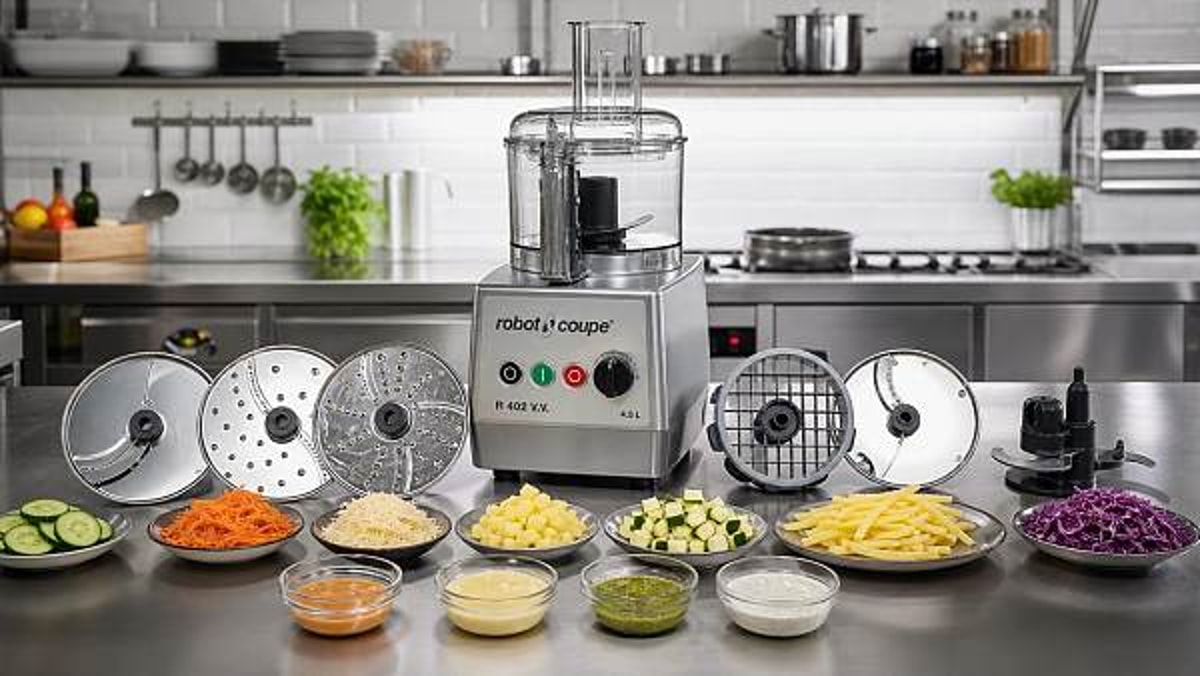
A processor fitted with the right slicing, grating, dicing, julienne, emulsifying, or dough-related tools can replace multiple pieces of equipment, reduce manual knife work, and standardize output across shifts. By contrast, a machine with limited or poorly designed attachments may force teams into workarounds, increase labor pressure, and create quality variation from one station to another.
For technical assessment teams, attachments are not accessories in the casual sense. They are operational interfaces. They influence cut precision, yield control, cleaning time, staff safety, spare-part complexity, and menu scalability. In high-volume hospitality, institutional catering, and central kitchen environments, those factors directly affect productivity and total cost of ownership.
Which attachment types should technical evaluators check first?
Not every kitchen needs the same attachment package, so the first step is to map menu demand to attachment function. The most common mistake in commercial food processors procurement is buying a powerful base unit without confirming whether the available attachments support the actual production mix.
Technical evaluators should usually begin with the following categories:
- Slicing discs for vegetables, fruits, cheese, and prepared proteins where uniform thickness affects cooking time and presentation.
- Grating and shredding discs for salads, toppings, fillings, and bakery support tasks.
- Dicing kits where cube consistency is required for soups, mise en place, ready-meal production, or buffet preparation.
- Julienne or strip-cut attachments for garnish programs, stir-fry prep, and premium visual presentation.
- Chopping and emulsifying blades for sauces, spreads, purées, and composite fillings.
- Dough or kneading tools where limited pastry or bakery production is handled in-house.
The priority order depends on the site. A hotel banquet kitchen may value dicing and shredding capacity. A quick-service chain may prioritize repeatable slicing and fast disc changes. A smart campus or institutional catering site may focus on robust vegetable processing with minimal operator training. The correct commercial food processors setup is therefore application-led, not catalog-led.
How can you tell whether an attachment system is truly compatible with your workflow?
Compatibility is broader than “fits the machine.” It includes how the attachment works inside the production environment. Technical evaluators should test compatibility at four levels: product flow, operator behavior, sanitation routines, and service support.
First, product flow. Ask whether the attachment supports the ingredients your team actually handles. Some slicing discs perform well on firm produce but poorly on softer items. Some dicing kits deliver attractive cubes only when products are pre-sized. If pre-cutting is needed before machine processing, labor savings may be smaller than expected.
Second, operator behavior. Commercial kitchens are fast-moving environments. Attachment changes must be intuitive, secure, and quick enough not to interrupt service prep. If locking mechanisms are awkward or blade alignment is difficult, staff may avoid changing attachments and default to manual methods.
Third, sanitation. Attachments should be easy to remove, inspect, and clean without hidden debris points. This is especially important in multi-allergen sites, healthcare foodservice, and premium hospitality kitchens where hygiene standards are tightly audited. Stainless-steel surfaces, simple geometries, and dishwasher-safe components can reduce cleaning risk and downtime.
Fourth, service support. A broad attachment ecosystem is only valuable if replacement parts, sharpening options, and local technical documentation are available. For global buyers and sourcing teams, this is where supplier reliability matters as much as machine design.
What hidden risks do kitchens overlook when comparing commercial food processors?
The biggest oversight is assuming all attachments are equal once the function label looks similar. Two “dicing kits” may differ significantly in cut accuracy, throughput consistency, cleaning effort, and part longevity. Technical evaluators should look beyond brochure claims and examine engineering quality in detail.
One common risk is attachment instability under high-volume use. Slight vibration or poor tolerancing can create irregular cuts, increased waste, and accelerated wear. Another risk is unsafe handling during assembly and disassembly. If operators need excessive force or awkward hand positioning, injury risk rises during routine cleaning or changeover.
A further issue is overbuying. Some sites purchase an extensive attachment set because it appears cost-effective as a bundle, yet only use a small fraction of it. Unused attachments still require storage, identification, sanitation management, and replacement planning. In lean operations, a smaller but well-matched set often delivers better ROI than a large universal kit.
Finally, there is the compliance risk. For commercial food processors used in international operations, evaluators should confirm food-contact material suitability, guarding design, documentation quality, and relevant regional safety expectations. Poorly documented attachments can create approval delays in regulated procurement environments.
What should a technical evaluation checklist include before procurement approval?
A disciplined checklist helps procurement teams compare commercial food processors on operational evidence rather than brand perception. The table below summarizes the key questions that matter most when assessing attachment systems.
For larger sourcing projects, it is wise to add trial-based criteria such as yield percentage, average cleaning minutes per attachment, output quality after repeated cycles, and failure points during real ingredients testing. These data points are more useful than relying only on nominal machine specifications.
Are expensive attachment systems always better for ROI?
Not necessarily. ROI in commercial food processors depends on usage intensity, labor substitution, menu complexity, and maintenance discipline. A premium attachment platform may be justified if the site runs high-volume prep every day, needs exact cut standards, or wants one machine platform to support several stations. In that setting, stronger materials, faster changeovers, and better output consistency usually pay back over time.
However, a smaller operation with limited menu variation may not benefit from a broad premium package. Paying for specialized attachments that are rarely used can dilute value. The better question is not “What is the best attachment system?” but “Which attachment system aligns with production frequency, labor economics, and menu evolution?”
Technical evaluators should also separate acquisition cost from lifecycle cost. Blades that hold sharpness longer, attachments that clean faster, and components that resist damage from daily handling may cost more upfront but reduce replacement spending and labor loss. For multisite operators and hospitality groups, standardizing attachment platforms can also simplify training and spare-parts planning across locations.
How should buyers compare suppliers of commercial food processors beyond the machine itself?
Supplier evaluation should focus on ecosystem strength. The best commercial food processors are supported by clear technical documents, stable manufacturing quality, traceable materials, and dependable after-sales coordination. Buyers should ask whether the supplier can provide exploded part views, cleaning instructions, spare-part timelines, product test evidence, and guidance on attachment selection by application.
For international procurement, it also helps to understand whether the supplier supports OEM or ODM adaptation, regional compliance labeling, multilingual documentation, and consistent packaging for attachments and replacement components. These details are especially relevant for hotel groups, institutional buyers, and central procurement teams that need standardization across projects and geographies.
This is where a sourcing intelligence perspective adds value. A reliable commercial equipment decision is rarely about a single unit price. It depends on the supplier’s ability to align product design, compliance confidence, and supply continuity with the buyer’s operational model.
What are the most practical questions to ask before finalizing a purchase?
Before approval, technical evaluators should push the conversation from generic claims to operational proof. Useful questions include:
- Which attachments are used most often in kitchens like ours, and why?
- Can the supplier demonstrate cut consistency on our actual ingredients?
- How many minutes does full cleaning take per attachment in routine conditions?
- What wear parts need replacement most frequently, and what is the lead time?
- Are there ingredient limitations that reduce performance or increase waste?
- How are attachments stored, labeled, and protected between shifts?
- What training level is required for safe changeover and correct use?
These questions help reveal whether a commercial food processors proposal is truly suitable for production reality, not just attractive on paper.
Final takeaway: what should be confirmed first if you need a practical sourcing decision?
The attachment issue is often overlooked because it sits between engineering, operations, and procurement. Yet for commercial food processors, attachments frequently determine whether a machine becomes a high-value kitchen asset or an underused piece of equipment. For technical evaluators, the smartest path is to define menu tasks, volume patterns, sanitation expectations, and changeover realities before comparing base-unit specifications.
If you need to move from evaluation to sourcing, prioritize a discussion around five points: required cut types, cleaning and safety expectations, replacement-part availability, workflow compatibility, and proof of performance on your real ingredients. Once those are clear, price, model selection, project timing, and supplier cooperation become easier to assess with confidence.
For organizations seeking dependable sourcing intelligence across hospitality and commercial equipment categories, a structured review process can reduce procurement risk and improve long-term operational fit. If further confirmation is needed on configuration, parameters, lead time, quotation logic, or supplier cooperation model, those five questions should be the first topics on the table.
Search News
Hot Articles
- Commercial KitchenStainless steel GN pans with reinforced corners last longer in busy kitchensMay 02, 2026
- Hotel Room AmenitiesMemory foam hotel mattresses: when soft comfort leads to faster saggingMay 02, 2026
- Hotel Room AmenitiesElectronic hotel door locks: battery alerts are often less simple than they seemMay 02, 2026
Popular Tags
Need ExpertConsultation?
Connect with our specialized leisureengineering team for procurementstrategies.
Recommended News
 May 02, 2026Stainless steel GN pans with reinforced corners last longer in busy kitchensStainless steel GN pans with reinforced corners help busy kitchens reduce warping, improve hygiene, and cut replacement costs. See why buyers choose longer-lasting performance.● Hospitality Sourcing Dir
 May 02, 2026Commercial induction cookers: power ratings that mislead first-time buyersCommercial induction cookers are not as simple as wattage labels suggest. Learn how to compare real performance, efficiency, pan fit, and reliability before you buy.● Hospitality Sourcing Dir
 May 02, 2026Beverage dispensers wholesale: what causes dripping after heavy useBeverage dispensers wholesale guide: learn what causes dripping after heavy use, how to spot seal, valve, and pressure issues, and choose durable suppliers with confidence.● Hospitality Sourcing Dir
 May 02, 2026Disposable wooden cutlery and the taste issue customers noticeDisposable wooden cutlery can affect taste, texture, and customer perception. Learn what causes woody aftertaste, how to test suppliers, and how to choose better options.● Hospitality Sourcing Dir
 May 02, 2026Sushi display cases: curved glass looks better, but is it practical?Sushi display cases with curved glass look premium, but are they practical? Compare visibility, cleaning, temperature control, and ROI before you buy.● Hospitality Sourcing Dir
 May 02, 2026Vacuum sealing machines food businesses can scale withVacuum sealing machines food businesses can scale with improve shelf life, workflow, and cost control. Explore reliable, compliant solutions for growing food operations.● Hospitality Sourcing Dir
 May 02, 2026Chafing fuel gel bulk: storage and burn-time issues to check firstChafing fuel gel bulk buyers should check storage stability, seal integrity, and real burn-time performance first. Reduce waste, avoid service disruption, and source with more confidence.● Hospitality Sourcing Dir
 May 02, 2026Custom printed napkins that keep logos sharp after unfoldingCustom printed napkins that keep logos sharp after unfolding help hotels, restaurants, and event brands protect presentation quality. Learn what to check before you buy.● Hospitality Sourcing Dir
 May 02, 2026Panini presses commercial models: smooth plate or grooved plate?Panini presses commercial buyers: compare smooth vs. grooved plates for hotels, cafés, catering, and foodservice. Learn which style boosts speed, cleaning, presentation, and value.● Hospitality Sourcing Dir
 May 02, 2026Catering transport carts: how much insulation is actually enough?Catering transport carts: discover how much insulation is truly enough to protect food quality, meet compliance goals, and improve service efficiency across real catering operations.● Hospitality Sourcing Dir
 May 02, 2026What slows down commercial bone saw machines during peak prep hoursCommercial bone saw machines slow down from blade wear, workflow bottlenecks, raw material variation, and cleaning delays. Learn what really cuts throughput and how to choose higher-efficiency equipment.● Hospitality Sourcing Dir
 May 02, 2026Refrigerated display cabinets: glass fogging problems and how to avoid themRefrigerated display cabinets often face glass fogging in humid settings. Learn key causes, smart anti-fog solutions, and how to choose reliable cabinets for clear visibility.● Hospitality Sourcing Dir
 May 02, 2026Commercial food processors: the attachment issue many kitchens overlookCommercial food processors are only as effective as their attachments. Learn how the right system improves consistency, safety, workflow, and ROI before you buy.● Hospitality Sourcing Dir
 May 02, 2026Biodegradable takeout containers that leak less with hot foodsBiodegradable takeout containers that leak less with hot foods: compare materials, heat resistance, grease barriers, and sourcing factors to choose reliable eco packaging.● Hospitality Sourcing Dir
 May 02, 2026Hotel & Catering Equipment checklist for new venue openingsHotel & Catering Equipment checklist for new venue openings: discover must-have items, common planning gaps, compliance checks, and sourcing tips to launch on time and with confidence.● Hospitality Sourcing Dir
 May 02, 2026Commercial waffle makers: flip or fixed plate for busy breakfast serviceCommercial waffle makers: compare flip vs fixed plate models for busy breakfast service. Learn which option improves speed, consistency, labor efficiency, and guest satisfaction.● Hospitality Sourcing Dir
 May 02, 2026Paper coffee cups wholesale: which lid fit causes the most complaintsPaper coffee cups wholesale buyers face the most complaints from loose lids that seem sealed but leak in use. Learn key fit risks, root causes, and sourcing checks before bulk orders.● Hospitality Sourcing Dir
 May 02, 2026Blast chillers commercial buyers regret choosing too smallBlast chillers commercial buyers often regret going too small. Learn how proper sizing protects food safety, peak throughput, compliance, and long-term operating efficiency.● Hospitality Sourcing Dir
 May 02, 2026Commercial wine coolers with dual zones: when are they worth it?Commercial wine coolers with dual zones: learn when the added cost pays off for hospitality, retail, and event venues through better temperature control, display, and service efficiency.● Hospitality Sourcing Dir
 May 02, 2026How to compare stainless steel GN pans by gauge and depthStainless steel GN pans compared by gauge and depth: learn how thickness, capacity, and workflow fit affect durability, heat performance, and smarter catering purchases.● Hospitality Sourcing Dir
 May 01, 2026Hotel and Catering Equipment Trends Shaping 2026 RenovationsHotel & Catering Equipment trends for 2026 renovations reveal smarter, cleaner, and more flexible solutions that cut risk, improve efficiency, and elevate guest experience.● Hospitality Sourcing Dir
 May 01, 2026Outdoor Patio Heaters: What Changes in Windy Dining AreasOutdoor patio heaters in windy dining areas need more than high output. Learn how wind changes comfort, efficiency, safety, and placement to choose smarter commercial heating solutions.● Hospitality Sourcing Dir
 May 01, 2026Food Warmers Commercial Models That Keep Texture, Not Just HeatFood warmers commercial buyers trust do more than hold heat—they preserve crispness, moisture, and presentation. Discover how to reduce waste and improve service quality.● Hospitality Sourcing Dir
 May 01, 2026Bakery Dough Mixers Sized Right for Batch ConsistencyBakery dough mixers sized right improve batch consistency, dough quality, and efficiency. Learn how to match capacity, torque, and dough type for reliable bakery performance.● Hospitality Sourcing Dir