Vacuum sealing machines food businesses can scale with
For project managers scaling food operations, choosing the right vacuum sealing machines food businesses rely on is not just about packaging—it is about workflow efficiency, product consistency, and long-term cost control. This guide explores how scalable sealing solutions support commercial kitchens, catering facilities, and food production projects with the reliability, compliance, and performance needed for sustainable growth.
Understanding scalable vacuum sealing in modern food operations
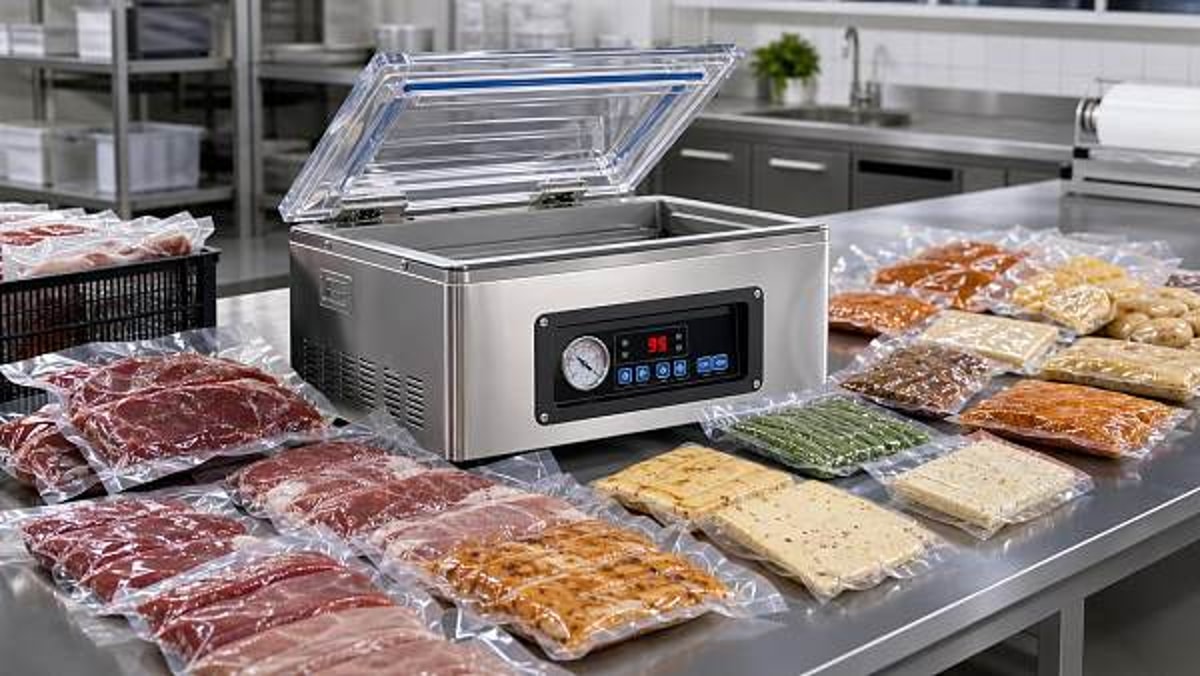
At a basic level, vacuum sealing removes air from packaging before sealing the product, extending shelf life and helping preserve texture, flavor, and presentation. In commercial settings, however, the role of vacuum sealing machines food teams depend on is much broader. These systems support inventory management, reduce spoilage, improve portion control, and create a more predictable packaging process across multiple sites or service formats.
For project managers and engineering leads, scalability is the central issue. A machine that performs well in a small prep kitchen may become a bottleneck in a growing commissary, central kitchen, hotel group, or food manufacturing line. Scalable vacuum sealing is therefore not only about machine size. It includes throughput, seal consistency, operator training requirements, maintenance cycles, packaging material compatibility, and the ability to integrate with food safety systems.
In practice, the best vacuum sealing machines food businesses can scale with are those that match both current production realities and future expansion plans. That means evaluating the machine as part of a larger commercial ecosystem rather than as a standalone appliance.
Why the food industry is paying closer attention
Food operations across hospitality, catering, retail, and institutional service are under pressure from labor shortages, volatile ingredient costs, stricter traceability requirements, and rising expectations around quality consistency. In this environment, packaging efficiency has moved from a back-of-house task to a strategic operational concern.
Vacuum sealing machines food facilities adopt at scale help address several industry priorities at once. First, they support waste reduction by slowing oxidation and minimizing product loss. Second, they make batch production more manageable by allowing teams to prepare, portion, and store ingredients safely in advance. Third, they improve logistics for multi-site distribution, especially where chilled transport, central production, or event-based service is involved.
This matters across the sectors GCT serves. Hotel and catering operators need premium presentation and storage control. Educational and institutional food programs need high-volume reliability. Specialty retail and gourmet concepts need packaging that reinforces freshness and brand value. As commercial experiences become more quality-driven and data-led, packaging equipment decisions increasingly influence the performance of the entire food project.
Core business value for project managers
From a project delivery standpoint, vacuum sealing should be evaluated through measurable business outcomes. The right machine can support schedule stability during commissioning, simplify standard operating procedures, and reduce process variation between shifts or sites. These are not minor gains. In scaled food environments, even small packaging inefficiencies multiply into labor waste, delayed dispatch, or quality complaints.
A well-selected vacuum sealing platform often creates value in five main areas:
- Longer usable shelf life for prepared ingredients and finished products
- More accurate portioning and improved cost control
- Cleaner storage and stronger cold-chain organization
- Higher output consistency in central kitchens and catering production
- Better support for HACCP-oriented hygiene and traceability practices
For engineering-minded decision-makers, these gains translate into better system utilization and easier operational scaling. Instead of reacting to waste, storage overflow, or inconsistent pack quality, teams can design a process that remains stable as volume increases.
Industry overview: where scalable sealing solutions fit
Not all food operations require the same configuration. The most suitable vacuum sealing machines food businesses choose depend on production rhythm, available footprint, labor profile, and regulatory expectations. The table below offers a practical overview for commercial planning.
Key machine categories and what they mean for scaling
External suction models are often the entry point for lower-volume operations. They are usually compact and cost-effective, but may struggle with liquids, heavy daily cycles, or highly variable production. They can serve small specialty food businesses well, yet they are rarely the ideal long-term answer for fast-growing commercial projects.
Chamber machines are the mainstream choice for many professional kitchens because they deliver stronger vacuum control, cleaner seals, and better handling of wet products. For project managers planning hotel kitchens, culinary labs, or medium-output commissaries, chamber units often represent the most balanced option between footprint, performance, and reliability.
Double-chamber machines are designed for higher productivity. While one chamber is sealing, the other can be loaded, reducing idle time and raising throughput. These systems are especially useful in event catering, central production, and expanding food service networks where speed becomes critical.
At the industrial end, automatic vacuum packaging lines and thermoforming systems support standardized, large-scale output. These systems require greater planning, utility coordination, and operator training, but they are often the right path for businesses moving from semi-manual packaging toward integrated production.
What project teams should assess before specification
Selecting vacuum sealing machines food operations can grow with should begin with production mapping rather than product brochures. Decision-makers need clear data on daily pack counts, product types, batch sizes, packaging formats, and expected growth over 12 to 36 months. Without this baseline, it is easy to either overspend on underused capacity or underinvest in equipment that soon becomes restrictive.
Several specification factors deserve close attention:
- Cycle time and packs per hour under real operating conditions
- Seal bar length, chamber dimensions, and bag size compatibility
- Vacuum pump performance and service accessibility
- Construction quality, including stainless steel finish and washdown suitability
- Control interface, recipe memory, and ease of staff training
- Food safety documentation and conformity with local market standards
- Availability of spare parts, technical support, and after-sales response
For multi-country buyers or globally expanding brands, compliance and sourcing reliability are especially important. A strong supplier should be able to support documentation, testing evidence, and supply continuity, not only machine delivery.
Application value across typical commercial scenarios
In hotel and resort environments, vacuum sealing supports mise en place discipline, premium ingredient protection, and sous vide workflows. This is particularly valuable for properties balancing banquet demand with à la carte service. Consistent packaging reduces prep variation and improves storage organization in space-constrained cold rooms.
In catering and event production, the priority is mobility and timing. Vacuum-packed portions travel more securely, are easier to label, and help crews execute faster on site. Where menu complexity is high, sealing also supports pre-event standardization, reducing pressure during service windows.
In institutional kitchens, including campuses and healthcare food service, repeatability and hygiene are critical. Vacuum sealing can improve stock rotation, reduce unnecessary handling, and support controlled portion systems. For project managers overseeing public or semi-public food projects, these operational improvements often carry direct budget implications.
In specialty retail and premium packaged food, the packaging itself contributes to customer perception. Here, vacuum sealing machines food brands use must balance preservation with visual quality. Clean seals, reduced air pockets, and consistent presentation help reinforce product value, especially for premium meats, prepared meals, artisanal items, and gourmet ingredients.
Implementation considerations that affect long-term success
Even a technically strong machine can underperform if installation planning is weak. Teams should confirm electrical requirements, ventilation conditions, sanitation workflows, operator access, and bench or line placement early in the project. Packaging material supply should also be validated in advance, since bag quality and compatibility influence seal integrity as much as machine settings do.
Training is another common gap. Operators need to understand not only how to run the machine, but how vacuum levels, dwell time, and product characteristics affect the finished pack. Standardized procedures for cleaning, daily checks, and preventive maintenance can significantly extend equipment life and reduce unplanned downtime.
Project leaders should also think about data and process control. In larger operations, packaging is not isolated from procurement, menu planning, shelf-life policy, and distribution planning. The more these functions are aligned, the more value vacuum sealing delivers over time.
A practical path forward for scalable food packaging
The most effective vacuum sealing machines food businesses can scale with are not necessarily the biggest or most automated models. They are the systems that fit the operational reality, support compliance, and remain dependable as production grows. For project managers, that means focusing on total process suitability: output, hygiene, maintenance, labor efficiency, and supplier credibility.
As food operations become more quality-driven and commercially complex, vacuum sealing is best treated as an enabling infrastructure decision. When specified well, it strengthens inventory control, protects margins, and supports a more resilient service model across hospitality, catering, institutional, and retail food environments.
For organizations reviewing vacuum sealing machines food projects at scale, a structured sourcing approach is essential. Define your production profile, compare machine classes against real throughput needs, verify compliance documentation, and work with partners that understand commercial-grade performance expectations. That is how packaging equipment becomes a growth asset rather than a future constraint.
Search News
Hot Articles
- Commercial KitchenStainless steel GN pans with reinforced corners last longer in busy kitchensMay 02, 2026
- Hotel Room AmenitiesMemory foam hotel mattresses: when soft comfort leads to faster saggingMay 02, 2026
- Hotel Room AmenitiesElectronic hotel door locks: battery alerts are often less simple than they seemMay 02, 2026
Popular Tags
Need ExpertConsultation?
Connect with our specialized leisureengineering team for procurementstrategies.
Recommended News
 May 02, 2026Stainless steel GN pans with reinforced corners last longer in busy kitchensStainless steel GN pans with reinforced corners help busy kitchens reduce warping, improve hygiene, and cut replacement costs. See why buyers choose longer-lasting performance.● Hospitality Sourcing Dir
 May 02, 2026Commercial induction cookers: power ratings that mislead first-time buyersCommercial induction cookers are not as simple as wattage labels suggest. Learn how to compare real performance, efficiency, pan fit, and reliability before you buy.● Hospitality Sourcing Dir
 May 02, 2026Beverage dispensers wholesale: what causes dripping after heavy useBeverage dispensers wholesale guide: learn what causes dripping after heavy use, how to spot seal, valve, and pressure issues, and choose durable suppliers with confidence.● Hospitality Sourcing Dir
 May 02, 2026Disposable wooden cutlery and the taste issue customers noticeDisposable wooden cutlery can affect taste, texture, and customer perception. Learn what causes woody aftertaste, how to test suppliers, and how to choose better options.● Hospitality Sourcing Dir
 May 02, 2026Sushi display cases: curved glass looks better, but is it practical?Sushi display cases with curved glass look premium, but are they practical? Compare visibility, cleaning, temperature control, and ROI before you buy.● Hospitality Sourcing Dir
 May 02, 2026Vacuum sealing machines food businesses can scale withVacuum sealing machines food businesses can scale with improve shelf life, workflow, and cost control. Explore reliable, compliant solutions for growing food operations.● Hospitality Sourcing Dir
 May 02, 2026Chafing fuel gel bulk: storage and burn-time issues to check firstChafing fuel gel bulk buyers should check storage stability, seal integrity, and real burn-time performance first. Reduce waste, avoid service disruption, and source with more confidence.● Hospitality Sourcing Dir
 May 02, 2026Custom printed napkins that keep logos sharp after unfoldingCustom printed napkins that keep logos sharp after unfolding help hotels, restaurants, and event brands protect presentation quality. Learn what to check before you buy.● Hospitality Sourcing Dir
 May 02, 2026Panini presses commercial models: smooth plate or grooved plate?Panini presses commercial buyers: compare smooth vs. grooved plates for hotels, cafés, catering, and foodservice. Learn which style boosts speed, cleaning, presentation, and value.● Hospitality Sourcing Dir
 May 02, 2026Catering transport carts: how much insulation is actually enough?Catering transport carts: discover how much insulation is truly enough to protect food quality, meet compliance goals, and improve service efficiency across real catering operations.● Hospitality Sourcing Dir
 May 02, 2026What slows down commercial bone saw machines during peak prep hoursCommercial bone saw machines slow down from blade wear, workflow bottlenecks, raw material variation, and cleaning delays. Learn what really cuts throughput and how to choose higher-efficiency equipment.● Hospitality Sourcing Dir
 May 02, 2026Refrigerated display cabinets: glass fogging problems and how to avoid themRefrigerated display cabinets often face glass fogging in humid settings. Learn key causes, smart anti-fog solutions, and how to choose reliable cabinets for clear visibility.● Hospitality Sourcing Dir
 May 02, 2026Commercial food processors: the attachment issue many kitchens overlookCommercial food processors are only as effective as their attachments. Learn how the right system improves consistency, safety, workflow, and ROI before you buy.● Hospitality Sourcing Dir
 May 02, 2026Biodegradable takeout containers that leak less with hot foodsBiodegradable takeout containers that leak less with hot foods: compare materials, heat resistance, grease barriers, and sourcing factors to choose reliable eco packaging.● Hospitality Sourcing Dir
 May 02, 2026Hotel & Catering Equipment checklist for new venue openingsHotel & Catering Equipment checklist for new venue openings: discover must-have items, common planning gaps, compliance checks, and sourcing tips to launch on time and with confidence.● Hospitality Sourcing Dir
 May 02, 2026Commercial waffle makers: flip or fixed plate for busy breakfast serviceCommercial waffle makers: compare flip vs fixed plate models for busy breakfast service. Learn which option improves speed, consistency, labor efficiency, and guest satisfaction.● Hospitality Sourcing Dir
 May 02, 2026Paper coffee cups wholesale: which lid fit causes the most complaintsPaper coffee cups wholesale buyers face the most complaints from loose lids that seem sealed but leak in use. Learn key fit risks, root causes, and sourcing checks before bulk orders.● Hospitality Sourcing Dir
 May 02, 2026Blast chillers commercial buyers regret choosing too smallBlast chillers commercial buyers often regret going too small. Learn how proper sizing protects food safety, peak throughput, compliance, and long-term operating efficiency.● Hospitality Sourcing Dir
 May 02, 2026Commercial wine coolers with dual zones: when are they worth it?Commercial wine coolers with dual zones: learn when the added cost pays off for hospitality, retail, and event venues through better temperature control, display, and service efficiency.● Hospitality Sourcing Dir
 May 02, 2026How to compare stainless steel GN pans by gauge and depthStainless steel GN pans compared by gauge and depth: learn how thickness, capacity, and workflow fit affect durability, heat performance, and smarter catering purchases.● Hospitality Sourcing Dir
 May 01, 2026Hotel and Catering Equipment Trends Shaping 2026 RenovationsHotel & Catering Equipment trends for 2026 renovations reveal smarter, cleaner, and more flexible solutions that cut risk, improve efficiency, and elevate guest experience.● Hospitality Sourcing Dir
 May 01, 2026Outdoor Patio Heaters: What Changes in Windy Dining AreasOutdoor patio heaters in windy dining areas need more than high output. Learn how wind changes comfort, efficiency, safety, and placement to choose smarter commercial heating solutions.● Hospitality Sourcing Dir
 May 01, 2026Food Warmers Commercial Models That Keep Texture, Not Just HeatFood warmers commercial buyers trust do more than hold heat—they preserve crispness, moisture, and presentation. Discover how to reduce waste and improve service quality.● Hospitality Sourcing Dir
 May 01, 2026Bakery Dough Mixers Sized Right for Batch ConsistencyBakery dough mixers sized right improve batch consistency, dough quality, and efficiency. Learn how to match capacity, torque, and dough type for reliable bakery performance.● Hospitality Sourcing Dir