Catering transport carts: how much insulation is actually enough?
For project managers responsible for foodservice efficiency, choosing catering transport carts is not just about mobility—it is about temperature control, compliance, labor flow, and service quality. But how much insulation is truly necessary for your operation? This article examines the practical insulation standards that matter most when balancing holding performance, transport distance, budget, and real-world catering demands.
What insulation means in catering transport carts
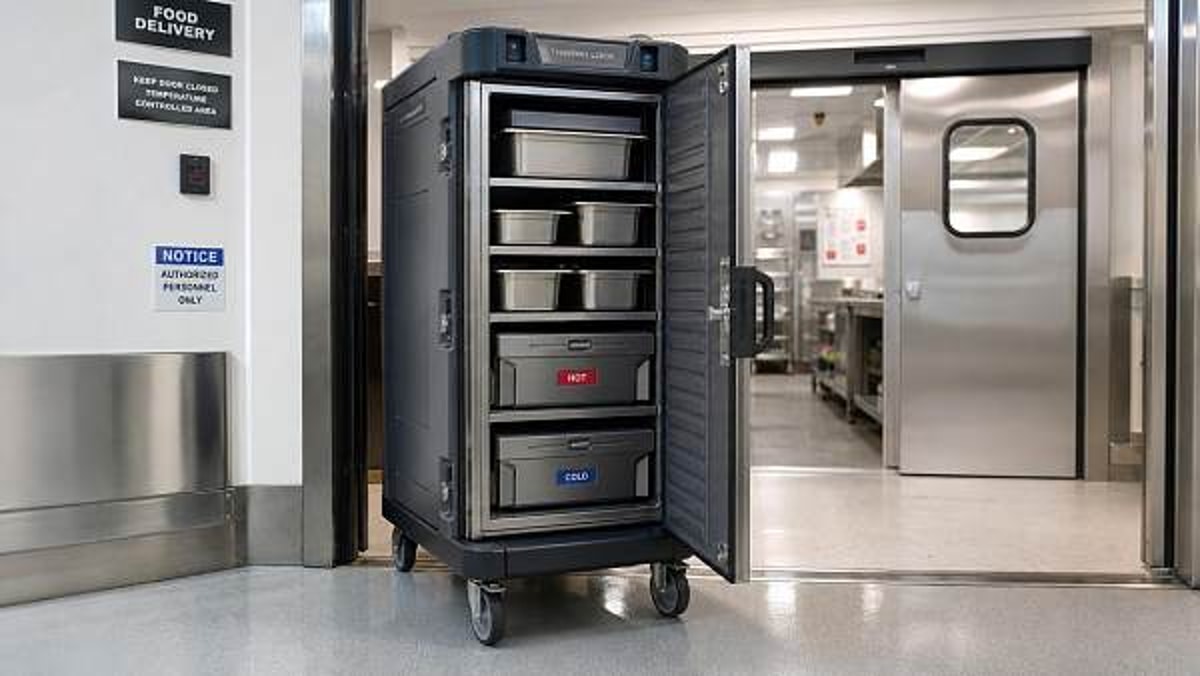
In practical terms, insulation in catering transport carts is the cart’s ability to slow heat gain or heat loss while food is moved between preparation, holding, and service points. That sounds simple, but for project managers, the issue is broader than wall thickness or marketing claims. Effective insulation affects food safety windows, staffing flexibility, route planning, energy use, and whether plated meals or bulk pans arrive in acceptable condition.
In hospitality, education, healthcare, event catering, and large institutional dining, catering transport carts often operate in transitional environments: hot kitchens, cold corridors, elevators, loading bays, banquet halls, and sometimes outdoor staging areas. Every transition exposes the cart to temperature stress. Insulation is what helps stabilize product temperature when active heating or refrigeration is limited, interrupted, or intentionally absent.
The core question is not whether more insulation is always better. The better question is whether the insulation level matches the transport duration, ambient conditions, menu sensitivity, and compliance targets of the operation. Over-specifying can raise cost and weight without meaningful operational benefit. Under-specifying can create quality drift, safety risks, and service disruption.
Why the industry pays close attention to insulation performance
The foodservice industry increasingly treats thermal control as part of operational design rather than as a simple product feature. This is especially true in commercial environments where service consistency is visible to guests, auditors, and brand stakeholders. A cart that performs well in a short hotel corridor may fail in a multi-building campus, a large convention venue, or a hospital distribution route.
There are four reasons insulation matters so much. First, food safety regulations require temperature control across the service chain, not only in the kitchen. Second, premium hospitality and institutional buyers are under pressure to reduce waste and complaints. Third, labor shortages make it harder to rely on fast movement as the only solution. Fourth, modern project planning increasingly emphasizes lifecycle value, meaning equipment must perform predictably across different service models.
For organizations sourcing through global commercial channels, this also connects to supplier credibility. Technical claims on catering transport carts should be backed by test methods, material specifications, door seal quality, and realistic holding expectations. In other words, insulation should be evaluated as a measurable operational variable, not as a vague premium label.
A practical industry overview of insulation needs
Not every operation needs the same insulation standard. A useful way to think about catering transport carts is by matching thermal performance to route complexity and product sensitivity. The table below offers a practical overview for project managers comparing common use cases.
This overview shows that insulation should be selected in relation to time, route, and operational variability. For many projects, “enough” insulation starts where temperature loss remains manageable during the longest realistic service delay, not merely the planned average route.
How to judge how much insulation is actually enough
When evaluating catering transport carts, project managers should avoid relying on a single specification. Instead, assess insulation through five practical criteria.
1. Transport duration
If food moves from kitchen to service in under 10 minutes, standard insulated carts may be sufficient for many hot or cold applications, assuming loading discipline is good. Once transport plus waiting time pushes beyond 20 to 30 minutes, thermal performance becomes much more critical. The cart must cover not only travel but also dispatch queues, elevator delays, and service setup time.
2. Temperature sensitivity of the menu
Bulk soups, covered pans, and dense proteins generally tolerate transport better than plated fried items, crisp textures, or chilled desserts. In other words, the more delicate the food, the more valuable strong insulation becomes. High-moisture foods may remain safe while still losing guest appeal; therefore, insulation decisions should consider both safety and sensory quality.
3. Ambient exposure
A conditioned indoor route is very different from passing through loading docks, open-air walkways, or winter corridors. Even short transport distances can require better-insulated catering transport carts when ambient conditions fluctuate sharply. Hot climates create similar stress for cold items, especially when doors are opened repeatedly.
4. Door opening frequency
A well-insulated cart can still underperform if staff open it too often or leave doors unsecured. The practical insulation requirement rises as service complexity increases. Multi-stop meal delivery routes usually need stronger insulation than one-stop transfers because each opening releases conditioned air and accelerates temperature drift.
5. Compliance margin
Operations with strict HACCP procedures, hospital meal protocols, or premium brand standards should build in a safety margin rather than selecting the minimum acceptable performance. That often means choosing catering transport carts that hold temperature beyond the expected route time so unexpected delays do not immediately create a nonconformance issue.
The business value of right-sized insulation
Selecting the right insulation level creates value in several ways. First, it protects food quality, which directly influences guest satisfaction, patient nutrition acceptance, student dining perception, or event reputation. Second, it reduces the need for emergency remakes and last-minute service corrections. Third, it supports more predictable labor deployment because teams are less dependent on perfect timing.
There is also an asset management angle. Overbuilt carts can be heavier, more expensive, and sometimes less agile in tight service areas. Underbuilt carts may require operational workarounds, such as shorter batches, extra staff runs, or supplemental holding equipment. The best result is usually a balanced specification: enough insulation to support the actual service model, plus a reasonable performance buffer.
For project leaders coordinating cross-border sourcing or multi-site rollouts, right-sized equipment also simplifies standardization. When insulation needs are clearly mapped to route conditions and menu profiles, it becomes easier to define a repeatable specification for suppliers and avoid inconsistent performance between locations.
Typical categories of catering transport carts and their insulation expectations
Different cart formats create different expectations for thermal control. The following classification helps connect equipment type with realistic insulation needs.
Common mistakes when specifying insulation
One common mistake is treating insulation as a stand-alone purchase criterion. In reality, the thermal result depends on preheating or prechilling practices, load density, pan coverage, gasket condition, and route discipline. A strong cart cannot compensate for poor loading habits.
Another mistake is using kitchen temperature as the test environment. The real test is the full service path, including staging and waiting. Project teams should walk the route, measure door counts, identify bottlenecks, and account for peak-time congestion. That field perspective often changes what “enough” insulation means.
A third mistake is paying only for nominal insulation thickness without asking how the cabinet is built. Material density, panel design, edge sealing, latch quality, and structural thermal bridging all influence performance. Two catering transport carts can look similar on paper while behaving very differently in operation.
Practical evaluation steps for project managers
For a reliable decision, project managers should document the longest route, highest ambient stress, and most temperature-sensitive menu items. Then request performance data from suppliers based on realistic holding intervals, not idealized showroom conditions. If possible, conduct a small-site trial using actual loads and normal staff behavior.
It is also wise to separate must-have performance from nice-to-have features. If your operation runs short indoor transfers, oversized insulation may add cost without improving service outcomes. But if your workflow includes outdoor handoff points, elevators, delayed dispatch, or multi-stop delivery, better-insulated catering transport carts usually pay back through lower food loss and fewer service failures.
For larger projects, create a specification sheet that includes target holding duration, acceptable temperature drop, ambient range, door opening assumptions, cleaning requirements, and mobility constraints. This turns procurement into a controlled technical decision rather than a comparison of generic brochures.
Conclusion: enough insulation is operation-specific, not absolute
The right insulation level for catering transport carts depends on how long food travels, how sensitive the menu is, how harsh the route conditions are, and how much compliance margin your organization requires. For many operations, moderate insulation is enough for short and controlled transfers. For institutional delivery, event catering, and complex commercial environments, higher insulation—and sometimes active holding support—is the safer long-term choice.
For project managers, the most effective approach is to define the service reality first and match the cart second. When catering transport carts are specified around real transport conditions rather than assumptions, insulation becomes a strategic tool for service quality, operational resilience, and buyer confidence. If your team is planning a new facility, multi-site rollout, or equipment upgrade, start by mapping the route, the menu, and the delay risk. That is how you determine how much insulation is actually enough.
Search News
Hot Articles
- Commercial KitchenStainless steel GN pans with reinforced corners last longer in busy kitchensMay 02, 2026
- Hotel Room AmenitiesMemory foam hotel mattresses: when soft comfort leads to faster saggingMay 02, 2026
- Hotel Room AmenitiesElectronic hotel door locks: battery alerts are often less simple than they seemMay 02, 2026
Popular Tags
Need ExpertConsultation?
Connect with our specialized leisureengineering team for procurementstrategies.
Recommended News
 May 02, 2026Stainless steel GN pans with reinforced corners last longer in busy kitchensStainless steel GN pans with reinforced corners help busy kitchens reduce warping, improve hygiene, and cut replacement costs. See why buyers choose longer-lasting performance.● Hospitality Sourcing Dir
 May 02, 2026Commercial induction cookers: power ratings that mislead first-time buyersCommercial induction cookers are not as simple as wattage labels suggest. Learn how to compare real performance, efficiency, pan fit, and reliability before you buy.● Hospitality Sourcing Dir
 May 02, 2026Beverage dispensers wholesale: what causes dripping after heavy useBeverage dispensers wholesale guide: learn what causes dripping after heavy use, how to spot seal, valve, and pressure issues, and choose durable suppliers with confidence.● Hospitality Sourcing Dir
 May 02, 2026Disposable wooden cutlery and the taste issue customers noticeDisposable wooden cutlery can affect taste, texture, and customer perception. Learn what causes woody aftertaste, how to test suppliers, and how to choose better options.● Hospitality Sourcing Dir
 May 02, 2026Sushi display cases: curved glass looks better, but is it practical?Sushi display cases with curved glass look premium, but are they practical? Compare visibility, cleaning, temperature control, and ROI before you buy.● Hospitality Sourcing Dir
 May 02, 2026Vacuum sealing machines food businesses can scale withVacuum sealing machines food businesses can scale with improve shelf life, workflow, and cost control. Explore reliable, compliant solutions for growing food operations.● Hospitality Sourcing Dir
 May 02, 2026Chafing fuel gel bulk: storage and burn-time issues to check firstChafing fuel gel bulk buyers should check storage stability, seal integrity, and real burn-time performance first. Reduce waste, avoid service disruption, and source with more confidence.● Hospitality Sourcing Dir
 May 02, 2026Custom printed napkins that keep logos sharp after unfoldingCustom printed napkins that keep logos sharp after unfolding help hotels, restaurants, and event brands protect presentation quality. Learn what to check before you buy.● Hospitality Sourcing Dir
 May 02, 2026Panini presses commercial models: smooth plate or grooved plate?Panini presses commercial buyers: compare smooth vs. grooved plates for hotels, cafés, catering, and foodservice. Learn which style boosts speed, cleaning, presentation, and value.● Hospitality Sourcing Dir
 May 02, 2026Catering transport carts: how much insulation is actually enough?Catering transport carts: discover how much insulation is truly enough to protect food quality, meet compliance goals, and improve service efficiency across real catering operations.● Hospitality Sourcing Dir
 May 02, 2026What slows down commercial bone saw machines during peak prep hoursCommercial bone saw machines slow down from blade wear, workflow bottlenecks, raw material variation, and cleaning delays. Learn what really cuts throughput and how to choose higher-efficiency equipment.● Hospitality Sourcing Dir
 May 02, 2026Refrigerated display cabinets: glass fogging problems and how to avoid themRefrigerated display cabinets often face glass fogging in humid settings. Learn key causes, smart anti-fog solutions, and how to choose reliable cabinets for clear visibility.● Hospitality Sourcing Dir
 May 02, 2026Commercial food processors: the attachment issue many kitchens overlookCommercial food processors are only as effective as their attachments. Learn how the right system improves consistency, safety, workflow, and ROI before you buy.● Hospitality Sourcing Dir
 May 02, 2026Biodegradable takeout containers that leak less with hot foodsBiodegradable takeout containers that leak less with hot foods: compare materials, heat resistance, grease barriers, and sourcing factors to choose reliable eco packaging.● Hospitality Sourcing Dir
 May 02, 2026Hotel & Catering Equipment checklist for new venue openingsHotel & Catering Equipment checklist for new venue openings: discover must-have items, common planning gaps, compliance checks, and sourcing tips to launch on time and with confidence.● Hospitality Sourcing Dir
 May 02, 2026Commercial waffle makers: flip or fixed plate for busy breakfast serviceCommercial waffle makers: compare flip vs fixed plate models for busy breakfast service. Learn which option improves speed, consistency, labor efficiency, and guest satisfaction.● Hospitality Sourcing Dir
 May 02, 2026Paper coffee cups wholesale: which lid fit causes the most complaintsPaper coffee cups wholesale buyers face the most complaints from loose lids that seem sealed but leak in use. Learn key fit risks, root causes, and sourcing checks before bulk orders.● Hospitality Sourcing Dir
 May 02, 2026Blast chillers commercial buyers regret choosing too smallBlast chillers commercial buyers often regret going too small. Learn how proper sizing protects food safety, peak throughput, compliance, and long-term operating efficiency.● Hospitality Sourcing Dir
 May 02, 2026Commercial wine coolers with dual zones: when are they worth it?Commercial wine coolers with dual zones: learn when the added cost pays off for hospitality, retail, and event venues through better temperature control, display, and service efficiency.● Hospitality Sourcing Dir
 May 02, 2026How to compare stainless steel GN pans by gauge and depthStainless steel GN pans compared by gauge and depth: learn how thickness, capacity, and workflow fit affect durability, heat performance, and smarter catering purchases.● Hospitality Sourcing Dir
 May 01, 2026Hotel and Catering Equipment Trends Shaping 2026 RenovationsHotel & Catering Equipment trends for 2026 renovations reveal smarter, cleaner, and more flexible solutions that cut risk, improve efficiency, and elevate guest experience.● Hospitality Sourcing Dir
 May 01, 2026Outdoor Patio Heaters: What Changes in Windy Dining AreasOutdoor patio heaters in windy dining areas need more than high output. Learn how wind changes comfort, efficiency, safety, and placement to choose smarter commercial heating solutions.● Hospitality Sourcing Dir
 May 01, 2026Food Warmers Commercial Models That Keep Texture, Not Just HeatFood warmers commercial buyers trust do more than hold heat—they preserve crispness, moisture, and presentation. Discover how to reduce waste and improve service quality.● Hospitality Sourcing Dir
 May 01, 2026Bakery Dough Mixers Sized Right for Batch ConsistencyBakery dough mixers sized right improve batch consistency, dough quality, and efficiency. Learn how to match capacity, torque, and dough type for reliable bakery performance.● Hospitality Sourcing Dir