Paper coffee cups wholesale: which lid fit causes the most complaints
In paper coffee cups wholesale, few issues trigger more buyer complaints than poor lid fit. For technical evaluators, a loose, overly tight, or inconsistent lid does more than affect user experience—it increases leakage risk, damages brand trust, and exposes gaps in material and tooling control. This article examines which lid fit problems generate the most complaints and what sourcing teams should verify before placing large-volume orders.
What lid fit means in paper coffee cups wholesale
In practical terms, lid fit is the relationship between the cup rim geometry and the lid locking feature. In paper coffee cups wholesale, buyers often treat lid fit as a simple compatibility issue, but it is actually a system-level performance factor involving cup curl diameter, rim roundness, paperboard stiffness, PE or PLA lining behavior, lid resin shrinkage, molding precision, and storage conditions. A cup and lid may match on paper by nominal size, yet still fail in use if tolerances are poorly controlled.
For technical assessment teams, the topic matters because the complaint is rarely just “the lid does not fit.” End users describe spills while walking, popping lids during delivery, lids that require too much force, lids that deform the cup rim, and intermittent failures from one batch to another. Each complaint points back to measurable production variables. That is why lid fit should be evaluated as a quality stability issue, not merely a packaging accessory concern.
Why the industry pays close attention to this issue
Across hospitality, catering, office supply, education, and specialty retail channels, takeaway beverage consumption has increased the performance expectations placed on disposable drinkware. Operators want faster service, lower leakage rates, cleaner customer handoff, and compatibility across multiple lid styles. In this environment, paper coffee cups wholesale decisions affect not only unit cost but also complaint frequency, return handling, customer review scores, and franchise consistency.
For global commercial buyers, the problem is amplified by multi-market sourcing. A cup sourced from one factory and a lid sourced from another may each pass internal inspection, yet fail when combined on a filling line or in field use. Temperature variation, shipping compression, warehouse humidity, and regional material substitutions can widen the gap between sample approval and real performance. This makes lid fit a priority topic for procurement engineers, QA managers, and commercial design teams working under E-E-A-T-driven sourcing standards.
Which lid fit issue causes the most complaints
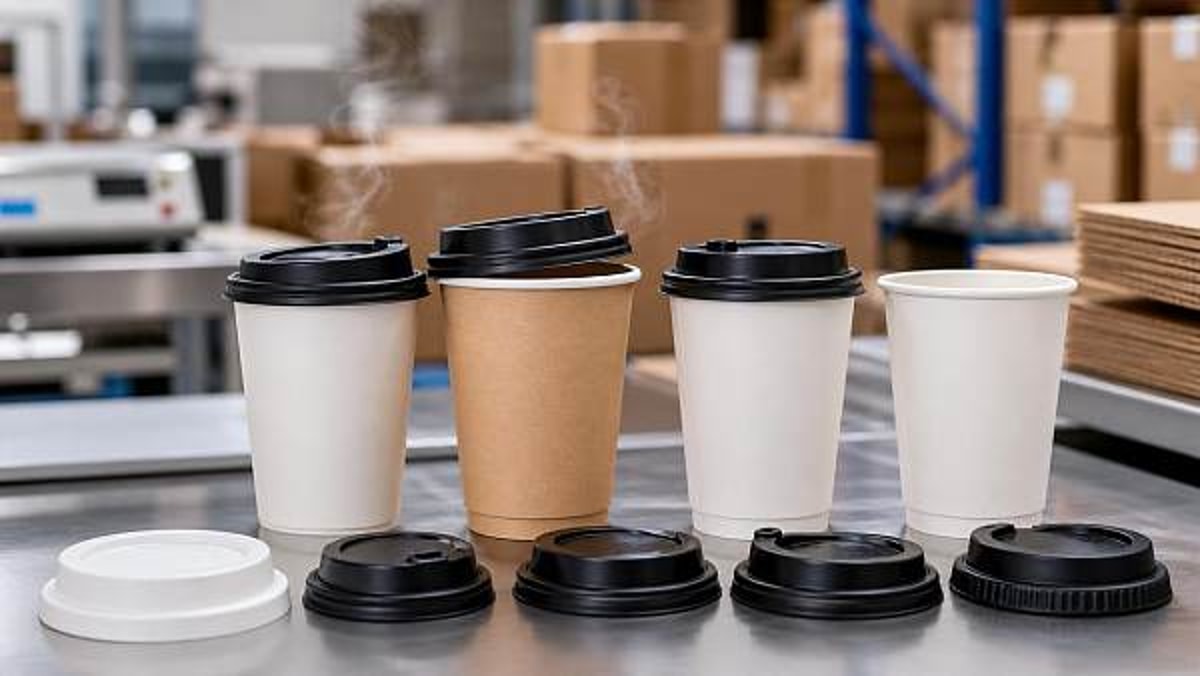
The most common and costly complaint in paper coffee cups wholesale is usually the loose-fit lid that appears sealed but releases under normal handling. This is worse than a clearly incompatible lid because it creates false confidence. Staff place the lid, hear partial engagement, assume closure is complete, and pass the drink to the customer. Once the cup is lifted, tilted, or placed in a carrier, the lid edge can lift, allowing hot liquid to leak through the sip opening side or around the perimeter.
Loose lids generate the highest complaint level for three reasons. First, they directly create spill events, including burn risk. Second, the failure is inconsistent, so operators struggle to train staff around it. Third, the issue is highly visible to end users and immediately associated with poor quality. A lid that is too tight is also a problem, but it tends to be detected during store operations. A deceptively loose lid often escapes detection until the drink is already in motion.
The second most frequent complaint is the overly tight lid that requires excessive application force. This can buckle the rim, crack the lid skirt, or cause beverage splash during capping. The third is batch inconsistency, where some lids fit correctly while others from the same carton vary enough to trigger random failures. From a technical standpoint, inconsistency often reveals weak process capability and poor dimensional control.
A practical overview of complaint types and root causes
Technical evaluators benefit from linking customer language to engineering causes. The table below summarizes the most typical patterns seen in paper cup and lid compatibility reviews.
Where lid fit failures usually begin
Most lid fit complaints in paper coffee cups wholesale begin before final assembly. A common failure point is cup rim conversion. If the rim curl is inconsistent in diameter or shape, even a well-molded lid cannot seal reliably. Another common issue is resin behavior in plastic lids. Polystyrene, polypropylene, PET, or fiber-based molded alternatives each react differently to molding temperature, cooling, and storage. Small changes in shrinkage can alter the snap-fit force.
Tooling maintenance is another major factor. Worn forming dies on cups and worn mold cavities on lids lead to dimensional drift that may remain unnoticed if suppliers only inspect appearance and top-level carton counts. Humidity also matters. Paper cups can soften slightly or deform under poor warehouse control, while lids stacked under pressure may warp. This is why technical audits should examine the entire compatibility chain rather than treating the cup plant and lid plant as isolated vendors.
Why this matters across commercial use scenarios
Not every buyer experiences the same severity of complaint. The operational context changes the tolerance for lid fit variation. A self-serve office pantry may tolerate minor tightness. A high-volume café serving hot beverages during rush periods cannot. The same applies to hotel breakfast takeaway counters, institutional catering, campus kiosks, amusement venues, and premium retail coffee corners.
What technical evaluators should verify before approval
For buyers managing paper coffee cups wholesale, sample approval should move beyond visual matching. At minimum, teams should request dimensional data for cup top outside diameter, curl profile, lid inner locking diameter, and sealing contact geometry. Tolerance ranges should be documented rather than described informally as “standard fit.” If multiple factories are involved, compatibility validation must use production samples from each source, not hand-picked reference pieces.
Retention testing is equally important. Technical teams should measure application force, removal force, leak performance under tilt, and stability after exposure to hot-fill conditions. Ideally, testing should include beverages at realistic service temperatures, because heat can soften the cup rim and change lid behavior. Stack compression and transport simulation are useful for export programs where lead time and shipment conditions can affect shape stability.
Also check process capability evidence. Reliable suppliers can explain how they monitor mold wear, rim forming consistency, resin lot variation, and post-production inspection frequency. If a supplier cannot describe these controls clearly, the chance of future complaints rises even when initial samples appear acceptable.
Common sourcing mistakes that increase lid complaints
One frequent mistake is buying cups and lids by nominal ounce size alone. A 12 oz cup from one supplier is not automatically compatible with a 12 oz lid from another. Another mistake is changing material or sustainability format without revalidation. Compostable or reduced-plastic designs can perform well, but they often require different snap geometry and stricter tolerance control.
A third mistake is accepting “pass” judgments based only on manual fitting by one inspector. In paper coffee cups wholesale, fit quality should be tested across multiple cartons, shifts, and lots. Random sampling matters because complaint-generating issues are often intermittent. Finally, buyers sometimes overlook the operational side. If store staff must press the lid at several points in a precise sequence to make it work, the design may be technically passable but commercially weak.
Practical recommendations for better commercial outcomes
A strong specification for paper coffee cups wholesale should define the cup-lid system, not the cup alone. Include dimensional tolerances, resin or material declarations, sealing performance expectations, hot-fill test conditions, and acceptance criteria for retention force. Where possible, nominate approved lid pairings by SKU rather than broad generic descriptions.
For strategic sourcing teams, it is wise to request pilot-run samples from actual production tooling before final commitment. Use real operating environments such as café counters, hospitality service stations, office beverage points, or event concessions. Capture feedback from staff who apply lids repeatedly, because ergonomics often reveal issues that lab checks miss. If the supply chain spans regions, repeat validation after shipment to confirm that transport has not altered performance.
From a brand perspective, the best outcome is not simply fewer complaints. Consistent lid fit supports service speed, beverage safety, presentation quality, and customer confidence. In commercial sectors where experience quality matters, these factors can outweigh minor unit-price differences.
Conclusion and next-step guidance
The lid fit problem that causes the most complaints in paper coffee cups wholesale is the loose seal that seems closed but fails during ordinary handling. It creates the highest spill risk, the hardest-to-control field variability, and the fastest damage to user trust. For technical evaluators, the solution is to assess cup and lid compatibility as an integrated engineered interface shaped by tolerance control, tooling condition, material behavior, and logistics exposure.
If your organization is reviewing high-volume disposable beverage packaging, build your evaluation around dimensional evidence, production consistency, and real-world use simulation. That approach helps sourcing teams reduce complaint rates, protect commercial reputation, and select suppliers that can support dependable global programs rather than only attractive sample-stage performance.
Search News
Hot Articles
- Commercial KitchenStainless steel GN pans with reinforced corners last longer in busy kitchensMay 02, 2026
- Hotel Room AmenitiesMemory foam hotel mattresses: when soft comfort leads to faster saggingMay 02, 2026
- Hotel Room AmenitiesElectronic hotel door locks: battery alerts are often less simple than they seemMay 02, 2026
Popular Tags
Need ExpertConsultation?
Connect with our specialized leisureengineering team for procurementstrategies.
Recommended News
 May 02, 2026Stainless steel GN pans with reinforced corners last longer in busy kitchensStainless steel GN pans with reinforced corners help busy kitchens reduce warping, improve hygiene, and cut replacement costs. See why buyers choose longer-lasting performance.● Hospitality Sourcing Dir
 May 02, 2026Commercial induction cookers: power ratings that mislead first-time buyersCommercial induction cookers are not as simple as wattage labels suggest. Learn how to compare real performance, efficiency, pan fit, and reliability before you buy.● Hospitality Sourcing Dir
 May 02, 2026Beverage dispensers wholesale: what causes dripping after heavy useBeverage dispensers wholesale guide: learn what causes dripping after heavy use, how to spot seal, valve, and pressure issues, and choose durable suppliers with confidence.● Hospitality Sourcing Dir
 May 02, 2026Disposable wooden cutlery and the taste issue customers noticeDisposable wooden cutlery can affect taste, texture, and customer perception. Learn what causes woody aftertaste, how to test suppliers, and how to choose better options.● Hospitality Sourcing Dir
 May 02, 2026Sushi display cases: curved glass looks better, but is it practical?Sushi display cases with curved glass look premium, but are they practical? Compare visibility, cleaning, temperature control, and ROI before you buy.● Hospitality Sourcing Dir
 May 02, 2026Vacuum sealing machines food businesses can scale withVacuum sealing machines food businesses can scale with improve shelf life, workflow, and cost control. Explore reliable, compliant solutions for growing food operations.● Hospitality Sourcing Dir
 May 02, 2026Chafing fuel gel bulk: storage and burn-time issues to check firstChafing fuel gel bulk buyers should check storage stability, seal integrity, and real burn-time performance first. Reduce waste, avoid service disruption, and source with more confidence.● Hospitality Sourcing Dir
 May 02, 2026Custom printed napkins that keep logos sharp after unfoldingCustom printed napkins that keep logos sharp after unfolding help hotels, restaurants, and event brands protect presentation quality. Learn what to check before you buy.● Hospitality Sourcing Dir
 May 02, 2026Panini presses commercial models: smooth plate or grooved plate?Panini presses commercial buyers: compare smooth vs. grooved plates for hotels, cafés, catering, and foodservice. Learn which style boosts speed, cleaning, presentation, and value.● Hospitality Sourcing Dir
 May 02, 2026Catering transport carts: how much insulation is actually enough?Catering transport carts: discover how much insulation is truly enough to protect food quality, meet compliance goals, and improve service efficiency across real catering operations.● Hospitality Sourcing Dir
 May 02, 2026What slows down commercial bone saw machines during peak prep hoursCommercial bone saw machines slow down from blade wear, workflow bottlenecks, raw material variation, and cleaning delays. Learn what really cuts throughput and how to choose higher-efficiency equipment.● Hospitality Sourcing Dir
 May 02, 2026Refrigerated display cabinets: glass fogging problems and how to avoid themRefrigerated display cabinets often face glass fogging in humid settings. Learn key causes, smart anti-fog solutions, and how to choose reliable cabinets for clear visibility.● Hospitality Sourcing Dir
 May 02, 2026Commercial food processors: the attachment issue many kitchens overlookCommercial food processors are only as effective as their attachments. Learn how the right system improves consistency, safety, workflow, and ROI before you buy.● Hospitality Sourcing Dir
 May 02, 2026Biodegradable takeout containers that leak less with hot foodsBiodegradable takeout containers that leak less with hot foods: compare materials, heat resistance, grease barriers, and sourcing factors to choose reliable eco packaging.● Hospitality Sourcing Dir
 May 02, 2026Hotel & Catering Equipment checklist for new venue openingsHotel & Catering Equipment checklist for new venue openings: discover must-have items, common planning gaps, compliance checks, and sourcing tips to launch on time and with confidence.● Hospitality Sourcing Dir
 May 02, 2026Commercial waffle makers: flip or fixed plate for busy breakfast serviceCommercial waffle makers: compare flip vs fixed plate models for busy breakfast service. Learn which option improves speed, consistency, labor efficiency, and guest satisfaction.● Hospitality Sourcing Dir
 May 02, 2026Paper coffee cups wholesale: which lid fit causes the most complaintsPaper coffee cups wholesale buyers face the most complaints from loose lids that seem sealed but leak in use. Learn key fit risks, root causes, and sourcing checks before bulk orders.● Hospitality Sourcing Dir
 May 02, 2026Blast chillers commercial buyers regret choosing too smallBlast chillers commercial buyers often regret going too small. Learn how proper sizing protects food safety, peak throughput, compliance, and long-term operating efficiency.● Hospitality Sourcing Dir
 May 02, 2026Commercial wine coolers with dual zones: when are they worth it?Commercial wine coolers with dual zones: learn when the added cost pays off for hospitality, retail, and event venues through better temperature control, display, and service efficiency.● Hospitality Sourcing Dir
 May 02, 2026How to compare stainless steel GN pans by gauge and depthStainless steel GN pans compared by gauge and depth: learn how thickness, capacity, and workflow fit affect durability, heat performance, and smarter catering purchases.● Hospitality Sourcing Dir
 May 01, 2026Hotel and Catering Equipment Trends Shaping 2026 RenovationsHotel & Catering Equipment trends for 2026 renovations reveal smarter, cleaner, and more flexible solutions that cut risk, improve efficiency, and elevate guest experience.● Hospitality Sourcing Dir
 May 01, 2026Outdoor Patio Heaters: What Changes in Windy Dining AreasOutdoor patio heaters in windy dining areas need more than high output. Learn how wind changes comfort, efficiency, safety, and placement to choose smarter commercial heating solutions.● Hospitality Sourcing Dir
 May 01, 2026Food Warmers Commercial Models That Keep Texture, Not Just HeatFood warmers commercial buyers trust do more than hold heat—they preserve crispness, moisture, and presentation. Discover how to reduce waste and improve service quality.● Hospitality Sourcing Dir
 May 01, 2026Bakery Dough Mixers Sized Right for Batch ConsistencyBakery dough mixers sized right improve batch consistency, dough quality, and efficiency. Learn how to match capacity, torque, and dough type for reliable bakery performance.● Hospitality Sourcing Dir