Commercial wine coolers with dual zones: when are they worth it?
For technical evaluators comparing refrigeration options, commercial wine coolers with dual zones are worth attention when storage precision, beverage variety, and service consistency directly affect operations. In hospitality, premium retail, and event venues, the right configuration can protect product quality while supporting display efficiency and workflow. This guide explains when dual-zone systems justify their higher cost and complexity.
In B2B environments, the decision is rarely about wine storage alone. It is about whether a cabinet can support inventory turnover, front-of-house presentation, staff speed, and temperature reliability over 10 to 16 operating hours per day. Technical evaluators must balance equipment cost, usable capacity, recovery time, service access, and integration with the wider commercial space.
For buyers in hotels, restaurants, specialty retail, lounges, cruise venues, and event facilities, commercial wine coolers are often evaluated alongside back-bar refrigeration, display cabinets, and cellar support systems. Dual-zone models can be highly practical, but only when the site actually benefits from storing different wine categories at separate temperature bands within one footprint.
What a dual-zone system changes in commercial operation
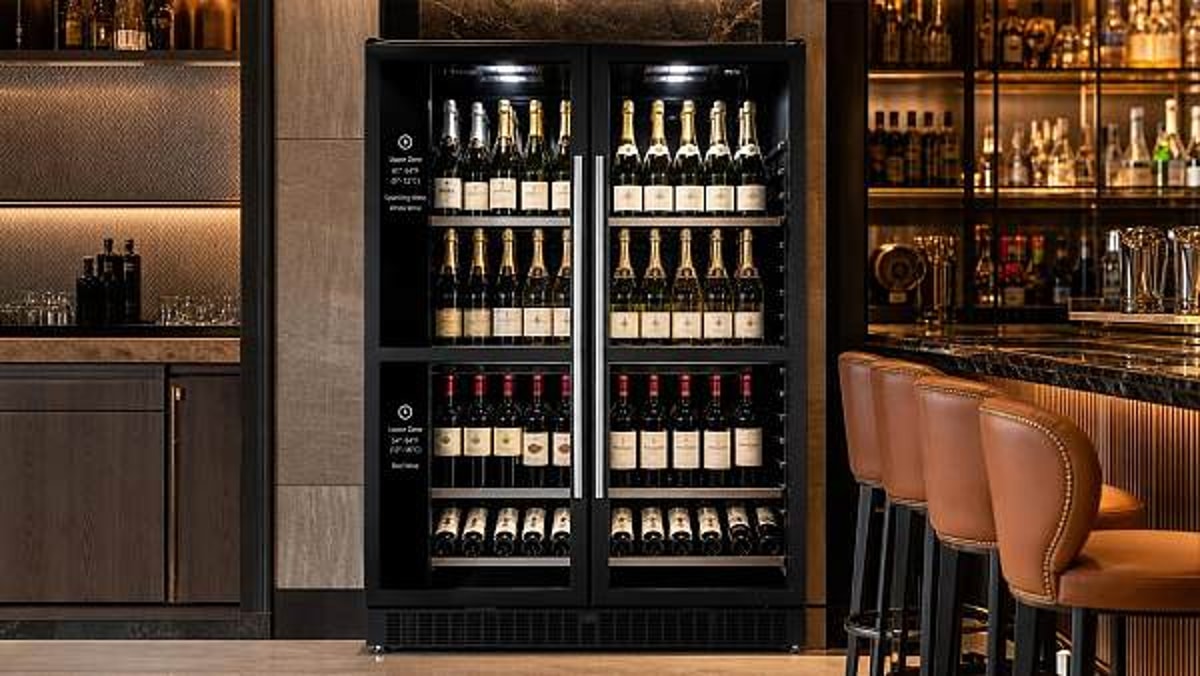
A dual-zone unit divides the cabinet into 2 independently controlled temperature areas. In most commercial wine coolers, the typical setpoint range for one zone may be around 5°C to 12°C for sparkling or white wines, while the second zone may operate around 12°C to 18°C for reds. The practical advantage is not luxury; it is operational control inside one cabinet.
This matters in venues where beverage menus are mixed and service teams cannot rely on a single holding temperature. A fine-dining restaurant with 20 to 60 wine labels, a premium retailer using refrigerated display, or a banquet operation preparing for 2 beverage styles in the same service window can all gain from a dual-zone layout.
Core technical benefit: separate temperature intent
Single-zone refrigeration works well when inventory is homogeneous or when product is moved quickly from central storage to service. Dual-zone systems become more valuable when operators need one cabinet to hold multiple categories at ready-to-serve temperatures with minimal manual handling. That can reduce door openings in secondary storage and cut avoidable staff movement across the service floor.
Common use cases where the second zone has measurable value
- Restaurants serving both white and red wines by the glass during the same shift
- Hotels managing VIP lounge service and premium minibar support
- Retail stores where display appearance and product condition are both priorities
- Event venues needing faster beverage staging for 100 to 300 guests
- Hybrid concepts where one cabinet supports display, storage, and immediate service
The table below shows where commercial wine coolers with dual zones typically deliver stronger business value than single-zone alternatives.
The key takeaway is simple: dual-zone systems are not automatically better. They are better when the cabinet replaces at least 1 extra handling step, supports 2 commercially relevant serving temperatures, or prevents product inconsistency visible to guests or retail customers.
When commercial wine coolers with dual zones are worth the added cost
In most sourcing exercises, dual-zone models cost more than comparable single-zone units because they require additional control logic, airflow balancing, and internal partition design. The premium may be justified if the business can convert that difference into better service speed, lower product risk, or stronger merchandising value within 12 to 36 months of use.
Scenario 1: high mix beverage programs
A venue with a narrow list of 6 to 10 labels may not need 2 zones. A venue carrying 25, 40, or 80 labels is different. Once a program includes sparkling, white, rosé, and red wines in regular rotation, technical evaluators should assess whether one cabinet can preserve service intent better than a single-zone compromise temperature.
Scenario 2: front-of-house display plus service storage
In premium retail and upscale hospitality, the cabinet is often visible to guests. That means lighting, glass type, humidity stability, door opening frequency, and shelving access all affect the decision. Commercial wine coolers with dual zones can support a split role: one zone for attractive ready-to-sell display and another for controlled reserve bottles intended for same-day service.
Scenario 3: constrained footprint
If the venue has only 1 placement location of roughly 600 to 900 mm in width, dual-zone may be more practical than buying 2 separate cabinets. This is especially relevant in bars, boutique hotels, private tasting rooms, and compact VIP areas where every square meter must justify itself.
Decision thresholds worth using in evaluation
- If more than 30% of stored inventory needs a different service temperature, dual-zone deserves review.
- If staff move bottles between cold storage and service points more than 2 to 3 times per shift, dual-zone may reduce handling.
- If cabinet visibility affects guest perception or premium positioning, display quality becomes a procurement factor, not a cosmetic extra.
- If the project avoids a second cabinet, installation and space savings may offset part of the price gap.
The table below helps technical evaluators compare common purchasing situations.
For many commercial sites, the break-even logic is operational rather than purely financial. If a dual-zone cabinet improves serving consistency, reduces bottle transfers, and supports a premium customer-facing program, the higher purchase price becomes easier to defend.
Technical criteria that matter more than the zone count
Some buyers focus too heavily on the phrase commercial wine coolers with dual zones and too little on how the cabinet actually performs under load. Zone count alone does not guarantee useful refrigeration. Evaluators should test whether the cabinet maintains stable internal conditions after frequent openings, uneven loading, and peak ambient temperatures of 25°C to 32°C.
Temperature stability and recovery time
The most practical metric is not only the setpoint range, but how tightly the unit can hold target temperatures during service. In commercial use, a variance of around ±1°C is often more useful than a wide theoretical range with weak recovery. Ask suppliers how long recovery typically takes after a 20 to 30 second door opening, and whether both zones perform evenly when stocked near capacity.
Airflow, humidity, and shelf usability
Bottles do not all have the same diameter, shoulder shape, or label sensitivity. A technically sound cabinet should combine effective fan circulation with shelf spacing that supports realistic commercial loading. If the nominal capacity is 100 bottles but practical capacity drops to 70 because of bottle shape, the project team should evaluate based on usable, not advertised, volume.
Key specification questions for suppliers
- What is the actual operating temperature range for each zone?
- What tolerance is expected under normal commercial door-opening frequency?
- Is cooling performance tested at full load or partial load?
- Can shelves be adjusted for mixed bottle heights and gift packaging?
- What ventilation clearance is required for built-in or undercounter installation?
- What is the noise level in dB, especially for guest-facing settings?
Another often overlooked factor is door construction. In front-of-house applications, UV-protective glass, low-condensation performance, and sturdy hinges may matter more than decorative trim. If a cabinet is opened 40 to 80 times per day, mechanical durability should be treated as a life-cycle issue, not an accessory detail.
Procurement risks, installation realities, and maintenance planning
Dual-zone refrigeration introduces more controls and often more service considerations. That does not make it risky by default, but it does require better project planning. Technical evaluators should review ventilation conditions, power supply, service clearance, and maintenance responsibility before approving specification or supplier shortlist.
Typical risks in commercial deployment
The first risk is misapplication. A dual-zone unit may be purchased for prestige while the actual beverage program remains simple. The second risk is poor placement, such as installing the cabinet near ovens, direct sunlight, or tight joinery with inadequate airflow. The third risk is assuming that nominal bottle capacity reflects mixed real-world inventory.
Installation and service checkpoints
Many projects fail at commissioning rather than sourcing. Evaluators should confirm electrical compatibility, ambient operating range, leveling, access for condenser cleaning, and whether the installation is freestanding, built-in, or undercounter. A review at 3 stages works well: pre-purchase layout check, delivery inspection, and post-install performance verification after 24 to 48 hours of stabilization.
The table below outlines a practical risk-control checklist for buyers sourcing commercial wine coolers.
From a life-cycle perspective, maintenance discipline is usually straightforward. Routine checks every 30 to 90 days, depending on dust load and placement, are often enough to preserve airflow and efficiency. For busy hospitality sites, documenting door gasket condition, internal sensor behavior, and visible temperature drift can prevent small issues from becoming service interruptions.
How technical evaluators should decide
A strong sourcing decision begins with application mapping rather than product marketing. Define 4 variables first: beverage mix, target service temperature bands, daily access frequency, and available footprint. Then compare those needs against real cabinet performance, install conditions, and support capability from the supplier or sourcing partner.
A practical 5-step evaluation model
- List the wine categories that truly need separate service temperatures.
- Calculate usable bottle volume by actual SKU mix, not brochure capacity.
- Check placement conditions, including ambient heat and ventilation.
- Review service response expectations, spare parts access, and cleaning routine.
- Compare the cost of one dual-zone unit versus one single-zone unit plus workflow inefficiency or second equipment.
When the answer is likely yes
Commercial wine coolers with dual zones are usually worth it when the operation serves at least 2 distinct wine profiles daily, space is limited, product presentation matters, and handling reduction has real workflow value. They are also a good fit when guest-facing consistency carries brand importance, such as in premium hotels, luxury retail, and curated event service.
When the answer is likely no
They are less compelling when the menu is narrow, service turnover is low, a central cellar already supports accurate staging, or the venue only needs one stable holding temperature. In those cases, a single-zone cabinet with strong recovery performance may deliver a better total value profile.
For technical evaluators, the real question is not whether dual-zone sounds premium. It is whether it solves a measurable operational problem in storage precision, service readiness, or display efficiency. If it does, the additional cost and complexity can be fully justified. If it does not, simpler refrigeration may be the more disciplined procurement choice.
If you are comparing commercial wine coolers for hospitality, retail, or specialty venue projects, GCT can help structure supplier screening, specification review, and sourcing evaluation around practical commercial outcomes. Contact us to discuss your application, request a tailored procurement framework, or explore more refrigeration solutions aligned with premium commercial environments.
Search News
Hot Articles
- Commercial KitchenStainless steel GN pans with reinforced corners last longer in busy kitchensMay 02, 2026
- Hotel Room AmenitiesMemory foam hotel mattresses: when soft comfort leads to faster saggingMay 02, 2026
- Hotel Room AmenitiesElectronic hotel door locks: battery alerts are often less simple than they seemMay 02, 2026
Popular Tags
Need ExpertConsultation?
Connect with our specialized leisureengineering team for procurementstrategies.
Recommended News
 May 02, 2026Stainless steel GN pans with reinforced corners last longer in busy kitchensStainless steel GN pans with reinforced corners help busy kitchens reduce warping, improve hygiene, and cut replacement costs. See why buyers choose longer-lasting performance.● Hospitality Sourcing Dir
 May 02, 2026Commercial induction cookers: power ratings that mislead first-time buyersCommercial induction cookers are not as simple as wattage labels suggest. Learn how to compare real performance, efficiency, pan fit, and reliability before you buy.● Hospitality Sourcing Dir
 May 02, 2026Beverage dispensers wholesale: what causes dripping after heavy useBeverage dispensers wholesale guide: learn what causes dripping after heavy use, how to spot seal, valve, and pressure issues, and choose durable suppliers with confidence.● Hospitality Sourcing Dir
 May 02, 2026Disposable wooden cutlery and the taste issue customers noticeDisposable wooden cutlery can affect taste, texture, and customer perception. Learn what causes woody aftertaste, how to test suppliers, and how to choose better options.● Hospitality Sourcing Dir
 May 02, 2026Sushi display cases: curved glass looks better, but is it practical?Sushi display cases with curved glass look premium, but are they practical? Compare visibility, cleaning, temperature control, and ROI before you buy.● Hospitality Sourcing Dir
 May 02, 2026Vacuum sealing machines food businesses can scale withVacuum sealing machines food businesses can scale with improve shelf life, workflow, and cost control. Explore reliable, compliant solutions for growing food operations.● Hospitality Sourcing Dir
 May 02, 2026Chafing fuel gel bulk: storage and burn-time issues to check firstChafing fuel gel bulk buyers should check storage stability, seal integrity, and real burn-time performance first. Reduce waste, avoid service disruption, and source with more confidence.● Hospitality Sourcing Dir
 May 02, 2026Custom printed napkins that keep logos sharp after unfoldingCustom printed napkins that keep logos sharp after unfolding help hotels, restaurants, and event brands protect presentation quality. Learn what to check before you buy.● Hospitality Sourcing Dir
 May 02, 2026Panini presses commercial models: smooth plate or grooved plate?Panini presses commercial buyers: compare smooth vs. grooved plates for hotels, cafés, catering, and foodservice. Learn which style boosts speed, cleaning, presentation, and value.● Hospitality Sourcing Dir
 May 02, 2026Catering transport carts: how much insulation is actually enough?Catering transport carts: discover how much insulation is truly enough to protect food quality, meet compliance goals, and improve service efficiency across real catering operations.● Hospitality Sourcing Dir
 May 02, 2026What slows down commercial bone saw machines during peak prep hoursCommercial bone saw machines slow down from blade wear, workflow bottlenecks, raw material variation, and cleaning delays. Learn what really cuts throughput and how to choose higher-efficiency equipment.● Hospitality Sourcing Dir
 May 02, 2026Refrigerated display cabinets: glass fogging problems and how to avoid themRefrigerated display cabinets often face glass fogging in humid settings. Learn key causes, smart anti-fog solutions, and how to choose reliable cabinets for clear visibility.● Hospitality Sourcing Dir
 May 02, 2026Commercial food processors: the attachment issue many kitchens overlookCommercial food processors are only as effective as their attachments. Learn how the right system improves consistency, safety, workflow, and ROI before you buy.● Hospitality Sourcing Dir
 May 02, 2026Biodegradable takeout containers that leak less with hot foodsBiodegradable takeout containers that leak less with hot foods: compare materials, heat resistance, grease barriers, and sourcing factors to choose reliable eco packaging.● Hospitality Sourcing Dir
 May 02, 2026Hotel & Catering Equipment checklist for new venue openingsHotel & Catering Equipment checklist for new venue openings: discover must-have items, common planning gaps, compliance checks, and sourcing tips to launch on time and with confidence.● Hospitality Sourcing Dir
 May 02, 2026Commercial waffle makers: flip or fixed plate for busy breakfast serviceCommercial waffle makers: compare flip vs fixed plate models for busy breakfast service. Learn which option improves speed, consistency, labor efficiency, and guest satisfaction.● Hospitality Sourcing Dir
 May 02, 2026Paper coffee cups wholesale: which lid fit causes the most complaintsPaper coffee cups wholesale buyers face the most complaints from loose lids that seem sealed but leak in use. Learn key fit risks, root causes, and sourcing checks before bulk orders.● Hospitality Sourcing Dir
 May 02, 2026Blast chillers commercial buyers regret choosing too smallBlast chillers commercial buyers often regret going too small. Learn how proper sizing protects food safety, peak throughput, compliance, and long-term operating efficiency.● Hospitality Sourcing Dir
 May 02, 2026Commercial wine coolers with dual zones: when are they worth it?Commercial wine coolers with dual zones: learn when the added cost pays off for hospitality, retail, and event venues through better temperature control, display, and service efficiency.● Hospitality Sourcing Dir
 May 02, 2026How to compare stainless steel GN pans by gauge and depthStainless steel GN pans compared by gauge and depth: learn how thickness, capacity, and workflow fit affect durability, heat performance, and smarter catering purchases.● Hospitality Sourcing Dir
 May 01, 2026Hotel and Catering Equipment Trends Shaping 2026 RenovationsHotel & Catering Equipment trends for 2026 renovations reveal smarter, cleaner, and more flexible solutions that cut risk, improve efficiency, and elevate guest experience.● Hospitality Sourcing Dir
 May 01, 2026Outdoor Patio Heaters: What Changes in Windy Dining AreasOutdoor patio heaters in windy dining areas need more than high output. Learn how wind changes comfort, efficiency, safety, and placement to choose smarter commercial heating solutions.● Hospitality Sourcing Dir
 May 01, 2026Food Warmers Commercial Models That Keep Texture, Not Just HeatFood warmers commercial buyers trust do more than hold heat—they preserve crispness, moisture, and presentation. Discover how to reduce waste and improve service quality.● Hospitality Sourcing Dir
 May 01, 2026Bakery Dough Mixers Sized Right for Batch ConsistencyBakery dough mixers sized right improve batch consistency, dough quality, and efficiency. Learn how to match capacity, torque, and dough type for reliable bakery performance.● Hospitality Sourcing Dir