How to compare stainless steel GN pans by gauge and depth
Choosing the right stainless steel GN pans is not just about size—it also depends on gauge and depth, which directly affect durability, heat performance, and kitchen efficiency. For buyers comparing options across commercial catering environments, understanding these specifications helps prevent costly sourcing mistakes and ensures the best fit for food service operations.
A checklist-based approach works best because stainless steel GN pans are often compared too quickly by price, finish, or nominal dimensions alone. In real purchasing, those shortcuts lead to premature denting, poor heat transfer, stacking problems, food holding issues, and replacement costs that outweigh the initial savings. For information researchers, procurement teams, and commercial kitchen planners, the smarter method is to compare the key decision points in sequence: gauge, depth, operating use, compatibility, and supplier consistency.
Start with the right comparison checklist before looking at price
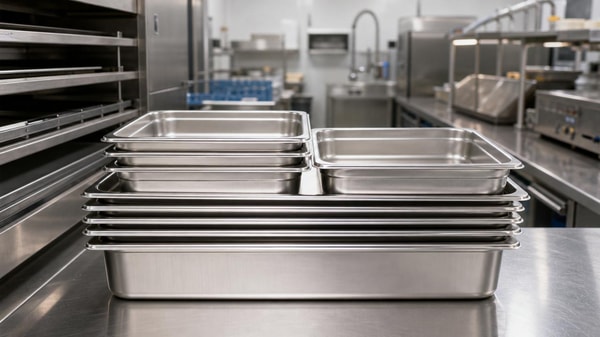
When evaluating stainless steel GN pans, buyers should first confirm whether they are comparing like-for-like products. Two pans may both be labeled GN 1/1, but the actual performance can differ significantly because of steel thickness, rim reinforcement, corner shaping, depth, and manufacturing tolerance. This matters even more in hotels, institutional catering, buffet lines, central kitchens, schools, and event service operations where pans move constantly between prep, storage, transport, heating, and washing cycles.
Before requesting quotations, prioritize these checks:
- Confirm the exact GN format needed, such as 1/1, 1/2, 1/3, or 2/3, so gauge and depth are compared within the same size category.
- Ask for the material thickness in millimeters, not only the marketing term “heavy duty” or “premium grade.”
- Verify depth in millimeters and usable capacity, since two pans with similar external dimensions can hold different volumes.
- Check whether the pan is intended for cooking, holding, transport, display, refrigeration, or all-purpose use.
- Review edge design, anti-jam stacking, and corner finishing because these affect handling and lifespan.
- Confirm compatibility with lids, trolleys, bain-marie wells, combi ovens, and buffet systems already in use.
How to compare gauge in stainless steel GN pans
Gauge is one of the most important but most misunderstood purchase factors. In practical sourcing, buyers should focus less on the gauge number by itself and more on the actual thickness specification provided by the supplier. Different markets may describe gauge differently, and confusion arises when a vendor uses approximate or non-standard terminology. A clear millimeter value is easier to compare and more reliable in technical reviews.
As a general rule, thicker stainless steel GN pans offer better resistance to warping, denting, and edge deformation. They are usually better for high-turnover kitchens, transport carts, banquet production, and repeated machine washing. Thinner pans may still be suitable for light-duty service, cold display, or operations where weight reduction matters more than long-term toughness.
Gauge comparison checklist
- For heavy-duty use: Prefer thicker walls and stronger rims for hotels, airline catering, institutional kitchens, and production environments with frequent handling.
- For display or lighter prep: Moderate thickness may be acceptable when pans are rarely subjected to impact or stacked loads.
- For transport: Reinforced edges matter as much as wall thickness because corners and rims absorb most handling stress.
- For oven exposure: Thicker material often provides better structural stability, although it may alter heat response slightly.
- For labor efficiency: Lighter pans reduce fatigue, but excessive thinness can increase replacement frequency.
A useful sourcing question is not “What gauge is best?” but “What gauge is best for the handling intensity of this kitchen?” This shifts the conversation from generic quality claims to operational fit.
How to compare depth without creating service inefficiency
Depth affects more than capacity. It also changes portion control, heating speed, food accessibility, line presentation, storage density, and cleaning time. Buyers often default to deeper stainless steel GN pans assuming they provide better value, but that choice can reduce efficiency if the foodservice format is based on quick replenishment, visual merchandising, or mixed-menu turnover.
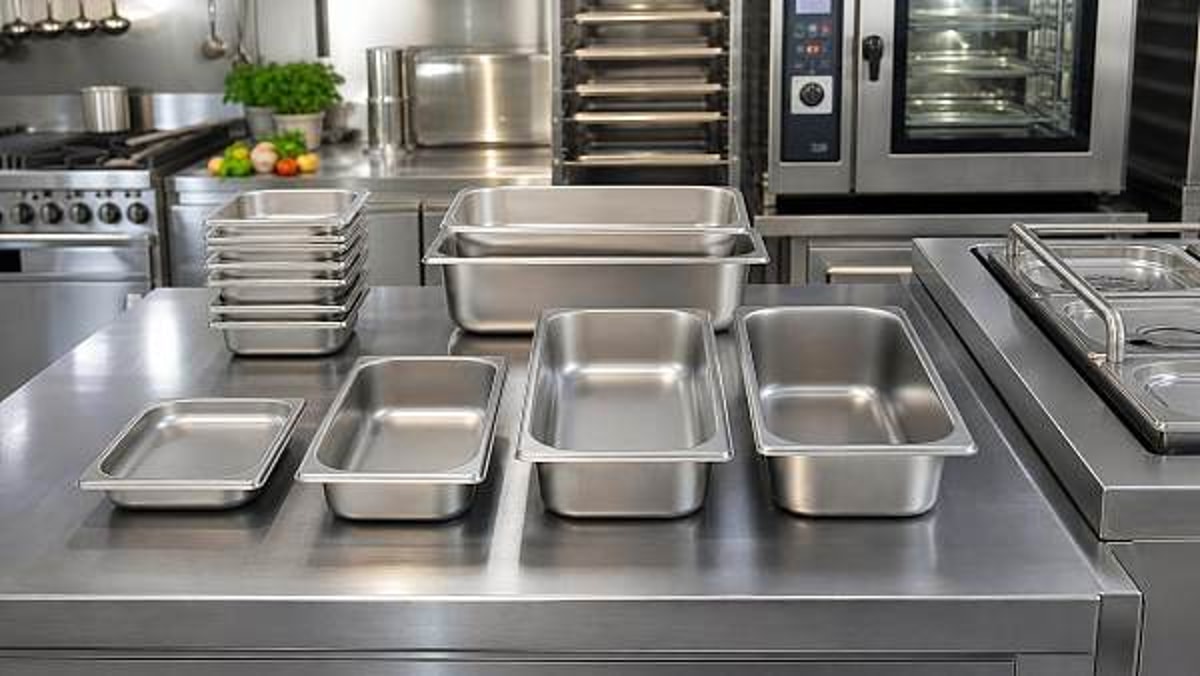
Shallow pans are often preferred for buffet display, cold prep toppings, deli presentation, and fast-access service because they improve visibility and make utensils easier to use. Medium-depth pans are versatile for prep, holding, and general kitchen rotation. Deep pans are typically selected for batch cooking, marinating, bulk storage, and back-of-house transport where maximum volume is the priority.
Depth comparison by operational purpose
When comparing depth, always ask how the pan will be used during the busiest hour of service. That single question often reveals whether capacity or accessibility matters more.
Use this decision framework to match gauge and depth together
The most reliable comparison does not treat gauge and depth as separate choices. Deep stainless steel GN pans usually carry more product weight, so they often benefit from thicker material and stronger rims. A shallow pan used only for cold display may not need the same structural strength. Matching both factors reduces overbuying and under-specifying.
- Estimate the actual food load, not just the nominal pan size.
- Map the pan to the workflow: prep, cook, hold, transport, display, or storage.
- Assess handling intensity: occasional use, daily use, or continuous turnover.
- Choose depth based on service speed and refill pattern.
- Choose thickness based on weight, impact risk, and washing frequency.
- Request samples if the purchase is for a multi-site commercial rollout.
Additional checks for different commercial catering environments
Different sectors within commercial trade will evaluate stainless steel GN pans differently. A hotel banquet kitchen, a school canteen, and a specialty food retailer may all buy GN pans, but their decision priorities are not identical.
Hotels and upscale hospitality
Prioritize appearance consistency, smooth finishing, anti-jam stacking, and pan rigidity. In premium hospitality settings, stainless steel GN pans often move between visible buffet areas and back-of-house production, so both presentation and durability matter.
Institutional and educational catering
Focus on replacement cost over lifecycle, heavy wash cycles, transport durability, and standardized compatibility. Slightly thicker pans may generate better long-term value where labor teams are large and handling conditions are less controlled.
Central kitchens and production units
Depth, load-bearing strength, and edge durability become critical. Deep stainless steel GN pans are common here, but they must be assessed for safe lifting, stacking stability, and deformation resistance under full load.
Retail food display and specialty service
Shallower pans may outperform deeper ones because merchandising visibility and frequent replenishment are more important than maximum capacity. In these cases, lighter gauge may be acceptable if visual standards and fit accuracy remain high.
Common sourcing mistakes that buyers often overlook
- Comparing only by external dimensions: Capacity, usable depth, and corner radius can still vary.
- Ignoring rim construction: The edge determines much of the pan’s real-world strength.
- Assuming thicker always means better: Over-specification adds cost and weight without necessarily improving workflow.
- Buying one depth for every application: Kitchens usually perform better with a mixed-depth assortment.
- Failing to test stacking and unstacking: Poor anti-jam performance wastes labor time and can damage pans.
- Not checking steel grade and finish quality: Material composition and surface treatment affect corrosion resistance and cleanability.
Practical supplier questions to ask before placing an order
If the goal is to source stainless steel GN pans efficiently, the most useful next step is to standardize supplier communication. Clear technical questions reduce back-and-forth, improve quote accuracy, and expose whether a factory or trading partner truly understands commercial kitchen requirements.
- What is the exact thickness in millimeters for each size and depth?
- What stainless steel grade is used, and is it consistent across the range?
- Are the pans suitable for oven, steam table, refrigeration, and dishwashing use?
- Do the pans include reinforced corners or anti-jam stacking design?
- Can the supplier provide dimensional tolerances and capacity data?
- Are matching lids, perforated versions, and related accessories available?
- Can samples be tested in the buyer’s actual catering environment before volume commitment?
FAQ: quick answers for comparing stainless steel GN pans
Is a thicker stainless steel GN pan always the better choice?
No. Thicker pans generally last longer in demanding environments, but they also cost more and weigh more. The best choice depends on handling intensity, food load, and service style.
What depth is best for buffet service?
Shallow or medium depths usually work best because they improve presentation, accessibility, and refill control. Deep pans are more suitable for back-of-house bulk holding.
Why do similar GN pans vary so much in price?
Price differences often reflect thickness, steel grade, finishing quality, edge reinforcement, stacking design, and production consistency rather than size alone.
Final buying guidance for faster and safer selection
To compare stainless steel GN pans effectively, start with the operating reality of the kitchen rather than with catalog labels. First define the application, then compare gauge in millimeters, depth suitability, handling stress, and system compatibility. This checklist method gives buyers a more accurate basis for evaluating cost, durability, and workflow efficiency across commercial catering environments.
If you need to move from research to sourcing, prepare a short specification sheet covering GN size, required depth range, expected load, preferred steel grade, usage scenario, and accessory compatibility. That information will make it easier to confirm product fit, compare supplier proposals, assess sample quality, and discuss lead time, budget, customization, and long-term procurement support with confidence.
Search News
Hot Articles
- Commercial KitchenStainless steel GN pans with reinforced corners last longer in busy kitchensMay 02, 2026
- Hotel Room AmenitiesMemory foam hotel mattresses: when soft comfort leads to faster saggingMay 02, 2026
- Hotel Room AmenitiesElectronic hotel door locks: battery alerts are often less simple than they seemMay 02, 2026
Popular Tags
Need ExpertConsultation?
Connect with our specialized leisureengineering team for procurementstrategies.
Recommended News
 May 02, 2026Stainless steel GN pans with reinforced corners last longer in busy kitchensStainless steel GN pans with reinforced corners help busy kitchens reduce warping, improve hygiene, and cut replacement costs. See why buyers choose longer-lasting performance.● Hospitality Sourcing Dir
 May 02, 2026Commercial induction cookers: power ratings that mislead first-time buyersCommercial induction cookers are not as simple as wattage labels suggest. Learn how to compare real performance, efficiency, pan fit, and reliability before you buy.● Hospitality Sourcing Dir
 May 02, 2026Beverage dispensers wholesale: what causes dripping after heavy useBeverage dispensers wholesale guide: learn what causes dripping after heavy use, how to spot seal, valve, and pressure issues, and choose durable suppliers with confidence.● Hospitality Sourcing Dir
 May 02, 2026Disposable wooden cutlery and the taste issue customers noticeDisposable wooden cutlery can affect taste, texture, and customer perception. Learn what causes woody aftertaste, how to test suppliers, and how to choose better options.● Hospitality Sourcing Dir
 May 02, 2026Sushi display cases: curved glass looks better, but is it practical?Sushi display cases with curved glass look premium, but are they practical? Compare visibility, cleaning, temperature control, and ROI before you buy.● Hospitality Sourcing Dir
 May 02, 2026Vacuum sealing machines food businesses can scale withVacuum sealing machines food businesses can scale with improve shelf life, workflow, and cost control. Explore reliable, compliant solutions for growing food operations.● Hospitality Sourcing Dir
 May 02, 2026Chafing fuel gel bulk: storage and burn-time issues to check firstChafing fuel gel bulk buyers should check storage stability, seal integrity, and real burn-time performance first. Reduce waste, avoid service disruption, and source with more confidence.● Hospitality Sourcing Dir
 May 02, 2026Custom printed napkins that keep logos sharp after unfoldingCustom printed napkins that keep logos sharp after unfolding help hotels, restaurants, and event brands protect presentation quality. Learn what to check before you buy.● Hospitality Sourcing Dir
 May 02, 2026Panini presses commercial models: smooth plate or grooved plate?Panini presses commercial buyers: compare smooth vs. grooved plates for hotels, cafés, catering, and foodservice. Learn which style boosts speed, cleaning, presentation, and value.● Hospitality Sourcing Dir
 May 02, 2026Catering transport carts: how much insulation is actually enough?Catering transport carts: discover how much insulation is truly enough to protect food quality, meet compliance goals, and improve service efficiency across real catering operations.● Hospitality Sourcing Dir
 May 02, 2026What slows down commercial bone saw machines during peak prep hoursCommercial bone saw machines slow down from blade wear, workflow bottlenecks, raw material variation, and cleaning delays. Learn what really cuts throughput and how to choose higher-efficiency equipment.● Hospitality Sourcing Dir
 May 02, 2026Refrigerated display cabinets: glass fogging problems and how to avoid themRefrigerated display cabinets often face glass fogging in humid settings. Learn key causes, smart anti-fog solutions, and how to choose reliable cabinets for clear visibility.● Hospitality Sourcing Dir
 May 02, 2026Commercial food processors: the attachment issue many kitchens overlookCommercial food processors are only as effective as their attachments. Learn how the right system improves consistency, safety, workflow, and ROI before you buy.● Hospitality Sourcing Dir
 May 02, 2026Biodegradable takeout containers that leak less with hot foodsBiodegradable takeout containers that leak less with hot foods: compare materials, heat resistance, grease barriers, and sourcing factors to choose reliable eco packaging.● Hospitality Sourcing Dir
 May 02, 2026Hotel & Catering Equipment checklist for new venue openingsHotel & Catering Equipment checklist for new venue openings: discover must-have items, common planning gaps, compliance checks, and sourcing tips to launch on time and with confidence.● Hospitality Sourcing Dir
 May 02, 2026Commercial waffle makers: flip or fixed plate for busy breakfast serviceCommercial waffle makers: compare flip vs fixed plate models for busy breakfast service. Learn which option improves speed, consistency, labor efficiency, and guest satisfaction.● Hospitality Sourcing Dir
 May 02, 2026Paper coffee cups wholesale: which lid fit causes the most complaintsPaper coffee cups wholesale buyers face the most complaints from loose lids that seem sealed but leak in use. Learn key fit risks, root causes, and sourcing checks before bulk orders.● Hospitality Sourcing Dir
 May 02, 2026Blast chillers commercial buyers regret choosing too smallBlast chillers commercial buyers often regret going too small. Learn how proper sizing protects food safety, peak throughput, compliance, and long-term operating efficiency.● Hospitality Sourcing Dir
 May 02, 2026Commercial wine coolers with dual zones: when are they worth it?Commercial wine coolers with dual zones: learn when the added cost pays off for hospitality, retail, and event venues through better temperature control, display, and service efficiency.● Hospitality Sourcing Dir
 May 02, 2026How to compare stainless steel GN pans by gauge and depthStainless steel GN pans compared by gauge and depth: learn how thickness, capacity, and workflow fit affect durability, heat performance, and smarter catering purchases.● Hospitality Sourcing Dir
 May 01, 2026Hotel and Catering Equipment Trends Shaping 2026 RenovationsHotel & Catering Equipment trends for 2026 renovations reveal smarter, cleaner, and more flexible solutions that cut risk, improve efficiency, and elevate guest experience.● Hospitality Sourcing Dir
 May 01, 2026Outdoor Patio Heaters: What Changes in Windy Dining AreasOutdoor patio heaters in windy dining areas need more than high output. Learn how wind changes comfort, efficiency, safety, and placement to choose smarter commercial heating solutions.● Hospitality Sourcing Dir
 May 01, 2026Food Warmers Commercial Models That Keep Texture, Not Just HeatFood warmers commercial buyers trust do more than hold heat—they preserve crispness, moisture, and presentation. Discover how to reduce waste and improve service quality.● Hospitality Sourcing Dir
 May 01, 2026Bakery Dough Mixers Sized Right for Batch ConsistencyBakery dough mixers sized right improve batch consistency, dough quality, and efficiency. Learn how to match capacity, torque, and dough type for reliable bakery performance.● Hospitality Sourcing Dir