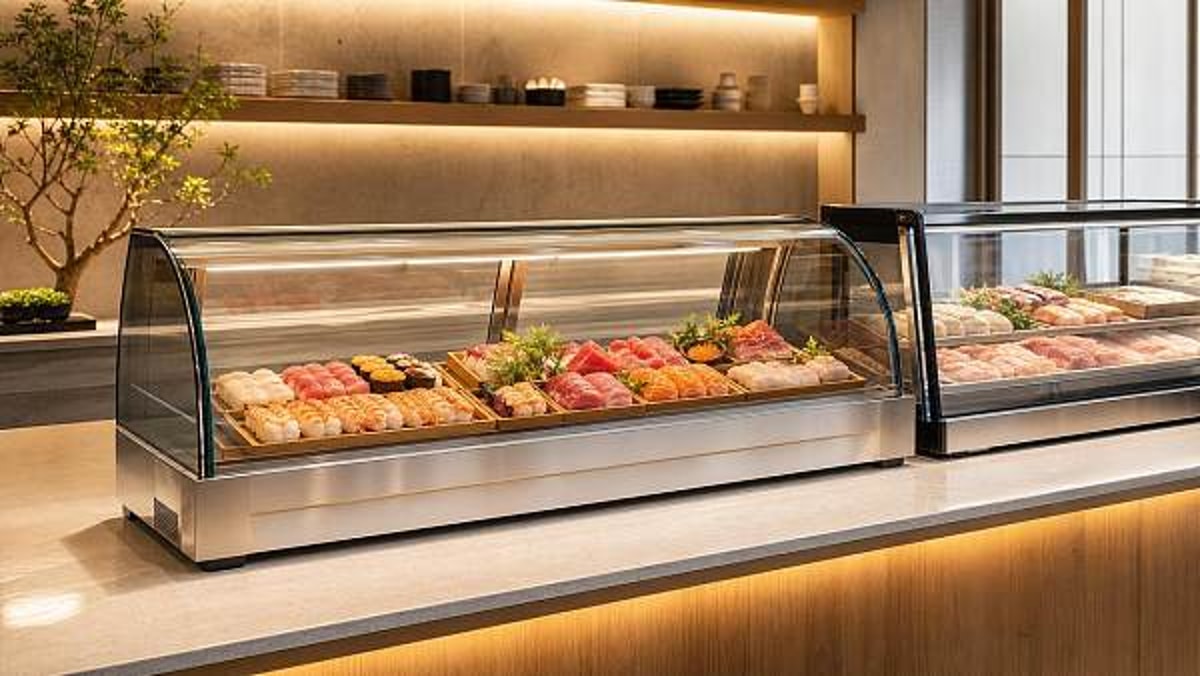
Sushi display cases: curved glass looks better, but is it practical?
Curved glass often gives sushi display cases a more elegant, premium look, making fresh ingredients appear more appealing at first glance. But beyond aesthetics, buyers also need to consider visibility, cleaning, temperature control, durability, and day-to-day practicality. This article explores whether curved glass is truly the better choice or simply a design upgrade with trade-offs worth examining.
For most buyers, the short answer is this: curved glass sushi display cases usually look better, but they are not automatically more practical. The right choice depends on your service style, counter layout, cleaning standards, budget, and the image you want to project. If presentation is central to the customer experience, curved glass can be a smart investment. If operational simplicity and easy maintenance matter more, straight glass may be the better fit.
That is the real search intent behind comparisons like this. People researching sushi display cases are rarely asking only about appearance. They want to know whether the visual upgrade improves sales enough to justify the trade-offs in daily use, upkeep, cost, and long-term reliability. In other words, they are trying to make a better buying decision, not just admire a design difference.
What buyers are really trying to decide
When someone compares curved and straight glass on sushi display cases, they are usually evaluating a purchase for a restaurant, hotel buffet, supermarket deli, Japanese concept store, or catering operation. They may be an owner, operations manager, chef, procurement lead, or fit-out consultant. Their concern is practical: which display type supports both product appeal and efficient service?
The most important questions tend to be consistent across use cases. Will the case make sushi look fresher and more premium? Can staff clean it quickly during busy service? Does the shape affect internal airflow or temperature stability? Is glare worse under strong lighting? Will replacement glass be more expensive or harder to source? And will the style still suit the venue three to five years from now?
That means a useful article should not spend too much time on generic definitions of display refrigeration. Instead, it should focus on real selection criteria: merchandising impact, visibility, food safety, maintenance, installation constraints, and return on investment. Those are the factors that actually influence whether a curved glass model is practical in the field.
Why curved glass sushi display cases look more attractive
There is a reason curved glass is so common in premium food presentation. Visually, it softens the silhouette of the unit and creates a more refined, modern, and hospitality-driven appearance. In sushi environments, where freshness, craftsmanship, and precision are part of the brand story, that design language matters.
Curved glass can make the display feel less boxy and more open to the customer. In front-of-house settings, this often helps the case blend into a high-end counter design rather than looking like a purely functional refrigeration appliance. That is especially useful in omakase bars, hotel lounges, upscale takeaway concepts, and food halls where visual impression influences perceived quality.
It can also enhance product presentation. Sushi, sashimi, nigiri, and garnish arrangements rely on visual delicacy. A curved front can frame the food more elegantly and create a showcase effect, especially when paired with warm-toned LED lighting, clean trays, and minimalist interiors. In this context, the display case does more than hold product. It becomes part of the selling experience.
For buyers concerned with brand positioning, this is not a small advantage. If your business depends on attracting attention, supporting premium pricing, or creating a polished first impression, the aesthetic value of curved glass may carry real commercial weight. A better-looking case can contribute to stronger merchandising, better customer perception, and potentially higher impulse purchases.
Does curved glass improve visibility, or create new problems?
This is where the discussion becomes more nuanced. Curved glass can improve the visual flow of the display from certain angles, particularly in customer-facing counters where guests approach from the front and slightly above. The softer profile may help products appear more continuous and less segmented than in a flat-front case.
However, curved glass can also introduce distortion, reflections, and glare depending on the lighting environment. In venues with strong ceiling spotlights, windows, or mixed ambient light, the curved surface may reflect more aggressively than straight glass. That can reduce clear visibility of the sushi, especially during daytime service or in brightly lit retail settings.
Visibility is also influenced by the height of the case, customer eye level, tray depth, and the angle of the front panel. A well-designed curved glass case can perform very well. A poorly designed one can make the display harder to read. This is why buyers should not assume all curved models are equally effective.
In practice, it is best to review the case under real or simulated lighting conditions. Ask suppliers for project references, installed photos, or showroom demonstrations. If possible, evaluate whether the front glass creates hot reflections, whether product labels remain readable, and whether the case still performs well when fully stocked. Practical visibility depends more on execution than on shape alone.
How curved glass affects cleaning and daily maintenance
For many operators, this is the biggest practical issue. Curved glass usually takes more time to clean than straight glass. The surface may require more careful wiping to avoid streaks, and the shape can be slightly less convenient for staff using standard cleaning motions. In high-turnover environments, even small inefficiencies can add up over time.
Fingerprints, condensation marks, and smudges may also be more noticeable on curved surfaces, particularly under decorative lighting. If the display is a central visual feature, staff may need to clean it more frequently to maintain the premium look that justified the purchase in the first place. That creates a hidden labor cost buyers should not ignore.
Another consideration is access. Some sushi display cases have rear sliding doors, lift-up panels, or removable trays. The practicality of curved glass depends partly on how easily staff can reach the inside front area for cleaning. If that section is awkward to access, sanitation routines may become less consistent, which is a real concern in fresh food presentation.
That said, maintenance challenges are manageable if the unit is designed well. Look for features such as easy-access interior surfaces, high-quality anti-fog glass, smooth frame joints, removable components, and corrosion-resistant materials. If the supplier can show that the case supports quick daily wipe-downs and deep cleaning, curved glass becomes far more practical.
What about temperature control and food safety?
Food safety matters more than appearance, so this question deserves careful attention. In most professional sushi display cases, the difference between curved and straight glass does not automatically determine refrigeration performance. Temperature control depends more on insulation, compressor quality, evaporator design, airflow management, ambient conditions, and how the case is used during service.
Still, the glass shape can influence airflow behavior and internal volume slightly, especially in compact countertop units. A poorly engineered curved glass case may have uneven cooling zones or weaker temperature consistency across the display area. That is not because curved glass is inherently flawed, but because some manufacturers prioritize styling over refrigeration design.
Buyers should therefore focus on measurable performance, not just visual appeal. Ask for temperature ranges under realistic operating conditions, not only laboratory claims. Check whether the unit maintains stable temperatures during frequent door opening, partial loading, and busy service periods. If the sushi case is used for raw fish display, consistency is critical.
It is also important to understand what the unit is meant to do. Many sushi display cases are designed primarily for short-term presentation, not long-term storage. They help preserve freshness during service, but they are not a substitute for proper refrigerated back-of-house storage. Buyers should align expectations with product use and local food safety requirements.
Durability, repair cost, and replacement concerns
Practicality is not only about daily use. It also includes what happens when something goes wrong. Curved glass panels are often more expensive to replace than flat panels. They may also be more specialized, with longer lead times depending on the supplier, country of origin, or custom dimensions.
For operations in remote markets or projects with strict uptime requirements, this matters. A damaged straight glass panel may be easier to source locally or replace quickly. A curved panel may require ordering from the original manufacturer, especially if the unit uses proprietary dimensions. That can increase downtime and maintenance cost.
Frame construction also matters. Because curved glass is often used in more design-oriented models, buyers should check whether the rest of the build quality matches the premium appearance. Pay attention to stainless steel grade, seal quality, shelf support, hinge performance, and the reputation of electrical and refrigeration components. A beautiful case is not practical if it ages poorly under daily commercial use.
Requesting spare parts policies, warranty details, and after-sales support terms is one of the smartest steps in the buying process. This is especially important for importers, distributors, and multi-site operators who need predictable maintenance planning across locations.
When curved glass is the better choice
Curved glass sushi display cases make the most sense when the display itself supports revenue, brand image, or customer experience in a visible way. If your concept relies on premium presentation, open-kitchen aesthetics, or elegant front-of-house merchandising, curved glass can deliver value beyond simple storage.
They are especially suitable for upscale sushi bars, boutique food counters, luxury hotel breakfast service, premium department store concessions, and design-forward hospitality spaces. In these settings, customers notice visual details, and the case contributes directly to the overall perception of freshness and quality.
Curved glass can also be a good fit for businesses that refresh displays often and have strong housekeeping discipline. If staff are already trained to maintain polished service counters and visual presentation standards, the extra cleaning attention required is less likely to become a burden.
In short, curved glass is most practical when aesthetics are not just decorative, but commercially relevant. If a stronger presentation helps justify pricing, support brand identity, or create a more memorable customer experience, the design premium may be well worth it.
When straight glass may be the smarter option
Straight glass sushi display cases are often the more practical choice for businesses that prioritize function, speed, and maintenance simplicity. They are generally easier to wipe clean, less prone to complex reflections, and often less expensive to repair or replace. For many operators, that combination is hard to beat.
This makes straight glass well suited to high-volume takeaway shops, conveyor-belt sushi concepts, supermarket prepared food sections, institutional foodservice, and budget-sensitive startups. In these environments, the operational benefits may outweigh any aesthetic advantage of a curved front.
Straight glass can also work better where visual consistency and modular fit-out matter. If the case needs to align with other counters, prep stations, or standardized shopfitting systems, a flat profile may integrate more easily. This can simplify installation and create a cleaner overall layout.
Most importantly, straight glass reduces the risk of paying extra for a design feature that customers may not value enough to notice. If your buyers care more about speed, price, or convenience than display elegance, the practical choice is usually the wiser one.
A simple checklist for comparing sushi display cases
If you are sourcing sushi display cases and deciding between curved and straight glass, use a structured comparison rather than relying on appearance alone. Start with the service model: dine-in showcase, grab-and-go, buffet, chef counter, or retail deli. The right design depends heavily on how the case will be seen and used.
Next, evaluate five core areas. First, product presentation: does the case genuinely improve how sushi looks under your actual lighting? Second, visibility: are there reflections or distortions from normal customer angles? Third, cleaning: how quickly can staff maintain a spotless finish? Fourth, refrigeration: does the unit keep consistent temperatures during service? Fifth, support: how easy is it to replace parts and get service if needed?
It is also wise to ask suppliers specific questions. Is the glass tempered and anti-fog? What is the recommended ambient operating range? How is condensate managed? Are spare parts stocked locally? Can the unit be customized for tray size, counter depth, or branding? Serious suppliers should be able to answer these questions clearly.
Finally, think in terms of total cost of ownership, not just purchase price. A cheaper unit that performs poorly, cleans badly, or fails early is rarely the better deal. Likewise, a premium curved glass model only makes sense if its visual value contributes meaningfully to the business.
Final verdict: better-looking, yes; more practical, not always
Curved glass sushi display cases do usually look better. They can elevate product presentation, strengthen brand image, and make a sushi counter feel more refined and premium. In the right commercial setting, that visual advantage can translate into real business value.
But practicality depends on more than appearance. Cleaning effort, glare, durability, replacement cost, and refrigeration quality all matter. A curved glass unit is practical only when its design benefits align with the needs of the operation. Otherwise, it may simply be a more expensive aesthetic upgrade.
For information researchers comparing sushi display cases, the best conclusion is this: choose curved glass when presentation is part of your selling strategy, and choose straight glass when simplicity, serviceability, and efficiency are the priority. The smartest buyers do not ask which style looks better in isolation. They ask which one works better for the business they are actually running.
Search News
Hot Articles
- Commercial KitchenStainless steel GN pans with reinforced corners last longer in busy kitchensMay 02, 2026
- Hotel Room AmenitiesMemory foam hotel mattresses: when soft comfort leads to faster saggingMay 02, 2026
- Hotel Room AmenitiesElectronic hotel door locks: battery alerts are often less simple than they seemMay 02, 2026
Popular Tags
Need ExpertConsultation?
Connect with our specialized leisureengineering team for procurementstrategies.
Recommended News
 May 02, 2026Stainless steel GN pans with reinforced corners last longer in busy kitchensStainless steel GN pans with reinforced corners help busy kitchens reduce warping, improve hygiene, and cut replacement costs. See why buyers choose longer-lasting performance.● Hospitality Sourcing Dir
 May 02, 2026Commercial induction cookers: power ratings that mislead first-time buyersCommercial induction cookers are not as simple as wattage labels suggest. Learn how to compare real performance, efficiency, pan fit, and reliability before you buy.● Hospitality Sourcing Dir
 May 02, 2026Beverage dispensers wholesale: what causes dripping after heavy useBeverage dispensers wholesale guide: learn what causes dripping after heavy use, how to spot seal, valve, and pressure issues, and choose durable suppliers with confidence.● Hospitality Sourcing Dir
 May 02, 2026Disposable wooden cutlery and the taste issue customers noticeDisposable wooden cutlery can affect taste, texture, and customer perception. Learn what causes woody aftertaste, how to test suppliers, and how to choose better options.● Hospitality Sourcing Dir
 May 02, 2026Sushi display cases: curved glass looks better, but is it practical?Sushi display cases with curved glass look premium, but are they practical? Compare visibility, cleaning, temperature control, and ROI before you buy.● Hospitality Sourcing Dir
 May 02, 2026Vacuum sealing machines food businesses can scale withVacuum sealing machines food businesses can scale with improve shelf life, workflow, and cost control. Explore reliable, compliant solutions for growing food operations.● Hospitality Sourcing Dir
 May 02, 2026Chafing fuel gel bulk: storage and burn-time issues to check firstChafing fuel gel bulk buyers should check storage stability, seal integrity, and real burn-time performance first. Reduce waste, avoid service disruption, and source with more confidence.● Hospitality Sourcing Dir
 May 02, 2026Custom printed napkins that keep logos sharp after unfoldingCustom printed napkins that keep logos sharp after unfolding help hotels, restaurants, and event brands protect presentation quality. Learn what to check before you buy.● Hospitality Sourcing Dir
 May 02, 2026Panini presses commercial models: smooth plate or grooved plate?Panini presses commercial buyers: compare smooth vs. grooved plates for hotels, cafés, catering, and foodservice. Learn which style boosts speed, cleaning, presentation, and value.● Hospitality Sourcing Dir
 May 02, 2026Catering transport carts: how much insulation is actually enough?Catering transport carts: discover how much insulation is truly enough to protect food quality, meet compliance goals, and improve service efficiency across real catering operations.● Hospitality Sourcing Dir
 May 02, 2026What slows down commercial bone saw machines during peak prep hoursCommercial bone saw machines slow down from blade wear, workflow bottlenecks, raw material variation, and cleaning delays. Learn what really cuts throughput and how to choose higher-efficiency equipment.● Hospitality Sourcing Dir
 May 02, 2026Refrigerated display cabinets: glass fogging problems and how to avoid themRefrigerated display cabinets often face glass fogging in humid settings. Learn key causes, smart anti-fog solutions, and how to choose reliable cabinets for clear visibility.● Hospitality Sourcing Dir
 May 02, 2026Commercial food processors: the attachment issue many kitchens overlookCommercial food processors are only as effective as their attachments. Learn how the right system improves consistency, safety, workflow, and ROI before you buy.● Hospitality Sourcing Dir
 May 02, 2026Biodegradable takeout containers that leak less with hot foodsBiodegradable takeout containers that leak less with hot foods: compare materials, heat resistance, grease barriers, and sourcing factors to choose reliable eco packaging.● Hospitality Sourcing Dir
 May 02, 2026Hotel & Catering Equipment checklist for new venue openingsHotel & Catering Equipment checklist for new venue openings: discover must-have items, common planning gaps, compliance checks, and sourcing tips to launch on time and with confidence.● Hospitality Sourcing Dir
 May 02, 2026Commercial waffle makers: flip or fixed plate for busy breakfast serviceCommercial waffle makers: compare flip vs fixed plate models for busy breakfast service. Learn which option improves speed, consistency, labor efficiency, and guest satisfaction.● Hospitality Sourcing Dir
 May 02, 2026Paper coffee cups wholesale: which lid fit causes the most complaintsPaper coffee cups wholesale buyers face the most complaints from loose lids that seem sealed but leak in use. Learn key fit risks, root causes, and sourcing checks before bulk orders.● Hospitality Sourcing Dir
 May 02, 2026Blast chillers commercial buyers regret choosing too smallBlast chillers commercial buyers often regret going too small. Learn how proper sizing protects food safety, peak throughput, compliance, and long-term operating efficiency.● Hospitality Sourcing Dir
 May 02, 2026Commercial wine coolers with dual zones: when are they worth it?Commercial wine coolers with dual zones: learn when the added cost pays off for hospitality, retail, and event venues through better temperature control, display, and service efficiency.● Hospitality Sourcing Dir
 May 02, 2026How to compare stainless steel GN pans by gauge and depthStainless steel GN pans compared by gauge and depth: learn how thickness, capacity, and workflow fit affect durability, heat performance, and smarter catering purchases.● Hospitality Sourcing Dir
 May 01, 2026Hotel and Catering Equipment Trends Shaping 2026 RenovationsHotel & Catering Equipment trends for 2026 renovations reveal smarter, cleaner, and more flexible solutions that cut risk, improve efficiency, and elevate guest experience.● Hospitality Sourcing Dir
 May 01, 2026Outdoor Patio Heaters: What Changes in Windy Dining AreasOutdoor patio heaters in windy dining areas need more than high output. Learn how wind changes comfort, efficiency, safety, and placement to choose smarter commercial heating solutions.● Hospitality Sourcing Dir
 May 01, 2026Food Warmers Commercial Models That Keep Texture, Not Just HeatFood warmers commercial buyers trust do more than hold heat—they preserve crispness, moisture, and presentation. Discover how to reduce waste and improve service quality.● Hospitality Sourcing Dir
 May 01, 2026Bakery Dough Mixers Sized Right for Batch ConsistencyBakery dough mixers sized right improve batch consistency, dough quality, and efficiency. Learn how to match capacity, torque, and dough type for reliable bakery performance.● Hospitality Sourcing Dir