Commercial waffle makers: flip or fixed plate for busy breakfast service
For procurement teams managing high-volume breakfast service, choosing between flip and fixed-plate commercial waffle makers can directly affect speed, consistency, labor efficiency, and guest satisfaction. This guide compares both options from a sourcing and operational perspective, helping buyers identify the right equipment for hotels, buffets, cafés, and institutional foodservice environments where reliability, output, and long-term value matter most.
For most busy breakfast operations, the short answer is this: flip models usually deliver better batter distribution and more uniform browning, while fixed-plate models often win on speed, simplicity, and ease of training. The right choice depends less on the appliance category alone and more on your service format, staffing model, expected output, cleaning routine, and guest quality expectations.
That is the decision framework procurement teams should use. Instead of asking which type is universally better, ask which type reduces service bottlenecks, supports your labor reality, and holds up under your actual breakfast volume. In commercial foodservice, a waffle maker is not just a countertop appliance. It is a throughput tool, a consistency control point, and in many hospitality settings, a visible part of the guest experience.
What procurement teams are really deciding when comparing flip and fixed-plate models
When buyers search for commercial waffle makers, the intent is usually practical rather than technical. They are trying to avoid slow service, uneven product quality, equipment downtime, cleaning headaches, and poor return on investment. The flip-versus-fixed decision affects all of these.
In a hotel buffet, for example, the equipment must support repeated use by staff or guests during a compressed morning peak. In a café or made-to-order station, the priority may shift toward product appearance and premium texture. In schools, hospitals, and institutional catering, safety, ease of operation, and output predictability may matter more than artisan-style results.
That means the buying decision should focus on operational fit. Plate style matters, but not in isolation. Procurement teams should assess how the machine performs during back-to-back cycles, whether it can maintain even heating during rush periods, how quickly new staff can operate it correctly, and how much intervention is needed to keep waffles consistent from first order to last.
Flip commercial waffle makers: where they add value
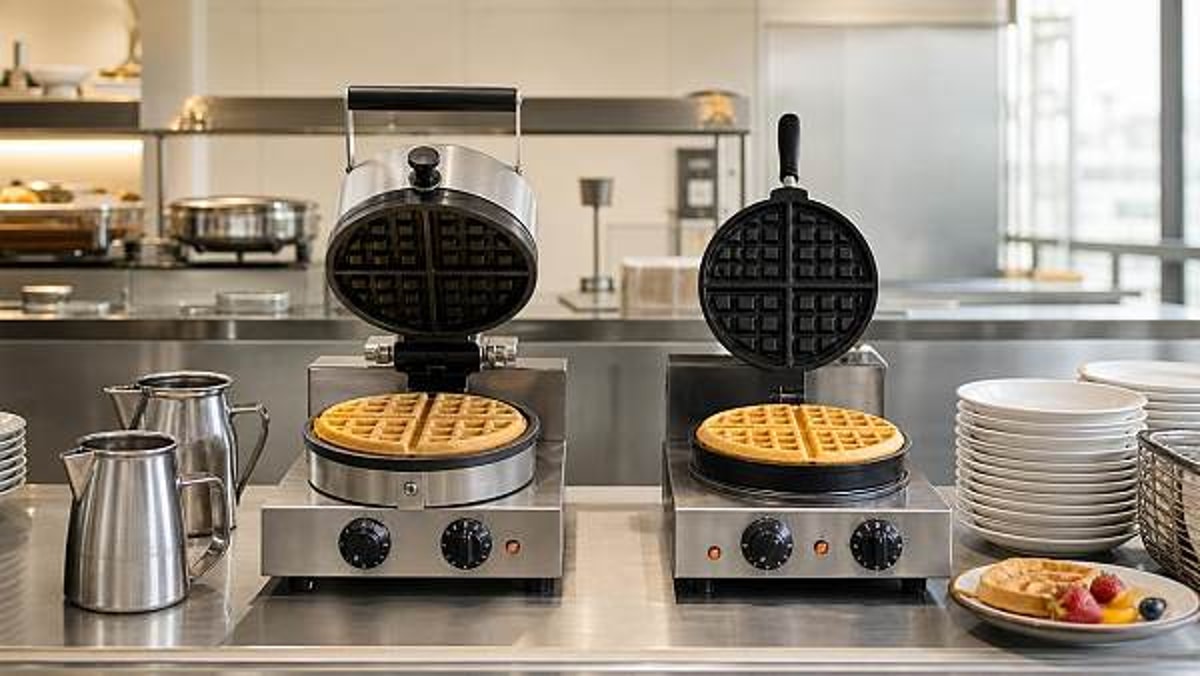
Flip commercial waffle makers are designed so the operator can rotate the cooking plates after pouring in batter. The rotation spreads batter more evenly across the grids, which often leads to more consistent shape, color, and internal texture. For operations that market breakfast quality or premium presentation, this is a meaningful advantage.
Many buyers associate flip models with better-looking waffles for a reason. In high-visibility hospitality settings such as upscale hotels, brunch venues, and specialty cafés, a uniform waffle with balanced browning helps support brand perception. Guests notice when waffles look symmetrical and cook evenly edge to edge.
Flip units can also help when batter viscosity varies. In real kitchens, batter is not always perfectly identical from batch to batch, especially when prepared on-site. The flipping motion can reduce the risk of patchy filling or thin corners, making output more forgiving under imperfect conditions.
Another benefit is perceived product quality. Where breakfast is part of a premium guest offer, the extra step of flipping may reinforce the idea of made-to-order preparation. That can matter in open kitchens or buffet action stations where the appliance itself contributes to the dining experience.
However, flip models are not automatically the best choice for every high-volume environment. They usually require slightly more operator involvement and more space for safe movement. If the station is cramped, if labor is limited, or if many temporary staff rotate through breakfast service, the added handling step may become a source of inconsistency rather than improvement.
Fixed-plate commercial waffle makers: why many busy operations prefer them
Fixed-plate commercial waffle makers keep the cooking grids in one position. This simpler design makes them easy to use, easy to train on, and often faster to operate in routine service. For procurement teams focused on labor efficiency and repeatable execution, that simplicity can be a major advantage.
In self-serve buffets, limited-service hotels, and institutional foodservice, a fixed-plate unit often fits the operational reality better than a flip unit. Staff can load, close, time, and release with fewer steps. That reduces the chance of handling mistakes, batter spills, and inconsistent workflows during the breakfast rush.
Fixed models may also be easier to integrate into standardized operating procedures. If your organization values cross-site consistency, a simpler machine usually reduces training time and operator variation. This becomes especially important when staffing levels are tight or when turnover is high.
There is also a maintenance and durability angle. While build quality varies by manufacturer, a simpler mechanism can mean fewer moving parts subject to wear. For buyers managing multiple sites, reducing avoidable service calls is often more valuable than chasing marginal gains in presentation.
That said, fixed-plate units can be less forgiving with batter distribution. In lower-quality machines or under rushed operation, waffles may brown less evenly or develop slight asymmetry. Whether this matters depends on your service concept. In a volume-driven breakfast environment, guests may care more about freshness and wait time than perfect visual uniformity.
Which type performs better during a busy breakfast rush?
If your main question is throughput, the answer depends on more than whether the machine flips. Plate count, recovery time, wattage, batter capacity, and workflow layout all influence output. A well-built fixed-plate double waffle maker may outperform a single flip unit simply because it supports more continuous production.
Procurement teams should evaluate output in terms of completed waffles per hour during sustained service, not just nominal cycle time. Some manufacturers list fast cooking times under ideal conditions, but real-world breakfast peaks involve repeated opening, closing, loading, and unloading. Heat recovery between batches matters just as much as stated cook time.
In many busy operations, the practical winner is the model that allows staff to maintain a steady rhythm with minimal error. Fixed-plate units often perform well here because the process is straightforward. Flip models can still handle volume effectively, but they tend to work best when stations are properly staffed and operators are trained to move efficiently.
For buffet settings with guest-facing preparation, queue management matters too. If one waffle takes slightly longer but consistently looks better, that may still be acceptable in premium hospitality. But if lines form and guests wait, the quality advantage may be outweighed by slower service. Procurement teams should match machine type to service expectations, not simply product ideal.
Labor, training, and safety: often the hidden cost drivers
One of the most overlooked parts of sourcing commercial waffle makers is labor compatibility. A machine that produces excellent waffles in theory may underperform if the staff model cannot support it. Buyers should consider who will use the equipment, how often, and with what level of supervision.
Flip machines require an extra motion, and in high-speed environments that introduces more opportunity for mishandling. The issue is not that they are difficult to use, but that breakfast service is repetitive and time-compressed. Small complications become larger when multiplied over dozens or hundreds of cycles.
Fixed-plate units generally reduce training demands. New staff can learn the process quickly, managers can standardize instructions more easily, and operations can scale with less dependence on skilled breakfast specialists. For chains, campuses, and institutional kitchens, this can materially lower operating friction.
Safety should also be part of the evaluation. Procurement teams should assess handle insulation, exterior surface temperatures, non-slip feet, lid balance, timer audibility, and the stability of the unit during constant use. In self-serve or semi-supervised settings, these features may matter more than subtle cooking differences.
In short, the best commercial waffle makers are not only those that cook well. They are the ones that fit your labor conditions without increasing risk, training burden, or service variability.
Cleaning and maintenance: the factor buyers regret underestimating
Breakfast equipment is judged every day, not just at installation. Cleaning time, crumb buildup, batter overflow, and access to surfaces all affect long-term satisfaction with a waffle maker. Procurement teams should insist on clear information about cleaning procedures before purchase.
Some units have removable drip trays, easy-access hinges, or plate coatings that simplify release and wipe-down. Others are more difficult to clean around edges and mechanical joints. Flip models, depending on design, may have additional crevices or moving assemblies that require more attention. This is not always a problem, but it should be assessed honestly.
Ask suppliers practical questions. Can the plates be cleaned in place safely? Are plates removable or fixed? What cleaning tools are recommended? How often must the hinge or rotating mechanism be inspected? Are replacement parts readily available in your region? These details affect total cost far more than many buyers expect.
Maintenance support matters especially for multi-site procurement. If a unit fails during breakfast service, lost output and guest dissatisfaction can outweigh the original equipment price difference. Buyers should prioritize commercial waffle makers with documented service support, dependable spare parts access, and a proven record in comparable foodservice environments.
How to match the machine to the service format
The most reliable way to choose between flip and fixed-plate models is to start with the service model, not the product brochure. Different environments place different demands on the equipment.
For upscale hotels and premium brunch concepts, flip commercial waffle makers often make sense when presentation quality and guest perception are priorities. They are particularly suitable for live cooking stations, open breakfast kitchens, and venues where a more crafted food experience supports room rates or average check value.
For high-volume hotel buffets, business hotels, and standard breakfast counters, fixed-plate units are often the more practical choice. They simplify execution, reduce training requirements, and can support reliable output when multiple team members rotate through the station.
For cafés and quick-service breakfast outlets, the answer depends on menu positioning. If waffles are a signature item, flip models may justify themselves through improved appearance and texture. If waffles are only one of several breakfast options, a fixed-plate model may deliver better operational balance.
For schools, healthcare, and institutional catering, fixed-plate machines typically align better with safety, standardization, and labor constraints. Here, the procurement priority is usually dependable output and easy operation rather than artisanal presentation.
Questions buyers should ask suppliers before making a purchase
To compare commercial waffle makers effectively, procurement teams should move beyond generic specifications and request operational evidence. The best supplier conversations are specific and scenario-based.
Ask for tested hourly output under continuous use. Request the average recovery time between batches. Confirm whether the unit is intended for light-duty, medium-duty, or heavy-duty service. Verify electrical requirements and whether your sites can support them without modification.
Ask what type of users the machine is best suited for: trained kitchen staff, buffet attendants, or guest self-service environments. Clarify cleaning requirements, coating lifespan, expected wear points, and parts replacement intervals. If possible, request references from similar hospitality or institutional operations.
It is also wise to ask about warranty structure and after-sales support. A strong warranty is useful, but service responsiveness is often more important. For international procurement or multi-market sourcing, confirm local service coverage, spare part lead times, and compliance with relevant foodservice safety standards.
Total cost of ownership matters more than purchase price
A lower-priced waffle maker is not necessarily the better procurement decision. The true cost includes labor impact, consistency losses, cleaning time, maintenance frequency, downtime risk, and effect on guest satisfaction. Procurement teams should compare models based on total cost of ownership over the expected service life.
If a flip model improves product quality enough to support a premium breakfast experience, its higher complexity may be justified. If a fixed-plate unit saves staff time every morning across multiple locations, that labor efficiency may produce the stronger long-term return.
Consider the hidden economics of breakfast service. Even small delays during peak periods can affect queue length, table turnover, and guest sentiment. Likewise, poor consistency can lead to waste, re-fires, and more supervision. The best sourcing decision is the one that reduces friction every day.
Final recommendation: flip or fixed plate?
For busy breakfast service, there is no universal winner between flip and fixed-plate commercial waffle makers. Flip models are usually the better choice when presentation, even batter distribution, and premium made-to-order quality are central to the guest experience. Fixed-plate models are often the smarter choice when speed, simplicity, training efficiency, and repeatable output matter most.
For procurement teams, the best decision comes from matching the machine to the site’s real operating conditions. Look at peak volume, staffing skill, cleaning capacity, counter space, guest expectations, and service support. If your breakfast concept sells quality first, a flip model may create more value. If your operation wins on reliable throughput and low-friction execution, a fixed-plate model will often deliver the stronger return.
In other words, the right commercial waffle maker is the one that performs well at 7:30 a.m. when the line is forming, the staff is moving fast, and consistency matters more than theory. Source for that moment, and the equipment decision will be much easier to defend.
Search News
Hot Articles
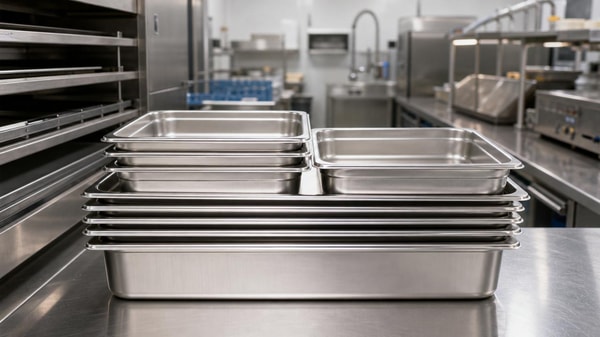
- Commercial KitchenStainless steel GN pans with reinforced corners last longer in busy kitchensMay 02, 2026
- Hotel Room AmenitiesMemory foam hotel mattresses: when soft comfort leads to faster saggingMay 02, 2026
- Hotel Room AmenitiesElectronic hotel door locks: battery alerts are often less simple than they seemMay 02, 2026
Popular Tags
Need ExpertConsultation?
Connect with our specialized leisureengineering team for procurementstrategies.
Recommended News
 May 02, 2026Stainless steel GN pans with reinforced corners last longer in busy kitchensStainless steel GN pans with reinforced corners help busy kitchens reduce warping, improve hygiene, and cut replacement costs. See why buyers choose longer-lasting performance.● Hospitality Sourcing Dir
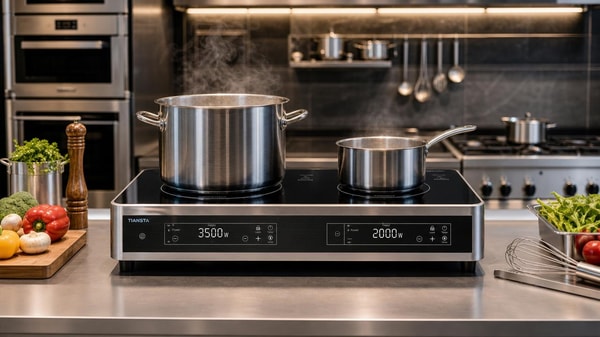
 May 02, 2026Commercial induction cookers: power ratings that mislead first-time buyersCommercial induction cookers are not as simple as wattage labels suggest. Learn how to compare real performance, efficiency, pan fit, and reliability before you buy.● Hospitality Sourcing Dir
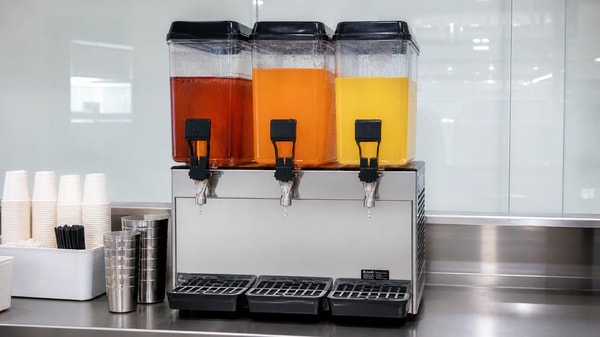
 May 02, 2026Beverage dispensers wholesale: what causes dripping after heavy useBeverage dispensers wholesale guide: learn what causes dripping after heavy use, how to spot seal, valve, and pressure issues, and choose durable suppliers with confidence.● Hospitality Sourcing Dir
 May 02, 2026Disposable wooden cutlery and the taste issue customers noticeDisposable wooden cutlery can affect taste, texture, and customer perception. Learn what causes woody aftertaste, how to test suppliers, and how to choose better options.● Hospitality Sourcing Dir
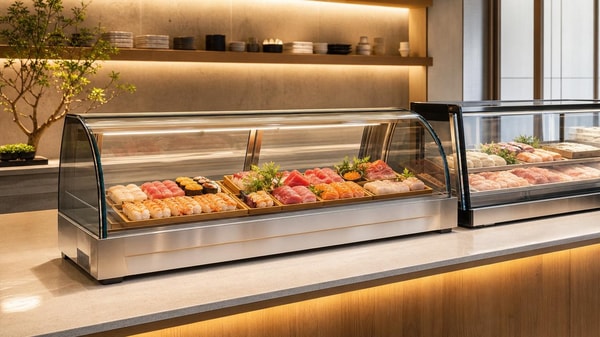
 May 02, 2026Sushi display cases: curved glass looks better, but is it practical?Sushi display cases with curved glass look premium, but are they practical? Compare visibility, cleaning, temperature control, and ROI before you buy.● Hospitality Sourcing Dir
 May 02, 2026Vacuum sealing machines food businesses can scale withVacuum sealing machines food businesses can scale with improve shelf life, workflow, and cost control. Explore reliable, compliant solutions for growing food operations.● Hospitality Sourcing Dir
 May 02, 2026Chafing fuel gel bulk: storage and burn-time issues to check firstChafing fuel gel bulk buyers should check storage stability, seal integrity, and real burn-time performance first. Reduce waste, avoid service disruption, and source with more confidence.● Hospitality Sourcing Dir
 May 02, 2026Custom printed napkins that keep logos sharp after unfoldingCustom printed napkins that keep logos sharp after unfolding help hotels, restaurants, and event brands protect presentation quality. Learn what to check before you buy.● Hospitality Sourcing Dir
 May 02, 2026Panini presses commercial models: smooth plate or grooved plate?Panini presses commercial buyers: compare smooth vs. grooved plates for hotels, cafés, catering, and foodservice. Learn which style boosts speed, cleaning, presentation, and value.● Hospitality Sourcing Dir
 May 02, 2026Catering transport carts: how much insulation is actually enough?Catering transport carts: discover how much insulation is truly enough to protect food quality, meet compliance goals, and improve service efficiency across real catering operations.● Hospitality Sourcing Dir
 May 02, 2026What slows down commercial bone saw machines during peak prep hoursCommercial bone saw machines slow down from blade wear, workflow bottlenecks, raw material variation, and cleaning delays. Learn what really cuts throughput and how to choose higher-efficiency equipment.● Hospitality Sourcing Dir
 May 02, 2026Refrigerated display cabinets: glass fogging problems and how to avoid themRefrigerated display cabinets often face glass fogging in humid settings. Learn key causes, smart anti-fog solutions, and how to choose reliable cabinets for clear visibility.● Hospitality Sourcing Dir
 May 02, 2026Commercial food processors: the attachment issue many kitchens overlookCommercial food processors are only as effective as their attachments. Learn how the right system improves consistency, safety, workflow, and ROI before you buy.● Hospitality Sourcing Dir
 May 02, 2026Biodegradable takeout containers that leak less with hot foodsBiodegradable takeout containers that leak less with hot foods: compare materials, heat resistance, grease barriers, and sourcing factors to choose reliable eco packaging.● Hospitality Sourcing Dir
 May 02, 2026Hotel & Catering Equipment checklist for new venue openingsHotel & Catering Equipment checklist for new venue openings: discover must-have items, common planning gaps, compliance checks, and sourcing tips to launch on time and with confidence.● Hospitality Sourcing Dir
 May 02, 2026Commercial waffle makers: flip or fixed plate for busy breakfast serviceCommercial waffle makers: compare flip vs fixed plate models for busy breakfast service. Learn which option improves speed, consistency, labor efficiency, and guest satisfaction.● Hospitality Sourcing Dir
 May 02, 2026Paper coffee cups wholesale: which lid fit causes the most complaintsPaper coffee cups wholesale buyers face the most complaints from loose lids that seem sealed but leak in use. Learn key fit risks, root causes, and sourcing checks before bulk orders.● Hospitality Sourcing Dir
 May 02, 2026Blast chillers commercial buyers regret choosing too smallBlast chillers commercial buyers often regret going too small. Learn how proper sizing protects food safety, peak throughput, compliance, and long-term operating efficiency.● Hospitality Sourcing Dir
 May 02, 2026Commercial wine coolers with dual zones: when are they worth it?Commercial wine coolers with dual zones: learn when the added cost pays off for hospitality, retail, and event venues through better temperature control, display, and service efficiency.● Hospitality Sourcing Dir
 May 02, 2026How to compare stainless steel GN pans by gauge and depthStainless steel GN pans compared by gauge and depth: learn how thickness, capacity, and workflow fit affect durability, heat performance, and smarter catering purchases.● Hospitality Sourcing Dir
 May 01, 2026Hotel and Catering Equipment Trends Shaping 2026 RenovationsHotel & Catering Equipment trends for 2026 renovations reveal smarter, cleaner, and more flexible solutions that cut risk, improve efficiency, and elevate guest experience.● Hospitality Sourcing Dir
 May 01, 2026Outdoor Patio Heaters: What Changes in Windy Dining AreasOutdoor patio heaters in windy dining areas need more than high output. Learn how wind changes comfort, efficiency, safety, and placement to choose smarter commercial heating solutions.● Hospitality Sourcing Dir
 May 01, 2026Food Warmers Commercial Models That Keep Texture, Not Just HeatFood warmers commercial buyers trust do more than hold heat—they preserve crispness, moisture, and presentation. Discover how to reduce waste and improve service quality.● Hospitality Sourcing Dir
 May 01, 2026Bakery Dough Mixers Sized Right for Batch ConsistencyBakery dough mixers sized right improve batch consistency, dough quality, and efficiency. Learn how to match capacity, torque, and dough type for reliable bakery performance.● Hospitality Sourcing Dir