Commercial induction cookers: power ratings that mislead first-time buyers
For first-time buyers, commercial induction cookers often seem easy to compare by wattage alone—but power ratings can hide major differences in heating speed, pan compatibility, energy efficiency, and real-world kitchen performance. This guide explains what those numbers actually mean, helping researchers avoid costly mistakes and evaluate commercial induction cookers with greater confidence.
Why do power ratings on commercial induction cookers confuse so many first-time buyers?
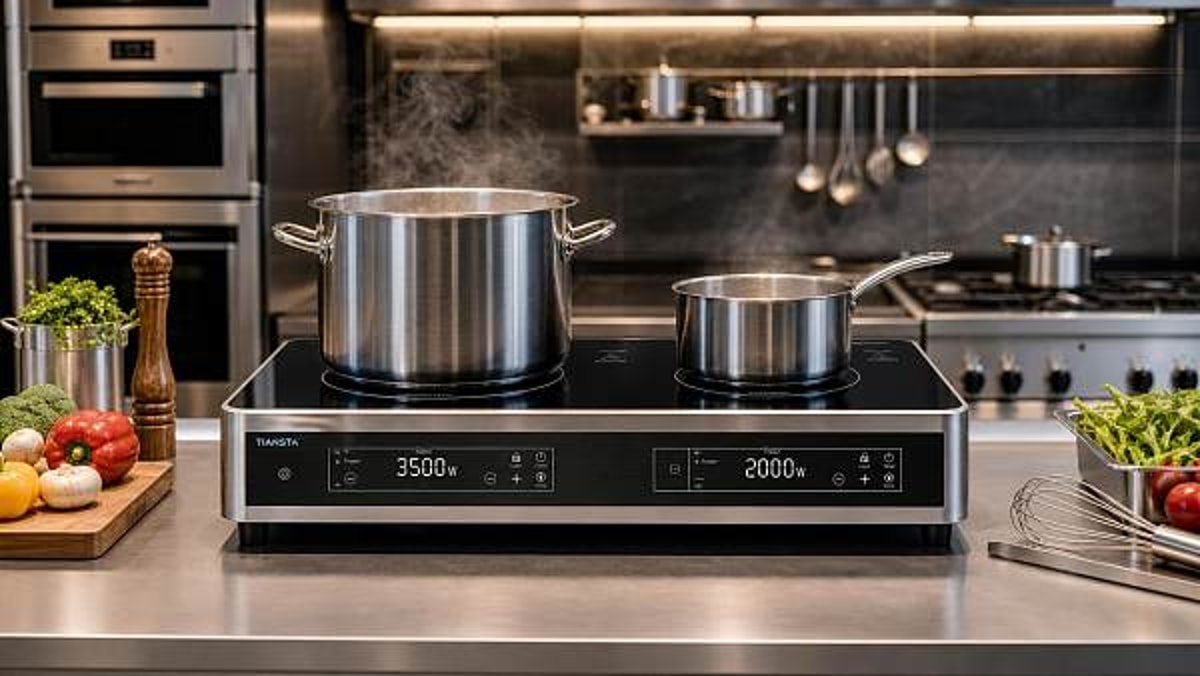
The short answer is that a headline wattage figure is only one part of the story. Many buyers see 3.5kW, 5kW, 8kW, or 12kW and assume the highest number automatically means the best performance. In practice, commercial induction cookers are judged by how efficiently they transfer energy into cookware, how steadily they hold temperature, and how well they fit the workflow of a professional kitchen.
A unit rated at lower power may outperform a higher-rated model in real service if its coil design is better matched to pan size, its controls respond faster, and its cooling system allows continuous operation without thermal throttling. Some products also advertise peak power under ideal electrical conditions, while actual sustained output may be lower during long cooking cycles. For information researchers, this is the first key lesson: rated power is a useful reference, but it is not a complete buying metric.
This matters especially in hotels, catering operations, institutional canteens, demonstration kitchens, and premium foodservice environments where downtime, uneven heating, or compatibility issues can affect both guest experience and operating cost. When reviewing commercial induction cookers, think beyond “how much power” and ask “how that power behaves under real workload.”
What does the power rating actually tell you—and what does it not tell you?
The power rating mainly tells you the maximum electrical input or output level the cooker is designed to deliver. In general, higher ratings can support faster boiling, stronger searing, and better capacity for larger pots. That is useful, but limited. A power rating does not automatically tell you how evenly the unit heats, how much energy is lost, or whether the appliance can maintain performance over hours of continuous commercial use.
It also does not tell you whether the cookware base fully covers the induction zone. If a pan is too small or poorly matched, some of the unit’s available power may not translate into useful heating. Likewise, a cooker with a powerful rating but unstable temperature control can burn sauces, scorch delicate products, or create inconsistency during service.
Another overlooked factor is electrical infrastructure. Some commercial induction cookers require specific voltage, phase, plug standards, or circuit protection. A buyer may see an attractive high-power model online but overlook whether the site can support the electrical load safely and legally. In sourcing terms, that can turn an apparently simple purchase into an installation challenge.
A quick comparison table for interpreting power claims
Are higher-power commercial induction cookers always better for professional kitchens?
Not always. The best commercial induction cookers are the ones that fit the cooking task, service volume, and kitchen layout. A compact front-of-house station, a buffet live-cooking setup, and a central production kitchen do not need the same power profile. Buying too little power causes slow turnaround and operator frustration. Buying too much can increase equipment cost, installation complexity, and energy demand without improving service outcomes.
For example, a small café or specialty retail food counter may benefit from precise medium-power induction units for soups, sauces, or reheating, where stability matters more than maximum searing force. By contrast, a high-volume catering operation may need stronger commercial induction cookers that can rapidly recover heat between batches. In a luxury hospitality setting, the choice might also depend on noise, visual integration, and user safety, not just raw output.
Researchers should also separate “task intensity” from “kitchen ambition.” Some first-time buyers over-specify because they assume premium means maximum wattage. In reality, premium often means balanced engineering: durable components, reliable controls, safer surfaces, easier cleaning, and consistent production quality.
Which performance factors matter more than wattage when comparing commercial induction cookers?
Several factors often matter as much as, or more than, the nameplate power rating.
1. Coil and pan matching
If the induction coil is poorly matched to the diameter of your cookware, heating can become uneven or inefficient. A powerful unit with a mismatched pan may underperform a lower-rated cooker with an ideal fit. This is especially important for stockpots, woks, and specialty vessels used in commercial kitchens.
2. Temperature control accuracy
Commercial induction cookers should not only heat fast but also hold stable temperatures. Delicate applications such as sauces, chocolate, dairy-based preparations, or buffet holding depend on precise low-to-medium heat control. A model with fewer temperature swings can reduce waste and improve food consistency.
3. Continuous-duty reliability
Some units perform well in short tests but slow down during extended use because internal temperatures rise and protection systems reduce output. For commercial operations, sustained service performance matters more than short promotional demonstrations.
4. Build quality and compliance
In global sourcing, buyers should verify safety certifications, stainless steel quality, glass surface durability, and compatibility with local standards. A lower-cost unit with an impressive power label may become expensive if it fails compliance checks or has limited after-sales support.
5. Usability and cleaning
Control interface, splash resistance, error messaging, and cleanability all affect staff productivity. Commercial induction cookers used in fast-paced service need practical design, not just technical claims.
What are the most common buying mistakes first-time researchers make?
The most common mistake is assuming that all commercial induction cookers with the same power rating will perform similarly. They do not. Engineering quality, component selection, fan design, software tuning, and cookware compatibility all influence results.
A second mistake is ignoring the application. Buyers may research commercial induction cookers for “general use” without defining whether they need boiling, wok cooking, holding, front-of-house display, or back-of-house volume production. Without that clarity, comparisons become misleading.
A third mistake is overlooking total ownership cost. Initial price and rated power are visible, but cleaning labor, downtime risk, replacement part access, and energy efficiency often decide long-term value. A slightly more expensive model from a reliable manufacturer may produce better lifecycle economics.
A fourth mistake is not checking pan compatibility early. Induction requires cookware with suitable magnetic properties, and not every existing commercial pot or pan will perform equally well. Researchers should confirm cookware inventory before shortlisting equipment.
Finally, many first-time buyers fail to ask whether the stated rating reflects tested, certified conditions or marketing language. In commercial procurement, documentation matters. Requesting technical sheets, duty-cycle information, and compliance records is a basic but often skipped step.
Common mistakes and better questions to ask
How should researchers compare commercial induction cookers for different business scenarios?
Start by defining the operating scenario before comparing specifications. For a hotel buffet or live-cooking station, you may prioritize elegant design, low ambient heat, guest-facing safety, and quiet operation. For a school or institutional kitchen, reliability, standardization, and ease of staff training may be more important. For catering or commissary use, recovery speed, pot capacity, and continuous-duty performance often move to the top.
It also helps to compare commercial induction cookers through a workflow lens. Ask how many portions must be served per hour, what cookware sizes are used most often, and whether cooking involves rapid boiling, holding, sautéing, or mixed tasks. Once the workflow is defined, the “right” power range becomes easier to judge.
For B2B sourcing teams, supplier capability should be part of the comparison. Can the supplier provide OEM or ODM customization if your project requires branded interfaces, special dimensions, or regional compliance? Can they support spare parts and documentation across markets? In global trade, a technically acceptable cooker is not enough if the supply chain behind it is weak.
Before shortlisting a model, what should buyers confirm with suppliers or sourcing partners?
Before moving from research to procurement, buyers should gather a focused set of answers. This reduces the risk of comparing commercial induction cookers on incomplete or inconsistent information.
- What is the rated power under the target electrical standard, and is that peak or sustained output?
- Which pan sizes, base materials, and cooking formats are recommended?
- How does the unit perform after extended continuous operation?
- Which certifications and test reports are available for the intended market?
- What warranty, spare parts access, and after-sales response structure are in place?
- Are there reference projects in hospitality, catering, education, or related commercial environments?
These questions are especially important for first-time buyers because they shift the conversation away from a single marketing number and toward operational evidence. Strong suppliers will usually be prepared for this level of scrutiny.
What is the practical takeaway for anyone researching commercial induction cookers?
The practical takeaway is simple: do not treat wattage as the final answer. Commercial induction cookers should be evaluated as performance systems, not just electrical products. Power rating helps you estimate capacity, but true buying confidence comes from understanding temperature control, cookware fit, duty cycle, compliance, and supplier reliability.
For information researchers, the smartest next step is to build a shortlist around actual use cases rather than headline specifications. Compare models based on your service environment, expected cooking patterns, and infrastructure realities. If needed, request demonstrations, data sheets, or project references that show how commercial induction cookers perform in settings similar to your own.
If you need to confirm a specific solution, parameter set, sourcing direction, lead time, quote structure, or cooperation model, prioritize a discussion around cooking application, electrical conditions, compliance needs, cookware compatibility, and after-sales support. Those answers will usually tell you far more than the power number on the label.
Search News
Hot Articles
- Commercial KitchenStainless steel GN pans with reinforced corners last longer in busy kitchensMay 02, 2026
- Hotel Room AmenitiesMemory foam hotel mattresses: when soft comfort leads to faster saggingMay 02, 2026
- Hotel Room AmenitiesElectronic hotel door locks: battery alerts are often less simple than they seemMay 02, 2026
Popular Tags
Need ExpertConsultation?
Connect with our specialized leisureengineering team for procurementstrategies.
Recommended News
 May 02, 2026Stainless steel GN pans with reinforced corners last longer in busy kitchensStainless steel GN pans with reinforced corners help busy kitchens reduce warping, improve hygiene, and cut replacement costs. See why buyers choose longer-lasting performance.● Hospitality Sourcing Dir
 May 02, 2026Commercial induction cookers: power ratings that mislead first-time buyersCommercial induction cookers are not as simple as wattage labels suggest. Learn how to compare real performance, efficiency, pan fit, and reliability before you buy.● Hospitality Sourcing Dir
 May 02, 2026Beverage dispensers wholesale: what causes dripping after heavy useBeverage dispensers wholesale guide: learn what causes dripping after heavy use, how to spot seal, valve, and pressure issues, and choose durable suppliers with confidence.● Hospitality Sourcing Dir
 May 02, 2026Disposable wooden cutlery and the taste issue customers noticeDisposable wooden cutlery can affect taste, texture, and customer perception. Learn what causes woody aftertaste, how to test suppliers, and how to choose better options.● Hospitality Sourcing Dir
 May 02, 2026Sushi display cases: curved glass looks better, but is it practical?Sushi display cases with curved glass look premium, but are they practical? Compare visibility, cleaning, temperature control, and ROI before you buy.● Hospitality Sourcing Dir
 May 02, 2026Vacuum sealing machines food businesses can scale withVacuum sealing machines food businesses can scale with improve shelf life, workflow, and cost control. Explore reliable, compliant solutions for growing food operations.● Hospitality Sourcing Dir
 May 02, 2026Chafing fuel gel bulk: storage and burn-time issues to check firstChafing fuel gel bulk buyers should check storage stability, seal integrity, and real burn-time performance first. Reduce waste, avoid service disruption, and source with more confidence.● Hospitality Sourcing Dir
 May 02, 2026Custom printed napkins that keep logos sharp after unfoldingCustom printed napkins that keep logos sharp after unfolding help hotels, restaurants, and event brands protect presentation quality. Learn what to check before you buy.● Hospitality Sourcing Dir
 May 02, 2026Panini presses commercial models: smooth plate or grooved plate?Panini presses commercial buyers: compare smooth vs. grooved plates for hotels, cafés, catering, and foodservice. Learn which style boosts speed, cleaning, presentation, and value.● Hospitality Sourcing Dir
 May 02, 2026Catering transport carts: how much insulation is actually enough?Catering transport carts: discover how much insulation is truly enough to protect food quality, meet compliance goals, and improve service efficiency across real catering operations.● Hospitality Sourcing Dir
 May 02, 2026What slows down commercial bone saw machines during peak prep hoursCommercial bone saw machines slow down from blade wear, workflow bottlenecks, raw material variation, and cleaning delays. Learn what really cuts throughput and how to choose higher-efficiency equipment.● Hospitality Sourcing Dir
 May 02, 2026Refrigerated display cabinets: glass fogging problems and how to avoid themRefrigerated display cabinets often face glass fogging in humid settings. Learn key causes, smart anti-fog solutions, and how to choose reliable cabinets for clear visibility.● Hospitality Sourcing Dir
 May 02, 2026Commercial food processors: the attachment issue many kitchens overlookCommercial food processors are only as effective as their attachments. Learn how the right system improves consistency, safety, workflow, and ROI before you buy.● Hospitality Sourcing Dir
 May 02, 2026Biodegradable takeout containers that leak less with hot foodsBiodegradable takeout containers that leak less with hot foods: compare materials, heat resistance, grease barriers, and sourcing factors to choose reliable eco packaging.● Hospitality Sourcing Dir
 May 02, 2026Hotel & Catering Equipment checklist for new venue openingsHotel & Catering Equipment checklist for new venue openings: discover must-have items, common planning gaps, compliance checks, and sourcing tips to launch on time and with confidence.● Hospitality Sourcing Dir
 May 02, 2026Commercial waffle makers: flip or fixed plate for busy breakfast serviceCommercial waffle makers: compare flip vs fixed plate models for busy breakfast service. Learn which option improves speed, consistency, labor efficiency, and guest satisfaction.● Hospitality Sourcing Dir
 May 02, 2026Paper coffee cups wholesale: which lid fit causes the most complaintsPaper coffee cups wholesale buyers face the most complaints from loose lids that seem sealed but leak in use. Learn key fit risks, root causes, and sourcing checks before bulk orders.● Hospitality Sourcing Dir
 May 02, 2026Blast chillers commercial buyers regret choosing too smallBlast chillers commercial buyers often regret going too small. Learn how proper sizing protects food safety, peak throughput, compliance, and long-term operating efficiency.● Hospitality Sourcing Dir
 May 02, 2026Commercial wine coolers with dual zones: when are they worth it?Commercial wine coolers with dual zones: learn when the added cost pays off for hospitality, retail, and event venues through better temperature control, display, and service efficiency.● Hospitality Sourcing Dir
 May 02, 2026How to compare stainless steel GN pans by gauge and depthStainless steel GN pans compared by gauge and depth: learn how thickness, capacity, and workflow fit affect durability, heat performance, and smarter catering purchases.● Hospitality Sourcing Dir
 May 01, 2026Hotel and Catering Equipment Trends Shaping 2026 RenovationsHotel & Catering Equipment trends for 2026 renovations reveal smarter, cleaner, and more flexible solutions that cut risk, improve efficiency, and elevate guest experience.● Hospitality Sourcing Dir
 May 01, 2026Outdoor Patio Heaters: What Changes in Windy Dining AreasOutdoor patio heaters in windy dining areas need more than high output. Learn how wind changes comfort, efficiency, safety, and placement to choose smarter commercial heating solutions.● Hospitality Sourcing Dir
 May 01, 2026Food Warmers Commercial Models That Keep Texture, Not Just HeatFood warmers commercial buyers trust do more than hold heat—they preserve crispness, moisture, and presentation. Discover how to reduce waste and improve service quality.● Hospitality Sourcing Dir
 May 01, 2026Bakery Dough Mixers Sized Right for Batch ConsistencyBakery dough mixers sized right improve batch consistency, dough quality, and efficiency. Learn how to match capacity, torque, and dough type for reliable bakery performance.● Hospitality Sourcing Dir