Custom printed napkins that keep logos sharp after unfolding
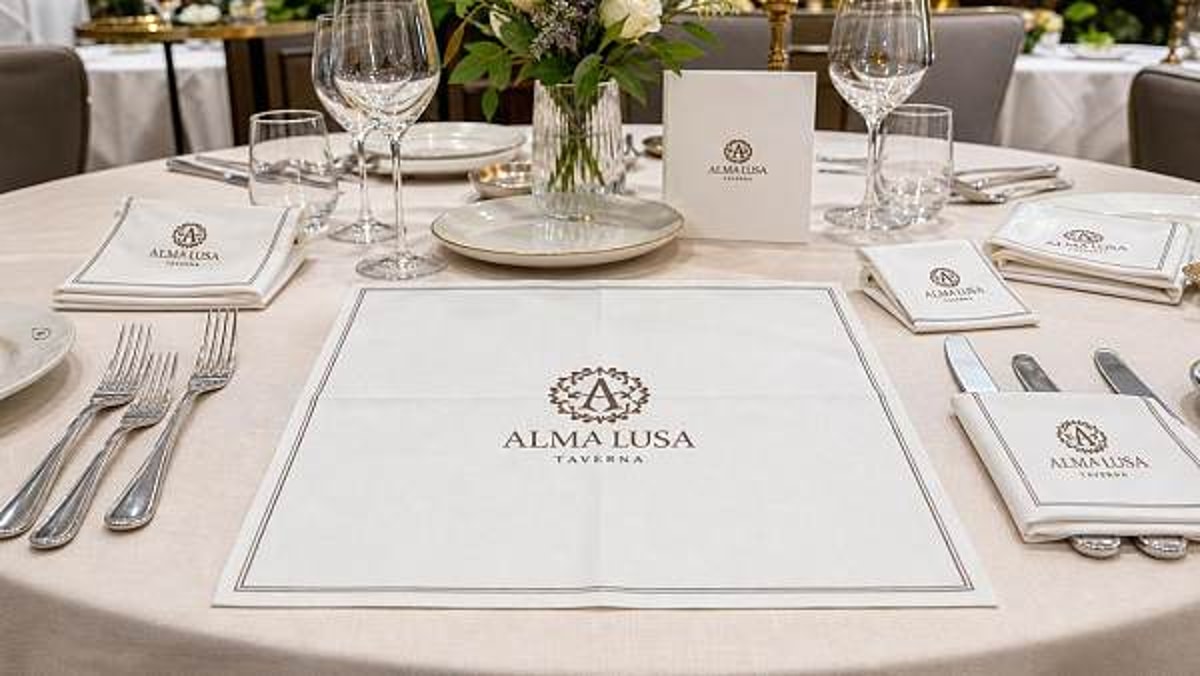
For brands in hospitality, events, and premium dining, custom printed napkins do more than decorate tables—they reinforce identity at every touchpoint. When logos stay sharp after unfolding, they signal quality, consistency, and attention to detail. This guide explores what buyers should evaluate when sourcing napkins that combine visual impact, print durability, and reliable commercial performance.
For procurement teams, designers, and sourcing managers, the challenge is rarely just finding a napkin with a logo. The real question is whether custom printed napkins will look precise after storage, transport, folding, service handling, and full unfolding at the table. In commercial settings where thousands of units may be used in a week, print clarity, substrate choice, color stability, and supply consistency directly affect brand presentation.
This matters across multiple buying environments: luxury hotels, catering groups, premium restaurants, branded lounges, private events, educational hospitality programs, and even specialty retail activations. In each case, the napkin functions as a low-cost but highly visible branded asset. A poorly placed or blurred logo can weaken an otherwise strong guest experience in just 1 interaction.
Why logo sharpness after unfolding matters in commercial use
In B2B dining and hospitality, a napkin is handled more aggressively than many buyers expect. It may be folded at the factory, packed in cartons, transported over 2–6 weeks, stored in dry rooms for 30–90 days, then opened quickly by service staff or guests. If the print process, paper grain, or fold alignment is poorly controlled, logo edges can crack visually, shift off-center, or become distorted once the napkin is fully opened.
Brand perception is formed in seconds
In premium service environments, guests often notice tabletop details within the first 5–10 seconds of seating. Custom printed napkins that unfold cleanly help maintain visual coherence with menus, tableware, signage, and uniforms. For multi-site hotel groups or restaurant chains, that consistency becomes even more important because buyers may need identical output across 10, 50, or 200 locations.
The fold line is a technical stress point
A logo can look excellent on a flat proof yet underperform on the final folded product. Fold intersections create pressure points that can interrupt line work, especially with fine serif fonts, thin strokes under 0.3 mm, or large solid ink areas. This is why commercial buyers should review both folded and fully opened samples before approval, not only digital mockups.
Common visual failures buyers should watch for
- Logo positioned too close to a fold seam or edge, often within 8–12 mm
- Ink spread softening small typography on absorbent tissue grades
- Misregistration between colors in 2-color or 3-color prints
- Inconsistent embossing pressure altering print appearance
- Shade variation between batch runs delivered 4–8 weeks apart
The following table shows how buyer priorities typically change by commercial use case. This helps sourcing teams define whether they should prioritize image sharpness, absorption, tactile softness, or carton efficiency when evaluating custom printed napkins.
The key takeaway is that not all custom printed napkins serve the same purpose. In upscale environments, appearance after unfolding is often more important than the cheapest unit cost. For high-volume operations, buyers need a balance between aesthetics and repeatable manufacturing control.
Core technical factors behind sharp custom printed napkins
When evaluating suppliers, buyers should move beyond generic claims about print quality. The performance of custom printed napkins depends on at least 4 technical areas: substrate composition, ply structure, printing method, and fold planning. Each one affects how the logo appears after unfolding and during actual use.
Paper grade and absorbency
A highly absorbent napkin can be excellent for service but difficult for fine logo work. Tissue grades with loose fiber structure tend to soften edges, especially in dense designs. Buyers sourcing for premium dining often compare 1-ply, 2-ply, and 3-ply constructions, with 2-ply being a common balance between cost and visual stability. Heavier grades usually provide better handling, but they must still fold cleanly without creating bulky pressure lines.
Print method and ink behavior
Not every logo performs equally well across every production line. Simple single-color logos often reproduce well, but metallic effects, gradients, or very thin outlines may not. Buyers should ask what print tolerance the supplier can maintain for alignment, and whether proofs are reviewed on the same substrate intended for production. A difference of even 1–2 mm in logo placement can become obvious on small cocktail napkins.
Fold format and artwork placement
Custom printed napkins are commonly supplied in quarter fold, luncheon fold, dinner fold, and beverage sizes. A logo that looks centered on a flat sheet may land awkwardly once folded into service format. For this reason, artwork should be tested in its actual folded geometry. Safe zones of 10–15 mm from critical fold lines are often more reliable for preserving clean visual definition.
Practical specification questions for suppliers
- What ply options are available for the intended service environment?
- Can the supplier provide folded and unfolded physical samples from a recent run?
- What is the recommended minimum line thickness for logo artwork?
- How are color variations controlled between repeat orders?
- What is the typical production lead time for 10,000, 50,000, and 100,000 pieces?
The comparison below can help buyers align product specification with service expectations before requesting quotations for custom printed napkins.
These ranges are not universal, but they offer a practical starting point. Buyers with complex brand guidelines should ask for pre-production sampling because the interaction between paper, ink, and fold pattern cannot be judged accurately from a flat PDF alone.
How B2B buyers should assess suppliers and proofs
A strong sourcing process can prevent most quality disputes before an order is placed. For custom printed napkins, the best suppliers are not simply low-cost converters. They are partners that understand packaging logic, foodservice presentation, repeat-order consistency, and communication speed. In many commercial projects, response quality within the first 24–48 hours is already a useful indicator of future reliability.
Review more than one sample type
Ask for at least 3 reference views: folded presentation, partially opened condition, and fully unfolded sheet. If possible, request samples from an existing production setup rather than a one-off studio proof. This shows whether the supplier can maintain edge sharpness at commercial speed, not just under ideal test conditions.
Check batch and logistics readiness
For import programs or regional rollouts, supply chain discipline matters as much as print quality. Buyers should confirm carton counts, moisture protection, labeling accuracy, and lot traceability. A shipment of 100 cartons with inconsistent case labeling can create operational delays even if the custom printed napkins themselves look acceptable.
A practical 6-point supplier review checklist
- Artwork review support, including advice on fold-safe placement
- Sample quality in both folded and open formats
- Repeat-order consistency across at least 2 production windows
- Clarity on MOQ, overrun tolerance, and reprint procedure
- Packaging details suitable for warehousing and multi-site distribution
- Communication turnaround for revisions, approvals, and issue handling
Commercial buyers often save money not by choosing the lowest initial quote, but by reducing hidden costs such as rush replacements, unusable stock, or inconsistent brand presentation across locations. A slightly higher unit price can be justified if it reduces rejection risk over 20,000 or 50,000 pieces.
Common mistakes when sourcing custom printed napkins
Many purchasing issues arise from assumptions rather than production defects. One of the most common mistakes is approving artwork based only on screen visuals. Another is selecting a napkin grade for softness without considering how that substrate handles fine print. In branded hospitality programs, these small oversights become visible at scale.
Mistake 1: treating all white napkins as equal
Brightness, fiber texture, emboss pattern, and absorbency can all change how a logo appears. Two white napkins may look similar in a catalog yet produce noticeably different print definition. This is especially important for logos with narrow lettering, monograms, or delicate line art.
Mistake 2: ignoring the service environment
Cocktail service, buffet stations, room service, and fine dining each create different handling conditions. A compact beverage napkin used for 2-second contact at a bar may need bold, high-contrast branding. A dinner napkin used for a 90-minute meal may need a softer hand and more elegant logo placement. The correct napkin format depends on use duration, moisture exposure, and table styling.
Mistake 3: failing to plan repeat orders
Buyers sometimes focus on the launch order but overlook future replenishment. If custom printed napkins are part of a chain-wide branding program, the supplier should document ink references, fold orientation, approved artwork version, and packaging specs. That basic discipline can simplify reorders 3 months or 6 months later and reduce the chance of visible mismatch.
Best-fit sourcing strategy for research-driven buyers
For information-focused buyers, the most effective sourcing path is usually structured in 5 steps. First, define the use case and required impression level. Second, shortlist materials and fold formats. Third, validate artwork placement through samples. Fourth, confirm logistics and reorder terms. Fifth, launch with a controlled first batch before scaling to a broader program.
When to request a pilot run
A pilot is especially useful when the logo includes fine detail, when the brand color must match other tabletop assets, or when the order is intended for multiple venues. Even a smaller first run of 5,000–10,000 pieces can reveal whether the chosen substrate preserves logo sharpness after unfolding under real operating conditions.
Where GCT-style sourcing intelligence adds value
In commercial procurement, success comes from combining aesthetic judgment with supply chain discipline. Buyers comparing custom printed napkins across regions, manufacturers, and commercial applications benefit from structured supplier evaluation, realistic lead-time planning, and category-specific quality checkpoints. This approach is particularly relevant for hospitality groups, institutional buyers, and branded experience operators that need sourcing decisions grounded in both presentation quality and operational reliability.
Custom printed napkins that keep logos sharp after unfolding are not a minor detail. They are a practical indicator of whether a supplier understands branding, material behavior, and commercial execution. Buyers should assess fold-safe artwork placement, substrate suitability, print stability, sample realism, and reorder control before committing to volume.
If your organization is reviewing sourcing options for hospitality, events, catering, or premium commercial environments, a disciplined evaluation process will help you avoid costly inconsistencies and protect brand presentation at scale. Contact us to discuss your application, request a tailored sourcing framework, or learn more solutions for selecting custom printed napkins that perform reliably from pack-out to guest use.
Search News
Hot Articles
- Commercial KitchenStainless steel GN pans with reinforced corners last longer in busy kitchensMay 02, 2026
- Hotel Room AmenitiesMemory foam hotel mattresses: when soft comfort leads to faster saggingMay 02, 2026
- Hotel Room AmenitiesElectronic hotel door locks: battery alerts are often less simple than they seemMay 02, 2026
Popular Tags
Need ExpertConsultation?
Connect with our specialized leisureengineering team for procurementstrategies.
Recommended News
 May 02, 2026Stainless steel GN pans with reinforced corners last longer in busy kitchensStainless steel GN pans with reinforced corners help busy kitchens reduce warping, improve hygiene, and cut replacement costs. See why buyers choose longer-lasting performance.● Hospitality Sourcing Dir
 May 02, 2026Commercial induction cookers: power ratings that mislead first-time buyersCommercial induction cookers are not as simple as wattage labels suggest. Learn how to compare real performance, efficiency, pan fit, and reliability before you buy.● Hospitality Sourcing Dir
 May 02, 2026Beverage dispensers wholesale: what causes dripping after heavy useBeverage dispensers wholesale guide: learn what causes dripping after heavy use, how to spot seal, valve, and pressure issues, and choose durable suppliers with confidence.● Hospitality Sourcing Dir
 May 02, 2026Disposable wooden cutlery and the taste issue customers noticeDisposable wooden cutlery can affect taste, texture, and customer perception. Learn what causes woody aftertaste, how to test suppliers, and how to choose better options.● Hospitality Sourcing Dir
 May 02, 2026Sushi display cases: curved glass looks better, but is it practical?Sushi display cases with curved glass look premium, but are they practical? Compare visibility, cleaning, temperature control, and ROI before you buy.● Hospitality Sourcing Dir
 May 02, 2026Vacuum sealing machines food businesses can scale withVacuum sealing machines food businesses can scale with improve shelf life, workflow, and cost control. Explore reliable, compliant solutions for growing food operations.● Hospitality Sourcing Dir
 May 02, 2026Chafing fuel gel bulk: storage and burn-time issues to check firstChafing fuel gel bulk buyers should check storage stability, seal integrity, and real burn-time performance first. Reduce waste, avoid service disruption, and source with more confidence.● Hospitality Sourcing Dir
 May 02, 2026Custom printed napkins that keep logos sharp after unfoldingCustom printed napkins that keep logos sharp after unfolding help hotels, restaurants, and event brands protect presentation quality. Learn what to check before you buy.● Hospitality Sourcing Dir
 May 02, 2026Panini presses commercial models: smooth plate or grooved plate?Panini presses commercial buyers: compare smooth vs. grooved plates for hotels, cafés, catering, and foodservice. Learn which style boosts speed, cleaning, presentation, and value.● Hospitality Sourcing Dir
 May 02, 2026Catering transport carts: how much insulation is actually enough?Catering transport carts: discover how much insulation is truly enough to protect food quality, meet compliance goals, and improve service efficiency across real catering operations.● Hospitality Sourcing Dir
 May 02, 2026What slows down commercial bone saw machines during peak prep hoursCommercial bone saw machines slow down from blade wear, workflow bottlenecks, raw material variation, and cleaning delays. Learn what really cuts throughput and how to choose higher-efficiency equipment.● Hospitality Sourcing Dir
 May 02, 2026Refrigerated display cabinets: glass fogging problems and how to avoid themRefrigerated display cabinets often face glass fogging in humid settings. Learn key causes, smart anti-fog solutions, and how to choose reliable cabinets for clear visibility.● Hospitality Sourcing Dir
 May 02, 2026Commercial food processors: the attachment issue many kitchens overlookCommercial food processors are only as effective as their attachments. Learn how the right system improves consistency, safety, workflow, and ROI before you buy.● Hospitality Sourcing Dir
 May 02, 2026Biodegradable takeout containers that leak less with hot foodsBiodegradable takeout containers that leak less with hot foods: compare materials, heat resistance, grease barriers, and sourcing factors to choose reliable eco packaging.● Hospitality Sourcing Dir
 May 02, 2026Hotel & Catering Equipment checklist for new venue openingsHotel & Catering Equipment checklist for new venue openings: discover must-have items, common planning gaps, compliance checks, and sourcing tips to launch on time and with confidence.● Hospitality Sourcing Dir
 May 02, 2026Commercial waffle makers: flip or fixed plate for busy breakfast serviceCommercial waffle makers: compare flip vs fixed plate models for busy breakfast service. Learn which option improves speed, consistency, labor efficiency, and guest satisfaction.● Hospitality Sourcing Dir
 May 02, 2026Paper coffee cups wholesale: which lid fit causes the most complaintsPaper coffee cups wholesale buyers face the most complaints from loose lids that seem sealed but leak in use. Learn key fit risks, root causes, and sourcing checks before bulk orders.● Hospitality Sourcing Dir
 May 02, 2026Blast chillers commercial buyers regret choosing too smallBlast chillers commercial buyers often regret going too small. Learn how proper sizing protects food safety, peak throughput, compliance, and long-term operating efficiency.● Hospitality Sourcing Dir
 May 02, 2026Commercial wine coolers with dual zones: when are they worth it?Commercial wine coolers with dual zones: learn when the added cost pays off for hospitality, retail, and event venues through better temperature control, display, and service efficiency.● Hospitality Sourcing Dir
 May 02, 2026How to compare stainless steel GN pans by gauge and depthStainless steel GN pans compared by gauge and depth: learn how thickness, capacity, and workflow fit affect durability, heat performance, and smarter catering purchases.● Hospitality Sourcing Dir
 May 01, 2026Hotel and Catering Equipment Trends Shaping 2026 RenovationsHotel & Catering Equipment trends for 2026 renovations reveal smarter, cleaner, and more flexible solutions that cut risk, improve efficiency, and elevate guest experience.● Hospitality Sourcing Dir
 May 01, 2026Outdoor Patio Heaters: What Changes in Windy Dining AreasOutdoor patio heaters in windy dining areas need more than high output. Learn how wind changes comfort, efficiency, safety, and placement to choose smarter commercial heating solutions.● Hospitality Sourcing Dir
 May 01, 2026Food Warmers Commercial Models That Keep Texture, Not Just HeatFood warmers commercial buyers trust do more than hold heat—they preserve crispness, moisture, and presentation. Discover how to reduce waste and improve service quality.● Hospitality Sourcing Dir
 May 01, 2026Bakery Dough Mixers Sized Right for Batch ConsistencyBakery dough mixers sized right improve batch consistency, dough quality, and efficiency. Learn how to match capacity, torque, and dough type for reliable bakery performance.● Hospitality Sourcing Dir