Beverage dispensers wholesale: what causes dripping after heavy use
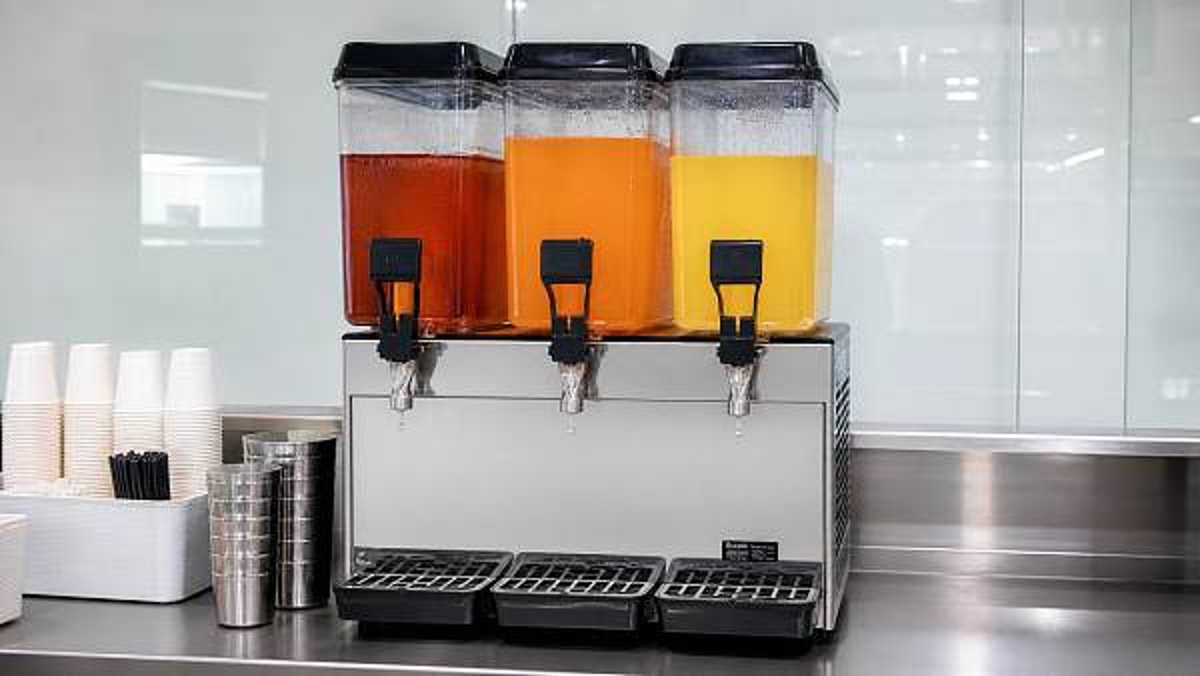
For buyers and technical evaluators sourcing beverage dispensers wholesale, persistent dripping after heavy use is more than a minor nuisance—it can signal wear, sealing failure, pressure imbalance, or poor component tolerances. Understanding the root causes helps teams assess product durability, maintenance demands, and supplier quality before making large-volume procurement decisions.
Why a checklist-based review is the fastest way to judge dripping issues
When a dispenser drips only after repeated cycles, the failure is rarely caused by one isolated defect. In beverage dispensers wholesale evaluation, heavy-use leakage usually comes from the interaction of valve wear, thermal expansion, sugar buildup, seal compression loss, and inconsistent assembly quality. A checklist approach helps technical teams avoid guessing and instead verify each probable cause in a sequence that reflects real operating conditions.
This matters in commercial sourcing because a unit that looks acceptable in a short showroom test may behave very differently after hundreds of dispensing actions. For hotels, self-service beverage stations, catering lines, school canteens, and convenience environments, post-use dripping affects sanitation, countertop damage, product waste, labor time, and customer perception. In large beverage dispensers wholesale projects, even a small leak rate can become a significant maintenance cost across dozens or hundreds of installed units.
Start with these priority checks before blaming the whole unit
Before rejecting a model or escalating to a supplier, technical evaluators should confirm whether the dripping is tied to component wear, operating conditions, or design limits. The first-pass review should focus on the parts most likely to fail under repetitive service.
- Valve seat condition: Check whether the valve seat shows scoring, deformation, or residue buildup. Even slight surface damage can prevent full shutoff after heavy use.
- Seal and O-ring recovery: Inspect whether elastomer parts rebound after compression. Heat, syrup acidity, oils, and cleaning chemicals can harden or swell seals.
- Spigot alignment: Confirm that the lever, stem, and outlet remain centered after repeated actuation. Misalignment often creates intermittent dripping rather than constant flow.
- Residual internal pressure: Determine whether trapped pressure continues to push liquid through the outlet after release, especially in insulated or carbonated systems.
- Viscosity-related residue: Sugary drinks, concentrates, tea, and dairy-based liquids leave deposits that keep the closing surface from sealing cleanly.
- Temperature cycling effects: Hot-fill and chilled-fill applications can change dimensions of plastic and metal parts, reducing shutoff consistency.
- Tolerance variation: If some units drip and others do not, manufacturing consistency may be the issue rather than the design concept itself.
Core causes of dripping after heavy use in beverage dispensers wholesale assessments
1. Seal fatigue and compression set
One of the most common causes is compression set in the seal. After repeated open-close cycles, the gasket or O-ring may lose elasticity and fail to return to its original profile. In beverage dispensers wholesale technical reviews, this is a critical durability marker because it directly reflects material selection. Low-grade silicone, rubber blends with poor chemical resistance, or underspecified hardness ratings tend to fail earlier in demanding service environments.
Ask suppliers for cycle-test data, material specifications, and compatibility information for acidic juice, tea, coffee concentrates, and sugar-rich beverages. If the supplier cannot explain seal performance by media type and temperature range, long-term dripping risk is higher.
2. Valve seat wear or surface damage
The valve seat must remain smooth and dimensionally stable. Repeated contact from the stem or plunger can create micro-grooves, especially in softer plastics. Once the contact face is damaged, liquid bypass occurs even when the handle is fully released. This is especially relevant in beverage dispensers wholesale projects where dispensers are expected to support high daily transaction volumes.
A useful judgment standard is whether the seat is replaceable, whether the material is food-safe engineering polymer or metal, and whether the supplier can provide wear-life expectations under simulated heavy use. Non-replaceable seat wear increases total cost of ownership.
3. Syrup, pulp, scale, or cleaning residue interfering with closure
Not all dripping means poor manufacturing. In many field cases, beverage residue accumulates around the valve stem or sealing face and prevents full closure. Thick juices, sweetened tea, flavored water, and dairy alternatives are more likely to leave films that change valve behavior after hours of service. If the unit is used with hard water, scale can add another layer of sealing interference.
Technical evaluators should review cleanability as carefully as leak performance. Tool-free disassembly, smooth internal geometry, sanitary dead-zone reduction, and clear cleaning instructions are all relevant when comparing beverage dispensers wholesale suppliers.
4. Pressure imbalance or delayed pressure release
Some dispensers continue to drip because liquid in the chamber remains under pressure after the valve is closed. This is more likely in systems with elevated head pressure, carbonated beverages, pump assistance, or narrow outlet paths that delay equalization. A technically acceptable valve may still drip if system pressure management is weak.
In beverage dispensers wholesale procurement, this is where evaluators should distinguish between gravity-fed beverage urns, insulated dispensers, post-mix systems, and premium serving stations. The root cause may not be the spigot itself; it may be the overall fluid path design.
5. Handle return weakness or spring degradation
If the actuation mechanism relies on a spring or return force, heavy use can reduce closing energy. The operator may think the valve is shut, but the stem may not fully seat. This failure often appears gradually and becomes more visible during peak service periods. Test whether the handle returns uniformly after 100, 500, or 1,000 cycles, not only when new.
6. Assembly inconsistency and dimensional tolerance drift
For technical buyers, inconsistent leak behavior across sample units is a warning sign. It suggests tolerance control issues in molded components, thread interfaces, or manual assembly. In beverage dispensers wholesale sourcing, inconsistent dripping is often more concerning than a known, fixable design flaw because it indicates unstable production quality.
Practical evaluation checklist for technical teams
Use the following checklist during sample approval, factory audit, or comparative testing. It is designed for technical evaluators who need a fast but meaningful way to judge whether dripping after heavy use is likely to become a field problem.
Different use scenarios require different judgment standards
A technical evaluator should not assess all dispensers by the same standard. In beverage dispensers wholesale purchasing, drip causes and acceptable tolerances vary by beverage type, duty cycle, and user behavior.
High-volume hospitality and buffet service
Look for rapid cycle endurance, easy cleaning between meal periods, and robust lever assemblies. Here, repeated use and hurried operation often expose weak return mechanisms and lower-grade seals.
Schools, offices, and institutional settings
User handling is less consistent, so the dispenser should tolerate partial handle release and imperfect cleaning routines. Anti-drip geometry and forgiving seal design become more important than premium appearance alone.
Specialty drinks and viscous products
If the liquid contains pulp, syrup, or milk solids, prioritize valve passages that resist buildup. Many units perform well with water but drip with thicker beverages because the closure zone was not designed for residue-heavy media.
Commonly overlooked risk points in beverage dispensers wholesale decisions
- Testing only with water: Water does not reveal sugar film, acidity effects, or viscosity-related closure issues.
- Ignoring cleaning chemistry: Some sanitizers shorten seal life or crack transparent components over time.
- Approving based on one perfect sample: A single hand-assembled sample may not reflect mass production consistency.
- Not defining acceptable drip rate: Procurement teams should specify whether one residual drop is acceptable or whether zero post-dispense dripping is required.
- Overlooking spare parts strategy: If seals and valves are not easy to source, a minor drip can turn into full unit replacement.
Execution advice: how to test before placing a larger order
For a disciplined beverage dispensers wholesale evaluation, request a structured validation process rather than relying on visual inspection alone. Run repeated dispensing cycles with the actual beverage category, not only water. Include hot and cold conditions if relevant. Measure dripping immediately after shutoff and after a short wait period. Compare multiple units from the same batch. If possible, disassemble the valve after testing to inspect seal deformation, residue traps, and seat wear.
Also ask the supplier for quality documentation that supports leak prevention: incoming material controls, seal traceability, assembly torque standards, end-of-line leak tests, and replacement part availability. For commercial buyers, a supplier that can explain failure modes clearly is usually safer than one that only promises “no leak” performance without test data.
FAQ for technical evaluators
Is dripping after heavy use always a product defect?
No. It may result from residue accumulation, pressure behavior, or maintenance gaps. However, frequent dripping under normal commercial use still indicates that the design, materials, or service protocol may be unsuitable for the intended application.
Which part fails first most often?
In many beverage dispensers wholesale cases, seals and valve seats are the first components to show performance decline, especially when exposed to sugary liquids, temperature changes, and aggressive cleaning routines.
What supplier answers are most useful during sourcing?
Ask for cycle-test results, seal material specifications, fluid compatibility limits, leak-test procedures, spare parts availability, and evidence of consistent production QC across batches.
What to prepare before moving forward with supplier discussions
If your team is comparing beverage dispensers wholesale suppliers, prepare the operating profile first: beverage type, sugar level, viscosity, service temperature, estimated daily dispensing cycles, cleaning frequency, operator type, and acceptable drip threshold. Then confirm whether the supplier can match those conditions with suitable seals, valve geometry, testing data, and service parts support.
For buyers who need deeper technical confirmation, the next discussion should focus on parameters, sample test protocol, maintenance intervals, replacement component lead times, warranty treatment for leakage, and any OEM or ODM modifications that improve anti-drip performance. That level of clarity turns beverage dispensers wholesale sourcing from a price comparison exercise into a lower-risk commercial decision.
Search News
Hot Articles
- Commercial KitchenStainless steel GN pans with reinforced corners last longer in busy kitchensMay 02, 2026
- Hotel Room AmenitiesMemory foam hotel mattresses: when soft comfort leads to faster saggingMay 02, 2026
- Hotel Room AmenitiesElectronic hotel door locks: battery alerts are often less simple than they seemMay 02, 2026
Popular Tags
Need ExpertConsultation?
Connect with our specialized leisureengineering team for procurementstrategies.
Recommended News
 May 02, 2026Stainless steel GN pans with reinforced corners last longer in busy kitchensStainless steel GN pans with reinforced corners help busy kitchens reduce warping, improve hygiene, and cut replacement costs. See why buyers choose longer-lasting performance.● Hospitality Sourcing Dir
 May 02, 2026Commercial induction cookers: power ratings that mislead first-time buyersCommercial induction cookers are not as simple as wattage labels suggest. Learn how to compare real performance, efficiency, pan fit, and reliability before you buy.● Hospitality Sourcing Dir
 May 02, 2026Beverage dispensers wholesale: what causes dripping after heavy useBeverage dispensers wholesale guide: learn what causes dripping after heavy use, how to spot seal, valve, and pressure issues, and choose durable suppliers with confidence.● Hospitality Sourcing Dir
 May 02, 2026Disposable wooden cutlery and the taste issue customers noticeDisposable wooden cutlery can affect taste, texture, and customer perception. Learn what causes woody aftertaste, how to test suppliers, and how to choose better options.● Hospitality Sourcing Dir
 May 02, 2026Sushi display cases: curved glass looks better, but is it practical?Sushi display cases with curved glass look premium, but are they practical? Compare visibility, cleaning, temperature control, and ROI before you buy.● Hospitality Sourcing Dir
 May 02, 2026Vacuum sealing machines food businesses can scale withVacuum sealing machines food businesses can scale with improve shelf life, workflow, and cost control. Explore reliable, compliant solutions for growing food operations.● Hospitality Sourcing Dir
 May 02, 2026Chafing fuel gel bulk: storage and burn-time issues to check firstChafing fuel gel bulk buyers should check storage stability, seal integrity, and real burn-time performance first. Reduce waste, avoid service disruption, and source with more confidence.● Hospitality Sourcing Dir
 May 02, 2026Custom printed napkins that keep logos sharp after unfoldingCustom printed napkins that keep logos sharp after unfolding help hotels, restaurants, and event brands protect presentation quality. Learn what to check before you buy.● Hospitality Sourcing Dir
 May 02, 2026Panini presses commercial models: smooth plate or grooved plate?Panini presses commercial buyers: compare smooth vs. grooved plates for hotels, cafés, catering, and foodservice. Learn which style boosts speed, cleaning, presentation, and value.● Hospitality Sourcing Dir
 May 02, 2026Catering transport carts: how much insulation is actually enough?Catering transport carts: discover how much insulation is truly enough to protect food quality, meet compliance goals, and improve service efficiency across real catering operations.● Hospitality Sourcing Dir
 May 02, 2026What slows down commercial bone saw machines during peak prep hoursCommercial bone saw machines slow down from blade wear, workflow bottlenecks, raw material variation, and cleaning delays. Learn what really cuts throughput and how to choose higher-efficiency equipment.● Hospitality Sourcing Dir
 May 02, 2026Refrigerated display cabinets: glass fogging problems and how to avoid themRefrigerated display cabinets often face glass fogging in humid settings. Learn key causes, smart anti-fog solutions, and how to choose reliable cabinets for clear visibility.● Hospitality Sourcing Dir
 May 02, 2026Commercial food processors: the attachment issue many kitchens overlookCommercial food processors are only as effective as their attachments. Learn how the right system improves consistency, safety, workflow, and ROI before you buy.● Hospitality Sourcing Dir
 May 02, 2026Biodegradable takeout containers that leak less with hot foodsBiodegradable takeout containers that leak less with hot foods: compare materials, heat resistance, grease barriers, and sourcing factors to choose reliable eco packaging.● Hospitality Sourcing Dir
 May 02, 2026Hotel & Catering Equipment checklist for new venue openingsHotel & Catering Equipment checklist for new venue openings: discover must-have items, common planning gaps, compliance checks, and sourcing tips to launch on time and with confidence.● Hospitality Sourcing Dir
 May 02, 2026Commercial waffle makers: flip or fixed plate for busy breakfast serviceCommercial waffle makers: compare flip vs fixed plate models for busy breakfast service. Learn which option improves speed, consistency, labor efficiency, and guest satisfaction.● Hospitality Sourcing Dir
 May 02, 2026Paper coffee cups wholesale: which lid fit causes the most complaintsPaper coffee cups wholesale buyers face the most complaints from loose lids that seem sealed but leak in use. Learn key fit risks, root causes, and sourcing checks before bulk orders.● Hospitality Sourcing Dir
 May 02, 2026Blast chillers commercial buyers regret choosing too smallBlast chillers commercial buyers often regret going too small. Learn how proper sizing protects food safety, peak throughput, compliance, and long-term operating efficiency.● Hospitality Sourcing Dir
 May 02, 2026Commercial wine coolers with dual zones: when are they worth it?Commercial wine coolers with dual zones: learn when the added cost pays off for hospitality, retail, and event venues through better temperature control, display, and service efficiency.● Hospitality Sourcing Dir
 May 02, 2026How to compare stainless steel GN pans by gauge and depthStainless steel GN pans compared by gauge and depth: learn how thickness, capacity, and workflow fit affect durability, heat performance, and smarter catering purchases.● Hospitality Sourcing Dir
 May 01, 2026Hotel and Catering Equipment Trends Shaping 2026 RenovationsHotel & Catering Equipment trends for 2026 renovations reveal smarter, cleaner, and more flexible solutions that cut risk, improve efficiency, and elevate guest experience.● Hospitality Sourcing Dir
 May 01, 2026Outdoor Patio Heaters: What Changes in Windy Dining AreasOutdoor patio heaters in windy dining areas need more than high output. Learn how wind changes comfort, efficiency, safety, and placement to choose smarter commercial heating solutions.● Hospitality Sourcing Dir
 May 01, 2026Food Warmers Commercial Models That Keep Texture, Not Just HeatFood warmers commercial buyers trust do more than hold heat—they preserve crispness, moisture, and presentation. Discover how to reduce waste and improve service quality.● Hospitality Sourcing Dir
 May 01, 2026Bakery Dough Mixers Sized Right for Batch ConsistencyBakery dough mixers sized right improve batch consistency, dough quality, and efficiency. Learn how to match capacity, torque, and dough type for reliable bakery performance.● Hospitality Sourcing Dir