Folding event tables that stay stable on uneven banquet floors
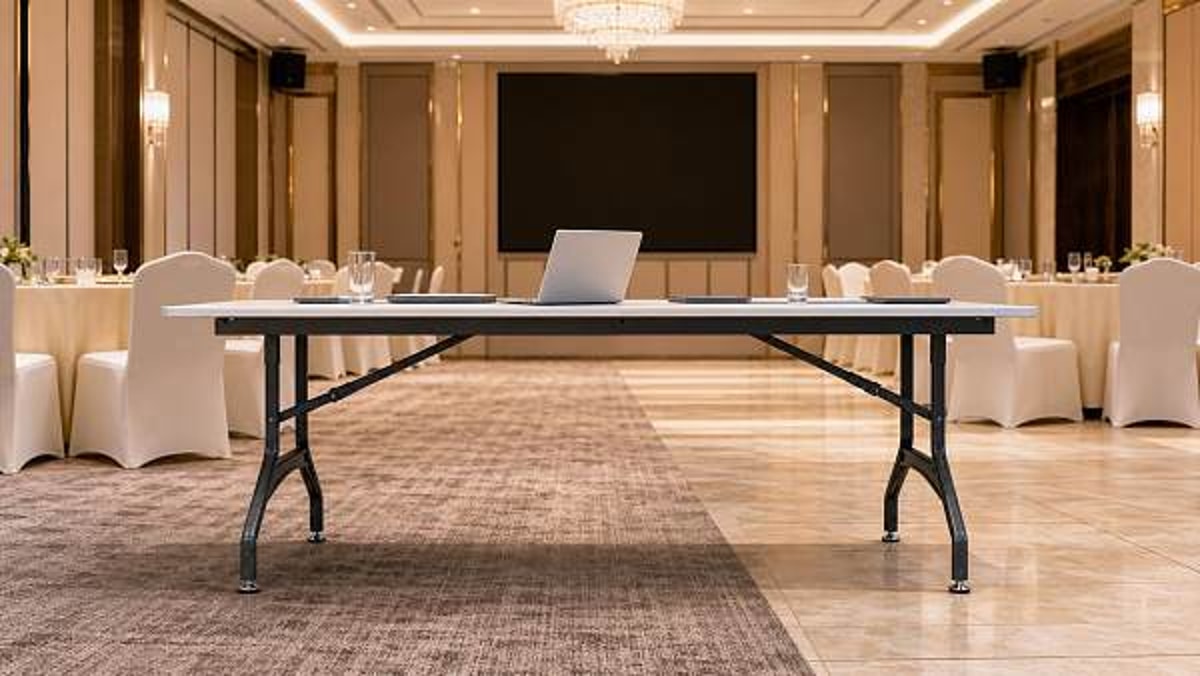
For project managers overseeing banquets, conferences, and multi-use venues, choosing folding event tables that remain stable on uneven floors is critical to safety, guest experience, and operational efficiency. The right tables reduce setup delays, prevent wobbling during service, and support long-term venue performance, making them a practical investment for demanding commercial environments.
Why do folding event tables become a major issue on uneven banquet floors?
This is one of the first questions project managers ask during venue planning or refurbishment. On paper, a banquet hall may appear level, but in practice many commercial floors include subtle slope transitions, tile joints, temporary staging areas, carpet compression, or wear from years of heavy traffic. These small inconsistencies can turn standard tables into a service problem.
When folding event tables are not engineered for floor variation, the result is more than a minor wobble. Glassware vibrates, buffet displays lose visual polish, laptops shake during conferences, and staff spend extra time shimming legs or rearranging layouts. In premium hospitality settings, instability also affects brand perception. Guests may not know why a room feels poorly managed, but they notice when a table shifts during dining, registration, or presentations.
For engineering and operations teams, stability is closely tied to risk control. Uneven loading can stress joints, accelerate hardware fatigue, and shorten product life. In multi-use spaces where tables are moved frequently, folding mechanisms must perform reliably across repeated setup cycles. That is why folding event tables designed for commercial use should be evaluated as operational assets, not as generic furniture.
What features actually keep folding event tables stable?
Many buyers focus first on tabletop size or finish, but stability comes from the structure underneath. If your venue includes imperfect floors, these are the features that matter most:
- Adjustable leveling glides: The most practical solution for minor floor irregularities. They allow each table leg to compensate for localized height differences without makeshift fixes.
- Cross-braced leg frames: Bracing reduces lateral sway and makes folding event tables feel more secure during guest interaction, food service, or document signing.
- Commercial-grade hinges and locking systems: Weak locking points often create movement even when the floor issue is small. A positive lock keeps legs fully deployed under load.
- Balanced weight distribution: A stable table does not always need to be excessively heavy, but it must have a well-designed frame that spreads load evenly across all legs.
- Non-marking foot materials: Rubberized or engineered polymer feet improve grip on polished surfaces and reduce micro-sliding.
- High-tolerance manufacturing: Even a smart design performs poorly if leg lengths vary due to inconsistent production quality.
For project managers, the key takeaway is simple: the best folding event tables for uneven banquet floors are those with built-in adjustment capability, rigid leg geometry, and durable locking hardware. Stability should be verified structurally, not assumed from appearance.
Which commercial settings benefit most from stable folding event tables?
Although nearly any venue can benefit, some applications place especially high demands on table stability. Hotels and convention centers are obvious examples because layouts change quickly between breakfast service, breakout sessions, gala dinners, and exhibitions. In these environments, folding event tables must support fast turnover without compromising guest confidence.
Educational campuses, training centers, and public institutions also face similar challenges. Floors may vary between legacy buildings and new extensions, and tables often need to be reconfigured by internal staff rather than specialist crews. Reliable setup becomes essential when spaces support exams, workshops, and formal meetings.
Leisure venues, event halls, and premium retail activation spaces have another priority: visual consistency. A luxury launch event or hospitality reception cannot afford unstable cocktail, registration, or display tables. Even slight movement undermines the polished atmosphere buyers expect. In all these cases, folding event tables with stable footing help maintain service quality, reduce complaints, and protect the venue’s reputation.
How can project managers compare options quickly during specification or sourcing?
A fast comparison framework is useful when reviewing catalogs, supplier proposals, or OEM samples. The table below summarizes the most important checkpoints for folding event tables intended for uneven banquet floors.
This approach helps procurement teams avoid a common mistake: selecting folding event tables based only on unit price. In commercial environments, labor time, maintenance calls, replacement frequency, and guest-facing quality often have a larger long-term cost impact than the initial purchase price.
What mistakes do buyers commonly make when selecting folding event tables?
The first mistake is assuming that all instability comes from bad floors. In reality, poorly manufactured folding event tables can wobble even on level surfaces. Tolerance inconsistency, weak welds, misaligned hinges, and thin-gauge steel all contribute to structural movement.
The second mistake is overvaluing lightweight construction without considering duty cycle. Easy handling matters, but tables used in banquet operations face repeated loading, stacking, transport, and impact. A product that saves a few kilograms but fails earlier can increase total ownership cost.
Another frequent oversight is failing to test setup conditions that mirror real use. A showroom sample may seem acceptable on a smooth floor, yet perform poorly on carpet seams, service corridors, or temporary event decking. Project managers should request realistic demonstrations or sample evaluations under site conditions.
Some teams also forget to align product choice with event format. Round banquet tables, rectangular conference tables, and narrow training tables behave differently under load distribution. Folding event tables for buffet service may require stronger edge resistance and higher load capacity than those used for light meeting functions. The right specification depends on operational use, not just dimensions.
How should you assess cost, lifecycle value, and sourcing reliability?
For project leaders, the real question is not “What is the cheapest table?” but “Which table performs reliably across years of commercial events?” A lower-cost unit may appear attractive in a tender, yet hidden costs emerge through staff adjustments, guest complaints, damaged tableware, replacement parts, or full-unit failures.
A better evaluation model includes four cost layers: purchase price, installation and deployment efficiency, maintenance burden, and replacement cycle. Folding event tables that remain stable on uneven banquet floors often deliver measurable value through reduced operational friction. Staff can set rooms faster, layouts stay consistent, and fewer emergency fixes are needed during live events.
Sourcing reliability also matters. Commercial buyers should confirm whether the supplier can support repeat orders, consistent dimensions across batches, spare components, and customization where needed. In international procurement, documentation quality is another trust signal. Clear technical sheets, load test data, finish specifications, and packaging details help procurement teams compare suppliers objectively.
For buyers working through a sourcing hub or B2B intelligence platform, it is useful to prioritize suppliers that can demonstrate manufacturing discipline, OEM or ODM flexibility, and familiarity with hospitality or institutional projects. Stable folding event tables are not only a product purchase; they are part of a broader venue performance strategy.
What should you confirm before finalizing a specification or purchase order?
Before issuing a final specification, project managers should narrow the conversation to practical, decision-critical points. This reduces rework later and improves supplier alignment from the start.
- What floor conditions exist across all intended use zones, including banquet halls, pre-function areas, breakout rooms, and storage routes?
- Do the folding event tables include adjustable feet as standard, and what adjustment range is available?
- What is the tested load capacity for dining, display, AV, or meeting applications?
- How durable are the hinges, locks, edging, and leg finishes under frequent commercial handling?
- Can the supplier maintain dimensional consistency for phased purchases or future expansion?
- What warranties, spare parts, and after-sales support are available for commercial accounts?
These questions help transform a broad search for folding event tables into a disciplined procurement process. They also make supplier comparisons more transparent, especially when multiple factories or distributors offer similar-looking products with very different performance standards.
So, what is the smartest next step for a project manager?
If you are selecting folding event tables for a hospitality, conference, education, or multi-use commercial project, start by matching table design to actual site conditions rather than catalog assumptions. Focus on leveling capability, frame rigidity, locking security, commercial durability, and supplier consistency. A stable table protects not only service quality but also labor efficiency, guest confidence, and long-term asset value.
If you need to confirm a practical solution, the most useful next discussion points are table type, target use case, floor condition variance, quantity, delivery schedule, storage method, customization requirements, test standards, and after-sales support. Clarifying these items early makes it easier to source folding event tables that perform reliably on uneven banquet floors and fit the broader needs of professional commercial environments.
Search News
Hot Articles
- Commercial KitchenStainless steel GN pans with reinforced corners last longer in busy kitchensMay 02, 2026
- Hotel Room AmenitiesMemory foam hotel mattresses: when soft comfort leads to faster saggingMay 02, 2026
- Hotel Room AmenitiesElectronic hotel door locks: battery alerts are often less simple than they seemMay 02, 2026
Popular Tags
Need ExpertConsultation?
Connect with our specialized leisureengineering team for procurementstrategies.
Recommended News
 May 02, 2026Folding event tables that stay stable on uneven banquet floorsFolding event tables that stay stable on uneven banquet floors help reduce wobble, speed setup, and improve guest experience. Discover key features buyers should compare.● Hospitality Sourcing Dir
 May 02, 2026Banquet chairs wholesale: stacking height can change storage costsBanquet chairs wholesale decisions should consider stacking height, because smarter storage, faster handling, and lower transport costs can significantly improve long-term venue profitability.● Hospitality Sourcing Dir
 May 02, 2026When wholesale melamine plates look premium and when they do notWholesale melamine plates can look refined or cheap. Learn how finish, weight, design, and supplier quality affect premium appeal before you source for hospitality or retail.● Hospitality Sourcing Dir
 May 01, 2026Restaurant Booth Seating That Saves Space Without Feeling TightRestaurant booth seating that saves space without feeling cramped—discover smart dimensions, durable specs, and layout tips to boost comfort, traffic flow, and revenue.● Hospitality Sourcing Dir
 May 01, 2026How to Choose Commercial Bar Stools for High-Traffic VenuesCommercial bar stools for high-traffic venues: learn how to compare durability, safety, comfort, maintenance, and supplier reliability to choose seating that lasts and performs.● Hospitality Sourcing Dir
 Apr 28, 2026Why Hotel Tables Often Fail at Edges, Bases, and Surface FinishHotel tables often fail at edges, bases, and surface finish. Compare hotel furniture, custom furniture, luxury furniture, hotel chairs, hotel beds, and hotel equipment before you buy.● Hospitality Sourcing Dir
 Apr 28, 2026Hotel Tables With Stone Tops or Wood Tops: Which Performs Better?Hotel tables with stone tops or wood tops? Compare ROI, durability, and style across hotel furniture, custom furniture, hotel chairs, and hotel beds to choose smarter.● Hospitality Sourcing Dir
 Apr 28, 2026The Best Hotel Chairs Balance Comfort, Stackability, and DurabilityHotel chairs that balance comfort, stackability, and durability. Explore hotel furniture, custom furniture, hotel tables, hotel beds, and luxury furniture solutions for hospitality buyers.● Hospitality Sourcing Dir
 Apr 28, 2026Hotel Chairs: What Causes Wobbling, Cracks, and Early Wear?Hotel chairs buying guide: learn what causes wobbling, cracks, and early wear, and how to compare hotel furniture, custom furniture, hotel tables, hotel beds, and luxury furniture for lasting value.● Hospitality Sourcing Dir
 Apr 21, 2026Hotel tables that stay stable on uneven flooringHotel tables that stay stable on uneven flooring: a practical guide for hospitality procurement covering hotel furniture, commercial furniture, luxury furniture, and specs that reduce wobble, risk, and maintenance.● Hospitality Sourcing Dir
 Apr 21, 2026Round or rectangular hotel tables for tighter layouts?Hotel tables for tight layouts: compare round vs rectangular hotel furniture for better flow, seating, and hospitality procurement decisions. Find the best fit for compact hotel room furniture.● Hospitality Sourcing Dir
 Apr 21, 2026Why hotel chairs fail early in banquet spacesHotel chairs in banquet spaces fail early due to stacking, impact, and weak specs. Learn how hotel furniture and commercial furniture choices cut costs and improve hospitality procurement.● Hospitality Sourcing Dir
 Apr 21, 2026Hotel chairs that look elegant and still hold upHotel chairs that blend luxury furniture appeal with commercial furniture durability. Discover how hotel furniture works with hotel tables, hotel desks, and hotel room furniture for smarter hospitality procurement.● Hospitality Sourcing Dir
 Apr 23, 2026How to Choose Commercial Furniture That LastsCommercial furniture buying guide for hotels, schools, and leisure venues—covering hotel tables, playground safety, sensory playgrounds, and durable amusement equipment.● Hospitality Sourcing Dir
 Apr 23, 2026When Commercial Furniture Fails in High-Traffic VenuesLearn why commercial furniture fails in busy venues and how to choose safer hotel tables, playground borders, sensory playground solutions, amusement equipment, and hotel equipment that last.● Hospitality Sourcing Dir
 Apr 20, 2026Hotel tables with edge seams that trap moisture and moldHotel tables, park benches & commercial furniture with mold-trapping edge seams? Discover seamless, moisture-resistant hotel furniture solutions—luxury, custom, and compliant.● Hospitality Sourcing Dir
 Apr 20, 2026Hotel chairs rated for 100,000 cycles—but tested how?Discover how top hotel chairs, park benches & commercial furniture are truly tested for 100,000 cycles—backed by BIFMA, EN & GB/T standards. Get verified luxury furniture insights.● Hospitality Sourcing Dir
 Apr 19, 2026Hotel tables that warp under daily cleaning chemicalsHotel tables, hotel chairs, hotel beds & park benches—discover why chemical warping fails luxury furniture & commercial furniture specs. Get expert OEM insights on durable hotel furniture & equipment.● Hospitality Sourcing Dir
 Apr 19, 2026Hotel chairs with hidden wear patterns no one tests forHotel chairs, luxury furniture & commercial furniture buyers: uncover hidden wear patterns in hotel chairs, hotel beds, and custom furniture—before failure hits ROI.● Hospitality Sourcing Dir
 Apr 18, 2026Custom furniture quoting errors—how small measurement gaps become big cost overrunsAvoid costly overruns: Fix custom furniture quoting errors before they derail hotel beds, theme park rides, playground structures & soundproofing materials.● Hospitality Sourcing Dir
 Apr 17, 2026Restaurant furniture that handles spills, scratches, and constant turnoverCommercial furniture built for spills, scratches & turnover—ideal for playground borders, sensory playgrounds, hotel tables, amusement equipment & more.● Hospitality Sourcing Dir
 Apr 16, 2026Custom fabrication for restaurant furniture: When ‘made-to-order’ becomes ‘wait-for-3-months’Custom fabrication for hotel furniture, designer eyewear & jewelry—solve supply chain delays with OEM manufacturing expertise. Get on-time, cross-sector solutions.● Hospitality Sourcing Dir
 Apr 15, 2026Restaurant furniture durability tests don’t match real dining room stressCommercial furniture, playground safety & amusement equipment tested for real-world stress—not just labs. Discover field-validated durability for hotel tables, sensory playgrounds, climbers & more.● Hospitality Sourcing Dir
 Apr 12, 2026Custom furniture for play spaces: When 'bespoke' means higher liability, not better fitOutdoor playground & inclusive playground design demands caution: custom furniture, playground swings, and theme park rides raise liability—discover safer, certified alternatives.● Hospitality Sourcing Dir