When wholesale melamine plates look premium and when they do not
Wholesale melamine plates can project a refined, high-end look—or quickly signal low quality—depending on design detail, surface finish, weight, and manufacturing standards. For buyers researching commercial tableware, understanding what separates premium-looking products from cheaper alternatives is essential to making confident sourcing decisions for hospitality, catering, and retail settings.
Why do wholesale melamine plates matter so much in commercial sourcing?
For hotels, restaurants, institutional dining programs, and specialty retailers, tableware is never just a functional purchase. It shapes visual identity, influences guest perception, affects replacement cost, and impacts long-term operating efficiency. That is why wholesale melamine plates receive so much attention from procurement teams: they sit at the intersection of appearance, durability, and budget control.
Melamine products are often selected because they are lighter than porcelain, more resistant to breakage, and practical for high-volume use. Yet buyers quickly discover an important truth: not all melamine looks the same. Some collections closely resemble premium ceramic or stoneware, while others have an obvious plastic appearance that weakens the dining presentation. In a premium buffet, luxury outdoor venue, school dining hall, or casual upscale café, that visual difference matters.
For information-stage researchers, the key question is not whether wholesale melamine plates are useful. It is how to tell when they support a polished commercial experience and when they undermine it.
What makes wholesale melamine plates look premium?
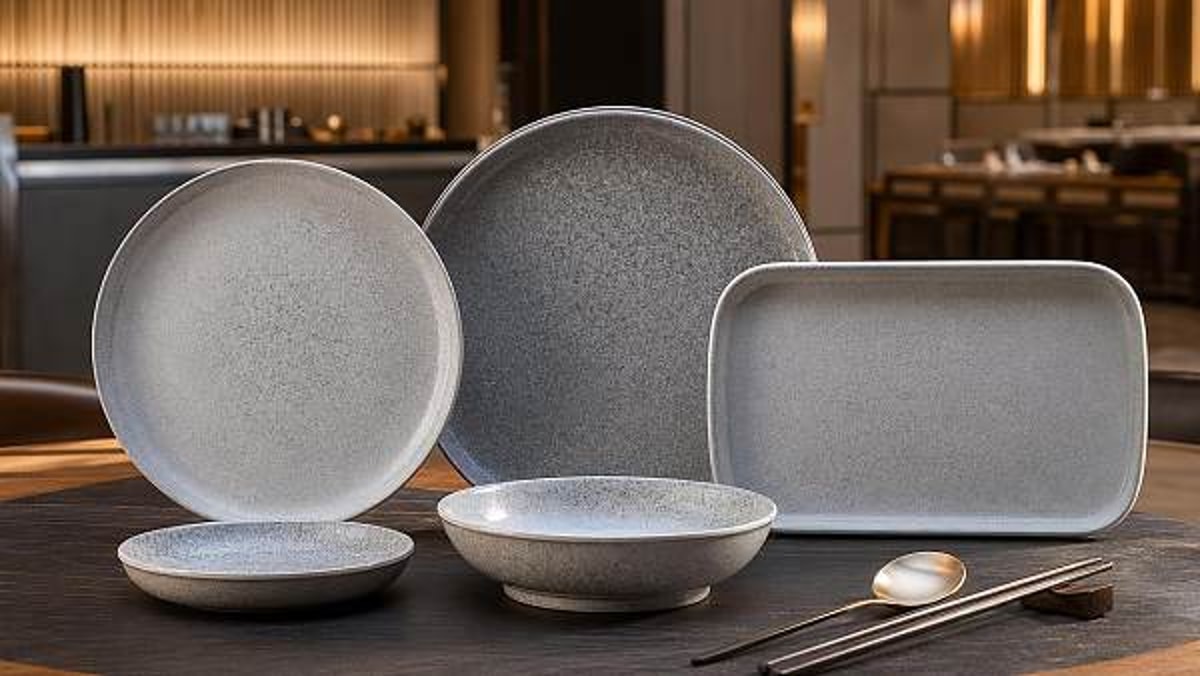
Premium-looking wholesale melamine plates usually succeed because they imitate the visual language of higher-end materials without copying them poorly. They do not try to look cheap and shiny; instead, they present controlled texture, balanced form, and a finish that fits the intended environment.
The first sign is surface quality. Better plates often use matte, satin, soft-speckled, hand-crafted, or glazed-look finishes that reduce the artificial plastic impression. The surface feels visually calm rather than overly reflective. This matters in hospitality photography, buffet lighting, and in-person guest interaction, where harsh gloss can make even a well-shaped plate look low grade.
The second sign is edge definition and shape discipline. Premium melamine usually has cleaner lines, more precise rims, and stronger design consistency across the collection. Whether the style is coupe, rimmed, organic, square, or minimalist, the proportions feel intentional. Low-end alternatives often show awkward curves, uneven thickness, or generic molds that fail to communicate design value.
The third sign is color sophistication. Neutral tones, mineral-inspired shades, restrained black, muted greens, sand, charcoal, ivory, or layered stone effects tend to look more premium than bright artificial whites or flat, saturated colors. If a supplier offers coordinated tabletop collections rather than isolated pieces, that is often another positive sign of design maturity.
Weight also influences perceived quality. Buyers frequently associate a little more heft with durability and value. The best wholesale melamine plates are not unnecessarily heavy, but they do feel stable, balanced, and reassuring in hand. Extremely light products may save shipping cost, yet they can also feel disposable.
When do wholesale melamine plates fail to look high-end?
They usually look cheap for a few predictable reasons. The most common is excessive gloss. A highly reflective surface can highlight scratch patterns, show mold inconsistencies, and create a toy-like finish under restaurant or banquet lighting. If the product looks good only in edited supplier photos but not under realistic lighting conditions, caution is warranted.
Another issue is unrealistic imitation. Some low-cost products attempt to mimic porcelain, marble, or handmade ceramics too literally, but the print quality, texture depth, or visual layering is not convincing. The result is a counterfeit appearance rather than a premium interpretation. Better commercial design usually takes inspiration from natural materials instead of copying them too aggressively.
Thin walls, hollow feel, and poor finishing at the rim are also warning signs. In foodservice, users handle plates constantly, so tactile quality matters. Rough edges, visible mold seams, inconsistent color batches, and shallow decoration all reduce the sense of value. Once scratch marks appear after repeated washing, these flaws become even more obvious.
Finally, premium appearance breaks down when performance and design are disconnected. A plate may look attractive in a sample room but lose credibility if the coating dulls quickly, the color fades, or the shape warps under demanding service conditions. For that reason, visual quality should always be evaluated together with manufacturing consistency.
How can buyers judge premium vs. low-quality products before ordering at scale?
The most reliable approach is to combine visual review, physical sampling, and supplier qualification. Product photos alone are not enough. Buyers should request actual samples and test them under the same conditions in which they will be used: buffet counters, dining tables, outdoor terraces, schools, or retail display environments.
Start with five practical checkpoints:
- Look at the finish under direct and warm lighting to see whether the surface appears refined or overly plastic.
- Check the rim, underside, and foot area for mold marks, rough trimming, and design consistency.
- Hold the plate in hand and assess weight distribution, rigidity, and tactile confidence.
- Test resistance to visible scratching, staining, and repeated washing.
- Ask for compliance documents relevant to food contact safety and target export markets.
For commercial buyers, supplier discipline is just as important as sample appeal. Strong manufacturers of wholesale melamine plates can usually explain resin quality, production process, temperature resistance, dishwasher suitability, color consistency control, and batch repeatability. If a supplier avoids technical questions and relies only on attractive catalog language, that is a sourcing risk.
Which design details most strongly influence whether wholesale melamine plates feel upscale?
In many projects, buyers overfocus on pattern and underfocus on form. In reality, shape and finish often have greater impact than decoration. A simple plate with a sophisticated profile can look more premium than a heavily printed plate with average geometry.
Details that often elevate appearance include softly irregular artisanal edges, stone-inspired speckling, muted matte surfaces, layered glaze effects, and coordinated collection design across plates, bowls, platters, and serving pieces. These features work especially well in boutique hospitality, modern catering, resort dining, and premium casual concepts where presentation is central to brand image.
By contrast, signs that reduce perceived value include flat color application, bright blue-white tones that look synthetic, generic round shapes with no design identity, and decoration that sits visually on the surface instead of blending into it. The more a plate looks mass-produced without design intention, the less premium it appears.
Quick judgment table for researchers and buyers
The table below summarizes the most common differences buyers notice when comparing wholesale melamine plates.
Are premium-looking wholesale melamine plates suitable for all commercial settings?
Not always, and that is an important sourcing point. Premium appearance should match the operating environment. In luxury outdoor dining, poolside service, healthcare hospitality, education catering, cruise applications, and high-turnover buffet use, melamine can be an excellent fit because breakage resistance and handling efficiency matter as much as appearance. In these settings, well-designed wholesale melamine plates can look polished while delivering practical value.
However, in fine-dining venues where tactile expectations, heat presentation, and ceramic authenticity are essential to brand identity, melamine may not always align with the guest experience. This does not mean the product is poor; it means material selection must reflect service style. Information-stage buyers should therefore ask not only, “Does this plate look premium?” but also, “Does this material support the experience our end users expect?”
What are the most common mistakes buyers make with wholesale melamine plates?
One frequent mistake is chasing the lowest unit price and then expecting a luxury presentation. Cost efficiency is important, but very low pricing often correlates with weaker finishing, less consistent molding, thinner construction, or poorer surface durability. For branded hospitality and retail environments, replacing cheap-looking products later is often more expensive than buying better at the start.
A second mistake is evaluating only front-facing sample photos. Buyers should inspect the underside, stackability, warewashing behavior, and visual aging after repeated use. A plate that photographs well for e-commerce may disappoint in actual commercial service.
A third mistake is ignoring collection consistency. Premium table presentation depends on how dinner plates, side plates, bowls, trays, and serving pieces work together. If colors shift between batches or styles feel unrelated, the overall tabletop loses coherence.
Another mistake is overlooking certifications and market requirements. Commercial buyers, especially those sourcing globally, should confirm food-contact compliance, testing standards, and import suitability for destination markets. A beautiful product with incomplete documentation creates avoidable procurement risk.
What should you ask suppliers before moving from research to purchase?
If you are narrowing options for wholesale melamine plates, the next step is structured supplier questioning. Good sourcing outcomes often come from the quality of these early conversations. Start with practical, evidence-based questions rather than broad promises.
- What resin formulation and manufacturing process are used?
- Which food-contact and export compliance documents are available?
- How does the finish perform after repeated commercial dishwashing?
- Can the supplier maintain color and texture consistency across batches?
- What are the MOQ, lead time, replacement policy, and sample timeline?
- Are OEM or ODM options available for shape, color, or branding?
- Which past hospitality, catering, or institutional projects demonstrate similar quality expectations?
These questions help buyers move beyond aesthetics and assess whether a supplier can support long-term commercial use. For organizations managing brand standards across multiple sites, repeatability is often more valuable than a single attractive sample.
So, when do wholesale melamine plates truly look premium?
They look premium when design, material feel, surface control, and manufacturing discipline work together. They do not rely on shine to create impact. Instead, they present quiet confidence: a refined finish, thoughtful shape, commercial durability, and consistency from sample to shipment. They look less premium when cost cutting becomes visible through gloss, weak molding, artificial decoration, or poor aging performance.
For researchers and sourcing teams, the best next step is to compare samples against actual use conditions and ask suppliers deeper technical and operational questions. If you need to confirm a practical direction, prioritize discussion around finish quality, compliance, batch consistency, dishwasher performance, lead time, MOQ, and whether the collection aligns with your hospitality, catering, retail, or institutional concept before requesting final pricing or project proposals.
Search News
Hot Articles
- Commercial KitchenStainless steel GN pans with reinforced corners last longer in busy kitchensMay 02, 2026
- Hotel Room AmenitiesMemory foam hotel mattresses: when soft comfort leads to faster saggingMay 02, 2026
- Hotel Room AmenitiesElectronic hotel door locks: battery alerts are often less simple than they seemMay 02, 2026
Popular Tags
Need ExpertConsultation?
Connect with our specialized leisureengineering team for procurementstrategies.
Recommended News
 May 02, 2026Folding event tables that stay stable on uneven banquet floorsFolding event tables that stay stable on uneven banquet floors help reduce wobble, speed setup, and improve guest experience. Discover key features buyers should compare.● Hospitality Sourcing Dir
 May 02, 2026Banquet chairs wholesale: stacking height can change storage costsBanquet chairs wholesale decisions should consider stacking height, because smarter storage, faster handling, and lower transport costs can significantly improve long-term venue profitability.● Hospitality Sourcing Dir
 May 02, 2026When wholesale melamine plates look premium and when they do notWholesale melamine plates can look refined or cheap. Learn how finish, weight, design, and supplier quality affect premium appeal before you source for hospitality or retail.● Hospitality Sourcing Dir
 May 01, 2026Restaurant Booth Seating That Saves Space Without Feeling TightRestaurant booth seating that saves space without feeling cramped—discover smart dimensions, durable specs, and layout tips to boost comfort, traffic flow, and revenue.● Hospitality Sourcing Dir
 May 01, 2026How to Choose Commercial Bar Stools for High-Traffic VenuesCommercial bar stools for high-traffic venues: learn how to compare durability, safety, comfort, maintenance, and supplier reliability to choose seating that lasts and performs.● Hospitality Sourcing Dir
 Apr 28, 2026Why Hotel Tables Often Fail at Edges, Bases, and Surface FinishHotel tables often fail at edges, bases, and surface finish. Compare hotel furniture, custom furniture, luxury furniture, hotel chairs, hotel beds, and hotel equipment before you buy.● Hospitality Sourcing Dir
 Apr 28, 2026Hotel Tables With Stone Tops or Wood Tops: Which Performs Better?Hotel tables with stone tops or wood tops? Compare ROI, durability, and style across hotel furniture, custom furniture, hotel chairs, and hotel beds to choose smarter.● Hospitality Sourcing Dir
 Apr 28, 2026The Best Hotel Chairs Balance Comfort, Stackability, and DurabilityHotel chairs that balance comfort, stackability, and durability. Explore hotel furniture, custom furniture, hotel tables, hotel beds, and luxury furniture solutions for hospitality buyers.● Hospitality Sourcing Dir
 Apr 28, 2026Hotel Chairs: What Causes Wobbling, Cracks, and Early Wear?Hotel chairs buying guide: learn what causes wobbling, cracks, and early wear, and how to compare hotel furniture, custom furniture, hotel tables, hotel beds, and luxury furniture for lasting value.● Hospitality Sourcing Dir
 Apr 21, 2026Hotel tables that stay stable on uneven flooringHotel tables that stay stable on uneven flooring: a practical guide for hospitality procurement covering hotel furniture, commercial furniture, luxury furniture, and specs that reduce wobble, risk, and maintenance.● Hospitality Sourcing Dir
 Apr 21, 2026Round or rectangular hotel tables for tighter layouts?Hotel tables for tight layouts: compare round vs rectangular hotel furniture for better flow, seating, and hospitality procurement decisions. Find the best fit for compact hotel room furniture.● Hospitality Sourcing Dir
 Apr 21, 2026Why hotel chairs fail early in banquet spacesHotel chairs in banquet spaces fail early due to stacking, impact, and weak specs. Learn how hotel furniture and commercial furniture choices cut costs and improve hospitality procurement.● Hospitality Sourcing Dir
 Apr 21, 2026Hotel chairs that look elegant and still hold upHotel chairs that blend luxury furniture appeal with commercial furniture durability. Discover how hotel furniture works with hotel tables, hotel desks, and hotel room furniture for smarter hospitality procurement.● Hospitality Sourcing Dir
 Apr 23, 2026How to Choose Commercial Furniture That LastsCommercial furniture buying guide for hotels, schools, and leisure venues—covering hotel tables, playground safety, sensory playgrounds, and durable amusement equipment.● Hospitality Sourcing Dir
 Apr 23, 2026When Commercial Furniture Fails in High-Traffic VenuesLearn why commercial furniture fails in busy venues and how to choose safer hotel tables, playground borders, sensory playground solutions, amusement equipment, and hotel equipment that last.● Hospitality Sourcing Dir
 Apr 20, 2026Hotel tables with edge seams that trap moisture and moldHotel tables, park benches & commercial furniture with mold-trapping edge seams? Discover seamless, moisture-resistant hotel furniture solutions—luxury, custom, and compliant.● Hospitality Sourcing Dir
 Apr 20, 2026Hotel chairs rated for 100,000 cycles—but tested how?Discover how top hotel chairs, park benches & commercial furniture are truly tested for 100,000 cycles—backed by BIFMA, EN & GB/T standards. Get verified luxury furniture insights.● Hospitality Sourcing Dir
 Apr 19, 2026Hotel tables that warp under daily cleaning chemicalsHotel tables, hotel chairs, hotel beds & park benches—discover why chemical warping fails luxury furniture & commercial furniture specs. Get expert OEM insights on durable hotel furniture & equipment.● Hospitality Sourcing Dir
 Apr 19, 2026Hotel chairs with hidden wear patterns no one tests forHotel chairs, luxury furniture & commercial furniture buyers: uncover hidden wear patterns in hotel chairs, hotel beds, and custom furniture—before failure hits ROI.● Hospitality Sourcing Dir
 Apr 18, 2026Custom furniture quoting errors—how small measurement gaps become big cost overrunsAvoid costly overruns: Fix custom furniture quoting errors before they derail hotel beds, theme park rides, playground structures & soundproofing materials.● Hospitality Sourcing Dir
 Apr 17, 2026Restaurant furniture that handles spills, scratches, and constant turnoverCommercial furniture built for spills, scratches & turnover—ideal for playground borders, sensory playgrounds, hotel tables, amusement equipment & more.● Hospitality Sourcing Dir
 Apr 16, 2026Custom fabrication for restaurant furniture: When ‘made-to-order’ becomes ‘wait-for-3-months’Custom fabrication for hotel furniture, designer eyewear & jewelry—solve supply chain delays with OEM manufacturing expertise. Get on-time, cross-sector solutions.● Hospitality Sourcing Dir
 Apr 15, 2026Restaurant furniture durability tests don’t match real dining room stressCommercial furniture, playground safety & amusement equipment tested for real-world stress—not just labs. Discover field-validated durability for hotel tables, sensory playgrounds, climbers & more.● Hospitality Sourcing Dir
 Apr 12, 2026Custom furniture for play spaces: When 'bespoke' means higher liability, not better fitOutdoor playground & inclusive playground design demands caution: custom furniture, playground swings, and theme park rides raise liability—discover safer, certified alternatives.● Hospitality Sourcing Dir